node-sdk: The SDK That Hides Lark's Messiest Problems
Why the official Node.js client matters less for calling APIs than for taming tokens, encrypted events, and framework friction.
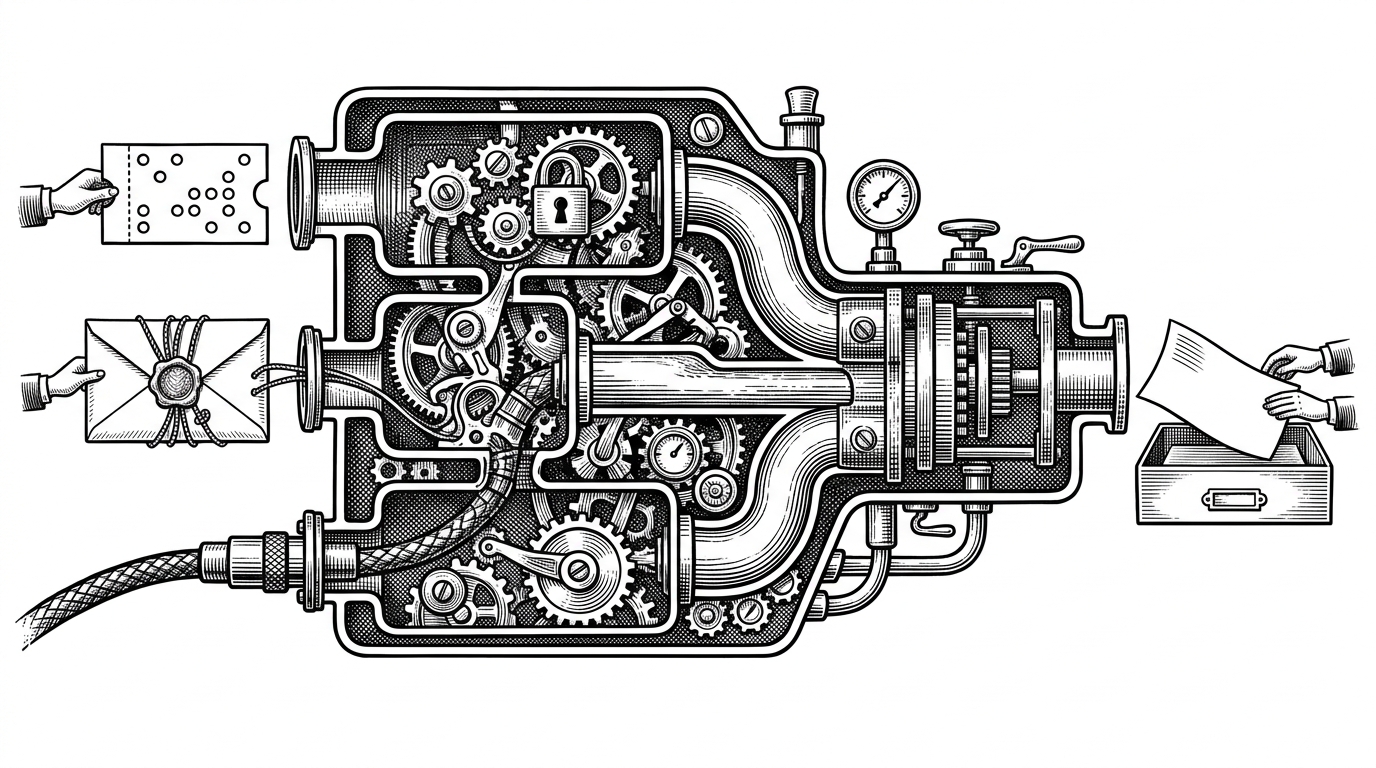
- The real product of `larksuite/node-sdk` is operational simplicity, because it hides token churn, encrypted callbacks, and transport quirks behind one TypeScript surface.
- Its code generation strategy keeps the API tree broad without forcing the maintainers to hand write every endpoint.
- The SDK's sharpest design choices are the ones that normalize platform edge cases, like early token refresh and mixed event schemas.
- WebSockets and framework adaptors make the SDK useful in environments where public webhook endpoints are awkward or impossible.
Most SDKs make API calls shorter. `larksuite/node-sdk` does something more valuable: it turns a platform with shifting auth rules, encrypted callbacks, and multiple transport paths into one TypeScript surface. That changes the job from stitching together infrastructure to shipping the integration.
appid 和 appSecret是在环境变量传过去的,能保证是存在的,并且上一条消息是发送成功的,下一条就出现发送失败,token鉴权失败问题
Built for teams already inside Lark
The repo is the official Node.js SDK for Lark, also known as Feishu, and it is aimed at backend developers who need bots, internal tools, or marketplace apps to work reliably inside an enterprise suite. The README and examples focus on the boring but expensive parts of the job: token acquisition, callback verification, encryption, and the small differences between app types that can break a deployment.
The request pipeline is the real architecture
The most interesting class is not a feature client. It is the request pipeline. The generated API tree gives you semantic calls like `client.im.message`, while the `Client` layer decides whether a request should carry a tenant token, a user token, or freshly fetched credentials. That separation keeps the surface pleasant for developers and keeps the ugly auth logic in one place.

Tokens are the hidden machinery
The token manager is where the SDK earns its keep. Lark distinguishes between self-built apps and ISV apps, so the code has to handle different handshakes, including the `app_ticket` to `app_access_token` to `tenant_access_token` sequence. The clever detail is the proactive refresh window. The SDK subtracts three minutes from expiry, which is a small number that prevents a lot of late-night debugging.
By the end of a very long day, I had a working Telegram bot that could read my emails, check my calendar, and create events.
Encrypted events become plain objects
Webhook handling is where many enterprise SDKs become painful. Here, `RequestHandle.parse` checks whether a payload is encrypted, decrypts it with `AESCipher`, and normalizes the schema so developers do not have to care whether the event came in as V1 or V2. That is a small amount of plumbing with a big effect: the handler you write looks like business logic, not protocol archaeology.
WebSockets and adaptors widen the deployment envelope
The `ws-client` and framework adaptors show that the repo is not just for the happy path. If your team cannot expose a public webhook URL, the WebSocket and long-polling path keeps development moving. If your codebase already sits on Express or Koa, the adaptors remove the ceremony of translating raw Node requests into the SDK's event dispatcher. The newer `scene/aily` code also hints that the project is moving toward stateful, AI-adjacent workflows instead of staying a thin API wrapper.
| Project | Best fit | What it trades off |
|---|---|---|
| larksuite/node-sdk | Lark-specific apps that need auth, events, and transport handled together | Narrow platform scope, but excellent platform fit |
| slackapi/node-slack-sdk | Teams building deeply inside Slack's ecosystem | Broader package surface, but Slack-specific |
| microsoftgraph/msgraph-sdk-javascript | Microsoft 365 integrations across many product surfaces | Large ecosystem complexity and heavier abstraction |
| google-api-nodejs-client | Apps that need access to many Google APIs from one client | Huge coverage, but less opinionated about chat workflows |
If you live inside Lark, this SDK removes the chores that make enterprise integrations brittle. If you need one abstraction across many chat platforms, a broader integration framework may be a better fit. But if you want a Node client that understands Lark's auth rules, event formats, and deployment constraints, this is the official tool built for that job.