`rock-climbing-robot`: The Browser Simulator That Treats Climbing Like a Robotics Problem
A Three.js climbing lab that turns text files into routes, solves reach with Jacobian inverse kinematics, and points toward MuJoCo-level physics when the visualization is not enough.
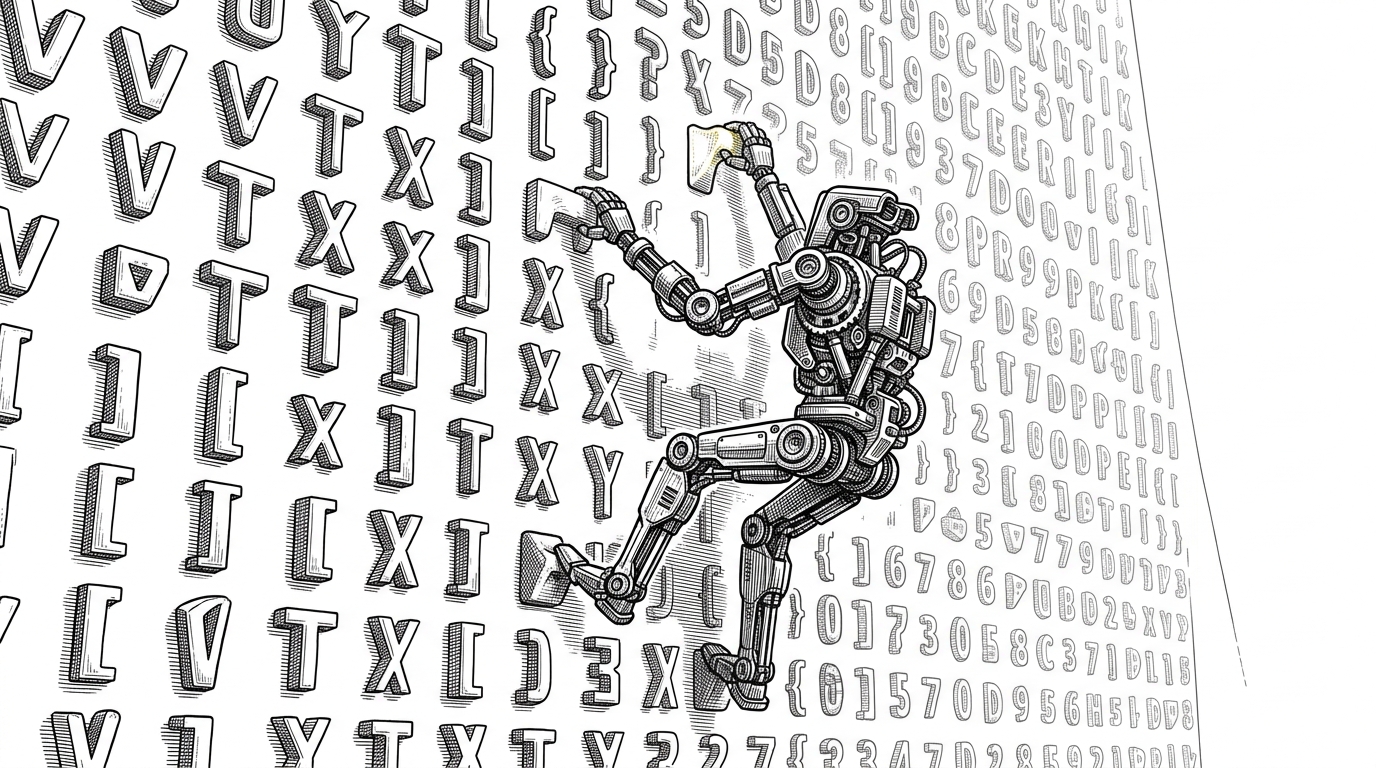
- This repo turns climbing into a control problem by making route authoring, reachability, and inverse kinematics part of one workflow.
- Its most distinctive choice is formal Jacobian IK, which makes the simulator feel like robotics tooling instead of a casual animation demo.
- The text-file wall system makes the environment editable and inspectable, so the route itself becomes a first-class input to the simulation.
- The MuJoCo assets suggest the browser front end is only half the story, with higher-fidelity physics waiting behind it.
The most interesting thing about lgadiego001/rock-climbing-robot is not that it animates a climber. It is that it treats climbing like a robotics bench problem: author the wall, solve the reach, inspect the result, then push the model toward heavier physics when the browser view runs out of fidelity.
Why a Climbing Wall Starts as Text
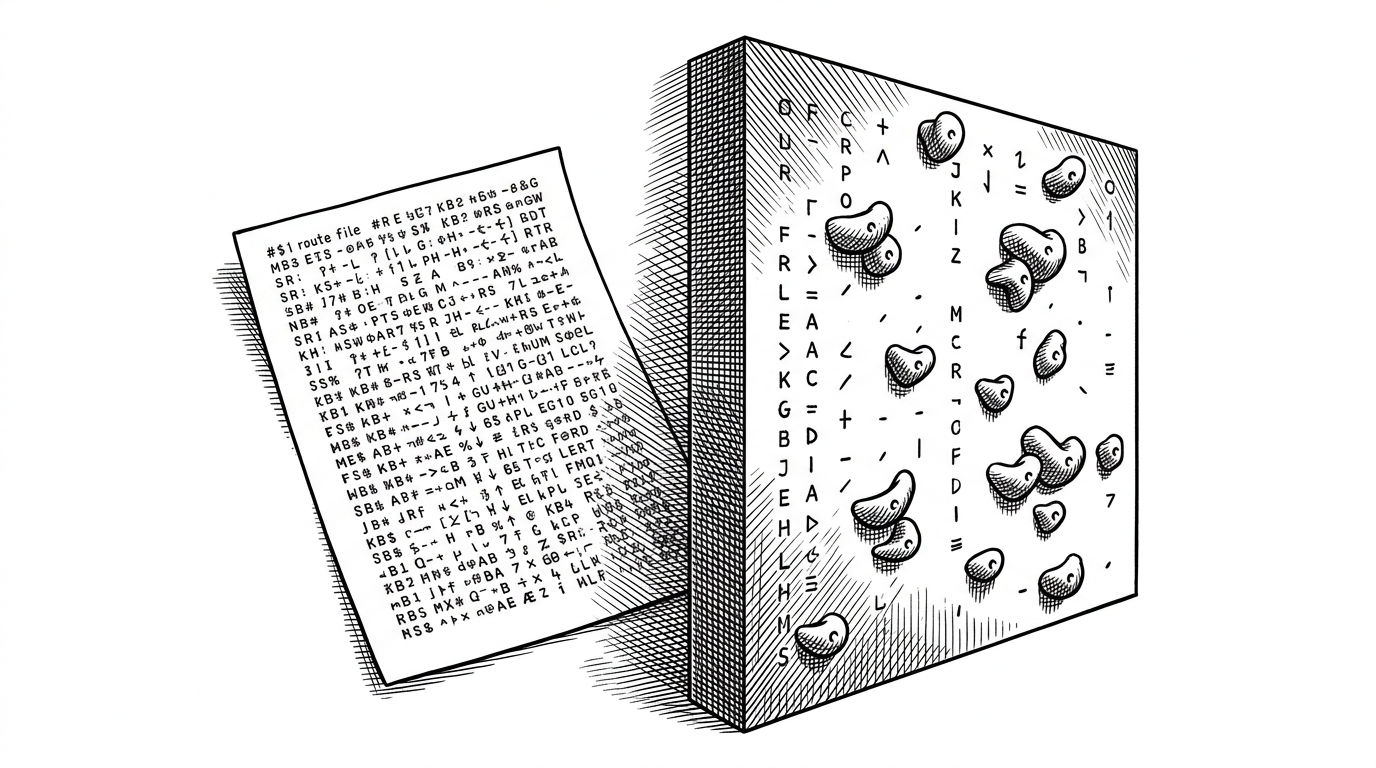
That route-first choice changes the whole project. The wall is not hand-built hold by hold. It begins as a map, where characters encode grip types and placement, then gets turned into cloned meshes, markers, and reachable targets.
That matters because it makes the environment editable. You can change the climbing problem without redrawing the scene. For a simulator, that is a quiet superpower: the route becomes data, not scenery.
The Robot Is Solved, Not Just Animated
This repo does not lean on the easiest-looking inverse kinematics trick. The codebase points to a formal Jacobian-based solver, which means joint movement is computed from the relationship between the end effector and the target, not guessed by a simple visual heuristic.
That is a meaningful choice. Jacobian IK is harder to implement than common web-friendly options like CCD or FABRIK, but it gives the simulator a more robotics-native feel. The robot is not merely drifting toward a hold. It is solving a constrained motion problem.
// Conceptual shape of the solver
const J = calcJacobian(jointAngles);
const error = target.subtract(endEffector);
const delta = inverseKinematics(J, error, jointLimits);
applyJointUpdate(delta);
In practice, that changes what the simulator can teach. Instead of only showing where an arm can go, it shows why a hold is reachable, why a joint saturates, and why a target can fail even when it looks close in screen space.
Why Jacobian IK Changes the Feel of the Simulator
The control loop is the point. A climber that uses Jacobian IK invites you to think in terms of gradients, constraints, and feasibility. A climber built on a simpler interpolator mostly invites you to watch motion happen.
| Approach | What it optimizes | Strength | Trade-off |
|---|---|---|---|
| Jacobian IK | Joint updates that reduce end-effector error | Precise, robotics-aligned control | More math and more tuning |
| CCD or FABRIK | Fast positional convergence | Simple and cheap to run | Less natural for formal control analysis |
| Keyframed animation | Preauthored pose changes | Easy to make look good | Not a solver at all |
That is why this repo feels closer to a lab than to a demo. The interesting output is not only a pose. It is an answer to a question: can this chain of joints actually reach that hold under the rules we gave it?
A Browser Front End With a Robotics Back End
The front end is deliberately light and legible. Three.js gives the scene, Tweakpane gives the controls, and the browser becomes a place to inspect the system in motion instead of a black box that spits out frames.
But the presence of MuJoCo assets changes the reading. That signals an ambition beyond visualization. It suggests the same climbing problem can move from browser ergonomics into a physics engine that is better suited to contact, dynamics, and downstream robotics work.
What This Repo Has in Common With Real Climbing Robots
The comparison set matters here. LEMUR, LORIS, SCALER, and ReachBot are serious research systems. They optimize for hardware, autonomy, and field use. This repo does something different: it optimizes for understanding.
| System | Primary goal | Control style | Best known for |
|---|---|---|---|
| rock-climbing-robot | Inspectable climbing simulation | Jacobian IK in a browser workflow | Making route design and reachability easy to study |
| LEMUR | Planetary and field exploration | Autonomous planning with advanced grippers | Redundant limbs and microspine adhesion |
| LORIS | Lightweight rough-terrain climbing | Passive mechanisms with minimal complexity | Low-mass free-climbing on irregular rock |
| SCALER | Versatile bouldering and ground motion | High-DoF locomotion and body repositioning | Dynamic climbing with a specialized gripper |
| ReachBot | Extreme enclosed-space reach | Extendable boom-based locomotion | Large workspace in caves and lava tubes |
That positioning is the reason the repo is interesting even without hardware. It sits in the explanatory layer of robotics, where the job is to make control legible before it is made physical.
Why This Matters
Good simulators do two things at once. They reduce friction for builders, and they preserve the structure of the real problem. This project does both. It makes a niche climbing system editable in a browser, but it keeps the math and the constraints intact enough to remain useful.
That is the rare part. The wall is authored as data. The motion is solved as control. The result is a climbing model that is easy to inspect without being cheapened into a toy.