ljg-skill-xray-book: A Claude Code skill that reads books like a compression pipeline
ljg-skill-xray-book turns a book into structure, argument, and transferable models, then writes the result as plain text you can keep.
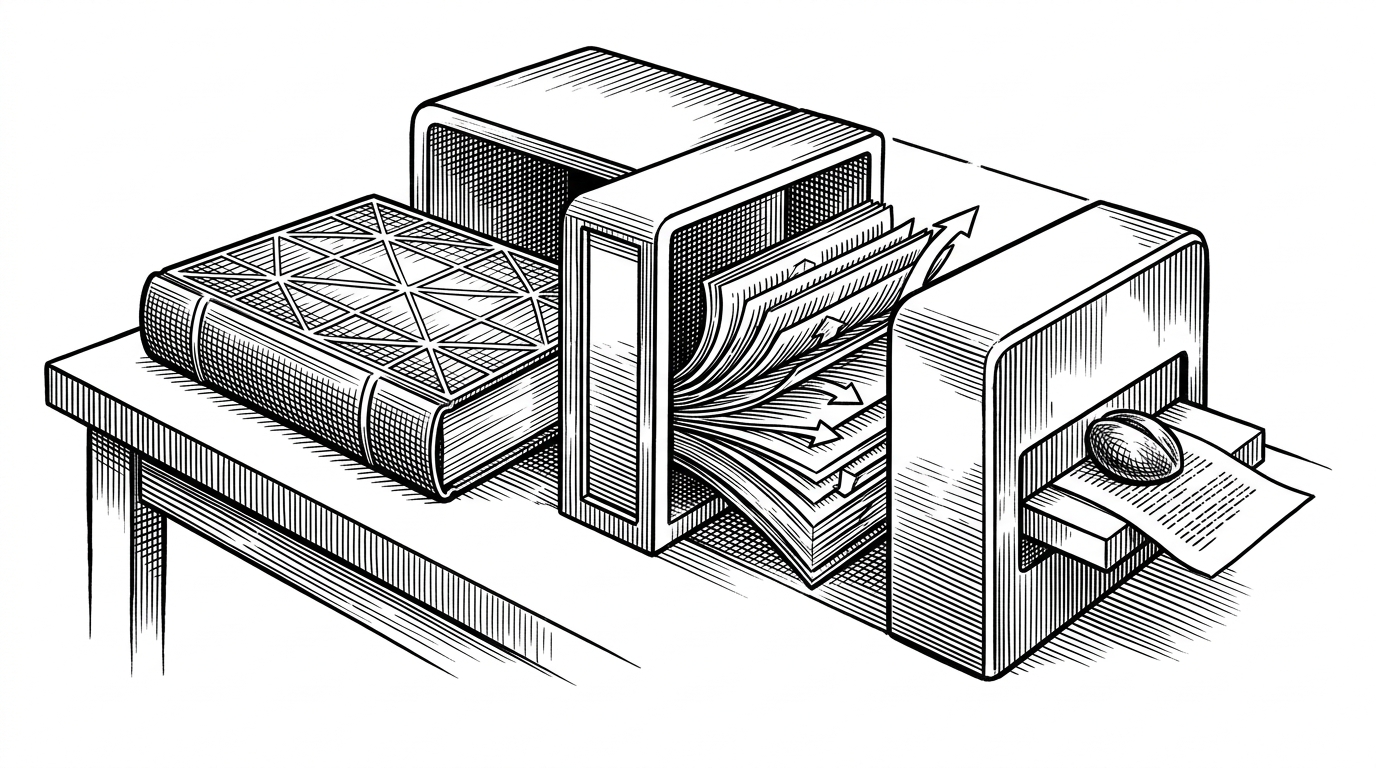
- ljg-skill-xray-book treats reading as a repeatable compression protocol, not as a one-shot summary request.
- Its value is the shape of the output, which lands in Org-mode and ASCII so the result can live inside a plain-text knowledge system.
- The repo's three passes, Skeleton, Dissection, and Soul, are designed to extract structure first, then argument, then transferable mental models.
- Compared with generic LLM prompting, the skill adds a local workflow that is easier to reuse, inspect, and trust.
Most book tools promise speed. This one promises compression. That is the difference between skimming and building a reading protocol.
Reading as a protocol
The important move is not that it can process books. It is that ljg-skill-xray-book formalizes how a serious reader should approach them. The repo wraps that idea in a Claude Code Skill, with plugin metadata in .claude-plugin/ and the real behavior living in skills/ljg-xray-book/SKILL.md. That makes it feel less like a prompt and more like a local knowledge engine built by lijigang.
三轮认知压缩:骨架扫描 → 血肉解剖 → 灵魂提取
The three passes
The three stages are a useful constraint. Skeleton scan maps the book's structure. Dissection pulls apart the argument chain, the assumptions, and the evidence. Soul extraction asks what survives when you move the idea into another domain. That last step is the difference between a summary and a reusable model.
* Deep Book X-Ray
** Skeleton
- What is the book saying?
- How is it organized?

** Dissection
- Why does each claim hold?
- What logic connects the parts?

** Soul
- What idea can survive the original context?
- How does it transfer to another domain?
That logic ends in a report meant to survive outside the model. The repo writes Org-mode, pairs it with ASCII structure maps, and pushes toward a napkin level of compression. It even automates the handoff by timestamping the run, writing the file into a local notes directory, and opening the finished result for you. The output is not a chat transcript. It is an artifact.
餐巾纸极限压缩:公式 + 草图 + 一句话
Why plain text is the point
The repo's refusal of rich UI is not austerity for its own sake. Plain text is searchable, durable, and easy to move between editors, notes systems, and terminals. If the output is meant to become part of a second brain, Org-mode is a sensible target. It is structured enough to preserve hierarchy and plain enough to outlive the tool that generated it.
| Dimension | Generic summary tool | ljg-skill-xray-book |
|---|---|---|
| Workflow | One prompt, one pass | Three fixed passes with distinct jobs |
| Output | Readable recap | Org-mode report plus ASCII map |
| Target user | Casual catch-up | Power reader, PKM user, researcher |
| Trust model | Depends on prompt quality | Constrained protocol that is easier to repeat |
| Environment | Usually browser-based | Claude Code, local file workflow |
That is the real differentiator. The repo is not trying to outrun Blinkist at curation, or a general chatbot at flexibility. It is trying to make deep reading feel like an instrumented workflow, where the method is visible and the artifact is portable. The broader x-ray family, including the author's paper and article skills, suggests a bigger platform idea: one reading grammar adapted to different media.