lijigang/ljg-skills: The Anti-AI Aesthetic Engine
How a collection of terminal scripts hijacked Claude Code to build a cognitive workbench with forced artistic chaos and Emacs Org-mode.
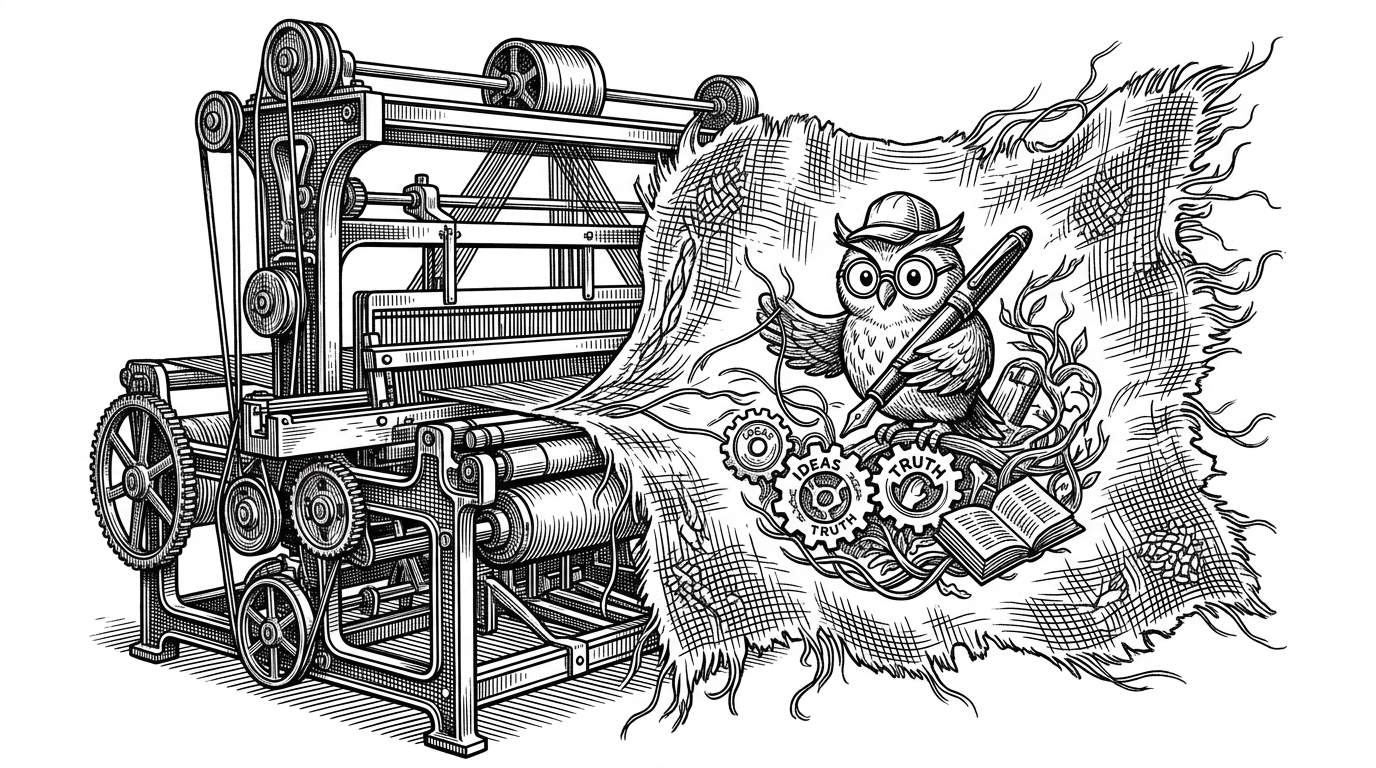
信息图模式会根据内容密度、结构和情绪自动生成独特的视觉构图,没有固定模板,形式服务于内容。
- ljg-skills uses strict prompt constraints to explicitly ban the generic "AI aesthetic," forcing Claude Code to output asymmetrical, non-templated designs.
- The project transforms a standard CLI into a headless rendering pipeline, using Node.js and Playwright to generate high-fidelity, tactile PNGs from text prompts.
- By relying heavily on Emacs Org-mode and "Red Line" rules, it shifts the LLM paradigm from ephemeral chat to structured, permanent knowledge management.
Banning the AI Aesthetic
Most AI tools produce output that looks inherently like AI. The Inter font, the subtle blue-to-purple gradients, the perfectly equidistant padding—it is a frictionless, corporate aesthetic. The lijigang/ljg-skills repository rejects this entirely. Inside the project lies a taste.md file that acts as a manifesto against bland generative design.
This file enforces strict constraints on Claude Code. It outright bans the Inter font, forbidding gradients and mandating specific, characterful typefaces like DM Serif. More crucially, it introduces a DESIGN_VARIANCE parameter. Set to 8/10 for infographics, this variable forces the LLM to introduce "artistic chaos." It demands asymmetrical layouts and non-templated structures, ensuring that no two generated artifacts look identical.
The Headless Rendering Pipeline
The visual engine of this project is the ljg-card skill. It bypasses the text-only limitations of standard LLM interfaces by acting as a bridge between the CLI and local system tools. When a user runs /ljg-card, Claude doesn't just return text; it writes dynamic HTML and custom CSS tailored to the "emotion" of the prompt.
This dynamic code is then fed into a local Node.js script (capture.js) that triggers Playwright. Headless Chromium loads the HTML, applies an SVG turbulence filter (#noise) to give the image a tactile, printed feel, and captures a full-page screenshot. The result is a high-fidelity PNG saved directly to the user's disk.
Structuring the Mind in Org-mode
Beyond visual aesthetics, ljg-skills transforms Claude into a rigorous cognitive workbench. The ljg-paper skill, for instance, implements a forced "Feynman Technique" for academic writing. It relies heavily on Emacs Org-mode to enforce structured data output, moving away from unstructured Markdown.
This skill utilizes "Red Line" rules. It forces the LLM to adopt the persona of a 20-year veteran academic advisor to brutally critique the user's work, rejecting jargon and demanding "one idea per sentence." It is not a polite assistant; it is a strict methodological filter.

The End of Ephemeral Chat
Most interactions with Large Language Models are ephemeral. You ask a question, you get a chat bubble, you close the tab. ljg-skills represents a fundamental shift in how we interact with these tools. By leveraging local file systems, headless browsers, and strict prompt engineering, it turns Claude Code into an agent that produces permanent, high-value artifacts.
| Feature | Standard AI Chat | Cognitive Workstation (ljg-skills) |
|---|---|---|
| Output Medium | Ephemeral text bubbles | Permanent PNGs and Org-mode files |
| Aesthetic | Corporate templates (Inter, gradients) | Forced artistic chaos (SVG noise, serif fonts) |
| Prompting Style | Loose suggestions | Strict 'Red Line' constraints |
| Execution Environment | Cloud server | Local CLI with Playwright/Node.js access |