`ljg-skill-xray-prompt`: The Skill That Treats Prompts Like a Physics Problem
A Claude Code Skill that breaks intent into Anchor, Vector, and Matrix, then renders the result as a visual report instead of a blob of advice.
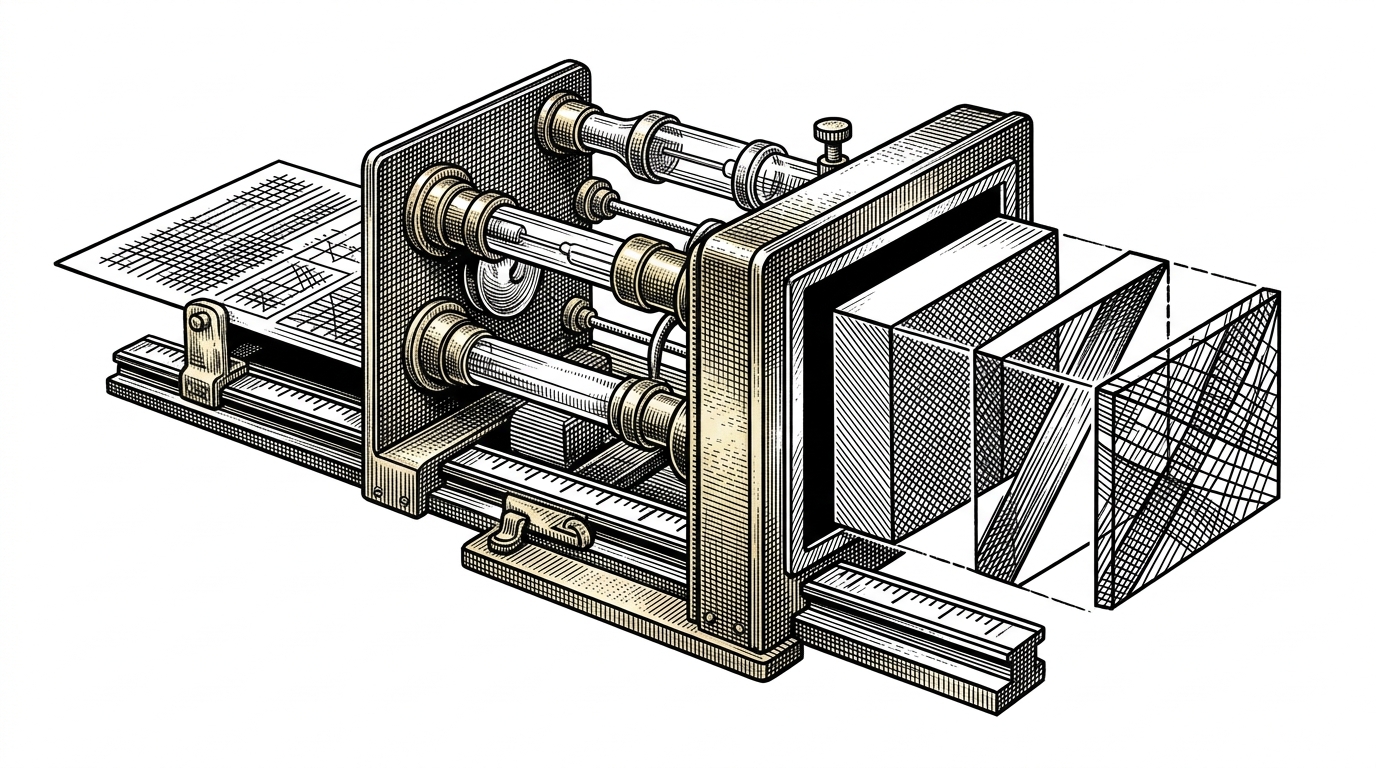
- The repo treats a prompt as an object to inspect, not a sentence to polish.
- Anchor, Vector, and Matrix turn prompt analysis into a repeatable decomposition.
- The retro HTML and ASCII output is part of the method, because legibility is the product.
- The project fits a broader xray family that makes LLM workflows visible and reusable.
This is not another prompt-tuning trick. ljg-skill-xray-prompt tries to do something stricter: it turns a prompt into a structural readout, then uses that readout to choose the right topology and render it as a report. That is a different ambition from “write better prompts.” It is closer to debugging.
The prompt is not the product
The interesting move here is conceptual, not cosmetic. The repo assumes that a prompt has internal parts, hidden forces, and a shape that can be inspected. Once you accept that, the output stops being advice and starts behaving like instrumentation.
That is why the project feels unusually disciplined for a prompt tool. It does not optimize for eloquence. It optimizes for legibility, repeatability, and a clear explanation of why one prompt feels sharp while another feels mushy.
Anchor, Vector, Matrix
The center of the repo is a simple formula: Ω = A + M · V. In plain English, that means a prompt can be read as an Anchor, the stable identity or persona, a Vector, the direction or intent, and a Matrix, the transformation logic that shapes the result. The point is not mathematical rigor for its own sake. The point is to give prompt analysis a vocabulary that is stable enough to debug.
Ω = A + M · V

A = Anchor   // who or what the prompt is centered on
V = Vector   // what the prompt is trying to move toward
M = Matrix   // how the prompt transforms intent into form

pipeline:
1. load memory and templates
2. analyze intent
3. decompose into Anchor, Vector, Matrix
4. map topology
5. render HTML
6. open in browser
This is the repo’s real invention. It makes prompt writing feel less like improvisation and more like reading a circuit. Once the three variables are visible, the rest of the workflow becomes a matter of tracing relationships instead of guessing at vibes.
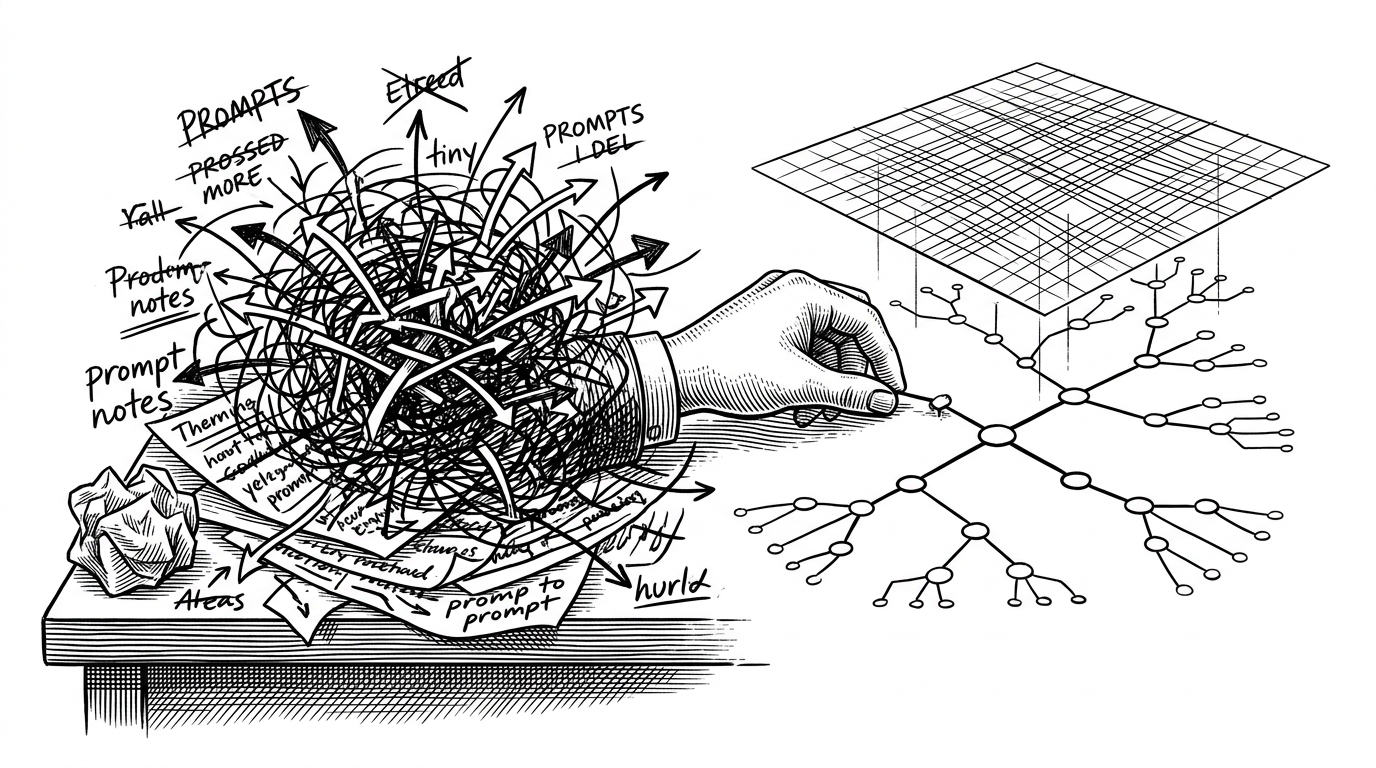
How SKILL.md compiles the analysis
Under the hood, the repo behaves like a constrained compiler. SKILL.md loads the surrounding context, classifies the prompt’s intent, decomposes it into Anchor, Vector, and Matrix, then maps that structure onto one of several topology families before writing an HTML artifact. The logic is deterministic in spirit, even if the model is doing the work.
That matters because it changes the role of the model. The LLM is not being asked to chat its way to insight. It is being asked to execute a method, preserve spacing, and emit a file that another human can inspect. The browser is the final mile, but the reasoning already happened in the structure.
The rest of the stack is intentionally spare. Markdown carries the instructions, HTML carries the display, and the browser turns the result into something tangible. No build tools, no framework, no dependency garden. The restraint is part of the argument.
Why the output looks like a terminal X-ray
The retro interface is not nostalgia wallpaper. It mirrors the project’s thesis. If the job is to reveal hidden structure, then a terminal-like surface, ASCII topology, and a diagnostic layout are doing semantic work, not just aesthetic work.
That is why the family resemblance to ljg-skill-xray-paper matters. The sibling project uses the same instinct, turning complex material into compact forms, cognitive cards, and structural readouts. Across the family, form is not packaging. Form is how the method explains itself.
The result is oddly persuasive. You do not just read the analysis. You can see where it came from. That makes the output feel closer to a lab note than a polished dashboard.
What this beats, and what it does not
| Dimension | Ad hoc prompting | Structured prompt frameworks | ljg-skill-xray-prompt |
|---|---|---|---|
| Problem solved | One-off phrasing | Generic prompt scaffolding | Inspectable prompt structure |
| Structure | Low | Medium | High |
| Reasoning visibility | Opaque | Partial | Explicit |
| Reusable artifact | Usually no | Sometimes | Yes, an HTML report |
| Best for | Quick asks | Disciplined writers | Prompt debugging and analysis |
The trade-off is clear. If you want a fast answer or a loose creative exchange, this is more machinery than you need. If you want to understand why a prompt behaves the way it does, or you want a repeatable way to compare prompts, this is exactly the kind of machinery that helps.
The author is building a family of xray tools

This does not look like a one-off experiment. The adjacent ljg-skill-xray-paper and ljg-skill-xray-book projects point to a broader design language, where the goal is always the same: make complex thought legible by giving it a shape. That consistency is the most convincing signal in the whole story.
So the real contribution of ljg-skill-xray-prompt is not that it writes about prompts. It turns prompt structure into an artifact you can inspect, compare, and reuse. That is a stronger idea than another prompt helper, and a rarer one too.