ljg-skill-xray-article Turns Reading Into a Collision With Your Own Assumptions
A Claude Code skill that strips an article to its real question, rebuilds its argument, and checks what survives when your own notes enter the room.
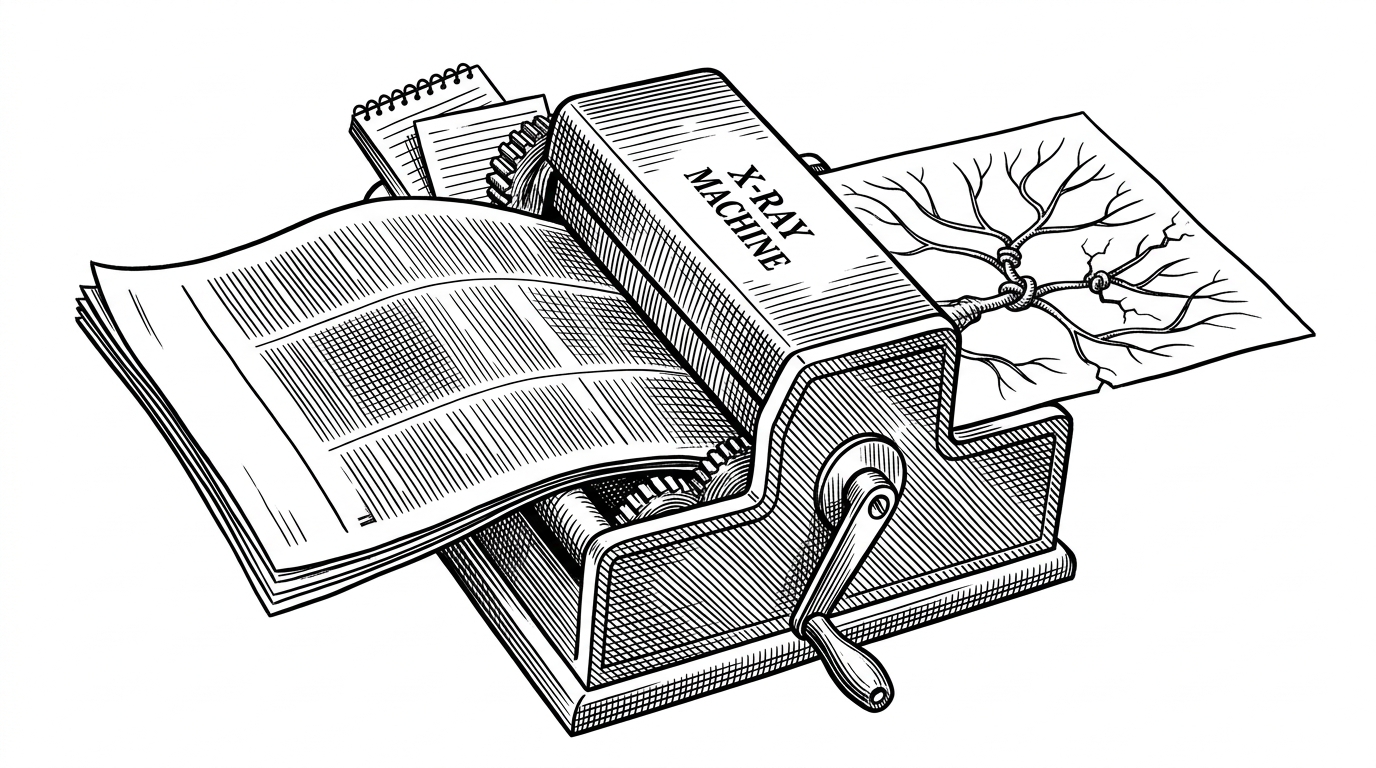

两件事,仅两件:说了什么 + 对我意味什么
- The repo treats reading as an argument hunt, not a compression task.
- Its real novelty is the collision check between the article and the reader's own notes.
- Org-mode and ASCII are structural choices that make the analysis portable and legible.
- The honesty principle turns no collision into a valid, disciplined result.
Not a summary. A collision.
Most AI summaries answer a narrow question: what did I just read? ljg-skill-xray-article asks a better one: what is this piece really trying to settle, and where would that argument rub against my own assumptions? That shift turns reading from compression into confrontation.
The repo is built around that idea. It does not try to be a bigger recap engine. It tries to expose the article's pressure point, then trace the fracture line through the claim, the structure, and the reader's context.
The four-layer funnel
Under the hood, the skill runs a four-stage funnel. It starts by hunting clues in the prose, not by asking the model for a summary.
Opposition tells it what the author is pushing against. Repetition tells it what they cannot stop circling. Emotional heat tells it where the text stops being informational and starts being invested.
From there, the skill moves to the real question, then the real answer, then the argument skeleton, and finally the collision check. The point is not to sound clever. The point is to see whether the structure of the article survives contact with the reader's context.
Why soul.md and memory.md matter
This is where the repo stops looking like a generic assistant and starts looking like a personal instrument. The local files are not decorative attachments. They give the analysis a place to land, so the report can say not just what the article means in the abstract, but what it means inside this particular cognitive frame.
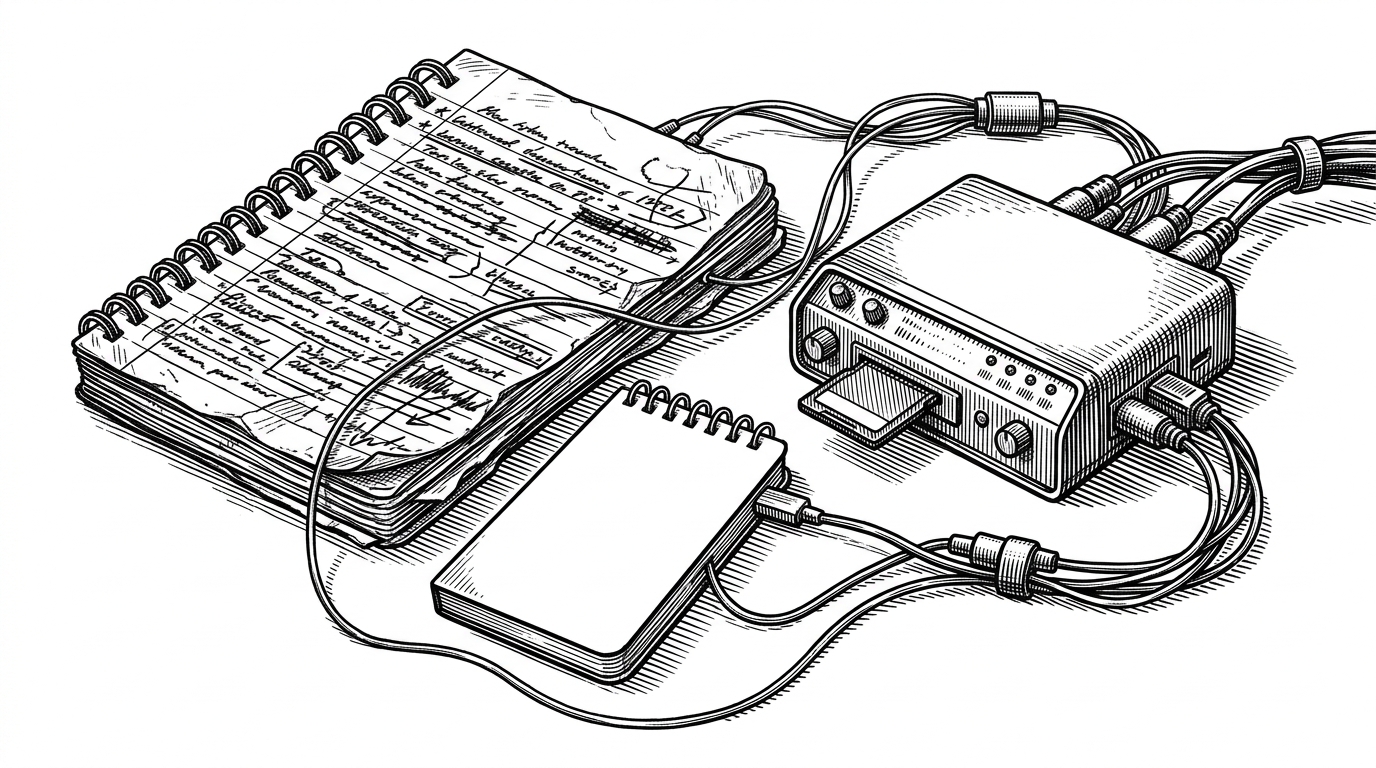
load('soul.md')
load('memory.md')
article = read(input)
skeleton = extract(article)
collision = compare(skeleton, context)
That design is stronger than it looks. It makes the analysis specific without making it noisy. If the article does not actually clash with your stored assumptions, the tool should be allowed to say so.
Org-mode and ASCII are not nostalgia
The output format is part of the product. Org-mode makes the report easy to file, search, diff, and revisit. ASCII diagrams force spatial reasoning into plain text, which matters when the model is supposed to expose structure instead of just narrating it.
:read:xray:article:
:created: YYYYMMDDTHHMMSS
* Real Question
** What is the author trying to settle?
* Argument Skeleton
** Opposition
** Repetition
** Emotional heat
* Collision Check
** Matches my context
** No collision
That choice gives the repo a PKM-shaped afterlife. The report is plain text, but it is not plain in the pejorative sense. It carries structure forward cleanly, which is exactly what a deep-reading tool should do.
The honesty principle
The most disciplined move in the project is also the least dramatic one. If there is no collision, it refuses to invent one. That matters because it shifts the incentive away from spectacle and toward accuracy.
A lot of AI tooling wants to finish every thought with a flourish. This repo is better when it can stop early, because a clean null result is often the most useful answer a reader can get.
What it shares with other tools, and what it does not
Compared with generic AI summaries, this repo is narrower and more opinionated. Compared with its sibling ljg-skill-xray-paper, it is less about academic papers and more about argumentative prose in the wild.
| Tool | What it outputs | What it optimizes for | Main failure mode |
|---|---|---|---|
| Generic AI summary tool | Condensed bullets or a short recap | Speed and compression | Loses stance, structure, and reader-specific tension |
| ljg-skill-xray-article | Real question, argument skeleton, collision note | Friction and contextual fit | Depends on having enough signals and reader context |
| ljg-skill-xray-paper | Paper x-ray with explanation diagrams | Academic reading and translation | Less suited to essays, op-eds, and blog posts |
The difference is not quality, it is intent. One compresses. One interprets. One interprets against you.
What this project is really selling
This is a tool for people who want to be argued with, not just briefed. Its real product is not a summary file. It is a sharper model of the text and a sharper model of the reader.
That is a useful niche. If you already have enough summaries, the next bottleneck is judgment. ljg-skill-xray-article is built for that bottleneck.