dbdiff: The Database Client with a Safety Catch
A modern PostgreSQL interface that uses transaction rollbacks to preview data changes before they ever touch your disk.
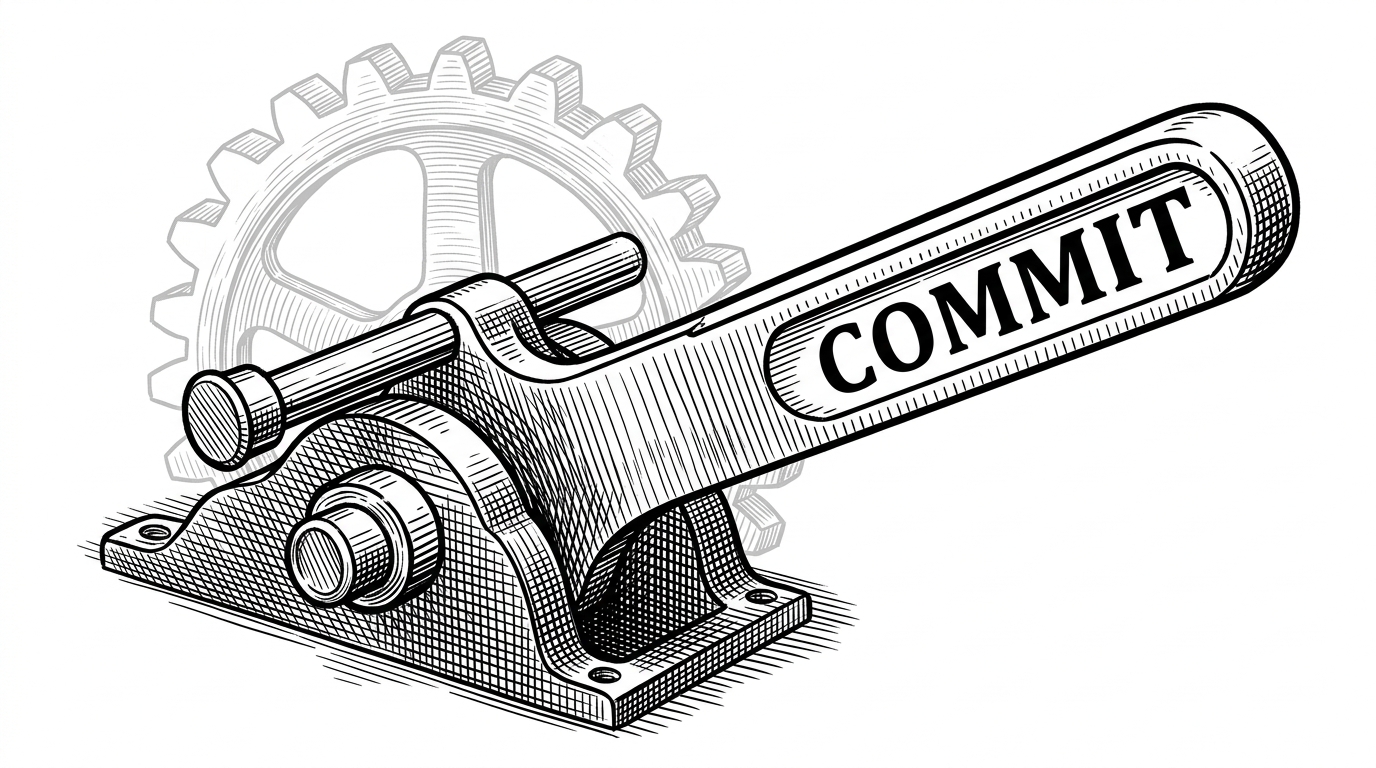
- The application uses a Request-Response-Rollback architecture to preview the impact of destructive SQL queries without persisting changes to disk.
- A hybrid Electron and Express structure enables the client to execute native database utilities like pg_dump through a local Node.js server.
- The custom data grid employs virtual coordinate mapping to mix live database rows with uncommitted draft changes in a single interface.
- Context-aware hotkeys and a schema-cached command palette provide IDE-like navigation speed for database management.
Running an UPDATE or DELETE statement on a production database is universally stressful. Most SQL clients operate on a fire-and-hope mechanism. You highlight the query, hit execute, and pray you did not forget the WHERE clause.
The open-source project louislva/dbdiff approaches this problem differently. Built as a hybrid Electron and Express application, it introduces a Request-Response-Rollback architecture. It turns the most dangerous part of a database administrator's job into a safe, local-first simulation.
The Simulation Sandbox
The most compelling feature of dbdiff lives inside its /api/query-diff endpoint. When a user submits a destructive query, the backend does not simply execute it. Instead, it opens a PostgreSQL transaction using BEGIN. It snapshots the current state of the affected tables, executes the user's SQL, and calculates the exact difference.
Then it issues a ROLLBACK command. The changes never persist to the disk, but the user is presented with a precise, row-by-row diff of what would have happened. This transforms the database client from a blunt instrument into a precision preview tool.
Bridging the Gap: Electron Meets Express
To achieve this level of control, a standard web application is insufficient. dbdiff requires deep access to native tooling. The project ships with a full Node.js server inside an Electron wrapper. A Vite-powered React frontend runs on port 4089, while an Express backend runs on port 4088.
This hybrid architecture allows the application to utilize the native pg_dump utility directly through Node's child_process. An IPC bridge safely connects the Chromium renderer to the Node environment, ensuring that heavy database operations do not block the UI thread.
A Grid That Remembers
Database GUIs live or die by their data grids. dbdiff implements a custom spreadsheet interface using virtualization to handle thousands of rows. But its standout feature is the Virtual Coordinate Mapping system.
The application maintains a buffered state of pending changes and pending new rows. It maps Virtual Indexes (the row's position in the UI) to Store Indexes (the actual data position). This allows users to mix live, committed database rows with unsaved draft rows seamlessly. The grid holds these changes in local memory until the user explicitly commits them.

Command-Line Speed, GUI Clarity
For power users, reaching for the mouse is a context switch. dbdiff borrows heavily from modern IDEs, implementing a robust Command Palette powered by fuzzy search. Because the application caches the database schema in a centralized Zustand store, the palette feels instant regardless of network latency.
The shortcut system is also highly context-aware. The useHotkey logic specifically checks if the user's cursor is inside a CodeMirror editor. This prevents a user from accidentally triggering a global Delete Row command while simply trying to backspace a typo in their SQL console.
| Feature | Standard SQL Clients | Web-based Managers | dbdiff |
|---|---|---|---|
| Architecture | Heavy desktop apps (Java/C++) | Browser-based (High latency) | Lightweight Electron + Express |
| Execution Safety | Fire-and-forget | Fire-and-forget | Transaction-based preview diffs |
| Data Editing | Immediate commit or strict modes | Form-based row editing | Buffered spreadsheet with draft rows |
By combining the safety of transaction rollbacks with the ergonomics of a modern text editor, dbdiff points toward a future where database management tools prioritize developer confidence over raw execution speed.