The Physicality of Smart Contracts: Inside Aptos-Tutorial
How an early devnet learning journal perfectly captures the shift from Solidity's ledger-based tracking to Move's resource-oriented architecture.
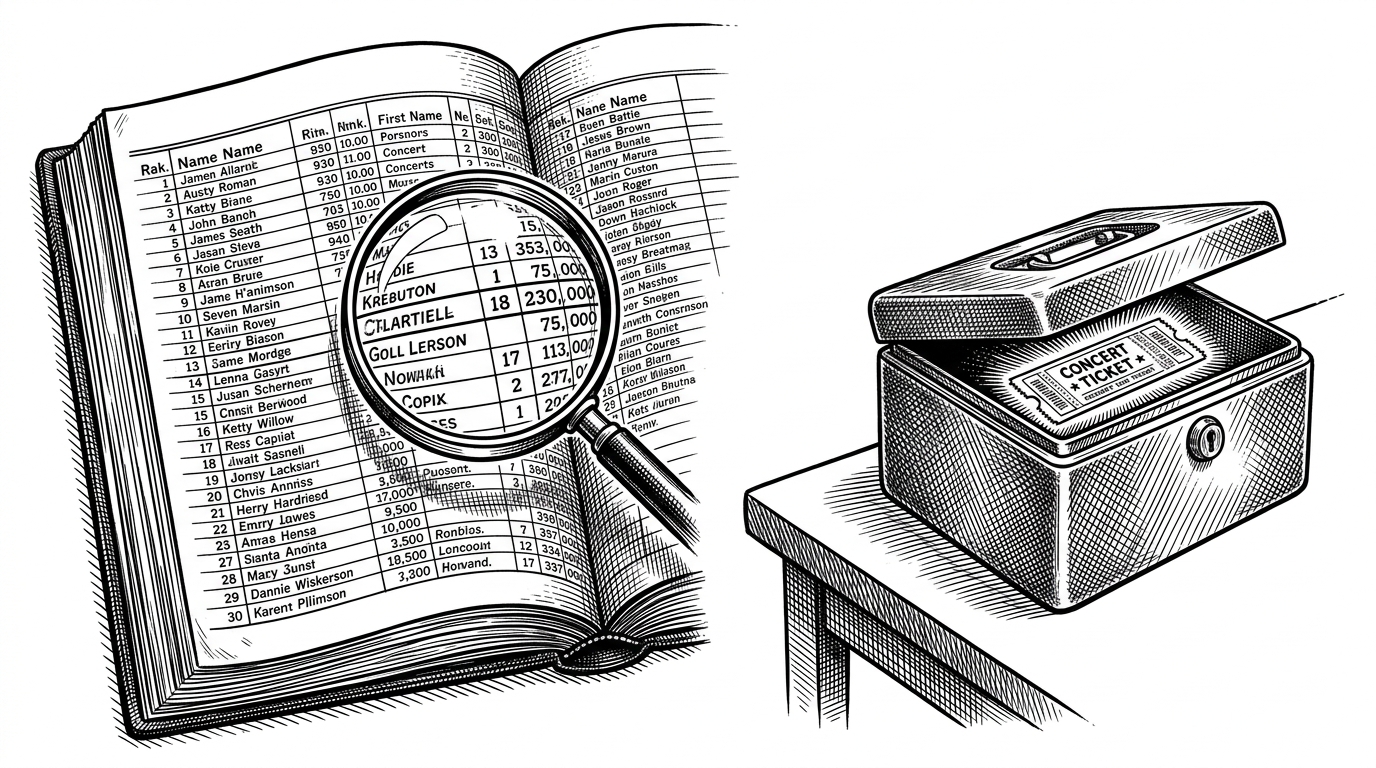
- Move's resource-oriented architecture treats digital assets as physical objects that reside directly within a user's account storage.
- The Aptos-Tutorial repository demonstrates this physicality through a ticketing system where assets are explicitly moved into personal envelopes.
- Early Move development required manual implementation of foundational data structures like doubly linked lists to enable iteration.
- The codebase serves as a time capsule of the Aptos devnet era before modern package managers streamlined the developer experience.
The Ledger vs. The Envelope
Most smart contract developers are conditioned to think in ledgers. In Solidity, owning an ERC-721 token does not mean the asset lives in your wallet. It means your specific address is mapped to a token ID inside a massive, centralized contract state. You do not hold the asset. The contract holds a record of your permission to use it.
The Move programming language fundamentally breaks this mental model. Move introduces a resource-oriented architecture where digital assets behave like physical objects. They cannot be duplicated. They cannot be accidentally dropped. They must be explicitly moved from one location to another.
The Aptos-Tutorial repository, an abandoned educational project from the early days of the Aptos devnet, provides a perfect lens into this paradigm shift. Instead of abstract documentation, its TicketTutorial module shows exactly how a user takes physical custody of a digital asset.
The "move_to" Mechanism
In the tutorial, a concert ticket is defined as a resource. When a user buys a ticket, the contract does not simply update a ledger line. It executes an atomic swap and physically places the ticket inside a container owned by the buyer.
public entry fun purchase_ticket(buyer: &signer, venue_owner: address, ticket_code: String) acquires Venue {
    // ... [setup and payment logic]

    // Check if buyer has an envelope. If not, create one.
    if (!exists<TicketEnvelope>(signer::address_of(buyer))) {
        move_to(buyer, TicketEnvelope { tickets: vector::empty() });
    };

    // Extract ticket from Venue and place into buyer's envelope
    let envelope = borrow_global_mut<TicketEnvelope>(signer::address_of(buyer));
    vector::push_back(&mut envelope.tickets, ticket);
}
This is the "Ticket Envelope" pattern. The move_to command is literal. The data structure representing the ticket is moved out of the venue's storage and into the user's personal account space. This guarantees that only the user can authorize future mutations or transfers of that specific asset.

Solving the Iteration Problem
While the resource model is elegant, high-performance blockchains impose strict storage constraints. Standard Move Table types are highly efficient for storing large amounts of data, but they lack a crucial feature: they cannot be iterated over. You cannot loop through a standard table to find all keys.
The author of this repository solved this by writing MapTable.move. This file wraps the standard table in a manual doubly linked list. By storing prev and next pointers alongside the actual data, the contract can sequentially traverse the stored items. This exposes the low-level memory management often required when building complex logic in early smart contract environments.
Archeology of a Blockchain Launch
Beyond the code itself, the repository is a fascinating artifact of the Aptos ecosystem's infancy. A look at the Move.toml file reveals dependencies pointing directly to local ../aptos-core/ directories.
This was the frontier of Web3 development. Before stable mainnets and zero-configuration CLI tools like create-aptos-dapp existed, pioneers had to build directly against evolving local framework files. They had to invent their own iterable data structures. They had to figure out the best patterns for resource management in real-time.
Today, developers can spin up a fully optimized Aptos application in seconds. But returning to these raw, early implementations clarifies exactly why the modern tooling exists, and why the underlying resource model remains so powerful.