The Mac Mini in the Closet: Decoding manaflow-ai/test-self-hosted-runner
Why parallel AI agents are forcing teams off cloud CI and back to bare-metal Apple Silicon, and how a zero-dependency shell script keeps the hybrid pipeline alive.
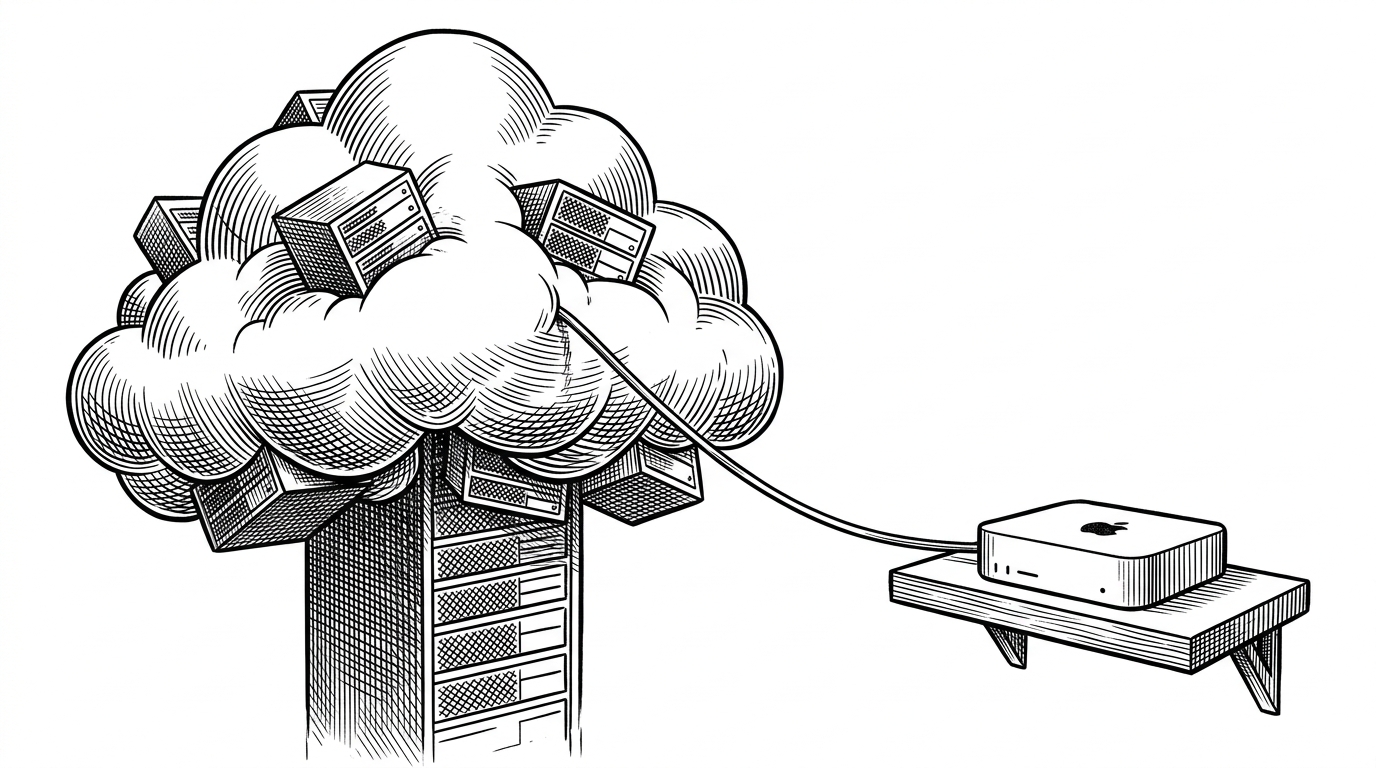
- Running multiple AI coding agents in parallel makes standard virtualized CI pipelines prohibitively expensive.
- Transitioning to self-hosted Apple Silicon introduces a massive debugging blind spot when hardware state and software logic diverge.
- The test-self-hosted-runner repository uses a zero-dependency POSIX shell script to isolate hardware validation from dependency failures.
- Direct interrogation of macOS system binaries prevents silent performance degradation caused by Rosetta 2 emulation.
The Compute Cost of Agent Swarms
The ecosystem of AI developer tools is moving from single-turn chat interfaces to parallel agent swarms. Tools like Manaflow and its native terminal cmux allow developers to run ten different AI coding sessions simultaneously. Each agent commands its own isolated workspace, git diff viewer, and terminal.
This parallel execution model creates a massive compute bottleneck. Standard virtualized CI pipelines choke under the weight of heavy local LLM inference and native compilation. When a team attempts to run these agent workflows in the cloud, usage bills skyrocket. The pragmatic solution is to buy physical M-series Macs and self-host the runners.
The Black Box of Hybrid CI
Owning physical hardware solves the compute cost problem but introduces a new architectural headache. The orchestration remains in the cloud via GitHub Actions, but the execution happens locally behind a corporate firewall. This hybrid setup creates a severe debugging blind spot.
When a pipeline fails on a self-hosted Apple Silicon runner, the root cause is entirely ambiguous. The engineer must determine if the application code is broken, or if the local Mac Mini lost network egress, dropped file permissions, or silently fell back to x86 emulation. You need a dedicated control group to isolate the hardware variables.
The Clean Slate Pattern
This is where manaflow-ai/test-self-hosted-runner becomes essential. It is a highly specialized infrastructure validation utility designed specifically for Apple Silicon. It functions as a minimalist smoke test for DevOps and MLOps teams.
The repository employs a clean slate testing pattern. It invokes zero external GitHub Actions aside from the initial repository checkout. By relying entirely on raw POSIX shell commands, the developers sidestep dependency inception. A failure in this pipeline guarantees a hardware or networking flaw, not a bug in a third-party workflow marketplace action.

Interrogating the Silicon
The execution payload within test.sh focuses strictly on hardware verification and network egress. It validates file I/O permissions by writing test outputs directly to the workspace, ensuring the daemon has local write access. More importantly, it interrogates the underlying silicon.
The script leverages macOS-specific binaries to guarantee native execution. It uses sysctl to check the CPU brand string and system_profiler to read the exact hardware data type. This is vital for AI workloads to ensure the runner is utilizing the native M-series architecture and its Neural Engine, rather than silently degrading performance by running in Rosetta 2 emulation.
# Extract of the core hardware interrogation logic
echo "Checking macOS architecture..."
ARCH=$(uname -m)
if [ "$ARCH" != "arm64" ]; then
  echo "Error: Runner is not operating on pure ARM64. Emulation detected."
  exit 1
fi

echo "Validating CPU profile..."
sysctl -n machdep.cpu.brand_string
system_profiler SPHardwareDataType | grep "Chip:"
Cloud vs. Closet: The ROI of Bare Metal
The decision to abandon managed infrastructure for self-hosted Apple Silicon comes down to raw execution time and billing metrics. For standard iOS builds, managed runners are sufficient. For persistent, parallel AI agents, bare metal is the only economically viable path.
| Metric | GitHub Hosted macOS | Self-Hosted Apple Silicon |
|---|---|---|
| Execution Cost | $0.08 to $0.16 per minute | Fixed hardware cost plus electricity |
| Hardware Access | Virtualized CPU | Bare-metal ARM64 with Neural Engine |
| Maintenance Burden | Zero | High (OS updates, networking, uptime) |
| Ideal Workload | General iOS/macOS CI tasks | Heavy local LLM inference and agent swarms |
The maintenance burden of self-hosting is real. Hardware goes offline. Networks drop packets. But by utilizing a zero-dependency validation script, teams can immediately diagnose infrastructure flakes and keep the parallel agents running.