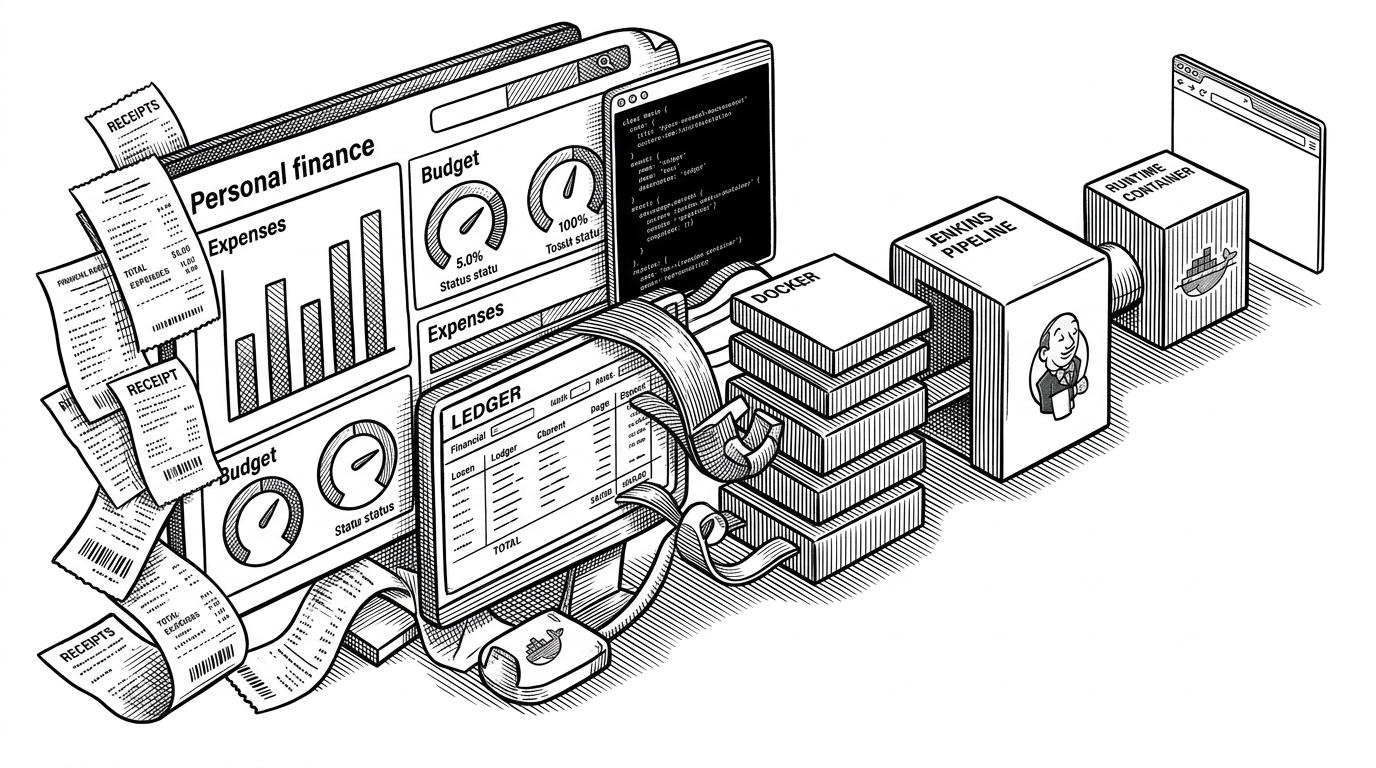
Floci: The Native Java AWS Emulator Built for the Post-LocalStack Era
A fast, MIT-licensed local AWS stack that trades feature gates for real containers, compatibility testing, and a surprising amount of Java performance.


Local development against AWS services has always been painful. You either run real AWS (expensive, slow, requires an internet connection) or use an emulator. For years, LocalStack was the go-to choice — until they required auth tokens and locked down their community edition in early 2026. That gap is exactly what Floci fills.
- Floci treats compatibility as the product, not a side effect, by using a deep test matrix against real AWS behavior and common tooling.
- Its unusual Java 25 plus Quarkus plus GraalVM stack is a performance strategy, not a novelty, because it keeps startup and footprint low without giving up structure.
- The three-layer controller, service, and storage design makes the emulator easier to extend across services and persistence modes.
- Real Docker-backed execution gives Floci a fidelity advantage over pure mocks, especially for Lambda and other integration-heavy workflows.
The local AWS emulator category changed when the default option stopped feeling free and frictionless. That opened a gap for something leaner, more open, and more honest about what local development actually needs.
The Local AWS Stack Changed
Floci makes sense because the old default got harder to justify. If a team wants local parity for SDK calls, IAM behavior, Lambda execution, and infrastructure tooling, a brittle mock is not enough, and a gated emulator feels like a tax.
| Option | Startup and footprint | Fidelity | Tooling compatibility | Trade-off |
|---|---|---|---|---|
| Unit-level mocks | Very light | Low | Only your test code | Fast, but shallow and brittle |
| LocalStack | Broader coverage, heavier runtime | High | Strong | More complete, but larger and less open |
| Floci | Small footprint, fast startup | High for supported paths | Designed to be drop-in | Narrower than the biggest players, but deliberately lighter and free |
Why Floci Is a Java Story, Not Just an AWS Story
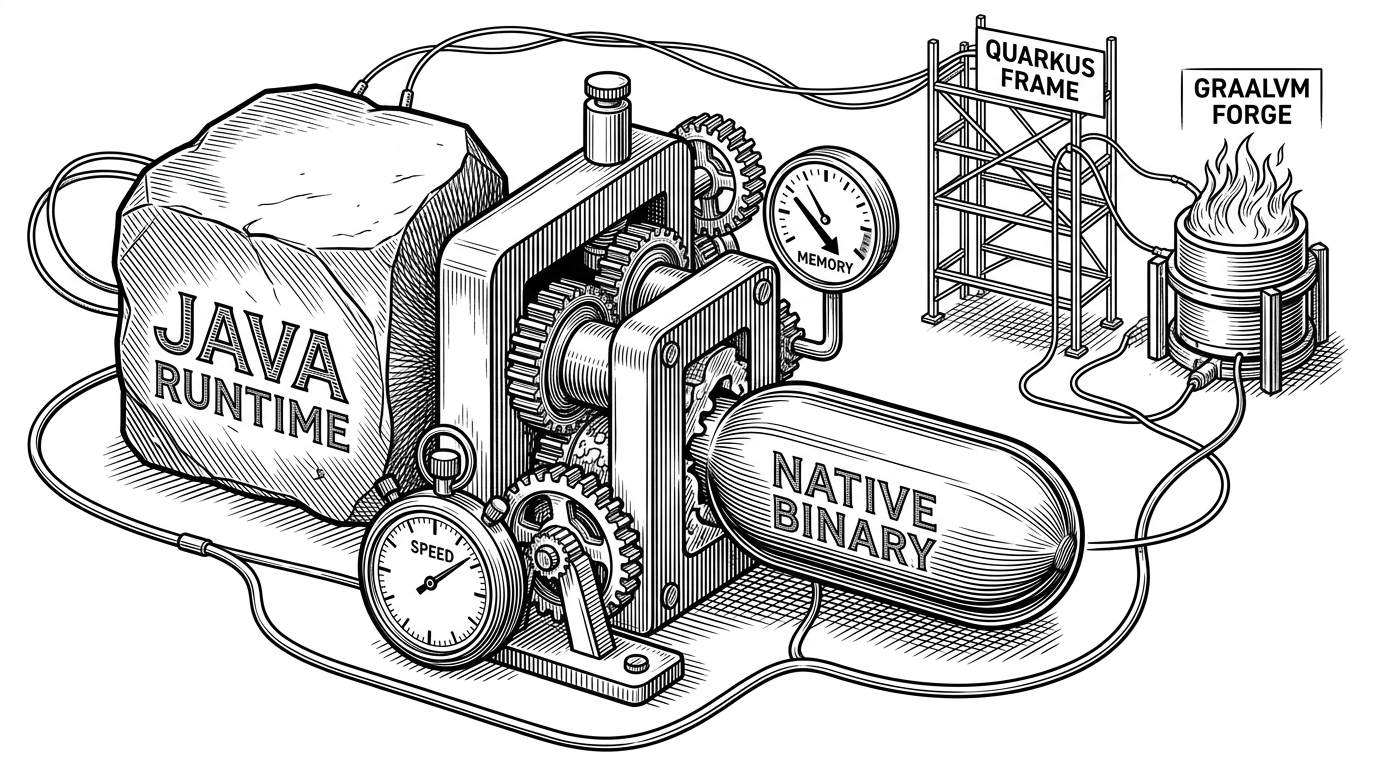
The surprising part is not that Floci works. It is that it works with a modern Java stack that people still tend to file under heavy and slow. The project uses Java 25, Quarkus, and GraalVM native image to turn that stereotype into a performance argument.
That choice matters because local emulation lives or dies on friction. If the tool starts quickly, stays small, and still gives you a structured codebase, you can afford to keep it running during real development instead of treating it like a special test-only dependency.
The Three-Layer Model That Keeps the Emulation Honest
Floci’s architecture is simple enough to explain and strong enough to matter: controller, service, storage. The controller handles AWS wire protocols, the service layer owns behavior, and storage decides how state persists.
That split is what makes the system legible. It also prevents the classic emulator problem where every service endpoint becomes a special case hidden in one giant handler.
AWS client or IaC tool
  -> wire protocol parser
  -> controller
  -> service layer
  -> storage backend or Docker-backed runtime
  -> response
Where Fidelity Comes From
Floci leans on real execution where it matters most. Lambda runs inside actual Docker containers, which means the local environment is not pretending to be compute. It is running compute.
The compatibility work is the real differentiator. API shape matters, but so do SDK quirks, CLI expectations, validation errors, event source mappings, and the rough edges that only show up when a tool is used the way developers actually use it.
| Fidelity layer | Floci approach | Why it matters |
|---|---|---|
| Protocol handling | AWS wire protocol parsing through the controller | Lets SDKs and IaC tools talk to it naturally |
| Service behavior | Dedicated service logic per AWS feature | Keeps edge cases close to real AWS semantics |
| Execution | Real Docker-backed containers for Lambda and related workloads | Raises trust for integration tests and networking behavior |
| State | Pluggable storage with memory, persistent, and WAL modes | Gives teams a choice between speed and durability |
The Compatibility Suite Is the Product
The `compatibility-tests/` directory is not just QA plumbing. It is the project’s thesis made visible. If the emulator cannot survive black-box AWS CLI checks, Terraform and OpenTofu coverage, and SDK-specific edge cases, the promise collapses.
That is why the breadth of the suite matters. It turns parity from a claim into a repeated measurement across languages and tools, which is exactly how infrastructure software earns trust.
Floci vs. the Usual Alternatives
| Question | Floci | LocalStack | Mocks and stubs |
|---|---|---|---|
| Do you get real local execution? | Yes, for supported services and Docker-backed paths | Yes, but in a broader heavier platform | No, only simulated behavior in your test process |
| Is it free and open? | MIT licensed and no gatekeeping | Community access is more constrained | Usually free, but incomplete |
| Does it aim for parity? | Yes, through compatibility tests and real container execution | Yes, with larger service coverage | No, it usually targets unit isolation instead |
| Does it fit offline local development? | Yes | Yes, though with more overhead | Sometimes, but not with AWS-like fidelity |
The best way to read the comparison is not as a winner take all chart. It is a fit chart. If you want the widest catalog and are willing to pay the overhead, a larger platform still makes sense. If you want a lighter, open, local-first path with serious fidelity, Floci is the more interesting bet.
Who Floci Is For
Floci is for teams that care about integration behavior, not just green unit tests. That includes backend teams, platform teams, and startups that want local AWS parity without tying their workflow to a bigger vendor-controlled runtime.
It is also for anyone who wants AWS-shaped development to work offline, cheaply, and consistently. The project’s strongest idea is not that it imitates the cloud. It is that it makes the cloud feel small enough to fit on a laptop without turning fidelity into an afterthought.