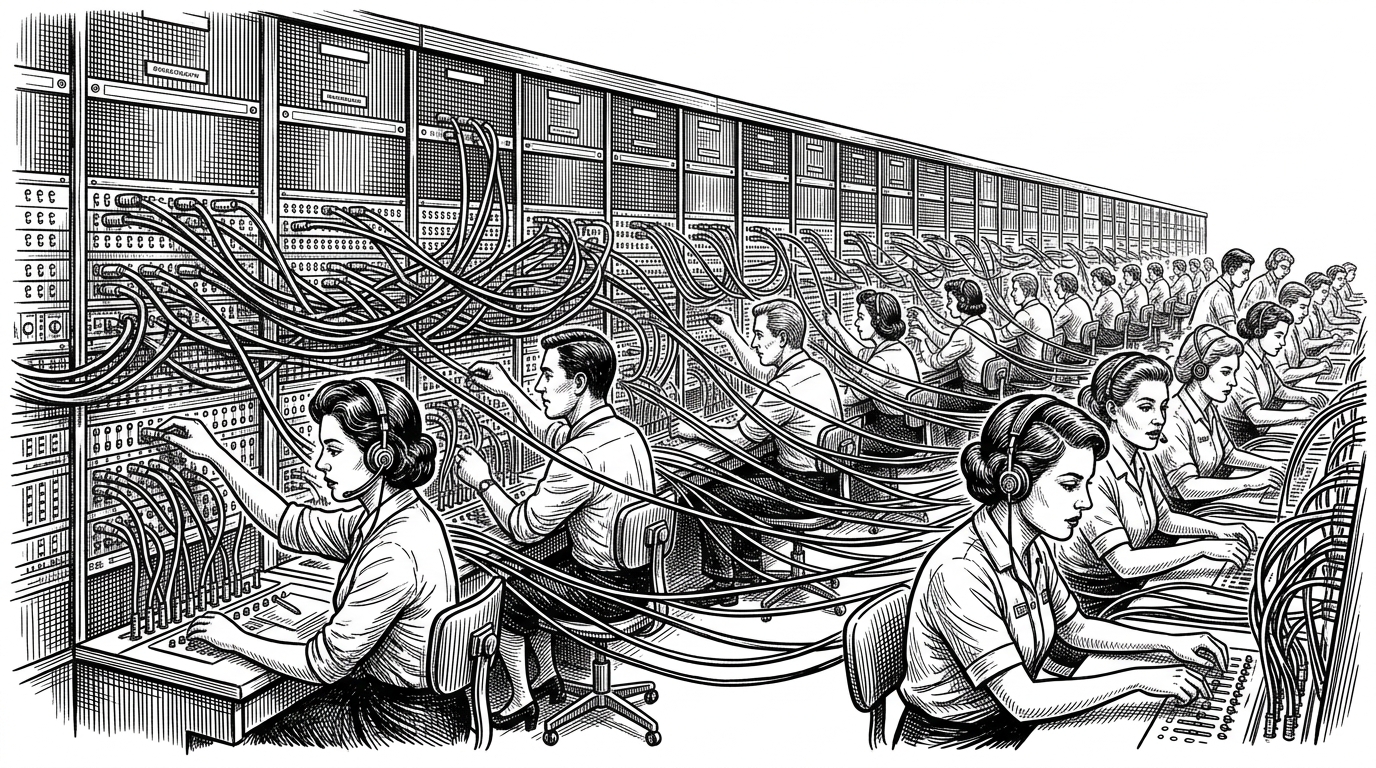
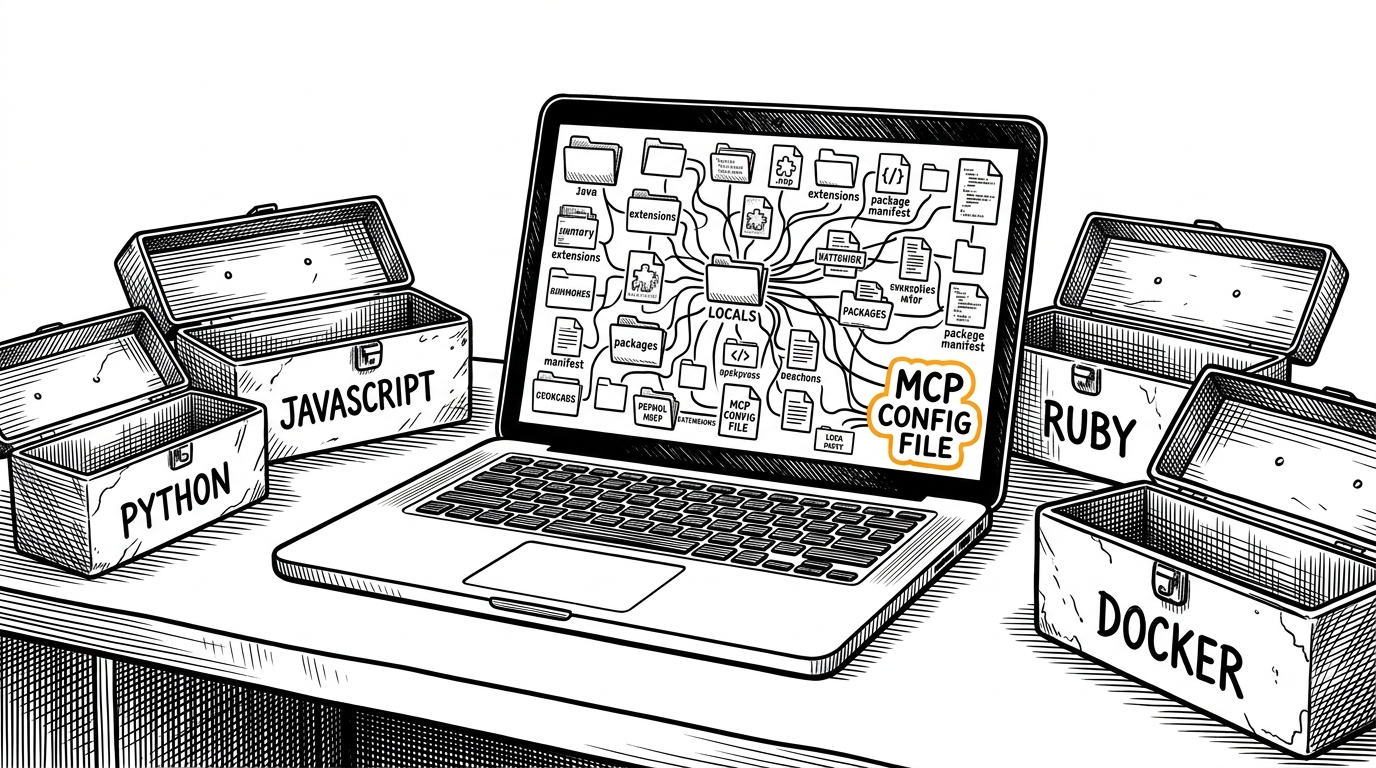
Outpacket: The Rosetta Stone for the Post-Impacket Red Team Stack
A cheatsheet that does more than compare tools. It rewires how operators think about authentication, remote execution, Kerberos, SMB, and AD workflows across modern async tooling.

- Outpacket is a translation layer for offensive workflows, not another grab bag of commands.
- Its most valuable feature is the auth quick reference, because it preserves operator intent across different tool syntaxes.
- The repo reflects a broader shift away from Impacket as the default mental model toward a modular, async-first stack.
- The strategic win is lower cognitive load, which makes switching tools practical instead of painful.
Outpacket is not trying to be the next big tool. It is trying to make the next tool feel familiar. That is the whole bet: if an operator can translate muscle memory instead of rebuilding it, switching from Impacket to newer tooling stops being a tax and starts being an upgrade.
The repo is easiest to understand as a migration aid for a changing ecosystem. Impacket became the default mental model for a generation of red team workflows, but the stack around it has fragmented into specialized, often async-first tools like NetExec, aiosmb, minikerberos, msldap, BloodyAD, and Titanis. Outpacket sits in the middle and says: keep the task, change the syntax.
Why the stack is splitting apart
The reason this matters is not fashion. It is workload. Modern operators need bulk execution, concurrent share enumeration, cleaner Kerberos handling, and task-specific tooling that does one job well. The old monolith still works, but the center of gravity has moved toward composable pieces.
| Old model | Outpacket-era model | What changes |
|---|---|---|
| Impacket as the default toolkit | A translation guide across multiple tool families | Operators map intent instead of memorizing every syntax variant |
| Synchronous, all-in-one workflows | Async and specialized components | Concurrent tasks become easier to express and scale |
| One library for many jobs | Best-of-breed tools for each job | Remote execution, LDAP, SMB, and ADCS can be handled by different tools |
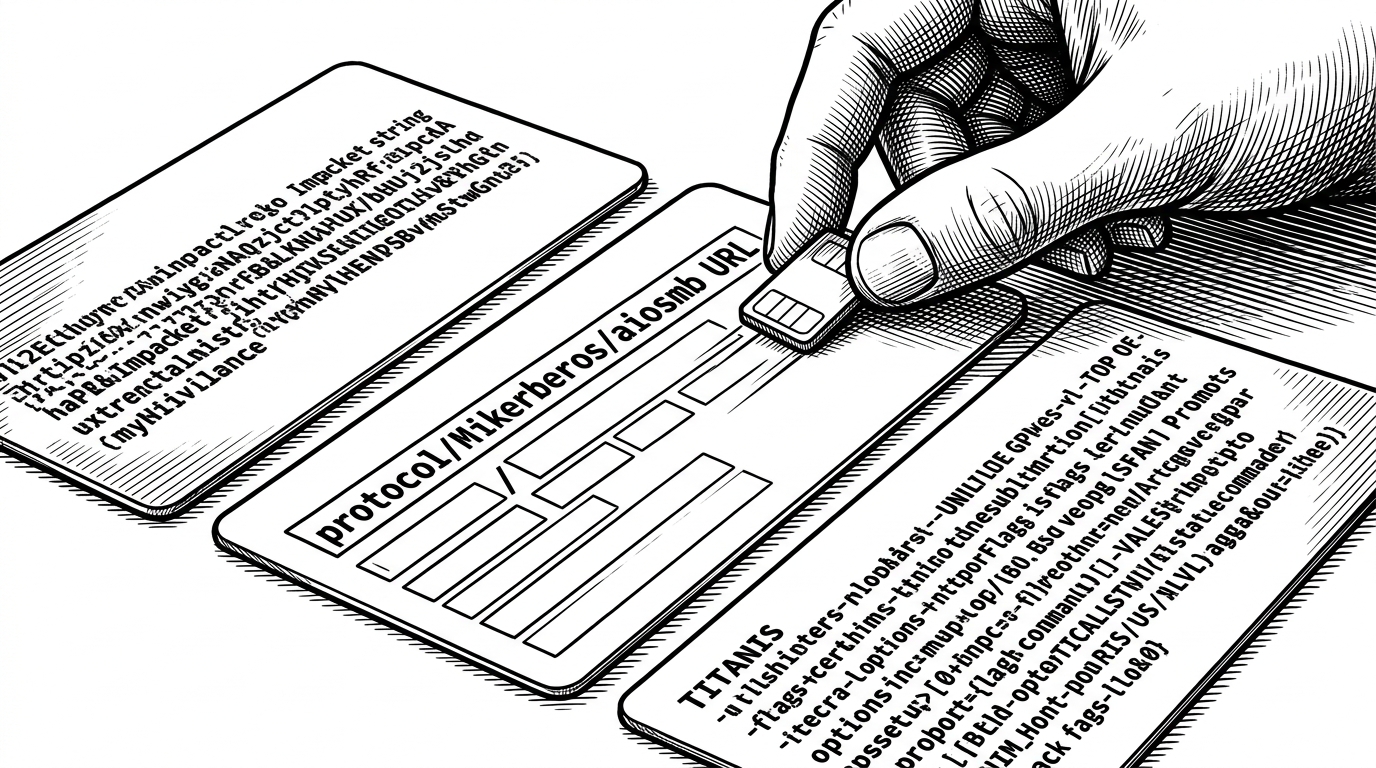
The auth quick reference is the real product
Tired of impacket? This cheatsheet maps common impacket workflows to their modern alternatives
That line captures the whole thesis. The repo is not a catalog of shiny replacements. It is a bridge for people who already know the job and do not want to spend their time relearning the same task in three different dialects.
The subtlety here is important. Outpacket is not inventing new operations. It is preserving the shape of the operation while the syntax changes around it. That is why the auth mapping lands so hard: it reduces switching cost at the exact point where switching usually hurts most.
| Task intent | Impacket | Minikerberos or aiosmb | Titanis |
|---|---|---|---|
| Authenticate to a host | DOMAIN/user:Pass@host | kerberos+password://... | -UserName, -UserDomain, -Password |
| Use Kerberos | Ticket-centric command patterns | Kerberos URL style | Kerberos parameters and ccache handling |
| Pass-the-hash | Hash in the familiar Impacket form | Tool-specific URL or parameter form | Parameter-based auth flags |
Async changes the operating model
Outpacket keeps pointing toward async tooling for a reason. Concurrency changes more than speed. It changes the kind of work that feels natural, especially when the job involves many hosts, many shares, or many repeated protocol negotiations.
That is why tools like aiosmb and msldap matter here. They are not just modern alternatives. They are better fits for bulk operations, where a synchronous script becomes friction and an async workflow becomes a shape that matches the task.
What the map covers
Outpacket organizes the Windows attack surface into nine practical domains. That structure is part of the value, because it turns a sprawling ecosystem into a navigable set of choices rather than a pile of unrelated snippets.
| Domain | What it helps with | Common modern direction |
|---|---|---|
| Remote execution | WMI, SCM, service-based execution | NetExec, Titanis, Metasploit |
| Kerberos | TGT, S4U, PKINIT, ticket handling | minikerberos, Titanis, gettgtpkinit |
| SMB and file ops | Shares, file copy, retrieval | aiosmb, asmbclient, asmbshareenum |
| Credential dumping | NTDS.dit, LSASS, secrets extraction | Specialized dump and retrieval tools |
| Enumeration | SAMR, RPC, WMI discovery | NetExec and protocol-specific helpers |
| LDAP and AD | DACL abuse, object manipulation | bloodyAD, owneredit.py, dacledit.py |
| Auth coercion | Triggering authentication events | printerbug.py, dfscoerce.py |
| ADCS | Certificate enrollment and ESC abuse | certipy, asmbcertreq |
| Exotic harvest | DPAPI, Golden Certificates, PKINIT edge cases | Targeted niche tooling |
That list is broad on purpose. It shows how the repo points to a whole operating style, not just a handful of commands. The deeper pattern is specialization: one tool for LDAP, another for SMB, another for coercion, another for certificates.
The modular stack is the bigger thesis
This is where Outpacket stops being a reference and becomes a signal. It reflects a larger shift in offensive engineering: away from monoliths that try to cover everything, toward a composable stack where each piece is sharp, narrow, and easier to swap.
That model is more work to assemble, but less work to operate once you know it. It is also easier to modernize. When a single library no longer fits the full workload, the operator who already thinks in translations has the advantage.
| Monolith | Modular stack | Operational result |
|---|---|---|
| One library covers many protocol paths | Several focused tools cover specific tasks | Less cognitive clutter in each tool |
| One syntax family to remember | Multiple syntax families bridged by a guide | Faster switching across workflows |
| Broad capability, mixed ergonomics | Targeted capability, better fit | Cleaner bulk work and clearer trade-offs |