Circle Never Reads Your Data's Real Shape
A local-first relationship memory, built for one friend and run entirely on your machine. Circle normalizes your whole archive, answers with citations, and keeps your content out of its own logs.
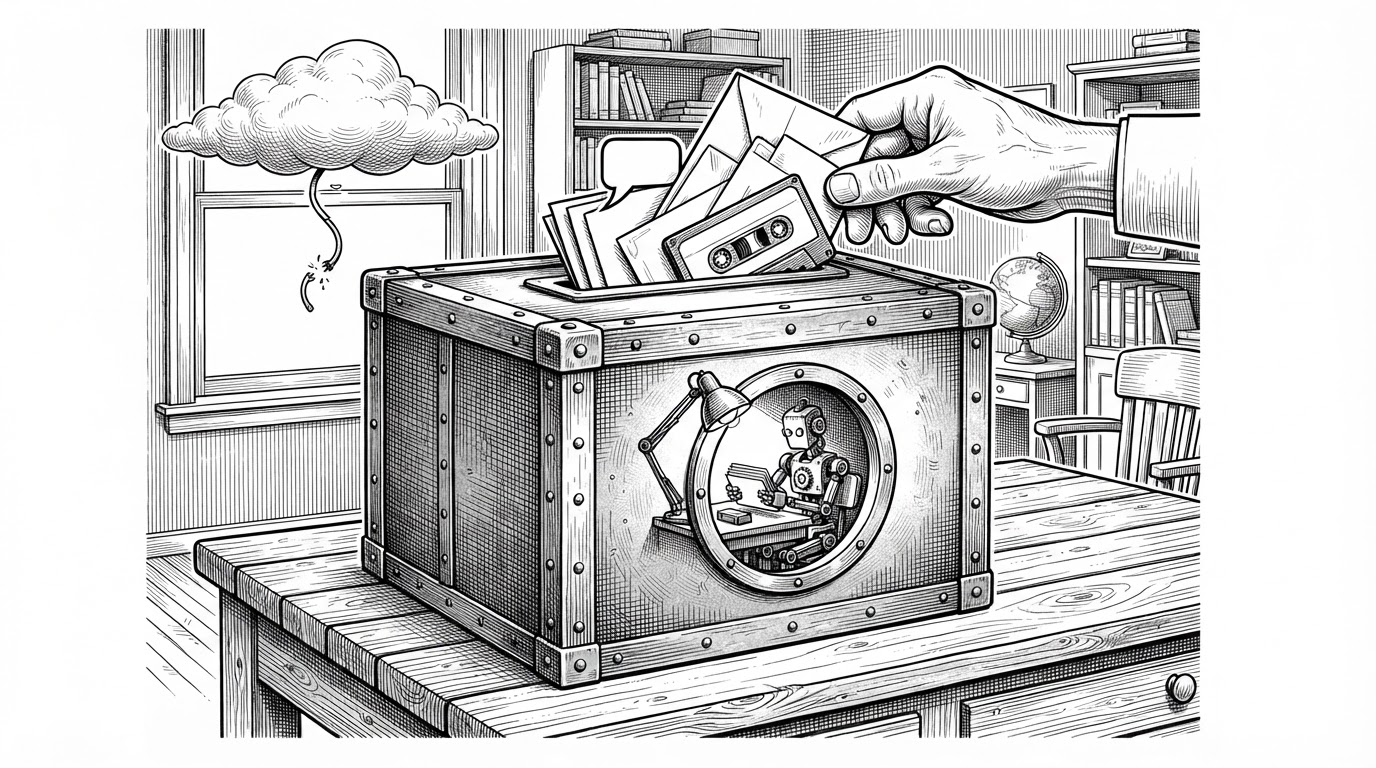
- Circle normalizes every imported source into one source-agnostic model, so the AI layer never sees WhatsApp- or Telegram-shaped data.
- Its privacy posture is architectural rather than bolted on: the app never writes into the folders it reads, and its logging config forbids raw imported content.
- Every answer traces back to the exact source records it was built from, through hybrid vector and keyword retrieval run locally.
- The one crack in the model is a loopback access-key bypass, which a tunnel could plausibly defeat.
A Weekend Project With Security-Product Manners
Circle is a personal AI memory. You point it at the exports you already have (WhatsApp, Telegram, Instagram, email, calendars, voice memos, notes), it folds them into one model, and it lets you ask questions about a specific person. Answers cite the records they came from.
By any normal measure, it is a tiny project. One contributor, no stars, no forks, no issue-tracker traffic. It was built over a Hacktoberfest weekend for a single friend.
And yet the code reads like it was written by someone who expects an audit.
Start with the middleware. In main.py, CORS is registered last, and the comment explains why: Starlette inserts each new middleware at the front of the stack, so the last one registered runs outermost. If the access-key check ran outside CORS, a 401 would come back without CORS headers, and the browser would surface a bare "Failed to fetch" instead of the real error. That is a bug most teams meet in production. Here the lesson is written down where the next maintainer will trip over it.
Then the logs. _configure_logging() pins the circle logger to INFO with an explicit comment that the app must never log raw imported content. The privacy promise reaches all the way into the logging config.
Then the filesystem. Circle splits storage into a user-owned folder and an app-owned one. work_dir() defaults to ~/Circle/circle-data, and the processed, failed, and quarantine directories all live under it. The comment makes the boundary plain: that one belongs to the user, this one is ours. The app never writes into the folder it reads, which is how the README can promise that nothing inside a Google Drive or OneDrive directory gets moved, renamed, or deleted.
None of this is a feature you can screenshot. It is the kind of discipline that usually shows up in products with a security team and a compliance deadline. Here it showed up in a weekend project.
Built for One Friend
Circle started as a Hacktoberfest Weekend Challenge entry under the theme "Build for a Friend." The friend had a specific problem: they could not reliably recall the meaningful details about the people in their life before a conversation.
The author framed the entire project as one question.
What should I remember before I talk to this person?
Everything in the app is downstream of that question. The watched folders, the identity resolution, the local model, the citations: all of it exists to answer it without shipping the friend's message history to a server.
That is the hinge. Once the motivating problem is "help me remember," the privacy posture stops looking like paranoia and starts looking like the only design that would work. A memory you have to hand to a cloud service is a memory you have to trust someone else with.
The Rule Underneath Everything
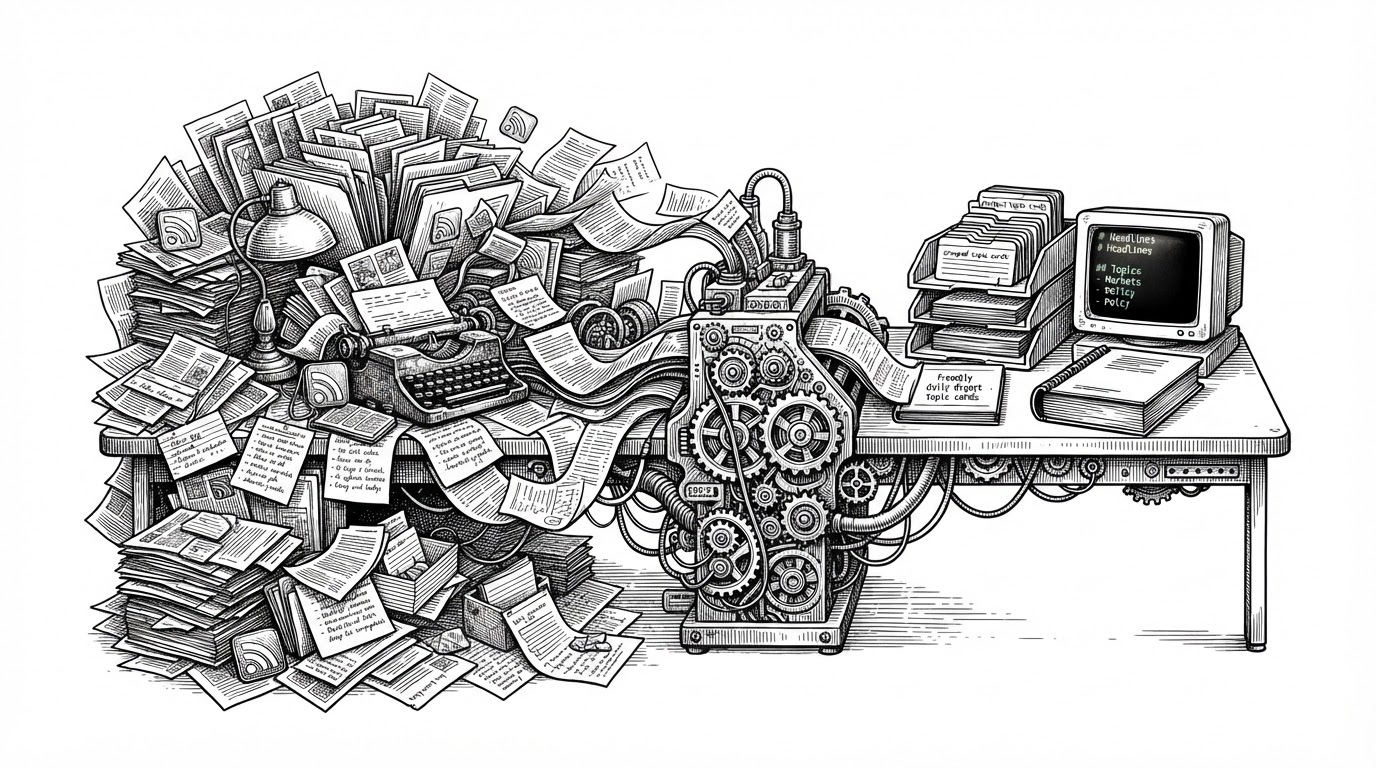
Here is the decision that shapes the rest of the system. Circle's data model is source-agnostic. Every parser, no matter which platform it reads, normalizes into the same entities: Person, Conversation, Message, Email, CalendarEvent, Note, VoiceRecording, MediaAttachment, Document, Memory, Source, ImportJob, RelationshipProfile.
The module docstring states the rule outright: "Every connector/parser normalizes into these entities. The AI/RAG layer only ever sees these types, never WhatsApp/Telegram/Instagram-specific shapes."
That single constraint buys a lot. The retrieval and generation code never branches on where a record came from, so adding a new source is a parser problem, not a RAG problem. Source-specific quirks stay at the edge. And the layer that touches the language model stays small enough to reason about.
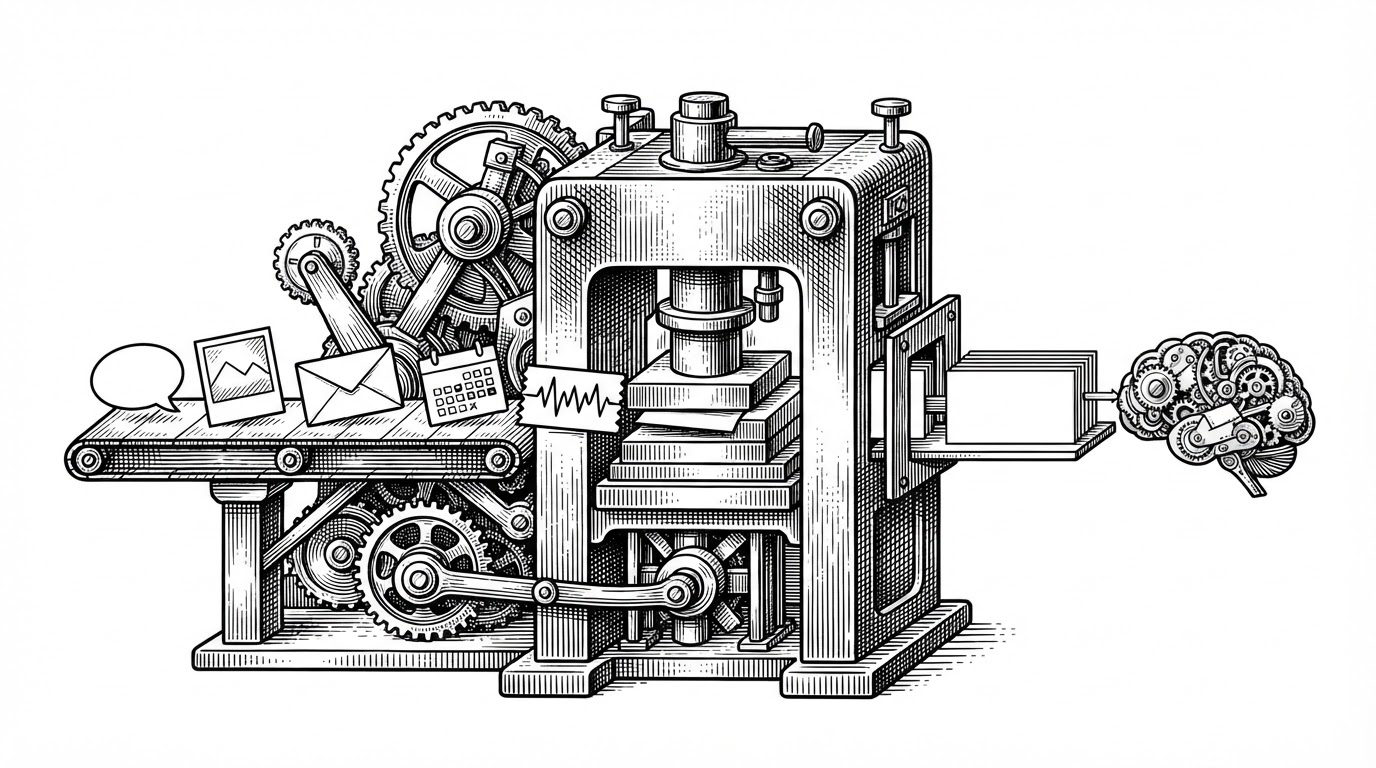
Why does this matter for privacy specifically? Because the rule makes the surface the AI can touch finite. There is no code path where a raw Telegram payload or an unparsed mail blob reaches the model. It reaches a typed entity or it does not reach the model at all.
Where the Paranoia Lives
The discipline is not concentrated in one module. It is spread across the plumbing, in four moves that each solve a problem most local apps ignore.
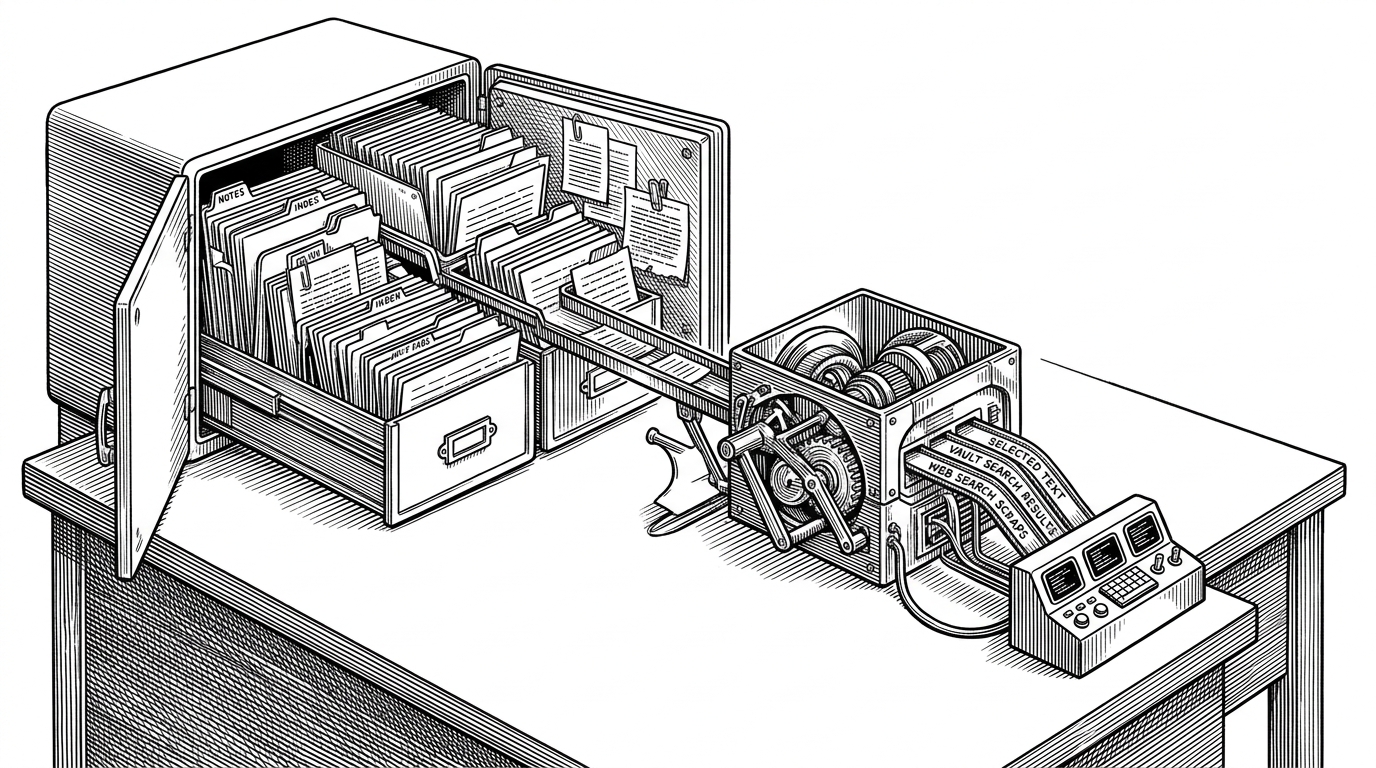
First, the folder split. Circle keeps two trees. The user's tree holds the exports. The app's tree holds everything Circle generates: processed files, failures, quarantined imports. The arrow between them points one way. Circle reads from the user's folders and writes only to its own. If you sync your exports through Google Drive or OneDrive, Circle cannot move, rename, or delete them, because it has no reason to.
Second, content-free logs. The rule that the app must never log raw imported content lives in the logging configuration itself, as a comment next to the log level. That placement is the point. Someone raising verbosity during a debugging session will see it before they do the damage.
Third, the storage reversal. The engine is SQLite, and the comment above storage_backend records why: one file, no server, one thing to back up or delete. That is a reversal. An earlier design used MongoDB, and the switch is documented in code rather than lost in a changelog. For a local-first app the reasoning holds. A single file is something a user can actually delete when they want their data gone.
Fourth, the detail that tells you someone ran this on real machines. cloud_materialize_timeout defaults to 600 seconds, with a comment explaining that Google Drive and OneDrive streaming mode report a full file size before the bytes exist locally. Parse the placeholder immediately and the import fails on a file that looks complete. The fix is a config value and a note.
One more thing about the folder logic. If the user has not picked an import folder yet, root_dir() returns None and Circle creates nothing. The docstring explains the choice: picking one silently means creating directories nobody asked for. A local app that leaves no trace until you tell it where to look is a local app you can trust to stay out of the way.
How an Answer Gets Its Receipts
The pipeline runs left to right. A file lands in a watched folder. A source-specific parser reads it. The normalize step collapses everything into the common model, which is the gate the AI never crosses. Identity resolution merges the same person across WhatsApp, Telegram, and email into one node.
Indexing forks each message into two lanes: a vector from nomic-embed-text and a keyword entry. When you ask a question, both lanes retrieve, then the results pass through a character budget. That budget is deliberate. The config comment ties prompt size to CPU latency, so evidence is trimmed by total characters as well as record count to keep local generation responsive on a CPU-only machine.
Gemma produces the answer, and every claim carries a citation chip that points back to the raw record. That is the part that turns a chatbot into something you can check.
The Field
Circle sits where personal CRM, personal knowledge management, and private retrieval over relationship history overlap. The nearest neighbors differ most in whether they emphasize agent access, manually curated records, or general-purpose knowledge management.
| Circle | Minty | closer | Gnoseis | |
|---|---|---|---|---|
| Data capture | Watched folders parse existing exports: chat, mail, calendar, notes, voice | Background sync and imports across contact and messaging sources | CSV and vCard import plus manual quick capture | On-device capture and linking of notes, people, and organizations |
| Retrieval / AI | Hybrid vector and keyword RAG; local Gemma via Ollama; cited answers | Deterministic local cached retrieval for MCP and CLI; no runtime LLM calls | Structured relationship database with optional opt-in AI | Offline linked knowledge; not a conversational RAG system |
| Interface | Person-centered Q&A with clickable source records | Agent-native MCP tools plus a self-hosted CRM UI | Relationship graph, timeline, and reminders | Cross-device personal knowledge manager and CRM |
| Storage | Single local SQLite file | Plain-JSON local data | PostgreSQL via Docker Compose | Local device storage, no account |
The distinction is emphasis, not proof that the others cannot overlap. Circle is the archive-and-answer one. Minty is agent-first. closer is a hand-maintained relationship graph. Gnoseis is a general offline knowledge manager. If your question is "what should I remember before I talk to this person," Circle is the one built around exactly that sentence.
The One Place It Might Slip
One question is worth flagging, because it reframes everything the rest of the design earns.
Circle has a shared-secret mode for non-local callers, controlled by access_key, cors_origins, and allow_remote. The config comment explains the stakes plainly: "Circle holds a person's entire message history and exposes an endpoint that permanently deletes records."
The same comment says loopback callers skip the access key regardless. Tunneling tools connect to a local server from 127.0.0.1, so a request arriving through a tunnel can look local. The comment's own threat model names "a tunnel, a shared link."
If the access-key middleware decides "remote" by looking only at the TCP peer address, a tunneled request could skip the key. The middleware is not visible in the excerpts we reviewed, so this is an open question for the maintainer, not a verdict. It is the one place where the otherwise consistent paranoia might not hold, and it is the right thing to check first.
That is the honest shape of the project. A weekend build with the manners of a security product, one rule that keeps the AI blind to your data's real shape, and a single seam worth testing before you expose it to the network.