Nuggets: The Holographic Memory Layer That Lets an AI Remember Without a Vector Database
A deep dive into the TypeScript system that reconstructs memory from seeds, promotes repeated facts into MEMORY.md, and gives a messaging agent a heartbeat.
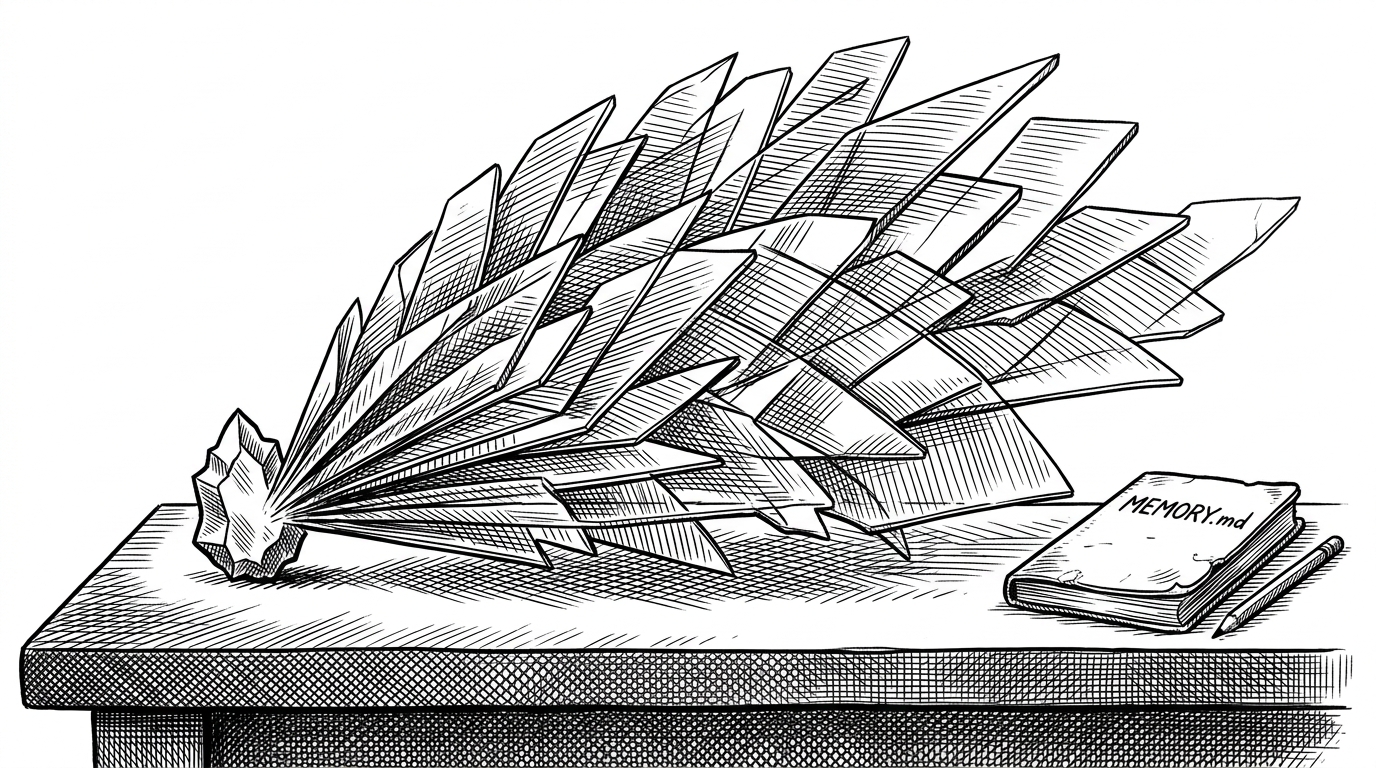
- Nuggets treats memory as a reconstructible algebraic object, not a database that has to be queried.
- Its core trick is deterministic holographic memory, where facts are re-dreamed from seeds into high-dimensional structure on demand.
- Repeated recalls move useful facts up a memory ladder until they harden into durable Markdown context in MEMORY.md.
- The gateway turns that memory substrate into a living assistant by adding per-user processes, scheduling, and proactive heartbeats.
Most AI memory layers feel like plumbing. Nuggets is stranger than that. It starts from a blunt question: what if a fact did not need to live in a vector database at all, but could be reconstructed every time from a deterministic seed and a small amount of text?
That choice changes the whole shape of the system. Instead of shipping a heavyweight retrieval stack, Nuggets keeps the math local, the footprint small, and the memory model portable. The result is an assistant substrate that behaves less like a search index and more like a physical system with rules.
Memory That Can Be Re-Dreamed
At the center of Nuggets is a holographic memory engine built on vector symbolic architectures and holographic reduced representations. The repo stores the ingredients for memory, not the full memory object itself. A fact is paired with a deterministic seed, then its high-dimensional representation is reconstructed when needed.
The important part is not just that this is local. It is that the representation is algebraic. Nuggets can bind facts together, superpose multiple items into a single vector space, and then recover them by reversing the operation and scoring similarity. That gives the system a memory feel without the operational drag of a conventional RAG stack.
// Simplified shape of the idea
const seed = seedFromName(key)
const vocab = makeVocabKeys(seed, dimension)
const bound = bind(keyVector, valueVector)
const store = superpose([boundA, boundB, boundC])
const recalled = unbind(store, keyVector)
const match = similaritySearch(recalled, candidates)
How Holographic Memory Works
Think of HRR as a way to compress relationships without losing their structure. Binding links a key to a value. Superposition stacks several bindings into one fixed-size vector. Retrieval then reverses the binding step and uses similarity to find the strongest match.
That is why the deterministic seed matters. Nuggets does not need to serialize the whole vector field to disk. It can regenerate the vocabulary vectors from the same seed and get back to the same algebraic space. In practice, that keeps storage tiny and the runtime simple.
This is also where the design becomes interesting for personal memory. Most assistant memories are either too brittle, because they are just files, or too heavy, because they need a database and embeddings and infrastructure. Nuggets lives in the middle: structured enough to recall, light enough to run locally.
| Memory model | Dependency footprint | Retrieval style | Persistence strategy | Best fit |
|---|---|---|---|---|
| Nuggets holographic memory | Tiny, local, zero external vector DB | Algebraic unbinding plus similarity | Seeds and facts reconstruct the representation | Small repeated facts in personal assistants |
| Standard RAG with vector DB | Embedding model plus database service | Nearest-neighbor search over stored embeddings | Embeddings and chunks are persisted directly | Document-scale semantic search |
| Plain file or notes memory | Minimal at first, but fragile at scale | Text lookup or prompt stuffing | Manual updates or ad hoc summaries | Simple reminders and static context |
Holographic memory — facts are stored as superposed complex-valued vectors using Holographic Reduced Representations (HRR). Recall is algebraic, sub-millisecond, and runs locally with zero external dependencies.
Why This Is Not a Vector Database
A vector database is great when the problem is document retrieval. Nuggets is chasing a different target: high-frequency, small-fact memory for an assistant that keeps learning the same user over and over.
That difference matters because the workload is different. Nuggets wants fast recall for a few personal preferences, files, commands, project facts, and recurring habits. It does not need a giant semantic index to answer a long-tail corpus query. It needs a memory substrate that stays cheap and predictable.
The repo’s own architecture makes that intent clear. The core math sits in `src/nuggets/`, while gateway code handles messaging, process pools, and proactive events. Memory is the substrate. The assistant is the product built on top of it.
The Promotion Ladder: From Fleeting Fact to MEMORY.md
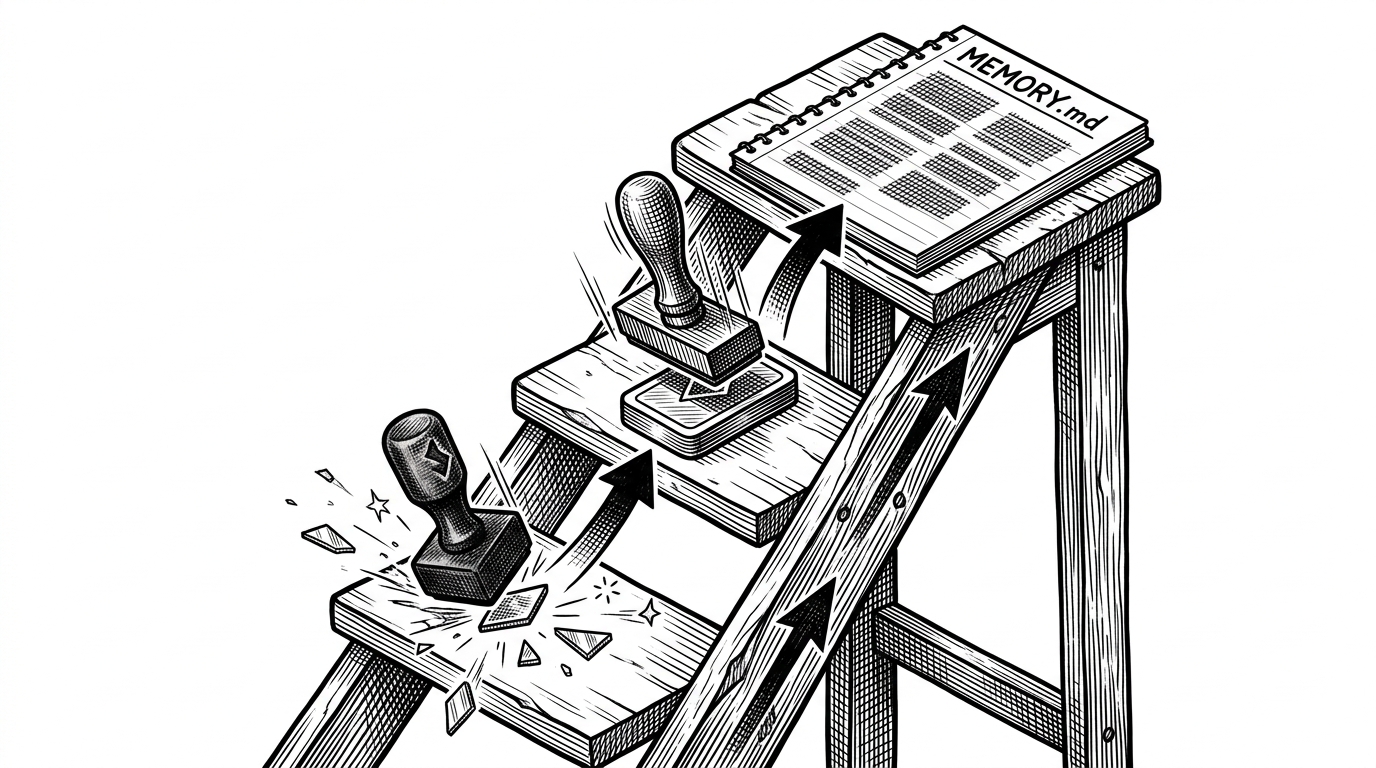
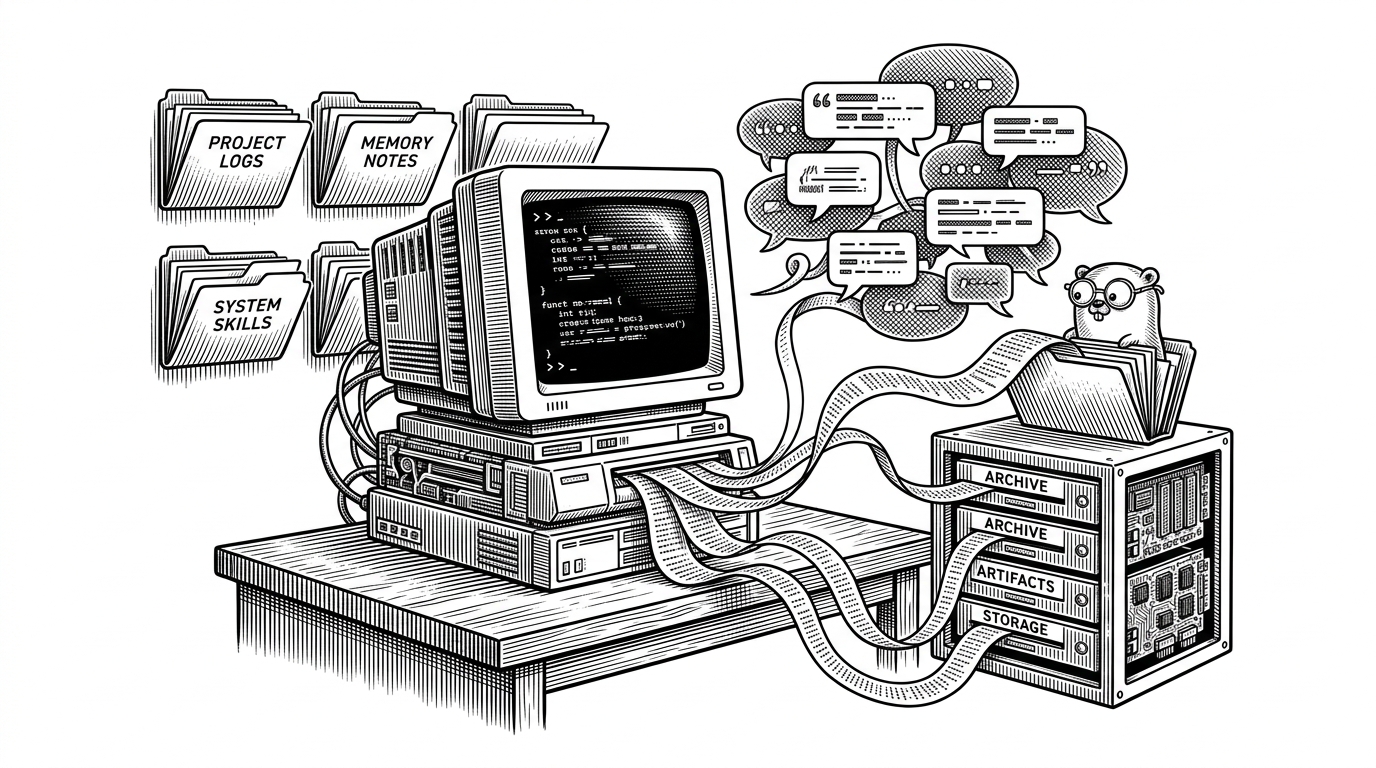
The promotion system is the part of Nuggets that makes the whole thing feel alive. Facts are not equally important forever. When a nugget keeps getting recalled, it earns permanence. At a threshold of repeated access, it graduates out of the lossy holographic layer and into `MEMORY.md`, where it becomes high-fidelity context.
That is a smart compromise. Short-term memory stays compact and flexible. Long-term memory becomes explicit, inspectable, and easy to version. The system avoids treating every fact as sacred, but it also avoids losing the facts that keep proving useful.
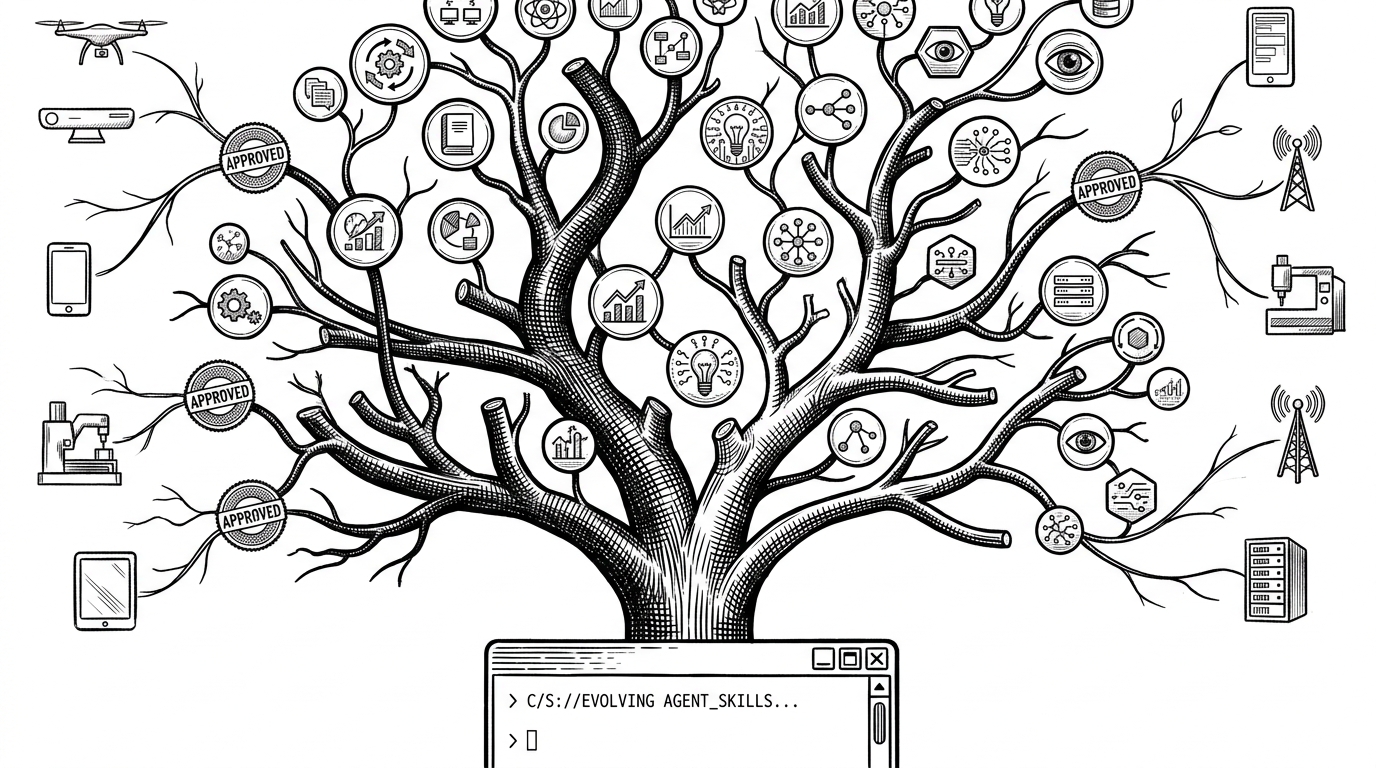
Self-improving — when a fact is recalled 3+ times across sessions, it gets promoted to permanent context. The agent gets faster and cheaper over time.
A Memory Layer With a Pulse
Nuggets is not just a memory engine. It is wrapped in a gateway that can live inside messaging apps like Telegram and WhatsApp, manage per-user subprocesses, and send proactive pings on a schedule. That pushes it beyond passive recall and into ongoing companionship.
The architecture here is practical. Each user gets an isolated process, idle workers can be reaped, and heartbeat logic lets the agent check in without waiting for a prompt. The system can send a message first, then suppress the output if the response is effectively nothing. That keeps the experience useful instead of noisy.
This is the product insight hiding inside the math. A good memory layer is not only about remembering better. It is about making the assistant feel continuous across time, while still keeping the operational cost small.
Where Nuggets Fits in the Agent Landscape
| Project type | What it optimizes for | What it avoids | Where Nuggets fits |
|---|---|---|---|
| Generic agent framework | Broad extensibility | A single opinionated memory model | Too general for the core idea |
| Traditional RAG stack | Large document retrieval | Deterministic reconstruction and promotion | Too heavy for small personal facts |
| File-based assistant memory | Simplicity and transparency | Fast structured recall at scale | Too fragile when the assistant must keep learning |
| Nuggets | Local, algebraic, self-promoting memory | External vector infrastructure | A specialized memory substrate for a personal agent |
The cleanest way to read Nuggets is as a specialized substrate, not a platform. It is not trying to be the one framework that does everything. It is trying to solve one uncomfortable problem very well: how to give an assistant a compact, durable memory that gets better as it is used.
That makes the project more interesting than a standard AI wrapper. The novelty is not the chat UI or the messaging bridge. It is the decision to make memory behave like a reconstructible physical system, then let repeated use decide what deserves permanence.