opentelemetry-ruby-contrib: OpenTelemetry Ruby Contrib: The Monorepo That Makes Ruby Auto-Instrumentation Feel Native
A tour of the generator, the dormant-loading pattern, and the SQL safety layer that lets dozens of gems behave like one observability system.
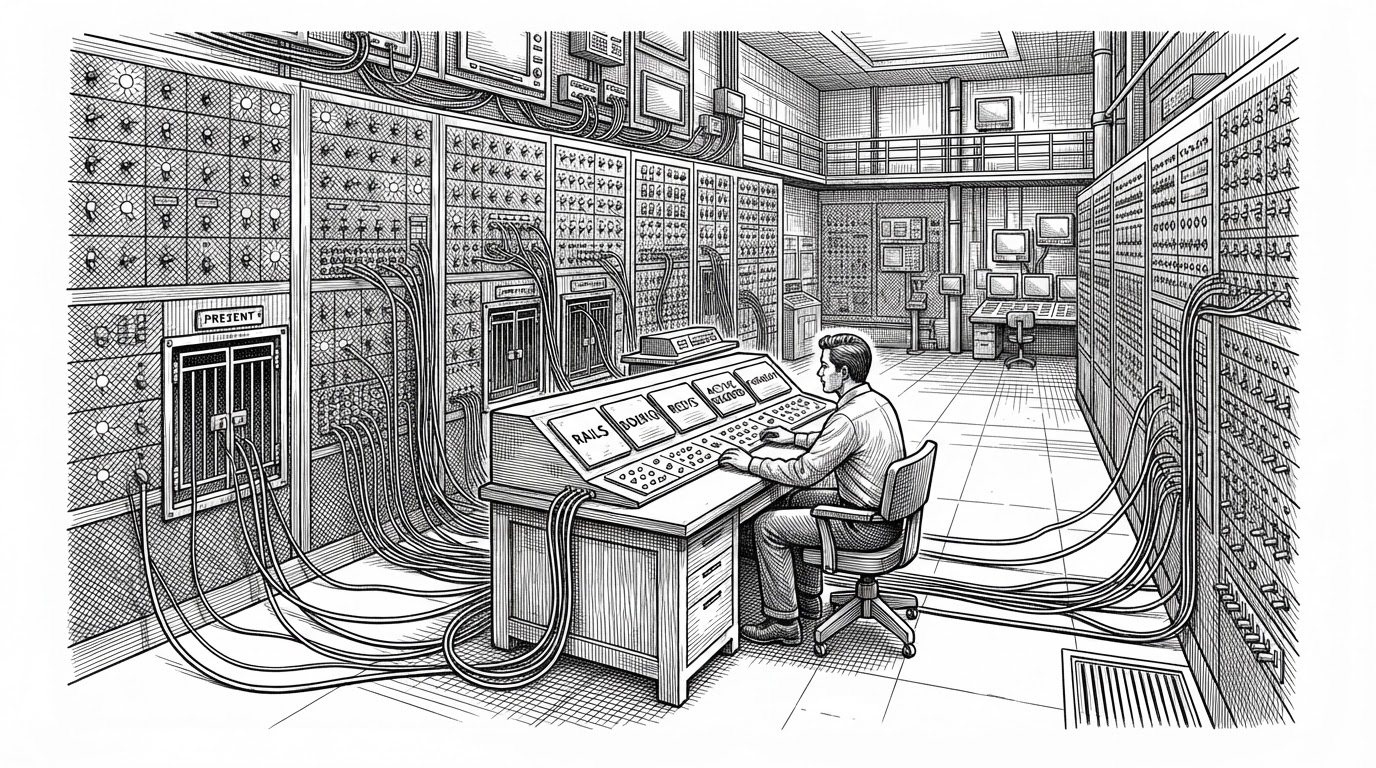
- OpenTelemetry Ruby Contrib turns auto-instrumentation into a platform by making dozens of small gems behave like one coordinated system.
- Its safest trick is also its most useful one: instrumentations stay dormant unless the target library is present and compatible.
- The generator is not just scaffolding, it is the operating system that keeps a large Ruby monorepo consistent across many packages.
- SQL handling shows the repo’s core trade-off clearly: collect useful telemetry, but fail closed when the risk is data leakage.
The most interesting thing about open-telemetry/opentelemetry-ruby-contrib is not how many integrations it contains. It is how quietly it behaves. A Ruby app can load the contrib ecosystem broadly, yet each instrumentation stays asleep unless the dependency is actually there and the version is acceptable.
The quiet trick that makes auto-instrumentation safe
That dormant-by-default model solves a hard problem in observability. Teams want tracing that feels automatic, but they do not want a missing gem or stale dependency to take down a production app. This repo’s answer is simple and disciplined: check for presence, check for compatibility, then do nothing unless both pass.
I kind of think of OpenTelemetry as a replacement for your standard agent. So if you've been installing App Signal, datadog, New Relic directly into your gem file, this can be a replacement for that. And more than that, it's a vendor agnostic replacement for that.
Generating portrait...
A monorepo built to scale across dozens of gems
The repository is organized like a factory, not like a scrapbook. The instrumentation/ tree holds the individual gems, helpers/ keeps shared logic from drifting, and .instrumentation_generator/ manufactures new packages with the same internal shape every time. That consistency is what keeps a sprawling Ruby ecosystem from turning into a maintenance tax.
| Project | Integration style | Vendor lock-in | Maintenance model | Best fit |
|---|---|---|---|---|
| OpenTelemetry Ruby Contrib | Standardized community instrumentations across many gems | Low | Shared monorepo plus generator-driven templates | Teams that want portable tracing across backends |
| Datadog dd-trace-rb | Deep proprietary auto-instrumentation | High | Vendor-maintained agent | Teams that want a turnkey Datadog experience |
| New Relic Ruby agent | Hybrid agent plus OpenTelemetry support | Medium to high | Vendor-maintained agent | Teams already committed to New Relic workflows |
| AppSignal for Ruby | Opinionated Rails-first agent | Medium | Vendor product and SDK | Teams that want simpler setup over portability |
| Manual OTel SDK only | Hand-written instrumentation and spans | Low | Team-owned custom code | Teams with unusual needs or strict control |

The important detail is not just that the repo has templates. It is that the templates define a social contract for contributors. A new instrumentation should look and feel like every other one, which means the loader, tests, versioning, and packaging all stay predictable even as the package count grows.
The generator is the real operating system
The Thor-based scaffolder is what makes the monorepo survivable. It creates the same basic anatomy every time: a Base class, a version.rb, and the gemspec plumbing that lets each integration ship independently without growing its own private conventions.
# Representative shape of a generated instrumentation gem
module OpenTelemetry
  module Instrumentation
    module ExampleGem
      class Instrumentation < OpenTelemetry::Instrumentation::Base
        # present { defined?(::ExampleGem) }
        # compatible { gem_version >= MINIMUM_VERSION }
      end
    end
  end
end
While OpenTelemetry Ruby has only recently announced its 1.0 release, the contributor community has hardened it in the production environments of some of the largest Ruby organizations in the industry for over a year now.
Generating portrait...
SQL is where telemetry meets risk
The clearest technical tension in the repo lives in sql-processor. On one side is the need to preserve query shape for debugging. On the other side is the need to strip sensitive literals before they ever reach a backend. That is why the obfuscator is so careful, and why it would rather fail closed than leak a quote character it could not cleanly process.
The other half of the story is sqlcommenter. That moves in the opposite direction: instead of removing context, it adds trace metadata back into the SQL text so database operators can connect a query to a request without guessing. The point is not to choose one forever. It is to make the trade-off explicit and controlled.
| Mechanism | What it does | Main risk | Why it exists |
|---|---|---|---|
| Obfuscator | Removes sensitive literals from SQL | False negatives if cleanup is weak | To keep query telemetry safe to export |
| sqlcommenter | Adds trace context as SQL comments | Query text gets more verbose | To correlate slow queries with traces |
| Fail-closed cleanup | Stops on suspicious leftover quotes | Loses some telemetry rather than risking leakage | To prioritize privacy over completeness |
Rails feels magical because it rides the framework's own signals
The Rails instrumentations do not win by fighting the framework. They win by listening to it. ActiveSupport::Notifications gives the repo a clean event stream, and the Railtie hooks let the instrumentation join the app at the right point without scattering monkey patches across controller code.
That is why the package feels native. It borrows Rails’ own lifecycle, then adds spans, attributes, and propagation at the seams that Rails already exposes. The result is low-friction tracing that looks like part of the framework instead of a bolt-on agent.
Why vendor-neutral instrumentation matters now
This repo’s strategic value is portability. A team can instrument once, then choose the backend later. That matters in a market where proprietary agents often optimize brilliantly for their own ecosystem, but make switching expensive.
The comparison is not about ideology. It is about control. Proprietary agents can be faster to adopt. OpenTelemetry Contrib is better when the team wants a shared observability layer that outlives any one vendor relationship.
The repo’s real bet on Ruby’s future
The decision to move aggressively on modern Ruby versions is a maintenance strategy, not a fashion statement. It keeps the codebase smaller, the compatibility surface narrower, and the behavior easier to reason about. In a monorepo with this many moving parts, that discipline is the difference between a platform and a pile of packages.
That is the real thesis of the project. OpenTelemetry Ruby Contrib is the infrastructure that lets Ruby applications adopt tracing without tying themselves to one vendor or one brittle integration style.