HackMolFinalRepo: The Railway Complaint System That Turns Text Into Triage
A MERN-plus-Python stack uses a fine-tuned small model to sort passenger grievances by urgency, surface the worst problems first, and make public-service queues feel less blind.
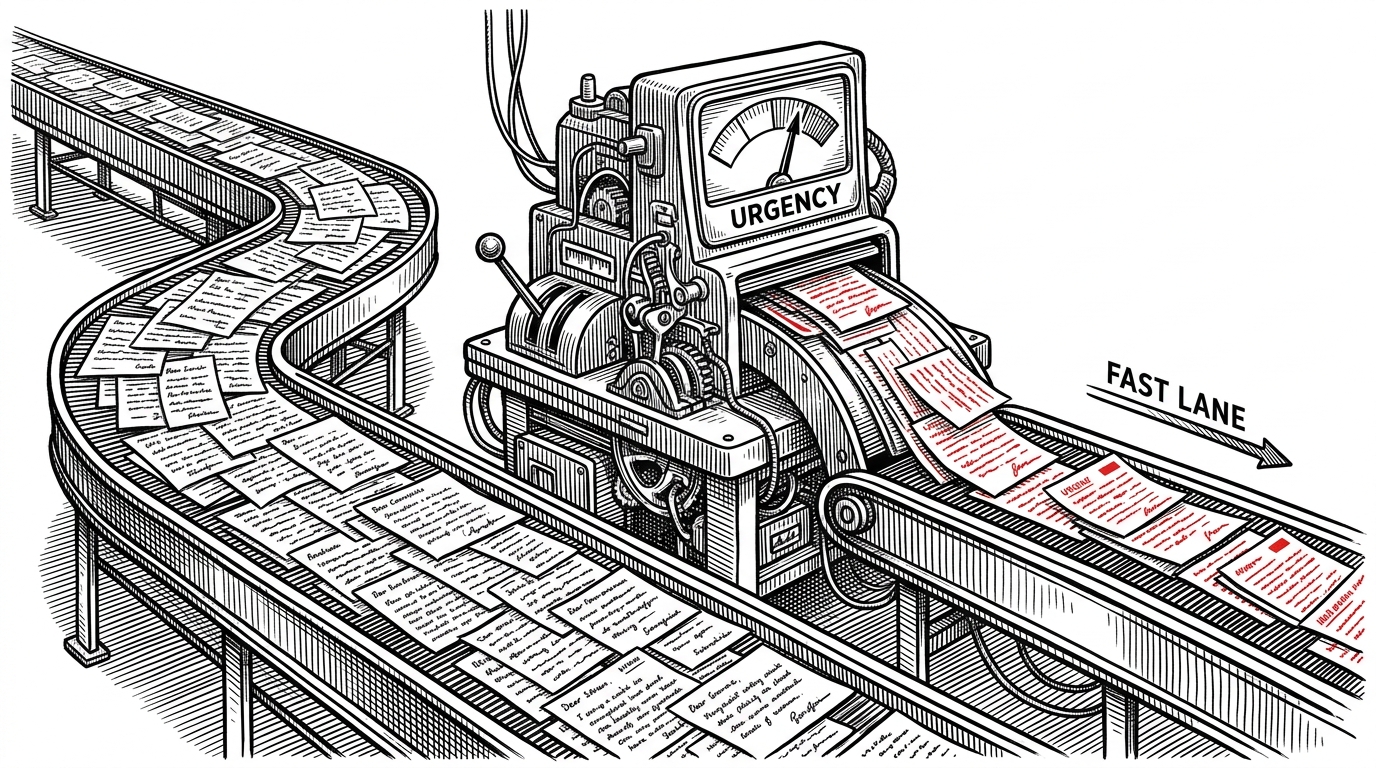
- HackMolFinalRepo’s real move is not complaint collection, but urgency ranking.
- The repo splits the problem cleanly: Node handles the product surface, Python handles model work, and MongoDB becomes the handoff point between them.
- The dashboard matters because it turns numeric model output into something an operator can act on fast.
- The project is clever and practical, but its Base64 uploads, polling loop, and security rough edges make it feel firmly hackathon-shaped.
When every complaint is not equal
Most complaint portals make one quiet assumption: first in, first out. That works for a support inbox. It fails for public services, where a broken seat, a missing ticket, and a safety issue do not deserve the same place in line.
HackMolFinalRepo starts from a better question: what needs help first? That shift turns the project from a standard grievance app into a triage machine, where the system helps decide which complaints deserve attention before a human ever opens the queue.
What HackMolFinalRepo actually does
The flow is straightforward. A passenger submits a complaint through the web app. The backend stores it in MongoDB, the AI layer scores its urgency, and the admin view pulls the updated record back into a color-coded queue.
That gives the project two jobs at once. It is both a complaint intake system and a railway-specific assistant, with a chatbot layer for general queries and a prioritization layer for operational action.
Passenger complaint -> Express validation -> MongoDB insert
                        -> Python inference -> priority score
                        -> MongoDB update -> admin dashboard refresh
The triage engine inside the repo
The most interesting part of the repo is the scoring path. Complaints are fetched from MongoDB, passed into an inference function, and written back with a numeric priority from 0 to 5. That is the moment the system stops being a form and starts behaving like an operations tool.
The model stack is pragmatic rather than luxurious. The repo uses Unsloth to fine-tune Phi-3.5-mini-instruct, with LoRA targeting attention modules like q_proj and v_proj. The point is not maximal model size. It is getting useful classification behavior out of constrained compute.
That matters because the project is not trying to be a general chatbot platform. It is trying to classify messy grievance text with enough reliability that the queue order becomes more meaningful than a plain timestamp.
Why the stack is split across Node and Python
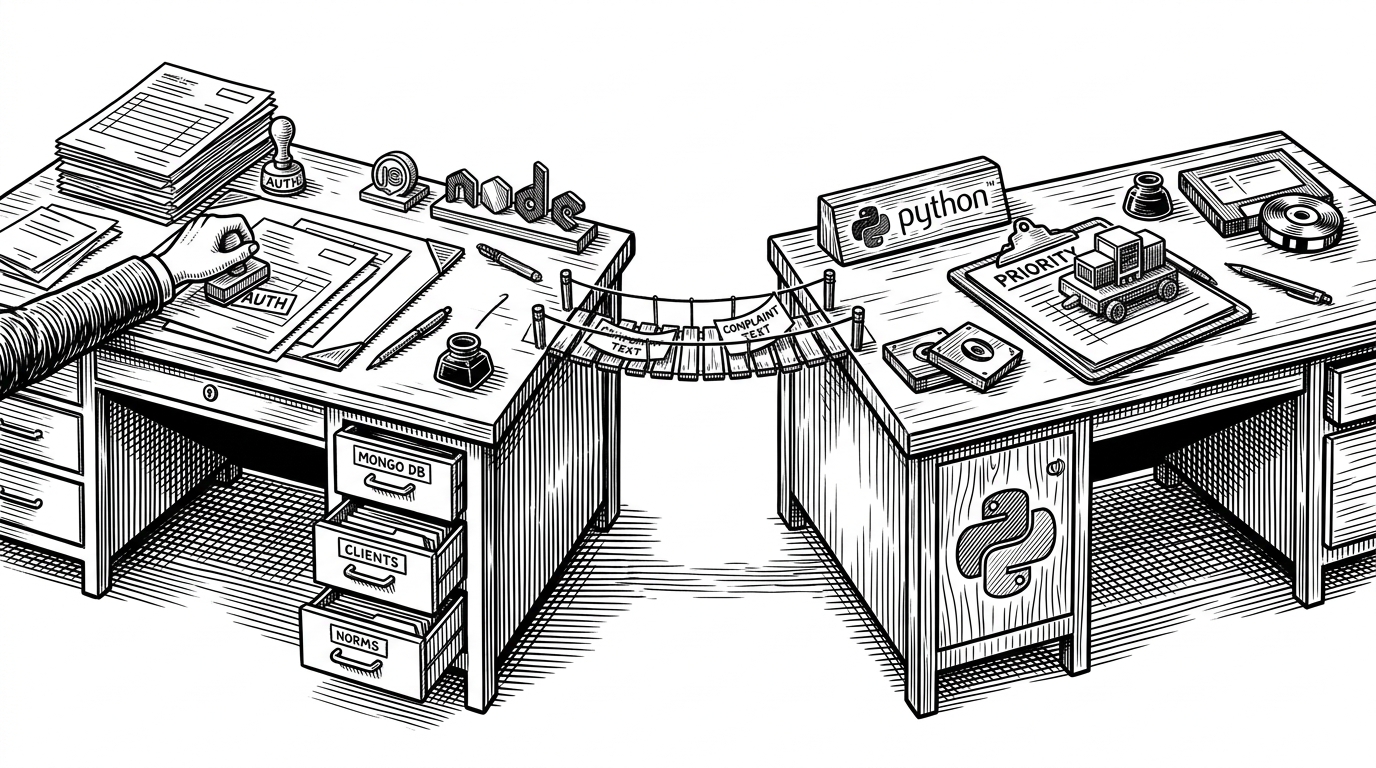
This repo uses a sidecar pattern in the most practical sense. Node and Express handle authentication, CRUD, and the app shell. Python handles the AI work, including the chatbot and the priority inference. The split keeps each layer in the ecosystem that fits it best.
That is a real engineering choice, not just a stylistic one. JavaScript owns the user-facing product path. Python owns the model path. MongoDB sits in the middle as the shared state that both sides can read and update.
| Dimension | Traditional complaint portal | HackMolFinalRepo |
|---|---|---|
| Handling model | Store and display submissions | Score urgency and reorder work |
| Ordering logic | Chronological queue | Priority-ranked queue |
| Human effort | Operators scan everything | Operators scan the worst items first |
| AI involvement | None | Classification and chatbot support |
| Operational risk | Important issues can hide in the pile | Model mistakes can mis-rank cases |
| Scale trade-off | Simple but blind | Smarter, but more moving parts |
The admin dashboard turns scores into action
The dashboard is where the model becomes visible. The repo polls for updates every 10 seconds, then maps the numeric score to color with a function like getPriorityColor. Suddenly the system is no longer just storing complaints. It is turning them into a heat map of urgency.
That small design choice matters. A triage score is only useful if the person on the other end can read it in seconds. The dashboard gives the project its operational face.
The trade-off: speed now, heavy baggage later
HackMolFinalRepo also shows its seams. Images are converted to Base64 before submission, which keeps the stack simple but makes payloads heavier. The backend sets a 10 MB document limit, which is a reminder that convenience and scale pull in opposite directions.
The repo also feels like a hackathon build in the best and worst ways. It is ambitious, functional, and coherent. It is also not the same thing as production hardened.
| Trade-off | What the repo gains | What it pays |
|---|---|---|
| Base64 uploads | No separate file pipeline | Larger payloads and bulkier documents |
| Polling dashboard | Simple refresh logic | Extra load and delayed updates |
| Small fine-tuned model | Lower compute needs | Possible ceiling on accuracy |
| Split Node plus Python stack | Right tool for each layer | More integration and deployment complexity |
What this project says about modern civic software
The larger idea here is easy to miss: public-service software does not have to be a passive inbox. It can rank, route, and surface urgency before a human triages the queue.
That is the promise of this repo. Not that AI replaces operators, but that it gives them a better first pass. The open question is whether the model is trustworthy enough for real civic use. The code points to the possibility. The deployment story would need to prove it.