skill: PinchBench: The Blue-Collar Exam for AI Agents
Moving beyond synthetic riddles to see if LLMs can actually manage your calendar, audit your spreadsheets, and survive a messy workspace.
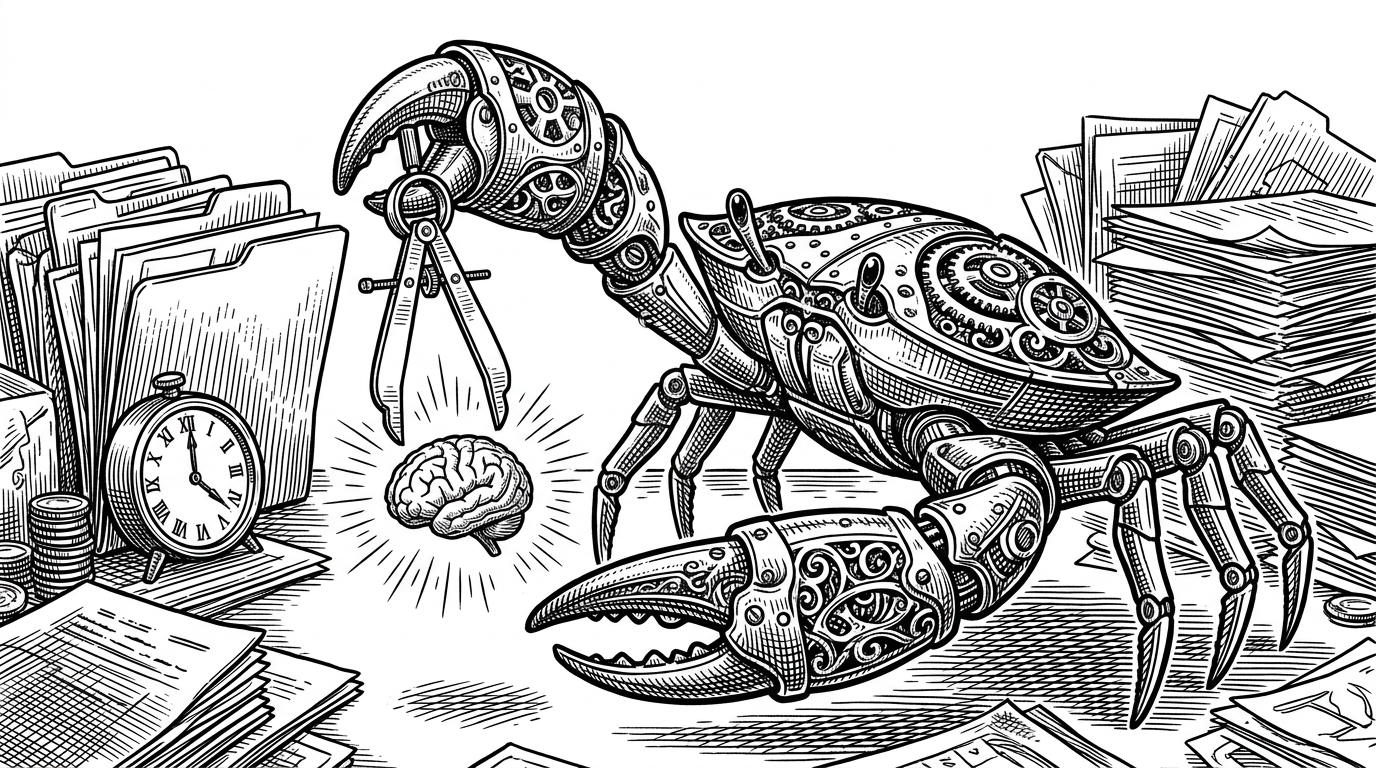

PinchBench started as a side project of Kilo DevRel mastermind Brendan O’Leary, who wanted to build a benchmarking system for evaluating LLM models as OpenClaw coding agents. The idea was simple: run tests based on real-world tasks to help users choose the right model for their use case.
- PinchBench evaluates AI agents by measuring their ability to perform functional tasks in a simulated office environment rather than solving synthetic riddles.
- The benchmark uses a hybrid grading system that combines deterministic Python checks with qualitative LLM-based assessment to judge agent performance.
- Results from these real-world simulations often show that smaller, highly-tuned models outperform larger frontier models at executing terminal commands and file manipulations.
The End of the "Vibe Check"
Modern Large Language Models routinely ace the bar exam and solve complex riddles. Yet, when you ask them to update a spreadsheet and send a calendar invite, they often hallucinate a file path or crash the environment. Traditional benchmarks like MMLU and HumanEval measure rote knowledge and syntax. They are essentially standardized tests for robots. PinchBench represents a hard pivot to vocational school.
It treats the LLM as a brain inside a body, specifically the OpenClaw agent framework. The test is whether it can navigate a messy office environment: opening the wrong Excel file, finding a typo in a calendar invite, and triaging a chaotic inbox. Success is defined by a measurable side effect in a filesystem, not a string of text in a chat window.
Unlike synthetic benchmarks (MMLU, HumanEval, etc.), PinchBench throws real tasks at agents
Anatomy of a Digital Shift
The core unit of PinchBench is the task file. Instead of a sterile JSON object containing a prompt and an expected string, PinchBench uses polyglot Markdown files. A single file like task_02_stock.md contains YAML metadata, a plain-English user prompt, and a hidden Python grading function.
When the benchmark runs, it provisions a temporary workspace populated with mock assets like PDFs and CSVs. The agent must read these files, perform the requested work, and modify the workspace. The benchmark then evaluates the aftermath.
Who Judges the Judges?
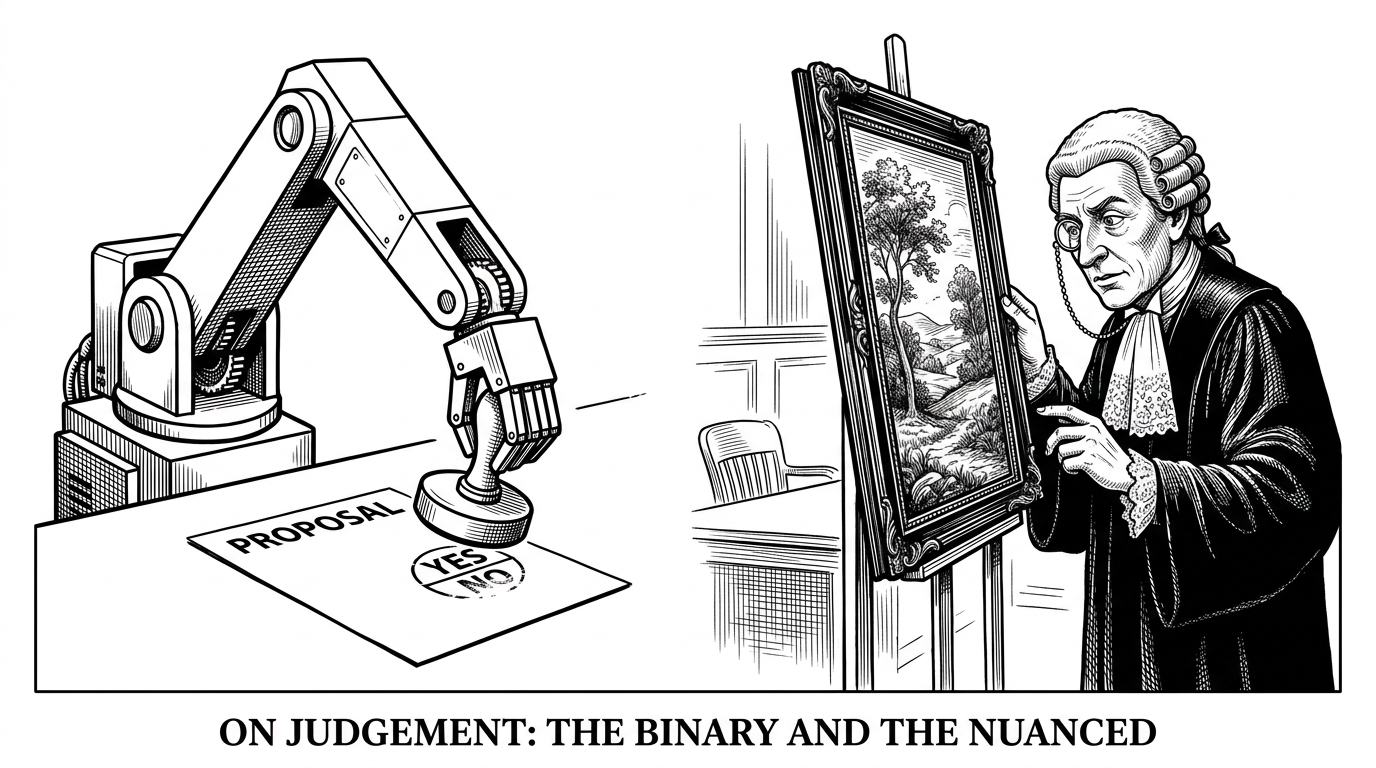
Evaluating an agent is notoriously difficult. If an agent is asked to write a professional email summarizing a financial report, a simple Python script cannot determine if the tone is correct. PinchBench solves this with a hybrid grading architecture found in lib_grading.py.
The system uses deterministic Python checks for atomic facts (did the file save, does the script execute) and deploys an LLM-as-a-judge for qualitative assessment. By default, it spins up a separate Claude 4.5 instance to read the agent's transcript and score it against a strict rubric.
The OpenClaw Gravity Well
PinchBench does not exist in a vacuum. It is deeply intertwined with the OpenClaw agent ecosystem. OpenClaw separates the agentic logic (the framework) from the inference engine (the LLM). PinchBench capitalizes on this by holding the framework constant while hot-swapping different models via OpenRouter to see which one performs best in a real-world setting.
The New Hierarchy of Power
The results generated by PinchBench often invert the traditional leaderboard. When the "vibe" is removed and agents are graded solely on their ability to execute terminal commands and manipulate files, smaller, highly-tuned models frequently outperform massive frontier models. The benchmark reveals that instruction adherence and tool-calling reliability are far more critical for agentic work than encyclopedic knowledge.
| Benchmark | Input Format | Success Metric | Primary Use Case |
|---|---|---|---|
| MMLU | Multiple Choice Text | String Match (A/B/C/D) | General Knowledge |
| HumanEval | Python Docstrings | Unit Test Pass | Code Generation |
| PinchBench | Messy Files & Prompts | System State & Workflow | Productivity Agents |
By forcing AI models to prove their worth in a simulated office rather than a sterile testing booth, PinchBench provides a much-needed reality check for the agent ecosystem. It proves that a model's true value lies not in what it knows, but in what it can actually get done.
Sources: