Project04: The Multi-Model Insurgent in the Terminal Wars
How an open-source Go binary is breaking the model-lock on autonomous coding agents.
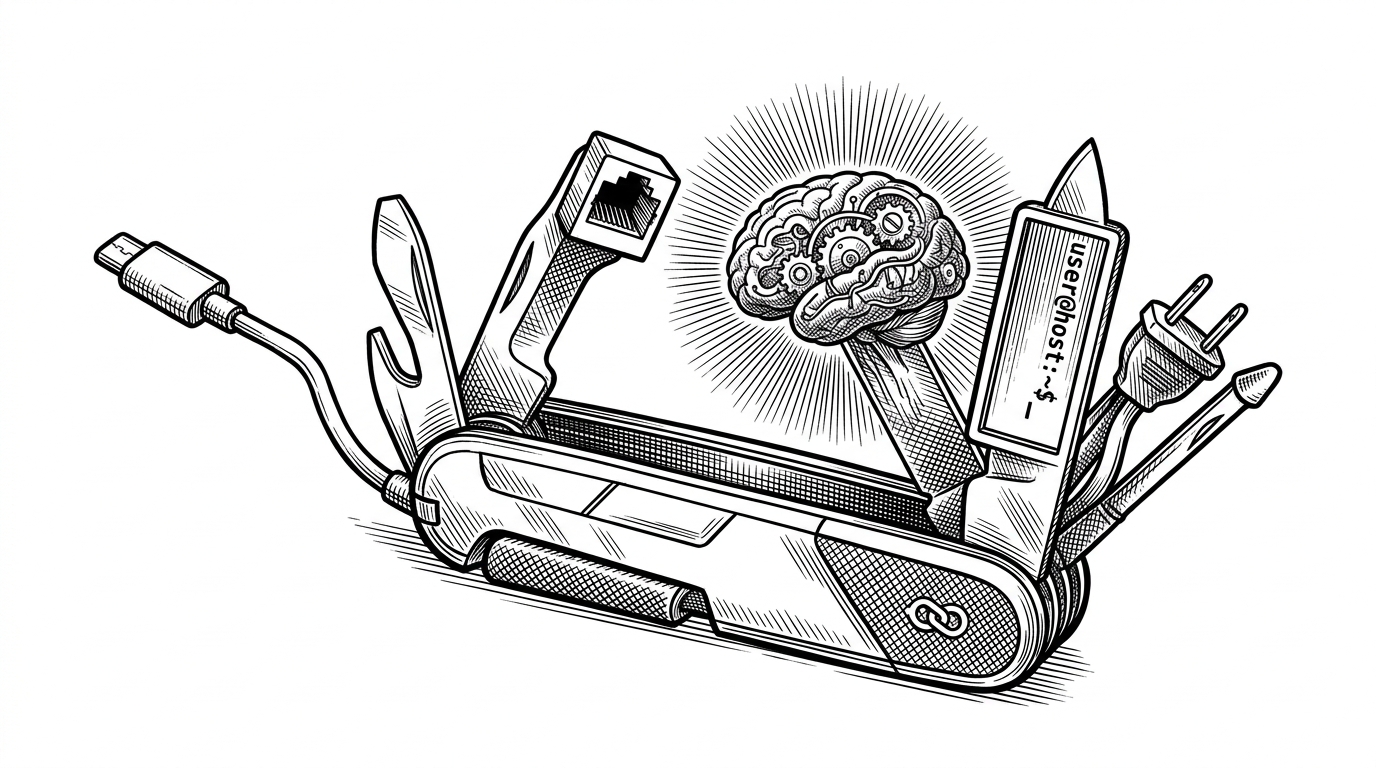
- Project04 breaks model-lock by allowing developers to swap between providers like Anthropic, OpenAI, and Groq using a single interface.
- The tool uses a Go-based architecture to deliver a lightweight, statically linked binary that outperforms heavy Node.js alternatives.
- Integration with the Bubble Tea framework enables a highly concurrent and interactive terminal UI for autonomous agent loops.
- The project prioritizes execution speed and provider flexibility over the specialized, model-specific features of proprietary competitors.
The Walled Garden Problem
The terminal is the developer's most sacred space, historically defined by its neutrality. Yet the arrival of autonomous AI agents threatens to turn the command line into a series of walled gardens. Tools from major AI providers offer incredible capabilities, but they often require users to lock themselves into a single ecosystem, binding their workflow to one company's billing structure, usage limits, and privacy policies.
Developers want the power of advanced models without surrendering their freedom of choice. The friction of installing massive Node.js packages just to run a specialized, single-provider assistant has created a demand for something lighter, faster, and aggressively agnostic.

The Architecture of Agnosticism
Project04, which transitioned to become Crush under the Charmbracelet organization, attacks the walled garden problem at the architectural level. By adopting a "Bring Your Own Key" (BYOK) model, it radically separates the agent's logic from the underlying Large Language Model.
The tool functions as a universal adapter. Whether a developer prefers Anthropic's reasoning, OpenAI's speed, or a local model routed through Groq, the terminal interface remains entirely consistent. The complexity of API translation is handled quietly under the hood.
Built on the Charm Stack
The decision to build in Go rather than TypeScript is the project's defining technical wager. Competing agents often rely on heavy Node.js environments, resulting in slower startup times and larger resource footprints. By compiling to a single, statically linked binary, Crush achieves near-instant execution.
The user interface leverages the Charm ecosystem, specifically the Bubble Tea framework. This allows for rich, interactive, and highly concurrent terminal applications. The internal loop—perceiving context, deciding on an action, and awaiting human confirmation—runs seamlessly across Go routines without blocking the main UI thread.
The Competitive Landscape
In a rapidly crowding market, positioning is everything. Proprietary tools like Claude Code offer deep, opinionated integration with their specific models. Community projects like Dyad focus heavily on full-stack application scaffolding. Crush carves out its niche by prioritizing execution speed and provider flexibility over specialized, model-specific features.
| Feature | Crush (Project04) | Claude Code | Dyad |
|---|---|---|---|
| Primary Language | Go | TypeScript / Node | TypeScript |
| Model Support | Agnostic (BYOK) | Anthropic Only | Agnostic / Local Focus |
| Distribution | Single Binary | NPM Package | NPM Package |
| UI Framework | Bubble Tea (Charm) | Custom CLI | Custom CLI |
From OpenCode to Crush
The project's evolution from a standalone community experiment into an official repository under Charmbracelet is a testament to its architectural soundness. It signals a shift in how the developer community views AI tooling: moving away from fragile, ad-hoc scripts toward professional-grade, highly optimized infrastructure.
By championing local-first storage, single-binary distribution, and multi-model support, Crush isn't just a tool for writing code. It is an argument for keeping the terminal open, fast, and firmly under the developer's control.