swift-path-matcher: The Swift Router That Turns URL Parsing Into a Type Problem
A tiny DSL, a result builder, and a careful solution to tuple flattening, type erasure, and clean route outputs.

- swift-path-matcher makes routing feel declarative by pushing URL structure into a result-builder DSL and keeping the caller focused on values, not string indexes.
- Its real trick is type hygiene: literals collapse to Void, parameters survive, and tuple flattening prevents the public API from turning into nested noise.
- The router layer stays intentionally boring, because the hard part happens earlier when the matcher composes and normalizes route output.
- This is a small library with a sharp opinion: optimize for Swift-native readability and typed route data, not for a giant all-purpose path toolkit.
A Router That Refuses to Leak Its Internals
Most routing code starts as a pile of string checks. This one starts as a declarative shape. You describe the path once, and the library turns it into a matcher that returns typed values instead of forcing you to peel apart path[0], path[1], and whatever comes next.
That is the real appeal of swift-path-matcher. The public API stays small and readable, but the package quietly uses Swift’s result-builder system and generic plumbing to keep the surface area clean.
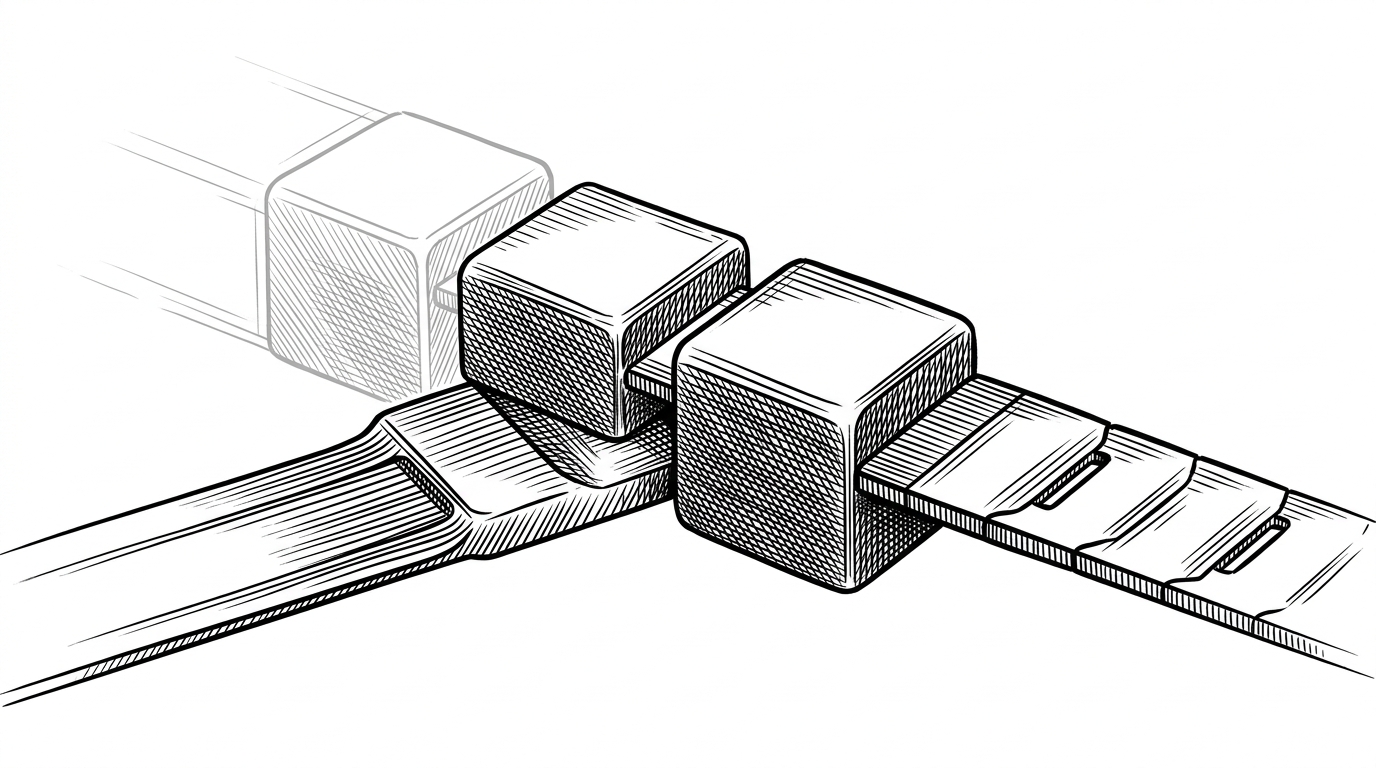
The Trick: Literals Disappear, Parameters Survive
The library’s key opinionated move is simple. Fixed path segments are treated as Void. Parameters are treated as values. That means the matcher can build a route definition out of many pieces without polluting the final output with every literal marker along the way.
That design matters because route handlers should care about meaning, not scaffolding. If a path contains /users/:id/posts/:postID, the caller wants id and postID. It does not want a tuple full of dead weight just because the path needed a few constant separators.
Why the Tuple Flattening Matters
This is the technical centerpiece. Without flattening, a builder chain would quickly devolve into nested tuples that are awkward to read, awkward to name, and awkward to pass around. The package solves that with builder extensions and factory logic that combine pieces into a flat shape instead of preserving every intermediate layer.
| Design choice | Result | Why it matters |
|---|---|---|
| Nested tuples | Hard to read and unpack | Leaks implementation detail into the public API |
| Flat tuple output | Readable route values | Keeps handlers focused on business logic |
| Void for literals | Structure disappears | Only parameters remain in the match result |
| Generic builder composition | Declarative route definitions | Lets Swift do the wiring without making callers pay for it |
The payoff is not just aesthetic. A flat result type makes route handlers more composable, easier to test, and less annoying to refactor. That is a small ergonomic gain with an outsized effect on daily use.
The Router Is Just a Registry, Which Is the Point
Once the matcher exists, the router can stay plain. It strips scheme and host, splits the URL into segments, then checks registered handlers in order until one returns a match. That is the right place for boring code. The cleverness belongs in the matcher, not the dispatch loop.
final class PathRouter {
    func handle(_ url: URL) {
        let segments = url.path.split(separator: "/").map(String.init)
        for handler in handlers {
            if let output = handler.matcher.match(segments) {
                handler.perform(output)
                return
            }
        }
    }
}
The internal type erasure is doing quiet work here. The router can store handlers together, but each handler still preserves the type safety of the closure it was built with. That is a good pattern for small libraries: erase where storage demands it, keep generics where the API benefits from them.
Literal Matching Is More Practical Than It First Looks
The package does not stop at exact string segments. It supports multi-segment literals and case-insensitive matching, which makes the DSL less fragile in real navigation scenarios. That is a subtle but important product decision. Routing libraries live or die on developer trust, and trust comes from predictable, forgiving matching behavior.
This is where the design stops feeling academic. The author is not trying to impress with raw pattern power. The focus is on making deep links, app navigation, and other URL-driven flows feel natural in Swift.
What This Beats, and What It Does Not
The cleanest comparison is against regex-heavy routing and broader path libraries. Regex gives you power, but it rarely gives you clarity. A bigger path utility like PathKit gives you more surface area, but that can be overkill if all you want is a focused matcher with typed route data.
| Approach | Strength | Trade-off |
|---|---|---|
| Regex-based routing | Very flexible | Harder to read, harder to maintain |
| Broad path libraries | More general-purpose | Routing is only one concern among many |
| Manual string checks | Simple at first | Brittle and repetitive |
| swift-path-matcher | Swift-native DSL with typed outputs | Narrow scope by design |
That narrow scope is a feature. This repo is not trying to be a universal filesystem or path toolkit. It is trying to make one slice of routing elegant, and it succeeds by refusing to do too much.
Why This Feels Like a Swift-First DSL, Not a Wrapper
The best Swift frameworks do not just wrap existing ideas. They reshape them around the language. That is what happens here. Result builders make the syntax feel native, generic extensions hide the type machinery, and the final public API reads like a tiny language rather than a utility function.
That is the larger lesson. If you can isolate complexity inside a few carefully engineered layers, you can give callers a declarative interface that feels effortless. Swift-path-matcher is interesting because it shows how far that pattern can go without turning into a framework zoo.