Supabase MCP: The Control Layer That Lets AI Operate a Cloud Backend
A deep dive into how Supabase turns MCP into a typed, security-aware bridge between agents and the infrastructure behind your app.
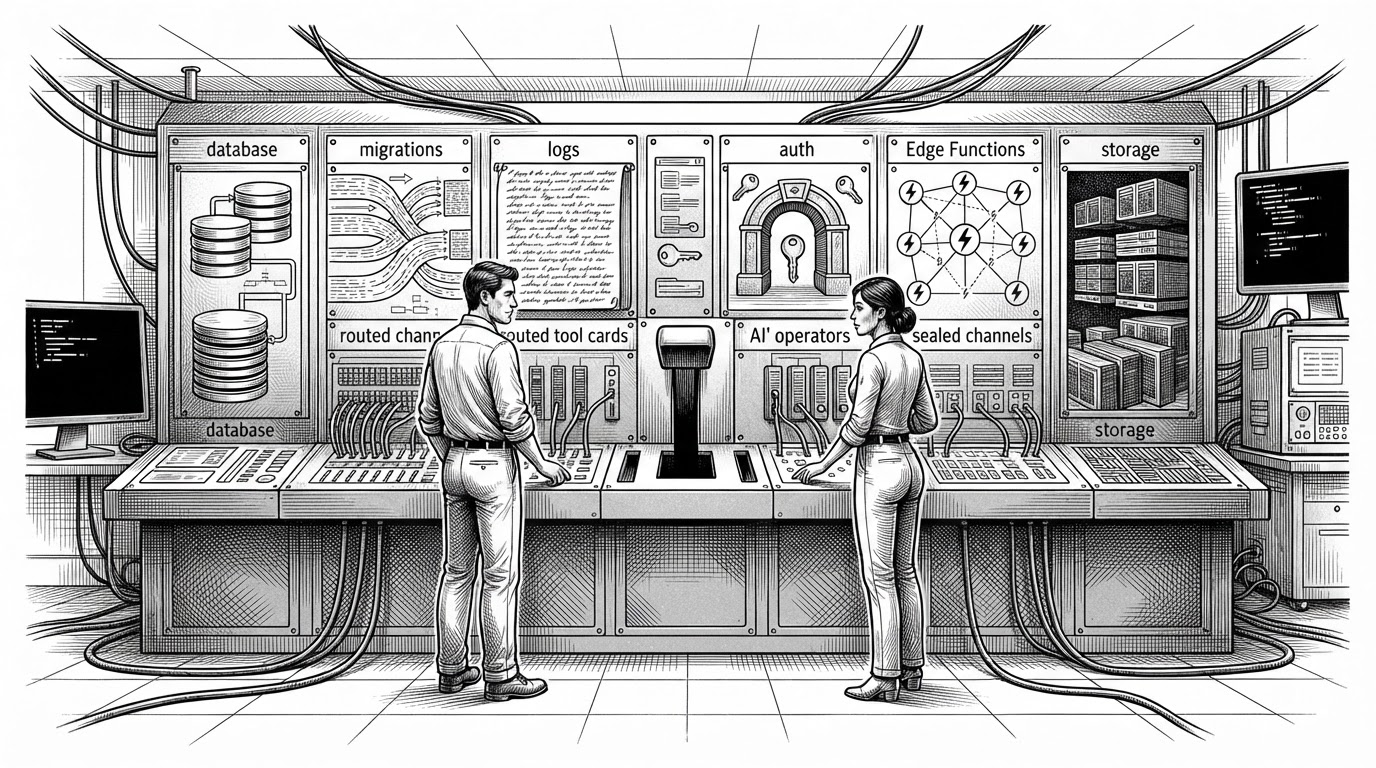
- Supabase MCP is best understood as a control plane for agents, not as a database connector with a nicer name.
- Its strongest idea is that risky operations become typed protocol events with schema validation, capability checks, and explicit confirmation.
- The cost-confirmation handshake treats spend as state that must be cryptographically acknowledged before an action can continue.
- Compared with read-only Postgres MCP servers, Supabase MCP reaches into the full operational surface of a hosted platform.
Why Supabase Built an AI Control Plane Instead of a Bigger CLI
The obvious way to give an AI access to Supabase would be a bigger CLI or a looser prompt wrapper. That is not what this repo does. It turns the platform into a set of bounded operations, then exposes those operations through MCP so an agent can act without being handed the whole console.
That matters because Supabase is not just a database. It is migrations, Edge Functions, logs, storage, auth, project settings, and hosted operations that carry real consequences. Greg Richardson frames the point plainly in the launch post: "Our MCP server connects your AI tools to Supabase so that they can perform tasks like launching databases, managing tables, fetching config, and querying data on your behalf."
Our MCP server connects your AI tools to Supabase so that they can perform tasks like launching databases, managing tables, fetching config, and querying data on your behalf.
| Surface | Read-only Postgres MCP | Supabase MCP |
|---|---|---|
| Scope | SQL and table inspection | SQL plus hosted project operations |
| Transport | Usually local STDIO | STDIO and HTTP |
| Risk model | Mostly read access | Typed read, write, and destructive actions |
| Platform awareness | Generic PostgreSQL | Supabase-specific capabilities and APIs |
| Operational reach | Database only | Database, auth, migrations, logs, storage, functions |
That table is the thesis in miniature. Supabase MCP does not flatten everything into one conversational interface. It keeps the boundaries and makes them machine-readable.
The Core Pattern: Typed Tools, Not Freeform Prompts
The heart of the repo lives in packages/mcp-server-supabase/src/tools/. Each action is defined as a tool with a parameters schema, an outputSchema, and annotations like readOnlyHint and destructiveHint. The tool is not a suggestion. It is a contract.
export const toolDefs = {
  list_tables: {
    annotations: {
      readOnlyHint: true
    },
    parameters: z.object({
      project_id: z.string().optional(),
      schema: z.string().optional()
    }),
    outputSchema: z.object({
      tables: z.array(z.object({ name: z.string() }))
    })
  }
}
That structure does two things at once. It makes the tool safer for the model to call, and it makes the server easier to reason about for humans. The helper injectableTool is a small but telling detail: it can fill in project context automatically when the server is already scoped, which keeps the tool surface clean without sacrificing structure.
The Real Trick: A Cost Confirmation Handshake
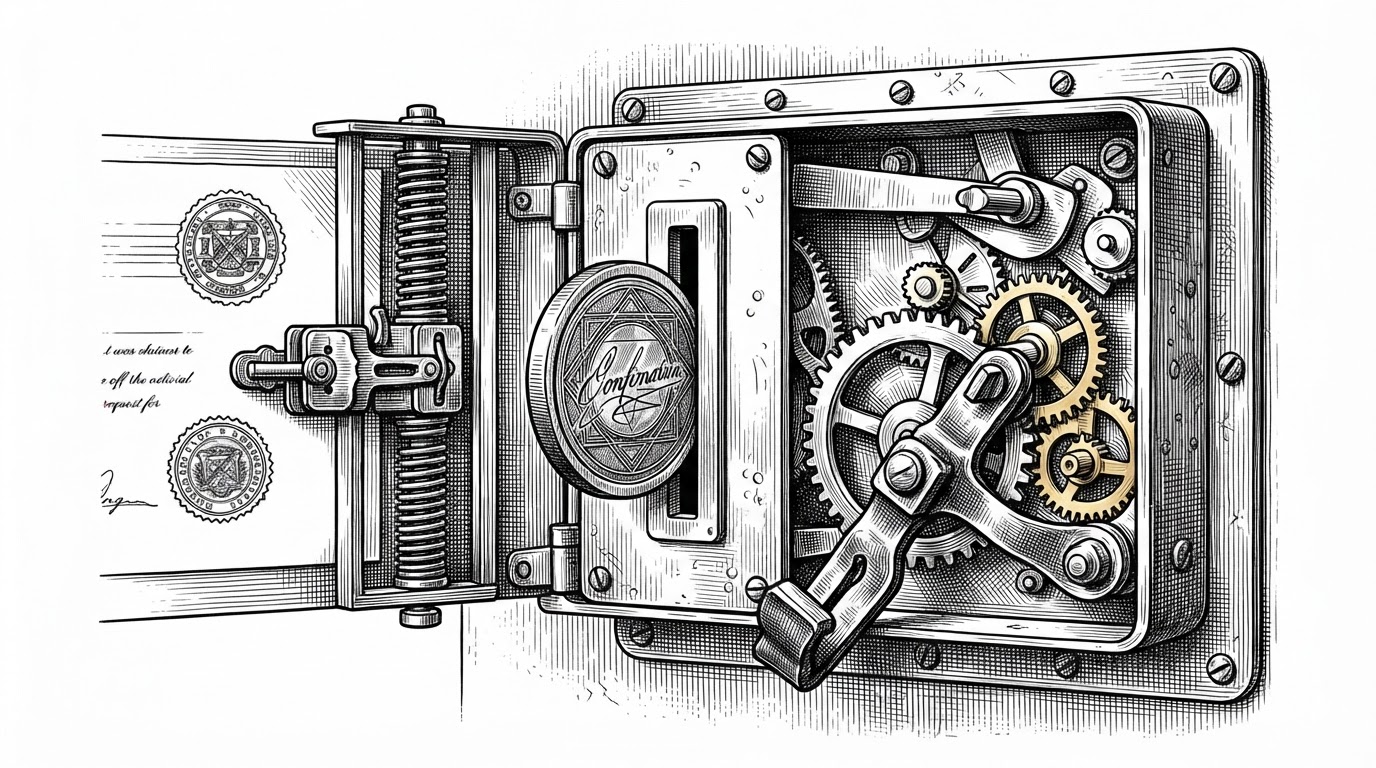
This is the part of the repo that changes the mental model. The server does not just ask for confirmation in the UI sense. It mints a requestState, signs it with an HMAC key, and expects that exact state to come back before it continues. That makes expensive actions into protocol state, not a polite suggestion.
The practical effect is simple. An LLM can propose a costly operation, but it cannot quietly drift into one. The server has to re-see the state it issued, verify the signature, and only then proceed. That is a stronger boundary than a checkbox, because the server itself owns the proof of intent.
Supabase’s documentation makes the surrounding safety posture explicit: "To lower this risk further, Supabase MCP wraps SQL results with additional instructions to discourage LLMs from following instructions or commands that might be present in the data." That is prompt engineering, but treated as part of the security model.
Supabase Is Not One Backend. The Server Admits That
The repo avoids fake uniformity by routing behavior through a SupabasePlatform interface. Hosted Supabase, local development, and other environment shapes can all expose different capabilities. The server does not pretend those differences are not there. It negotiates them.
That design shows up in capability filtering. Available tools are derived from what the platform can actually do, rather than from a static menu that may or may not work. In practice, that means the agent sees a surface that is honest about its limits.
| Design choice | Why it matters |
|---|---|
| Capability negotiation | The tool list changes with the platform instead of pretending every environment is identical. |
| Platform interface | The server can target hosted APIs or alternate environments without rewriting every tool. |
| Feature grouping | Tool families stay coherent, so operations remain legible to both the model and the user. |
Why HTTP Transport Changes the Game
STDIO is the classic MCP path for local desktop clients. HTTP is the bigger move. It lets Supabase MCP live as a remote service, which matters for cloud IDEs, browser-adjacent workflows, and setups where the AI should reach a hosted endpoint instead of spawning a local process.
That shifts the repo from helper utility to service boundary. The same managed backend that your app talks to can now expose a managed AI control surface, and the transport layer is part of that story.
How It Compares to Read-Only Postgres MCP and Other Alternatives
The cleanest contrast is with the official Postgres MCP server. That project is narrower by design: database access, usually read-first, with no Supabase-native management surface. Supabase MCP is broader because it reaches into the platform that sits above the database.
| Project | Transport | Scope | Safety posture |
|---|---|---|---|
| Supabase MCP | STDIO and HTTP | Database, auth, migrations, logs, functions, storage | Typed tools plus confirmation for risky actions |
| Official Postgres MCP | Usually STDIO | Generic PostgreSQL access | Mostly read-focused |
| DataMCP | Hosted service | Any PostgreSQL database | Permission and revocation oriented |
| Community Supabase variants | Varies | Often self-hosted or SQL-centric | Safety tiers depend on the project |
The competitive split is not about who can run SQL. Plenty of tools can do that. The split is about how much of the platform they expose, and whether they admit that operational power needs a deeper safety model than a raw connection string.
What This Repo Says About Agent-Ready Infrastructure
Supabase MCP is a prototype for a different kind of cloud interface. It treats the agent as an operator with bounded authority, not as a chat widget with API keys. That means typed actions, transport flexibility, explicit risk gates, and runtime capability negotiation all matter as much as the actual API calls.
That is the larger lesson. Agent-ready infrastructure will not be one giant prompt over everything. It will be a stack of carefully bounded operations that know what they can do, what they cannot do, and when they need a human to re-acknowledge the cost.