The End of the Goldfish Agent: Inside supermemoryai/supermemory
How a consumer "second brain" pivoted into an open-source infrastructure layer that uses graph structures and the Model Context Protocol to fix the amnesia of modern AI.
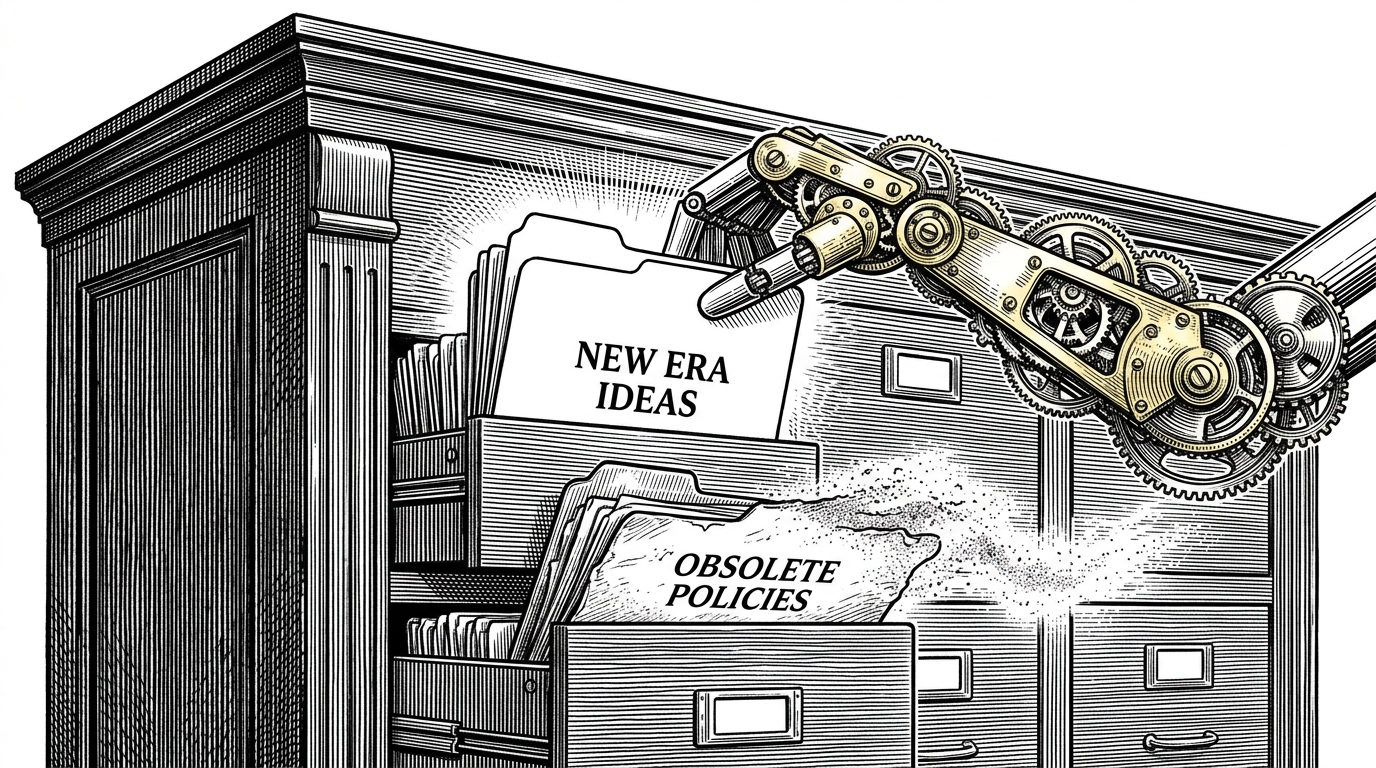
- Supermemory replaces static vector retrieval with a temporal graph that actively deprecates conflicting historical data.
- A hybrid storage architecture pairs Cloudflare KV for ultra-low latency user profile injection with Postgres for bulk document storage.
- Native integration via the Model Context Protocol allows the engine to act as a local background server for tools like Claude Code.
- The repository itself utilizes an autonomous AI loop via GitHub Actions to read CI failure logs and push code fixes directly to pull requests.
The Amnesia Epidemic
Context windows are expanding rapidly, but filling them with raw retrieved data is a fundamentally flawed approach for long-term agent persistence. Standard Retrieval-Augmented Generation (RAG) treats all ingested data as static facts. If you tell an AI you moved to New York today, but a document from last year says you live in London, simple vector search retrieves both. The LLM is left to reconcile the contradiction.
This amnesia epidemic limits autonomous agents from maintaining a reliable state over time. Supermemory tackles this by shifting away from pure document retrieval toward active state management. It extracts isolated facts from conversations and maps them onto a temporal structure that knows when to let go of the past.
AI becomes meaningfully useful only when it remembers.
Graphing the Stateful User
To solve the contradiction problem, Supermemory employs a pipeline they call Super RAG. Instead of merely chunking text by character count, the system extracts atomic facts and maps them onto a temporal graph. This allows the engine to recognize when a new fact supersedes an old one.
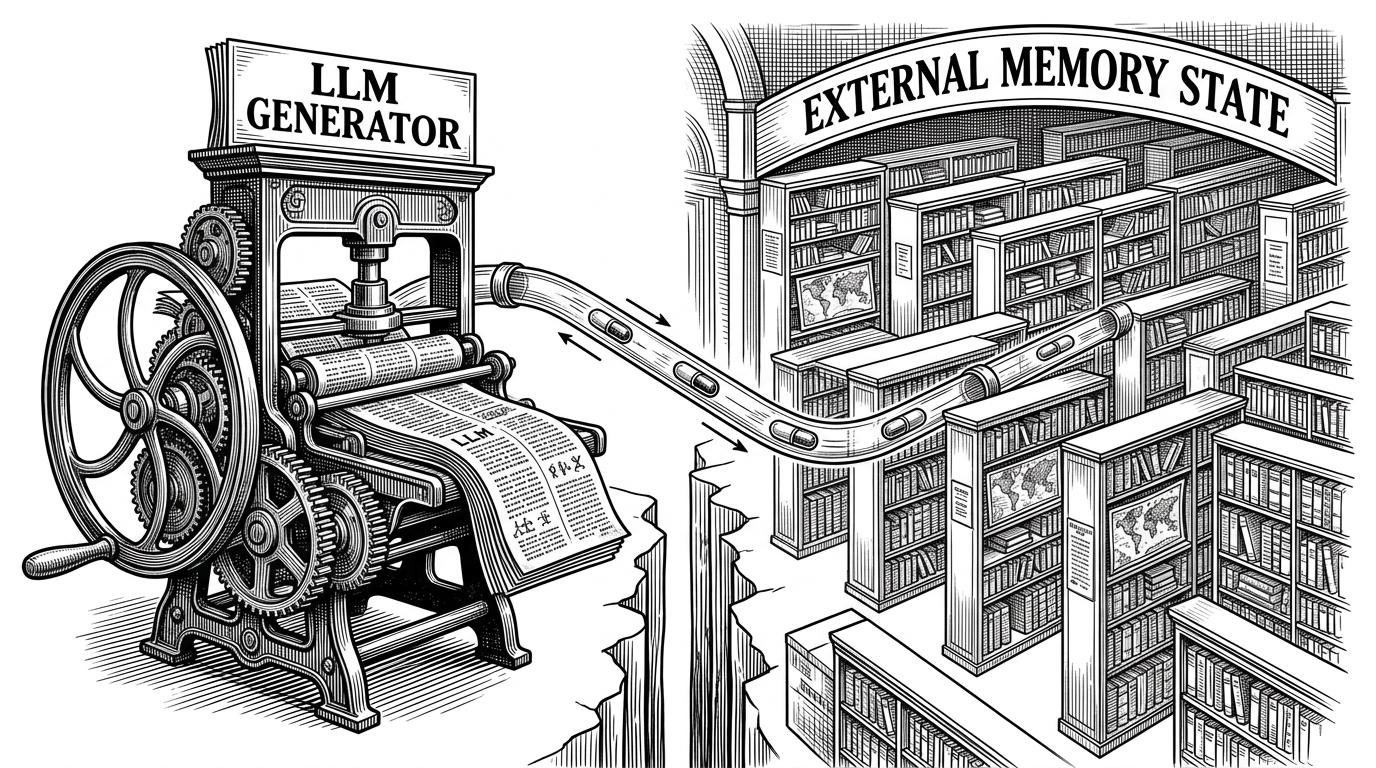
The architecture relies on a dual-storage strategy. High-frequency, temporal facts that make up a "user profile" are stored in Cloudflare KV. This ensures ultra-low latency retrieval (roughly 50ms) necessary for injecting context at the start of every session. Bulk static documents and codebases are stored in Postgres using Drizzle ORM.
Hijacking the Context Window via MCP
Storing data is only half the battle. Getting it into the agent's context window reliably requires tight integration. Supermemory leans heavily on the Model Context Protocol (MCP) to bridge this gap.
By running as an MCP server, Supermemory operates as a native tool in the background of applications like Claude Desktop or Cursor. It avoids vendor lock-in and eliminates the need for developers to write custom API wrappers for every new model. A companion browser extension quietly intercepts data from web apps and Twitter, feeding the background memory engine without requiring manual uploads.
The AI-Self-Healing Repository
Perhaps the most fascinating aspect of the Supermemory repository is its own maintenance loop. The project is built for AI, but it is also maintained by AI. The codebase includes a sophisticated GitHub Actions workflow (`claude-auto-fix-ci.yml`) designed to autonomously handle build failures.
When a CI pipeline fails, the workflow triggers a Claude agent. The agent reads the failure logs, analyzes the diff, generates a patch, and pushes the fix directly back to the pull request branch. A separate workflow acts as a senior engineer, performing logic-heavy code reviews that focus strictly on race conditions and security vulnerabilities rather than stylistic linting.
name: Claude Auto Fix CI
on:
  workflow_run:
    workflows: ["CI"]
    types:
      - completed
jobs:
  auto-fix:
    runs-on: ubuntu-latest
    if: ${{ github.event.workflow_run.conclusion == 'failure' }}
    steps:
      - uses: actions/checkout@v4
      - name: Trigger Claude Debugger
        uses: supermemoryai/claude-code-action@v1
        with:
          task: "Read CI logs, identify the failure, and push a fix."
Standard RAG vs. Agentic Memory
The shift from raw retrieval to temporal, stateful orchestration represents a significant architectural divergence. Here is how Supermemory compares to standard vector databases and native agent logs.
| Feature | Standard RAG | Native Agent Memory | Supermemory Engine |
|---|---|---|---|
| Conflict Resolution | Fails, retrieves all matches | Relies on LLM prompt reasoning | Graph-based temporal deprecation |
| Storage Layer | Pure Vector DB | Append-only Markdown logs | Hybrid KV + Postgres |
| Integration | Custom API wrappers | Hardcoded tools | Native MCP local server |