agents-lab: Five Ways to Build the Same J-League Analyst
A controlled shootout between OpenAI Agents, CrewAI, LangGraph, Google ADK, and Microsoft Agent Framework, all pointed at the same sports workflow.
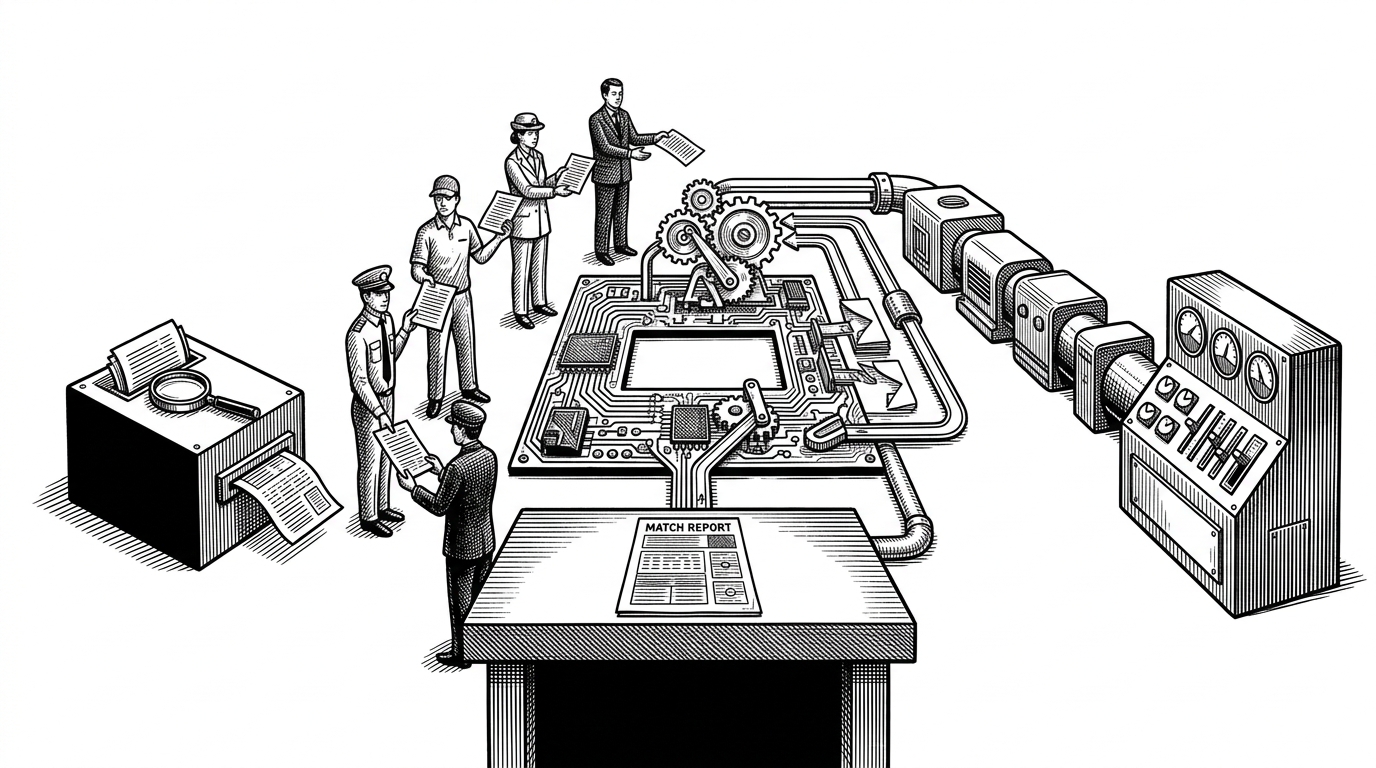
- This repo is a controlled experiment in orchestration, not a single agent application.
- Keeping the J-League task and search tool fixed makes framework differences easier to see.
- LangGraph stands out because it makes correction explicit instead of assuming a one-pass workflow.
- The real comparison is how each framework handles control, state, and review.
Most agent demos try to impress you with output. agents-lab does the opposite. It keeps the task steady, then swaps the orchestration layer five times to show what really changes when an AI workflow gets built as a black box, a role machine, a state graph, a pipeline, or an enterprise-managed agent.
The same analyst, built five different ways
The shared job is simple to say and hard to do well: search a J-League match, pull out useful stats, interpret what happened, and write a readable report. The repo repeats that workflow across OpenAI Agents, CrewAI, LangGraph, Google ADK, and Microsoft Agent Framework, while keeping the search source consistent. That gives the comparison real teeth.
This is why the repository feels more like a lab than a product. It is not trying to prove that one model is smarter. It is asking a sharper question: which orchestration pattern makes the analyst more trustworthy, easier to inspect, and easier to correct?
Why sports reporting is a brutal test case
Sports analysis forces the agent to do several different jobs at once. It has to find facts, decide which metrics matter, connect those metrics to tactics, and then package the result as a coherent narrative. A toy chatbot can bluff through one of those steps. A match analyst cannot.
| Task pressure | Why it matters | What it exposes |
|---|---|---|
| Search plus synthesis | The agent cannot stay vague and still succeed. | Whether the framework helps or hides tool use. |
| Metric extraction | The report needs grounded numbers, not vibes. | How state moves from raw data to analysis. |
| Tactical interpretation | Numbers alone are not enough. | How much reasoning is explicit versus implicit. |
| Review and revision | A first draft is often not good enough. | Whether correction is a built-in path or a manual fix. |
The architecture is a monorepo, but the real unit is the workflow
The code is organized like a controlled comparison, not a single app. Each phase lives in its own directory under apps/, with its own dependency boundary, while packages/shared-prompts/ holds shared prompt logic. That separation matters because it keeps the frameworks from bleeding into one another.
agents-lab/
├─ apps/
│  ├─ phase1-openai-agents/
│  ├─ phase2-crewai/
│  ├─ phase3-langgraph/
│  ├─ phase4-google-adk/
│  └─ phase5-microsoft-agent-framework/
├─ packages/
│  └─ shared-prompts/
├─ pyproject.toml
└─ uv.lock
The point is not elegance for its own sake. The point is isolation. When each phase has its own environment, the reader can compare orchestration styles without wondering whether a shared dependency or a hidden helper changed the result.
OpenAI Agents: the lightest touch
Phase 1 is the minimal version of the idea. One agent gets instructions, a search tool, and enough freedom to decide when to act. That makes it easy to start, and it also makes the control surface small.
| Dimension | OpenAI Agents |
|---|---|
| Control | Low ceremony, mostly implicit. |
| State visibility | Mostly hidden inside the agent loop. |
| Correction | Not structurally emphasized. |
| Best fit | Fast prototypes and simple tool use. |
If you want to see what the model does when left relatively alone, this is the cleanest starting point. If you want hard guarantees about how the workflow progresses, it is the weakest fit of the five.
CrewAI and the managerial model
CrewAI changes the mental model immediately. Instead of one agent doing everything, the workflow is split into collector, analyst, writer, and reviewer roles. The developer becomes a manager of responsibilities, not a choreographer of low-level state.
| Dimension | CrewAI |
|---|---|
| Control | Role definitions are explicit, execution is more guided. |
| State visibility | Better than a black box, still abstracted by the framework. |
| Correction | Supported through task flow and review roles. |
| Best fit | Teams that think in responsibilities and handoffs. |
That matters because a role map is often easier to reason about than a long chain of prompts. The trade-off is that you inherit the framework’s idea of what a role should look like.
LangGraph is where the repo gets interesting
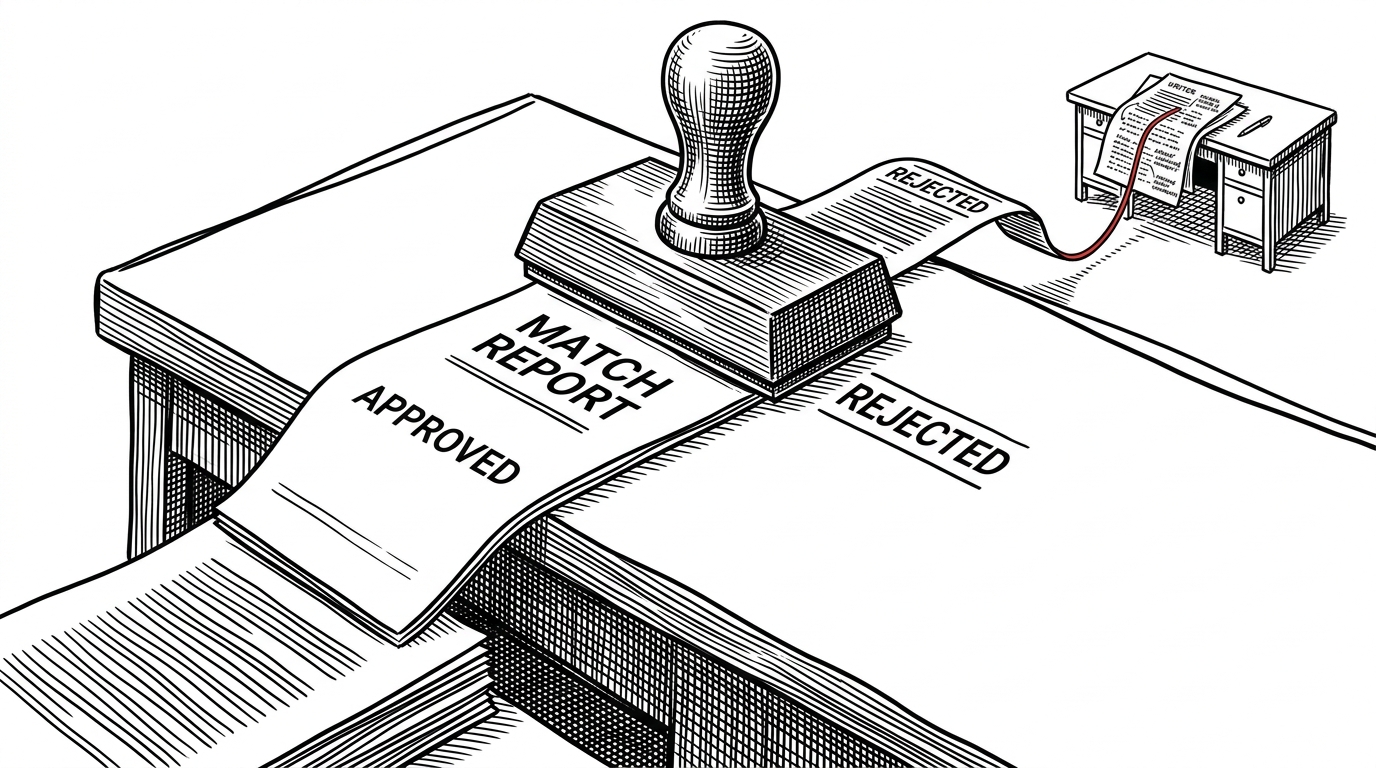
LangGraph is the clearest expression of the repository’s thesis. It uses typed state, a directed graph, and a review node that can reject a draft and send it back to the writer. That is not just sequencing. It is control over failure.
This is the most structurally honest section of the repo. You can see where the report is born, where it is judged, and where it gets sent back if it falls short. For editorial work, that loop is the whole story.
The repo’s LangGraph phase also shows why typed state is powerful. Once the workflow state is explicit, you can reason about what each node consumes, what it emits, and what has to be true before the next step runs. That makes debugging, retries, and review much less hand-wavy.
Google ADK and Microsoft Agent Framework: pipeline and enterprise layer
Phase 4 reads like a pipeline. Inputs move through chained agents, outputs get keyed, and the structure feels close to functional data flow. It is neat, legible, and well suited to workflows that want clear handoffs without a lot of drama.
| Framework | Shape | What it emphasizes |
|---|---|---|
| Google ADK | Pipeline | Keyed outputs and sequential composition. |
| Microsoft Agent Framework | Managed session | Cloud-native orchestration and deployment posture. |
| LangGraph | State machine | Explicit transitions and correction loops. |
| CrewAI | Role system | Specialized agents and task handoffs. |
| OpenAI Agents | Single-agent loop | Speed and simplicity. |
Phase 5 pushes the story toward infrastructure. Sessions, clients, and cloud-managed agent concepts make it feel closer to a deployment model than a local script. That makes sense if your concern is operating agents inside a broader platform, not just assembling them for a benchmark.
What this repo is really teaching
The deeper lesson is that orchestration style is not cosmetic. It changes how much control the developer has, how visible the state is, and whether the system can truly revise itself. In practice, those differences matter more than brand names or model labels.
There is also a quiet signal in the code: future-looking model names and placeholders suggest a stack built for fast-moving assumptions. That is less a prediction about the future than a warning to keep architecture flexible. The model may change. The workflow still has to hold.
Which framework fits which job
| Need | Best fit | Why |
|---|---|---|
| Fastest path to a working prototype | OpenAI Agents | Least ceremony, least structure. |
| Clear role separation | CrewAI | The framework maps naturally to team-like responsibilities. |
| Explicit state and retry logic | LangGraph | Correction is part of the graph, not an afterthought. |
| Readable staged data flow | Google ADK | Good for sequential pipeline thinking. |
| Managed platform posture | Microsoft Agent Framework | Better when deployment and operations matter. |
There is no single winner here, and that is the point. The repo argues, implicitly but clearly, that you should choose the orchestration pattern that matches the kind of control you need. If the job needs correction, LangGraph is the most revealing. If it needs speed, OpenAI Agents is the quickest start. If it needs role clarity, CrewAI reads most naturally.