the-seo-framework: The SEO Framework: the WordPress SEO Plugin That Thinks Like a Framework
A deep dive into a fast, unbranded, opinionated plugin that replaces SEO busywork with a modular engine for metadata, schema, and head output.
- The SEO Framework argues that SEO should be infrastructure, not theater, and that philosophy shapes every part of the product.
- Its codebase behaves like a framework because it is split into small generators, a clean bootstrap, and a narrow public API.
- The real technical move is control of the head pipeline, where TSF replaces WordPress noise with ordered output.
- Its biggest strength, a solo-maintained architecture with strong discipline, is also its biggest long-term risk.
Most WordPress SEO plugins try to win attention. They show scores, prompts, nudges, and upgrade banners. The SEO Framework does the opposite: it removes itself from view and tries to produce the right head output with as little ceremony as possible.
That is why TSF is interesting. It is not really a plugin in the usual WordPress sense. It is a small, opinionated infrastructure layer that behaves more like a framework, then disappears once the page is assembled.
SEO Without the Theater
The product philosophy is blunt. No traffic theater. No branded dashboard clutter. No score gamification pretending to be strategy. TSF is built around sane defaults, white-label output, and a performance-first posture that assumes the user wants search engines to read clean metadata, not a motivational poster.
That restraint matters because WordPress SEO has a habit of drifting toward product excess. TSF stays close to the actual job: titles, descriptions, robots, social tags, schema, canonical output, and a cleaner relationship with WordPress core.
The Plugin That Behaves Like a Framework
The repository layout tells the story early. There is a clean bootstrap, a custom autoloader, namespaced classes, and a public facade through tsf(). Under /inc/classes, the project divides itself by responsibility: admin, data, front, meta, and helper code each live in their own lane.
That shape is the clue. TSF does not centralize everything in a god object and hope the code stays manageable. It separates concerns, then uses a narrow orchestration layer to connect them. That is framework thinking inside a plugin shell.
| Dimension | TSF | Typical WordPress SEO plugin |
|---|---|---|
| Architecture | Small, purpose-built generator classes | Broader feature surface centered on settings screens |
| Public API | Facade-style access through tsf() | Often more UI-driven than programmatic |
| Output philosophy | Minimal, unbranded head output | Feature-rich dashboards and prompts |
| Performance posture | Aggressively lightweight and selective | Heavier UI and more runtime surface |
| Developer experience | Modular and composable | Usually optimized for end-user guidance |
What the bootstrap is really doing
The entry point hands off quickly. It defines constants, loads classes, and then lets bootstrap code decide what belongs on the front end and what belongs in the admin path. That separation is not cosmetic. It is how TSF keeps the plugin usable in environments where the settings UI is irrelevant.
The important pattern is not just loading classes. It is loading only the right classes at the right time. That is how a WordPress plugin starts to feel like infrastructure instead of a blob of hooks.
The Clean Head Pipeline
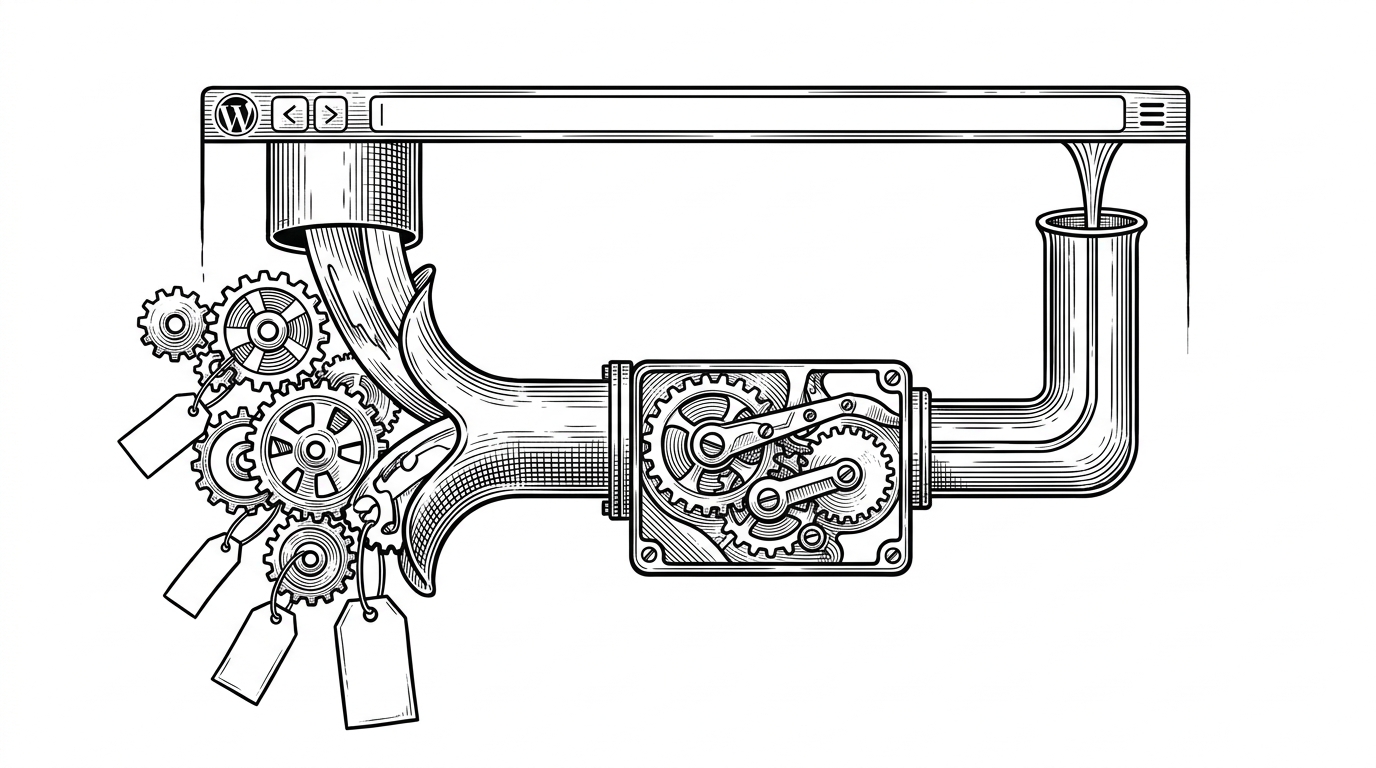
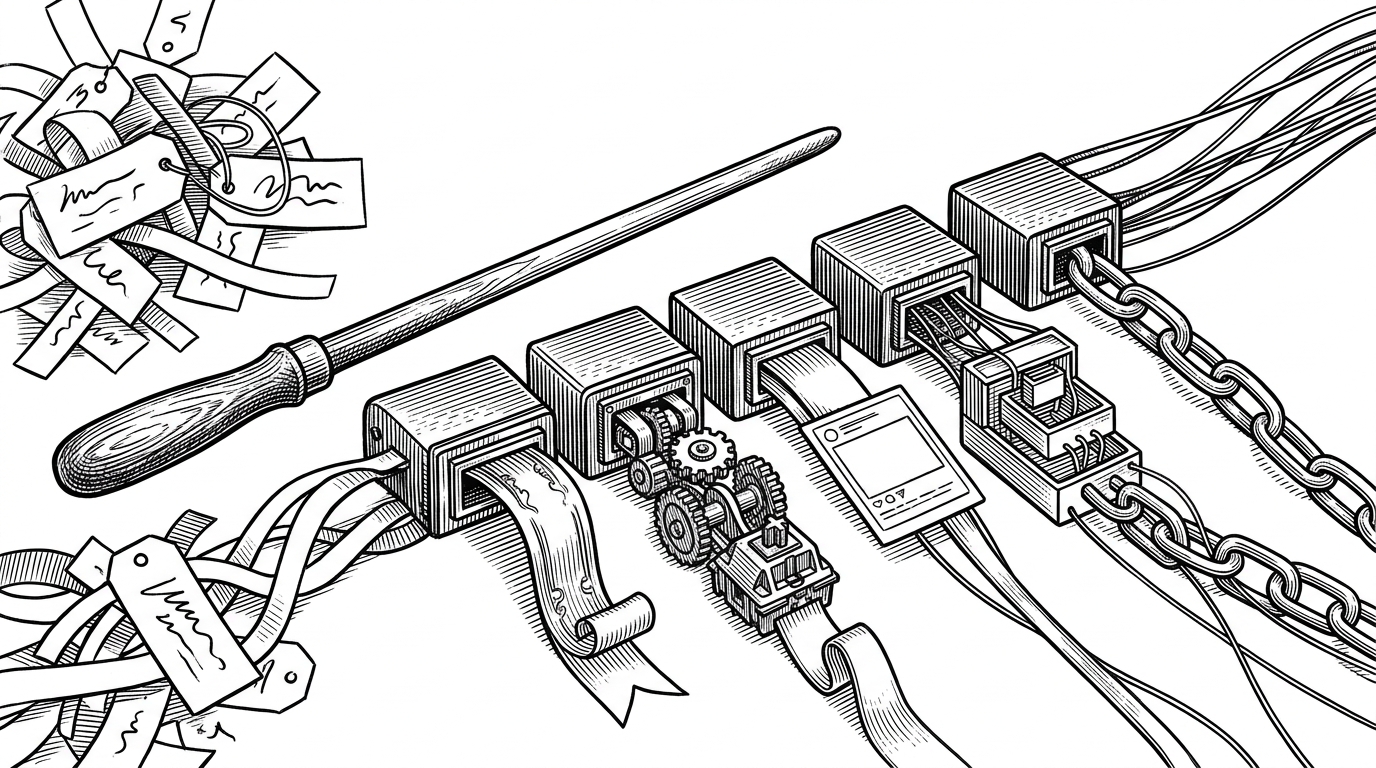
This is the core trick. TSF takes control of wp_head, strips out default WordPress noise, then rebuilds the output through specialized generator classes. The result is not merely fewer tags. It is a predictable ordering system.
add_action( 'wp_head', 'tsf_render_head', 1 );
remove_action( 'wp_head', 'wp_generator' );
remove_action( 'wp_head', 'rel_canonical' );

$head = tsf()->head();
$head->generate_title();
$head->generate_robots();
$head->generate_open_graph();
$head->generate_schema();
$head->output();
The code above is a simplified reading of the idea, not a literal copy of the implementation. The point is that TSF does not scatter SEO logic across theme files and ad hoc hooks. It centralizes head generation, then lets each generator contribute one piece of the final block.
That architecture also explains why the plugin scales well. When one class owns one output type, the system becomes easier to reason about, faster to profile, and less likely to collapse under feature creep.
Why Headless Mode Matters
Headless mode is the quiet signal that this project is thinking beyond the dashboard. If the settings interface is not needed, TSF can stay out of the way and still provide the engine underneath. That makes it useful in REST-heavy workflows, CLI tasks, and setups where WordPress is serving content without acting like a traditional CMS admin app.
A lot of plugins say they are developer-friendly because they expose a few filters. TSF goes further. It treats the admin UI as optional surface area, not the center of the product.
Robots Logic With Bitwise Precision
The robots layer is one of the clearest signs that the codebase has real engineering discipline. Instead of sprawling conditionals, TSF uses bitwise flags to model SEO state as composable switches. That is a compact way to represent priority, exceptions, and overrides without turning the logic into a maze.
It also says something about the team’s priorities. This is a plugin that cares enough about internal representation to make the simple case fast and the edge case explicit.
| Robots handling | Bitwise TSF style | Loose conditional style |
|---|---|---|
| State model | Composable flags | Scattered if statements |
| Priority handling | Explicit and compact | Often implicit |
| Performance | Cheap to evaluate | Can grow branchy |
| Maintainability | Easier to extend cleanly | Harder to audit under pressure |
That matters because robots directives are not just a UI choice. They are policy. Encoding policy in a structured way is one reason TSF feels more like a system than a settings page.
The v5 Rewrite Was the Real Product
The v5 rewrite, codenamed Apex, looks like the moment the project decided to trade accumulated convenience for a better long-term shape. The old monolithic API was split into a pool-based model, with focused entry points like tsf()->query(), tsf()->title(), and tsf()->description(). That is not a cosmetic refactor. It is a statement about how the code should be used.
The same rewrite rebuilt schema generation around relational entities, which matters because schema is where duplicate data and wasted bytes tend to pile up. TSF’s answer was to wire entities by ID and tighten the system around a smaller, more explicit data model.
In other words, v5 was not feature inflation. It was architectural compression. Fewer moving parts, clearer boundaries, and a cleaner path for future changes.
Why This Is a Different Kind of SEO Tool
Compared with Yoast, Rank Math, and SEOPress, TSF is playing a different game. It is not trying to win on UI breadth or feature theater. It is trying to be the quietest reliable layer between WordPress content and the head tags search engines actually consume.
| Product | Philosophy | UI weight | Defaults | Branding | Performance posture | Developer friendliness |
|---|---|---|---|---|---|---|
| The SEO Framework | Automation and restraint | Light | Sane, opinionated | Unbranded | Aggressively lean | High |
| Yoast SEO | Guidance and broad adoption | Heavier | Guided and opinionated | Visible brand layer | Moderate | Moderate |
| Rank Math | Feature density | Heavy | Feature-rich | Visible brand layer | Moderate to heavy | Moderate |
| SEOPress | Balanced general-purpose SEO | Moderate | Flexible | Light branding | Moderate | Moderate |
That comparison is less about feature counts than product philosophy. TSF treats SEO as an operating layer. The others more often treat it as a workflow surface.
If you are a developer or a site owner who wants the plugin to disappear after setup, that distinction is decisive.
The Solo Architect Problem
The project is strongly associated with Sybre Waaijer, who has kept the system coherent across years of rewrites and performance work. That cohesion is part of the appeal. It is also the risk. When one person holds the architectural memory, the code can stay elegant for a long time, but the bus factor stays high.

That tension is the right ending. TSF is unusually disciplined for a WordPress plugin, unusually resistant to bloat, and unusually confident about what it is not. The trade-off is that the same clarity that makes it elegant also concentrates responsibility in one place.