theDakshJaitly/HandsOnML_Aurelien-Geron: The notebook that teaches machine learning without the hype
A tiny study repo built from Hands-On Machine Learning Chapter 2, where stratified sampling, pipelines, and data hygiene do the real work.
- This repo matters because it turns one textbook chapter into a public record of machine learning discipline, not a polished product.
- Chapter 2 is the real lesson because stratified sampling, preprocessing, and leakage control decide whether an ML workflow is trustworthy.
- The notebook's minimalism is the signal, because it documents practice and repetition instead of packaging.
- Compared with the official companion repos, it reads like a private study artifact that makes learning visible.
The most interesting thing about this repository is that it refuses to look impressive. The README says NOT A PROJECT, and that is exactly why it deserves attention. It is a study log, not a launch. One notebook, one chapter, one developer turning a textbook into muscle memory.
The anti-project is the point
The repo is small enough to understand at a glance. A minimal README frames the intent, and Chapter2.ipynb carries the actual work. That combination matters, because it shifts the question from "What does this app do?" to "What does this person now know how to do?"
A series of Jupyter notebooks that walk you through the fundamentals of Machine Learning and Deep Learning in Python using Scikit-Learn, Keras and TensorFlow 2.
That framing fits the repo perfectly. This is not a product repo with a roadmap, issue queue, and release cadence. It is a notebook-shaped proof of work, built to turn the ideas in Hands-On Machine Learning into repeatable habits.
Chapter 2 is where machine learning stops being glamorous
Chapter 2 in Géron's book is the familiar end-to-end housing project. The interesting part is not the model, and it is not the visualization. It is the boring machinery around the model: sorting the data correctly, avoiding leakage, and making sure every transformation can be replayed on new inputs.
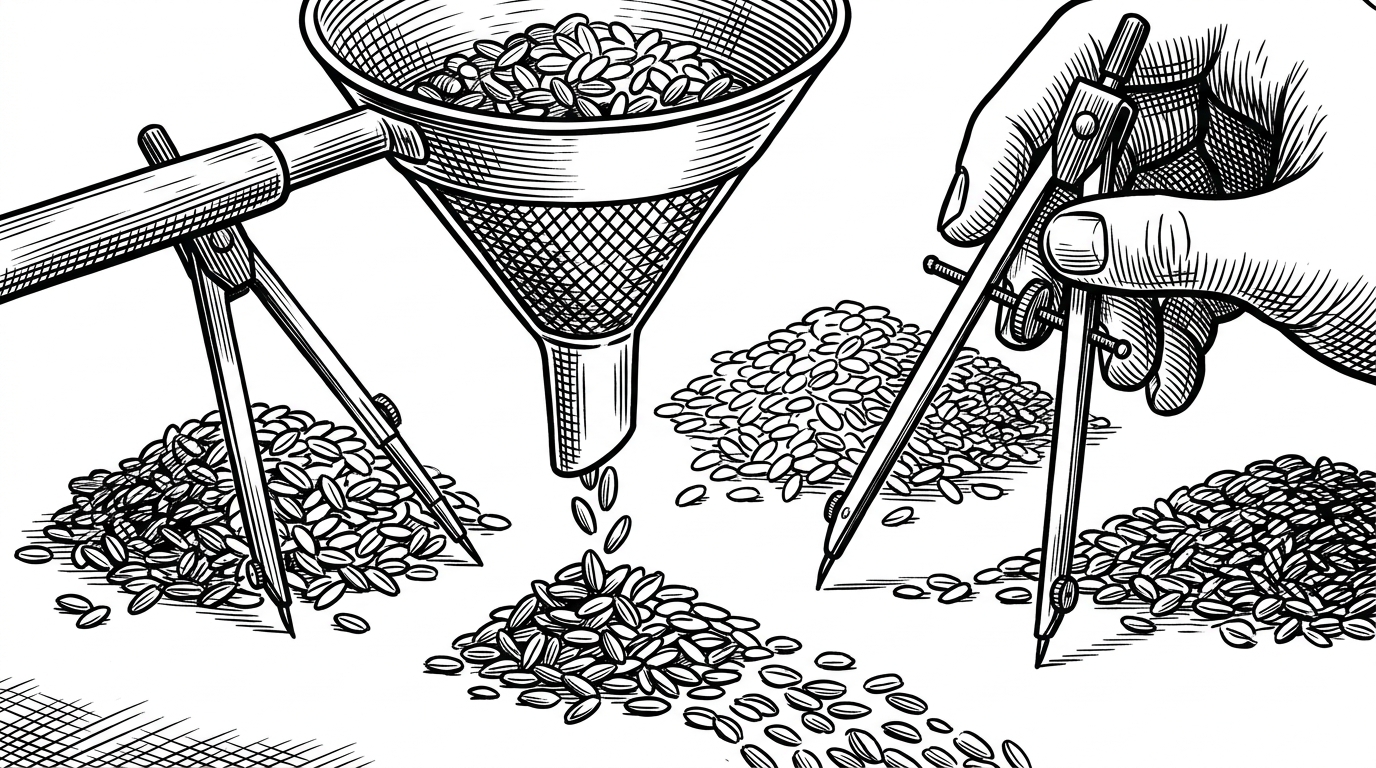
That is why this notebook is more revealing than a polished demo. It shows a learner grappling with the parts of ML that actually determine whether a later model is meaningful. The work starts with a representative split, continues through preprocessing, and only then reaches the estimator.
Unlike many other popular ML books and courses that spend a lot of time on mathematical derivations and theory before getting to any actual code, Géron takes a decidedly practical approach focused on developing real-world skills as quickly as possible.
Why the notebook stays small
The repo does not chase software engineering polish. There is no framework layer, no build system, and no attempt to hide the notebook underneath a product shell. That restraint makes sense. For a study repo, reproducibility of thought matters more than packaging.
The absence of extras is also the point. A chapter notebook is allowed to be narrow. Its job is to preserve the sequence of decisions, not to become a platform. In that sense, the repo is closer to a lab notebook than to a launchable application.
Compared with the official companions
| Repo | Intent | Stack | What it optimizes |
|---|---|---|---|
| theDakshJaitly/HandsOnML_Aurelien-Geron | Personal study log for Chapter 2 | Python, Jupyter | Deliberate practice and proof of understanding |
| ageron/handson-ml3 | Official companion to the book | Python, Jupyter, scikit-learn, Keras, TensorFlow | Coverage, consistency, and maintainability |
| ageron/handson-mlp | Official PyTorch-oriented companion | Python, Jupyter, scikit-learn, PyTorch, Hugging Face | A modern deep learning path with a different ecosystem |
The comparison is not about size or status. It is about purpose. The official companions are reference materials. This repo is a learner's trace, which makes it useful in a different way. It shows the point where understanding is still being assembled, one notebook cell at a time.
That is the deeper appeal of learning in public. A tiny repo can be more honest than a glossy one. It reveals the shape of the work before the polish arrives.