acf-objects: Turning ACF Arrays into Fluent PHP Objects
A surgical wrapper for Advanced Custom Fields that replaces array-juggling, null checks, and template clutter with objects, collections, Carbon dates, and Blade-powered renderers.

- acf-objects rewires ACF’s return path so template code can work with objects instead of brittle arrays.
- Its real trick is interception: a return flag, ACF’s formatting hook, and recursive conversion for nested fields.
- The API borrows from Laravel, with collections, Carbon dates, fluent accessors, and Blade-based rendering.
- The package is niche, but it solves a big WordPress problem by making defensive template code the exception instead of the rule.
The hidden cost of ACF arrays
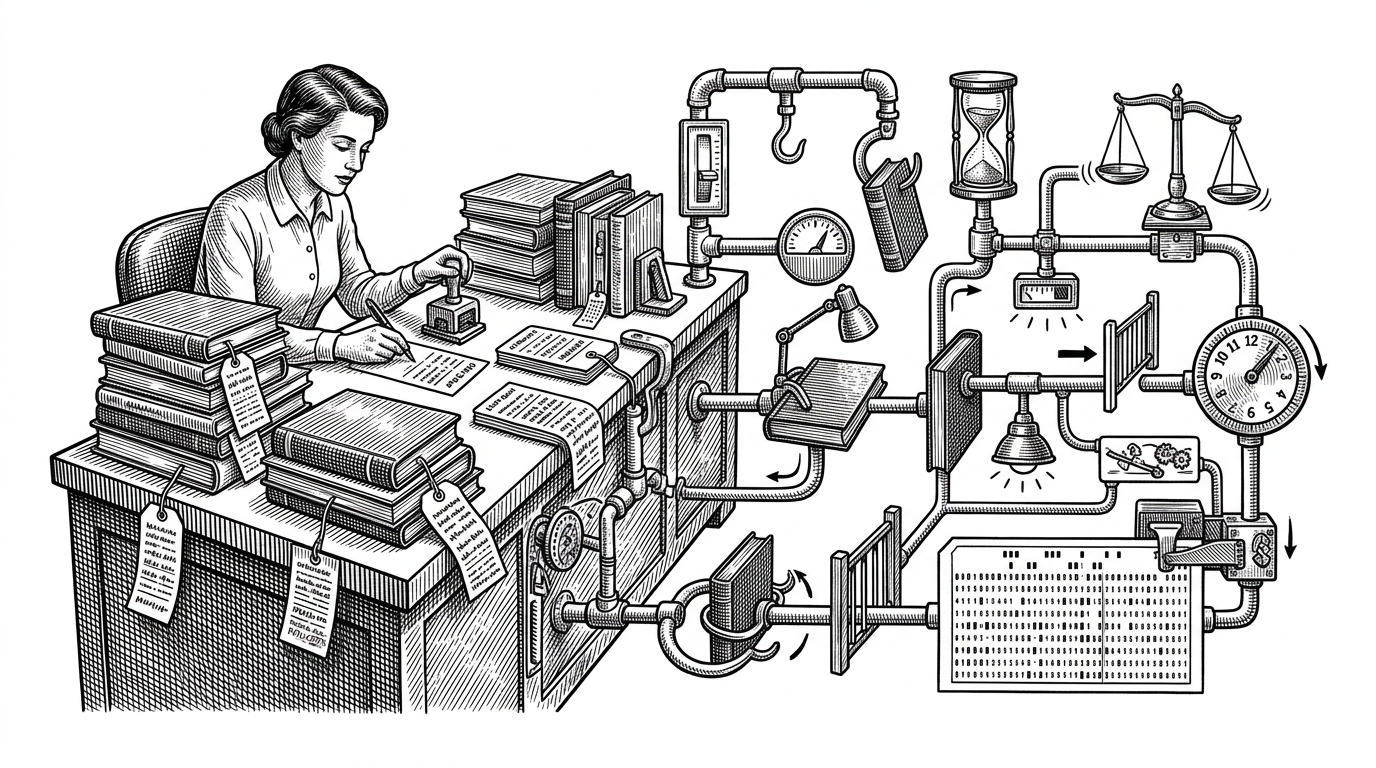
ACF looks harmless until you meet the template code it produces. You start with a simple field, then you are checking nested keys, guarding against nulls, and repeating the same shape of defensive PHP everywhere.
That cost is not just verbosity. It changes how you think. Instead of working with a model, you are babysitting a return value.
<?php
$image = get_field('hero_image');

if ($image && isset($image['sizes']['large'])) {
    echo '<img src="' . esc_url($image['sizes']['large']) . '" alt="' . esc_attr($image['alt']) . '">';
}
This package converts the return values of ACF to objects with easy-to-use methods.
What acf-objects changes
The promise is simple. A field becomes an object. A repeater becomes a collection. A date becomes Carbon. An image can render itself through a view instead of forcing you to assemble markup by hand.
| Standard ACF template code | acf-objects |
|---|---|
| Raw arrays and magic strings. | Fluent objects with methods that match the field type. |
| Repeated null checks and `isset()` branches. | Fallback objects and default values reduce branch clutter. |
| Manual image and link markup. | Renderable field objects and Blade views. |
| Repeaters handled as nested arrays. | Repeaters behave like collections. |
| Dates are parsed ad hoc. | Dates arrive as Carbon instances. |
The library is not trying to make ACF look fashionable. It is trying to make ACF feel native to a modern PHP stack.
The interception trick
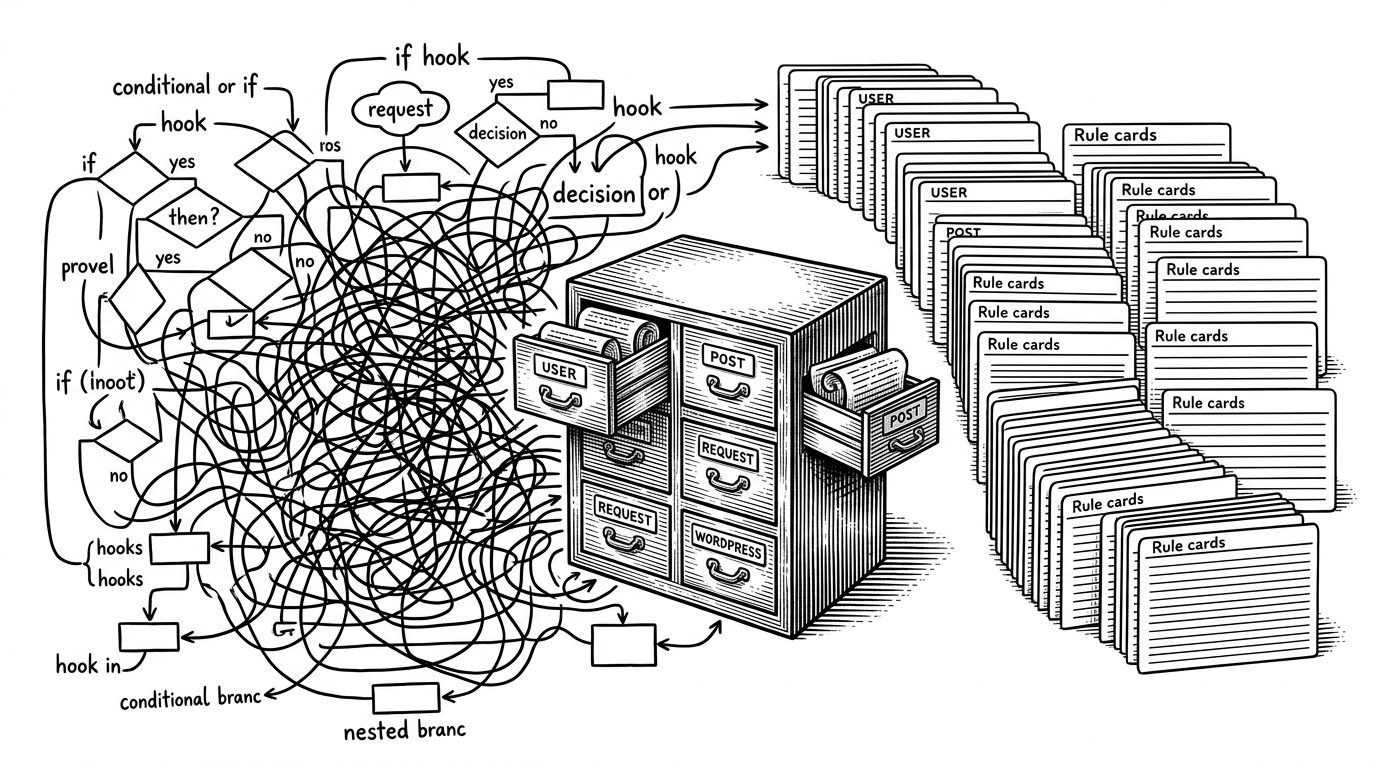
The clever part is that `acf-objects` does not wait until after ACF has already flattened everything into a useless shape. It marks the field with a `return_object` flag, routes the value through ACF’s formatting pipeline, and then intercepts the formatted result in its service provider.
// Conceptually, the flow looks like this.
$field['return_object'] = true;

add_filter('acf/format_value', function ($value, $post_id, $field) {
    if (!empty($field['return_object'])) {
        return app('acf-objects.field')->make($field['type'], $value, $field);
    }

    return $value;
}, 10, 3);

Field objects as a fluent API
Once the value is converted, the API starts to feel deliberately designed. `Field.php` gives the shared behavior. Traits like `FetchesArrayValues` let field keys become methods, which means the surface area stays small even as the supported field types grow.
<?php
$image = AcfObjects::getField('hero_image');

$image->default('fallback.jpg');
$image->isSet();
$image->url('large');
$image->alt();
| Shared behavior | Effect |
|---|---|
| `default()` | Provides a fallback value without forcing template branches. |
| `isSet()` | Lets templates check presence without touching the raw array. |
| Magic accessors | Expose array keys as method calls. |
| Collection support | Makes repeaters feel like native Laravel collections. |
That is the nice part of the design. The package does not add more concepts than necessary. It standardizes access so the field type itself carries the behavior.
Why empty values do not explode
Null safety is where this kind of package proves its worth. The `FallbackField` pattern keeps empty values from turning into fatal errors, which is the difference between a graceful template and a late-night production fix.
<?php
$date = AcfObjects::getField('event_date');

if ($date->isSet()) {
    echo $date->format('F j, Y');
}

// No special casing for empty values.
// No call to format() on null.
| Without acf-objects | With acf-objects |
|---|---|
| Branch before every field access. | Use object methods that encode the field’s behavior. |
| `null` can leak into templates. | Fallback objects absorb empty states safely. |
| Every field type needs bespoke checks. | Shared contracts handle the common cases. |
| The template owns the data cleanup. | The field object owns its own safety rules. |
Blade as the rendering layer
The package does not stop at data. It also lets fields render through Blade views, which matters because it moves markup decisions into one overrideable place. That is especially natural in the Roots and Acorn ecosystem.
<?php
$image = AcfObjects::getField('hero_image');

{!! $image->image('medium') !!}

$image->attributes([
    'class' => 'rounded-full',
    'data-lazy' => 'true',
])->image();
This is the real DX win. You get centralized rendering, but you do not lose the ability to override it. The object is fluent, and the view layer stays open.
Where it fits in the WordPress ecosystem
`acf-objects` is not a replacement for ACF, and it is not a page builder widget. It solves a narrower problem: how developers handle ACF data inside theme and plugin code when they want a Laravel-like experience.
| Tool | What it solves | Where it lives |
|---|---|---|
| Standard ACF template code | Nothing beyond raw field retrieval. | Inside each template file. |
| acf-to-rest-api | Exposing ACF data through the REST API. | API layer and headless setups. |
| Elementor ACF widgets | Displaying a specific ACF field in a builder UI. | Builder-specific presentation. |
| acf-objects | Fluent, object-oriented access to ACF data. | Theme and plugin PHP code. |
That positioning is why the project feels bigger than its footprint. It does not compete on breadth. It competes on the quality of the default developer experience.
Why this project feels bigger than it looks
The surface area is small, but the idea is not. `acf-objects` pulls a familiar Laravel pattern into WordPress without asking you to rewrite the whole stack. That makes it useful to one team, and suggestive to everyone else.
The package’s real achievement is not that it wraps ACF values. It changes the posture of the code around them. Instead of defensive template scripting, you get a domain-shaped object model that is harder to misuse.