Inside trailofbits/skills: how security expertise becomes a versioned system for Claude Code
Trail of Bits has packaged audit methodology, rejection patterns, and validation scripts into a marketplace of skills that teaches an agent how to think before it hunts for bugs.
- trailofbits/skills is not a prompt dump, but a governed system for turning security judgment into reusable agent behavior.
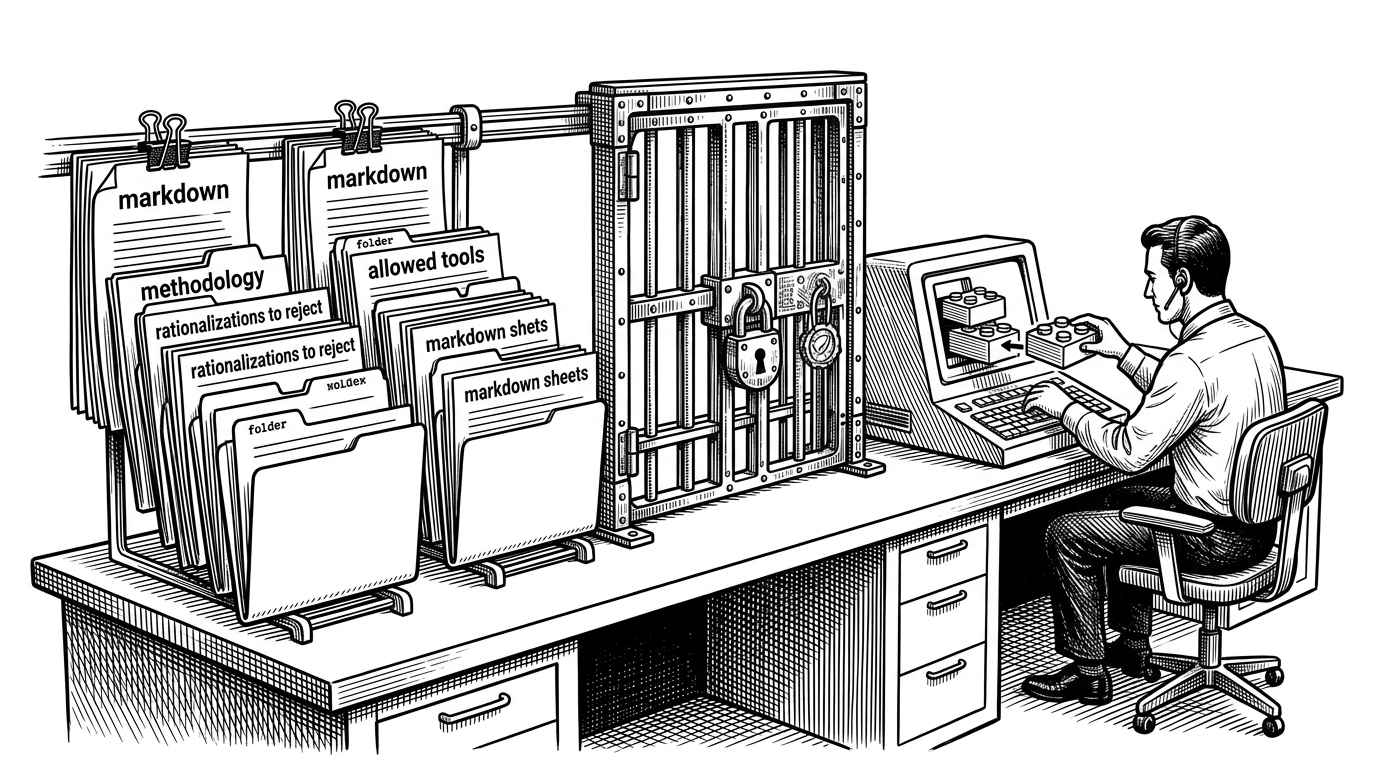
- Its sharpest idea is negative guidance, where explicit rationalizations to reject keep Claude from taking the easy wrong answer.
- The repo is held together by validation scripts and mirrored metadata, so the marketplace behaves like software rather than content.
- The result is a portable audit layer that sits above tools, shaping how analysis starts before it decides what to flag.
The most interesting thing about trailofbits/skills is not that it can audit code. Plenty of tools can search for patterns, run scanners, or wrap an LLM around a checklist. The interesting part is that Trail of Bits is trying to ship judgment: the habits, constraints, and skepticism that keep a good security analyst from reaching for the first convenient answer.
That is why this repo reads less like a prompt library and more like a security operating system for Claude Code. The skills are modular, versioned, and enforced. They are also opinionated about what the agent should not do, which turns out to be the most important design choice in the whole project.
Why “rationalizations to reject” changes the game
Most AI tooling tells the model what to do. This repo is unusually good at telling it what excuses to drop. The skills contain explicit sections for rationalizations to reject, which means they anticipate the lazy shortcuts that produce bad security work: shallow context, overconfident conclusions, and assumptions that feel plausible but fail under scrutiny.
That negative-constraint pattern matters because security work is full of false certainty. A model that can list issues is not the same as a model that can resist premature closure. Trail of Bits is trying to build the second one.

Trail of Bits Claude Code skills for security research, vulnerability detection, and audit workflows
SKILL.md is the real product
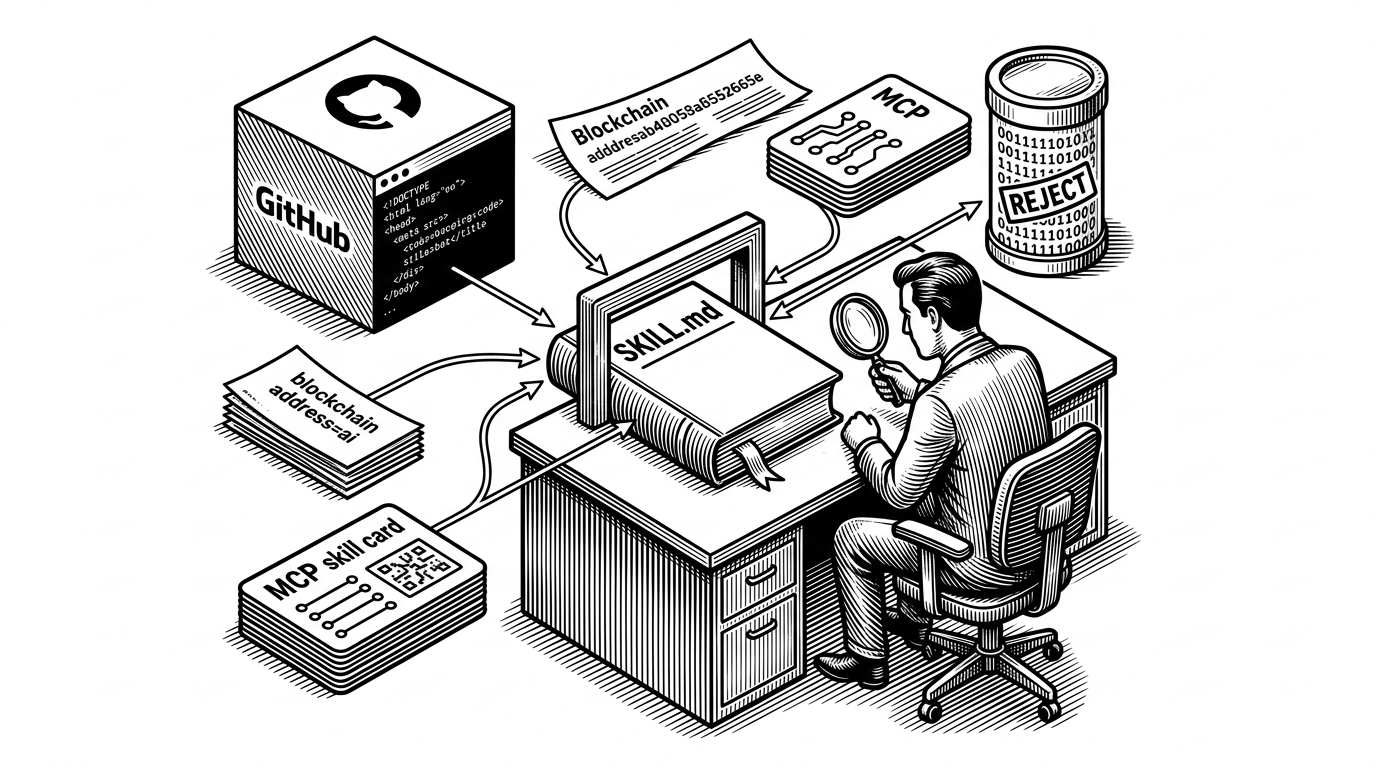
The repo’s unit of value is the skill file. SKILL.md is not just documentation. It is a compact operating contract: what the agent should pay attention to, what tools it can use, what methodology it must follow, and what bad reasoning it must reject.
That works because the surrounding system is strict. The markdown can stay readable and human-editable while the repo’s metadata, symlinks, and plugin registry do the enforcement. In other words, the prose is the interface, but the surrounding repository makes it executable.
# Audit Methodology
1. Build context before conclusions.
2. Inspect the smallest useful unit first.
3. Verify every assumption with tools or source.
4. Reject shortcuts that create false confidence.
5. Only then summarize findings.
That is a simple shape, but it is a serious one. It turns expert practice into a repeatable scaffold. The model is not being asked to be brilliant on demand. It is being forced to behave like a disciplined analyst.
The marketplace is backed by enforcement, not vibes
The repository calls itself a marketplace, but it behaves more like a release pipeline. The scripts in .github/scripts check that the README, marketplace metadata, plugin manifests, and filesystem layout all agree with each other. That matters because a skill ecosystem is only useful if the catalog stays coherent.
This is the unglamorous part that makes the whole thing credible. A clever prompt collection is easy to fork and drift. A validated marketplace is harder to break accidentally.
| Dimension | trailofbits/skills | General prompt packs | Static analysis tools |
|---|---|---|---|
| Goal | Encode security judgment for Claude Code | Give the model helpful instructions | Find known bug classes reliably |
| Primary unit | Skill plus metadata plus validation | Prompt or template | Rule set or analyzer |
| Reasoning style | Methodical, constraint-heavy, skeptical | Loose, often generic | Deterministic pattern matching |
| Human expertise encoded? | Yes, explicitly | Sometimes | Yes, but in rules rather than prose |
| Validation or linting? | Yes, via repo scripts and metadata checks | Rarely | Yes, but usually for rules and configs |
| Scope | Audit workflows, patterns, and agent behavior | Task-specific assistance | Code and configuration scanning |
| Best for | Security teams that want repeatable agent behavior | Quick experimentation | Known classes of defects |
The important distinction is that trailofbits/skills does not replace scanners. It sits above them. It helps decide what to inspect, how to inspect it, and when to distrust the first result.
Why the Codex sidecar matters
The mirrored .codex/ layer is a small detail with big implications. It says the repo is not married to one runtime. The same expertise is being packaged for multiple agent environments, with symlink validation keeping the mirror honest.
That is a portability story, but it is also a durability story. If the knowledge lives only in one assistant-specific format, it is fragile. If it can be mirrored and checked, it starts to look like infrastructure.
The most revealing plugin refuses to conclude too early
The clearest expression of the project’s philosophy is the insistence on context building before bug hunting. In the repo’s own language, the point is to produce understanding first. That sounds obvious until you compare it with the average security workflow, which often rewards speed over confidence discipline.
This is where the repo feels genuinely different from a generic security agent. It is not optimized for hot takes. It is optimized for slower, more defensible reasoning.
## Function analysis
- Start with structure, not suspicion.
- Trace behavior at the smallest meaningful granularity.
- Record what is known before inferring what is risky.
- Treat missing context as a blocker, not a detail.
That posture matters in practice. An agent that is forced to understand a function before accusing it of being vulnerable is less likely to generate a pile of noisy findings and more likely to surface the one issue that survives scrutiny.
Where this sits in the market
Compared with broader AI security tooling, trailofbits/skills is more curated and more opinionated. Compared with offense-oriented collections such as transilienceai/communitytools, it feels less like a loose toolkit and more like a governed library of expert workflows. The difference is not just audience. It is the level of constraint baked into the system.
That makes the repo closer to a curated security brain for Claude Code than a generic AI security utility. It is not trying to do every security task. It is trying to make a few security tasks much harder to do badly.
| Project shape | trailofbits/skills | Offensive skill collections | Traditional analyzers |
|---|---|---|---|
| Core identity | Curated expert marketplace | Community toolkit for security tasks | Deterministic analysis engine |
| Primary strength | Guided reasoning and enforced methodology | Breadth and flexibility | Repeatable detection |
| Risk profile | Can be opinionated or narrow by design | Can be uneven in quality | Can miss novel or contextual issues |
| Best use | Audit workflows and agent discipline | Hands-on testing and exploration | Baseline defect detection |
The weird little Easter egg that says a lot
Then there is let-fate-decide, the kind of plugin that could only exist in a repository confident enough to be playful. It is a good signal. The team is not pretending that every problem is solved by a stricter checklist. Sometimes the right move is to introduce controlled randomness and break a deadlock.
That small joke does not weaken the project. It humanizes it. More importantly, it hints that agent workflows are not just about tighter control. They are also about knowing when a process needs a nudge out of local optimality.
What this repo suggests about the future of security work
The long-term implication is straightforward. Security teams may increasingly ship their judgment as modular, testable artifacts that agents can use every day. That does not replace experienced auditors. It multiplies them.
If that happens, repos like trailofbits/skills will be the template. Not because they are flashy, but because they make expert reasoning durable, portable, and harder to fake.