Unsloth: The Local AI OS That Refuses to Break
From custom Triton kernels to spawned training workers and live data recipes, Unsloth Studio turns fine-tuning, inference, and model juggling into one self-healing local workflow.
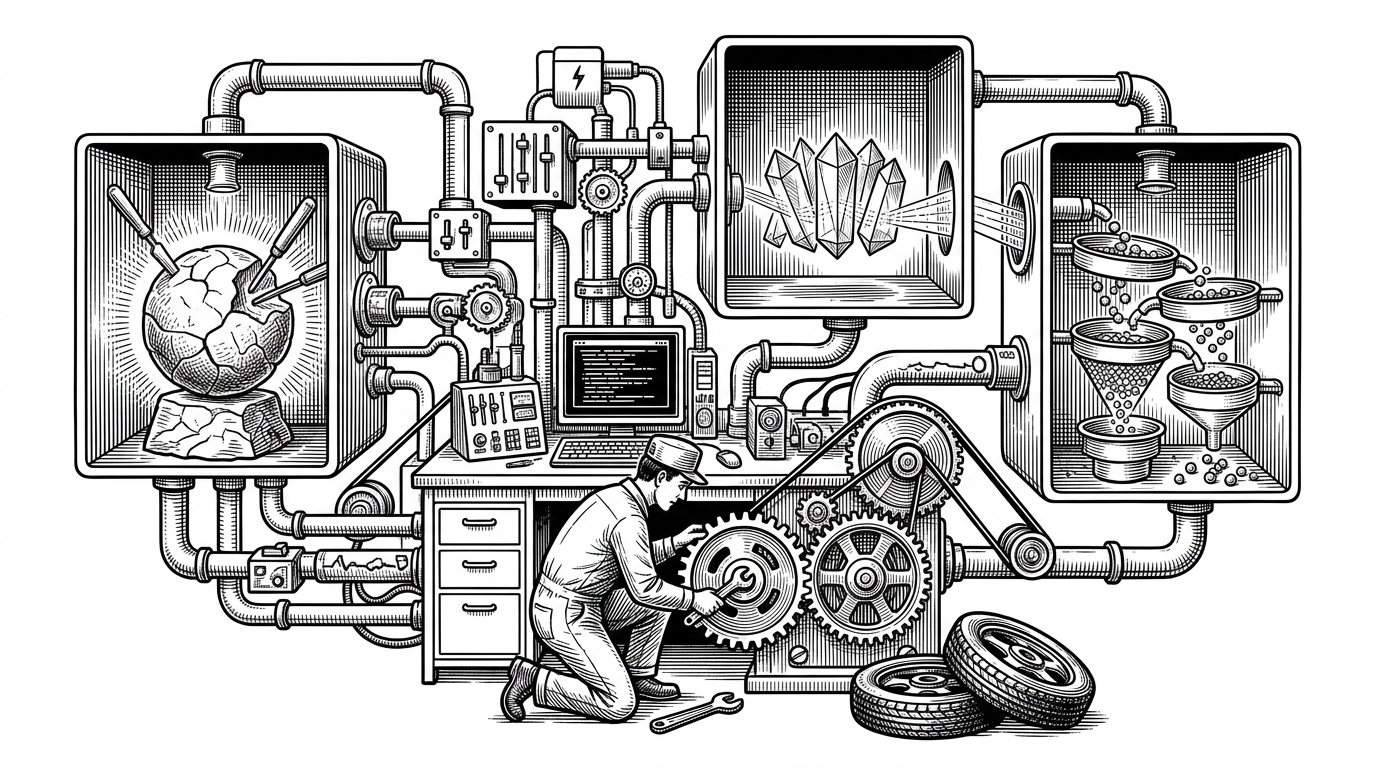
- Unsloth’s main innovation is operational, not just computational: it treats local AI as a system that must isolate jobs, patch dependencies, and recover from broken environments.
- Fresh spawned workers are the backbone of that resilience, because they avoid process contamination, CUDA collisions, and version-switching problems that usually wreck long-lived training backends.
- The Studio layer widens the product from a fine-tuning library into a local control plane for training, inference, exports, and data preparation across many model families.
- Performance still matters, but in Unsloth it is the second act after reliability, because fast kernels only become useful when the workflow stays alive long enough to use them.
The real problem Unsloth solves
Local AI tooling often fails in boring ways. One model wants one dependency stack, another wants a different kernel, and a long-lived backend can get contaminated by imports, CUDA state, or an environment that looked fine five minutes ago. Unsloth Studio is interesting because it assumes that mess from the start.
That is why the project feels less like a single library and more like a control system. The useful question is not just can this model train fast, but can the machine keep functioning after three model switches, a bad dataset preview, and one missing wheel? Unsloth’s answer is yes, or at least, it tries very hard to make yes the default.
Why the backend is built like a reset button
The core design choice is simple and unusually effective. Instead of keeping training inside the main FastAPI process, Unsloth uses a fresh spawned Python interpreter for each job. That means state does not leak between runs, model-specific setup can change safely, and a bad job has a much harder time poisoning the next one.
This is the opposite of the fragile local AI pattern many developers know. The common failure mode is a backend that slowly accumulates imports, memory pressure, and CUDA baggage until every new task feels cursed. Unsloth treats that as an architectural smell and reaches for process isolation instead of hoping the stack behaves.
# Conceptual shape of the spawn pattern
ctx = mp.get_context("spawn")
process = ctx.Process(target=worker_main, args=(job_config,))
process.start()
process.join()
The important part is not the syntax. It is the implication: each run gets a cleaner room. If the job needs a different set of model-specific assumptions, Unsloth can afford to make them without dragging yesterday’s state into today’s training loop.
The self-healing worker
The worker is where Unsloth stops pretending the environment will be perfect. In the backend, it can detect model-specific needs, patch missing wheels just in time, and adjust for kernels that particular architectures expect. That is a practical answer to the reality of local AI: users do not all begin from the same clean machine.
| Traditional local training | Unsloth worker model |
|---|---|
| One long-lived process handles everything. | Each job starts in a fresh spawned process. |
| Dependencies are installed manually ahead of time. | Missing pieces can be patched just in time. |
| Errors often surface late, after state has already accumulated. | Isolation makes failures more contained and easier to recover from. |
| Model switching is brittle and stateful. | Model-specific behavior is handled per job, not per session. |
| Environment cleanup is a separate chore. | Cleanup is part of the workflow design. |
Unsloth Studio is a web UI for training and running open models like Qwen3.5, Gemma 4, DeepSeek, gpt-oss locally.
That quote matters because it shows the scope shift. The worker is not just a helper for fine-tuning. It is one execution layer inside a broader local studio that expects to move between model families without asking the user to rebuild their environment every time.
The thing that saves your GPU before it burns
One of the smartest product choices in the repo is the lightweight tokenizer pre-loading path. It lets users inspect, format, and validate data without loading the full model into VRAM. That sounds minor until you have watched a preview step quietly consume the memory you needed for training.
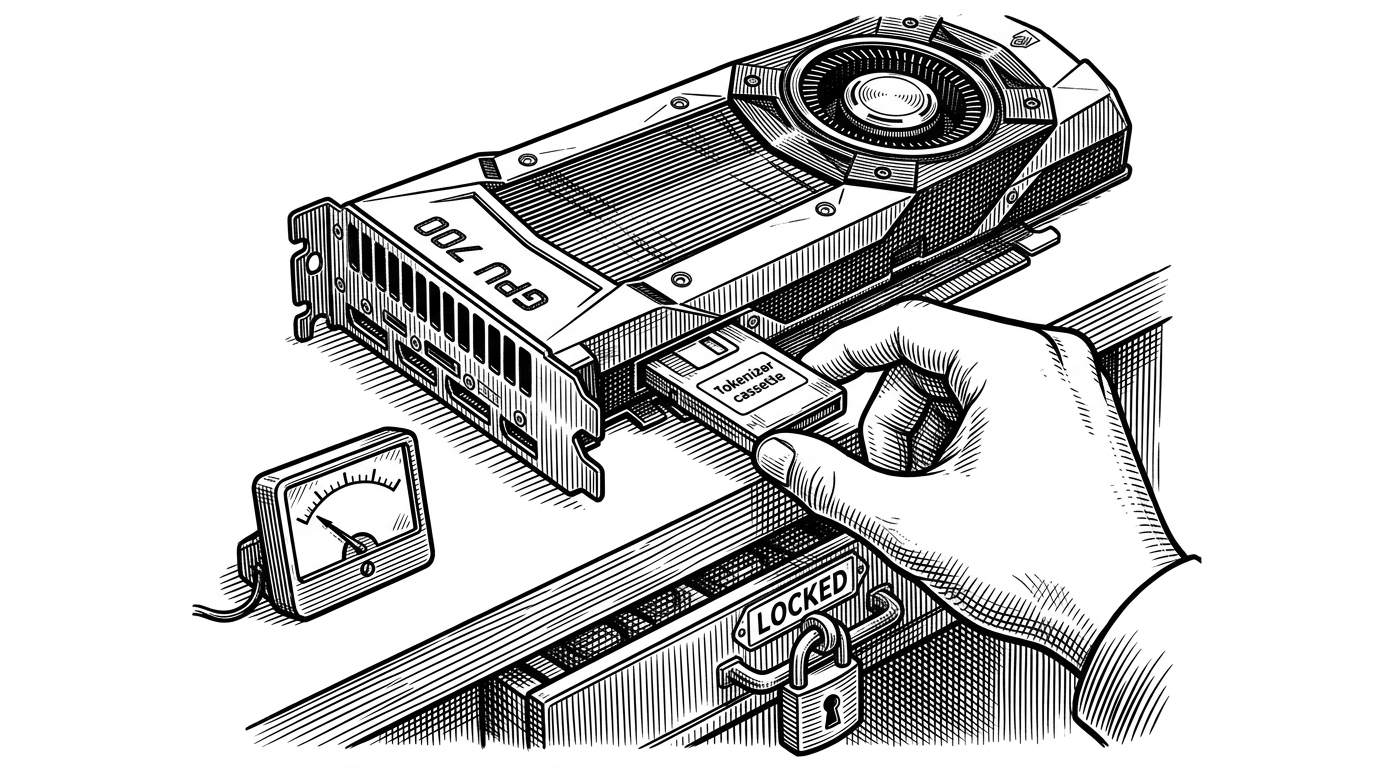
This is the kind of detail that separates a developer tool from a workflow product. Unsloth is not only optimizing the hot path. It is reducing the number of stupid ways a session can fail before the expensive part even begins.
Data recipes are the hidden product layer
The data recipe system is where the Studio becomes more than a training engine. Instead of treating datasets as static files, Unsloth introduces a structured prep layer with validation before the job starts. That means formatting errors can be caught early, before a long run burns time and GPU hours on bad input.
This is a strong signal about the product’s worldview. It assumes real users will bring messy data, switch formats, and make mistakes. So it bakes in checks and transformation steps that make the path from raw data to training far less brittle than a script-first workflow.
Why Studio feels bigger than a library
The repository layout makes the ambition obvious. There is a core library with kernels and model logic, but there is also a backend, assets, configs, export paths, and model presets for a widening range of text, vision, audio, and embedding models. That is not just packaging. It is a platform shape.
| Library mindset | Studio mindset |
|---|---|
| Optimize a function or kernel. | Orchestrate an end-to-end local workflow. |
| Assume the developer can wire the pieces together. | Ship a guided path across training, inference, export, and validation. |
| Support a narrow model slice well. | Maintain presets and fixes across many model families. |
| Treat UX as optional. | Treat resilience and usability as first-class engineering problems. |
A lot of open-source AI projects stop at a good benchmark story. Unsloth is trying to own the whole loop: prepare data, select a model, launch a safe worker, train, export, and keep the machine recoverable for the next task. That is why the “Studio” label is not marketing fluff. It describes the architecture.
Unsloth’s real advantage is not one trick
The obvious sell is speed. The deeper advantage is that speed sits inside a system that keeps itself usable. Custom Triton kernels, spawned workers, validator checks, hardware detection, and model presets all point in the same direction: less friction across the full lifecycle of local AI work.
That is why Unsloth stands out from both general-purpose ML stacks and single-purpose fine-tuning tools. It is not asking users to choose between performance and sanity. It is trying to package both into one workflow that survives the chaos around it.