Promo-docs: The Documentation Site Built to Win the Migration War
Inside a Mintlify knowledge base that turns roster imports, activation setup, and AI summaries into a playbook for switching staffing agencies onto Promo.

- Promo-docs turns documentation into switching infrastructure instead of post-sale support.
- The repo is organized around two audiences, but it pushes them through one shared operational loop.
- Its strongest moat is migration, because messy roster data gets normalized before it becomes a product problem.
- AI is used surgically, only where setup and summarization would otherwise burn operator time.
Most SaaS docs explain a product after the sale. Promo-docs does something sharper. It tries to make the sale itself feel less risky.
The repository documents Promo, a staffing platform for agencies and brand ambassadors, but the real story is in the workflow. Everything points to the same bet: if you can tame onboarding, migration, and field reporting, you can beat better-known tools that leave that work to spreadsheets.
That is why this repo feels like product surface, not a content library. The content is split by role, the navigation follows the job to be done, and the examples keep returning to the same operational pain.
This is not help content. It is switching infrastructure.
Promo-docs is built to reduce friction before a customer ever reaches the core app. The pages read like setup paths, but they behave like a conversion layer.
That matters because staffing software lives or dies on adoption. If a team cannot import a roster, understand a task, or trust the reporting loop, it will quietly keep the old system and the new sale will stall.
The repo splits the world into agencies and ambassadors
Promo is built around two users who move through the system differently. Agencies create activations, assign tasks, and read results. Brand ambassadors receive the work, submit structured responses, and stay inside a simpler mobile-first loop.
The docs reflect that split instead of flattening it. That matters, because a platform built for both sides needs two kinds of clarity: one for operators, one for participants.
The sharpest docs in the repo are not the feature pages. They are the migration pages. Invite link, single entry, bulk CSV, and platform migration all collapse into one promise: whatever ugly roster you already have, Promo will normalize it.

The docs hint at a real ETL layer underneath the product. Photo URLs are accepted, competitor column names are mapped, and migration from legacy tools is treated as a normal path instead of an edge case.
Activations, tasks, and results form a closed loop
Once a roster is inside, the product starts behaving like a loop. An activation creates the work. A task packages the request. A form collects the response. Results feed back to the agency.
That is the important detail. Promo is not just storing records. It is turning field operations into a repeatable transaction.

That loop is what makes the docs feel operational instead of promotional. They teach a rhythm, not just a feature list.
AI is used where the paperwork hurts most
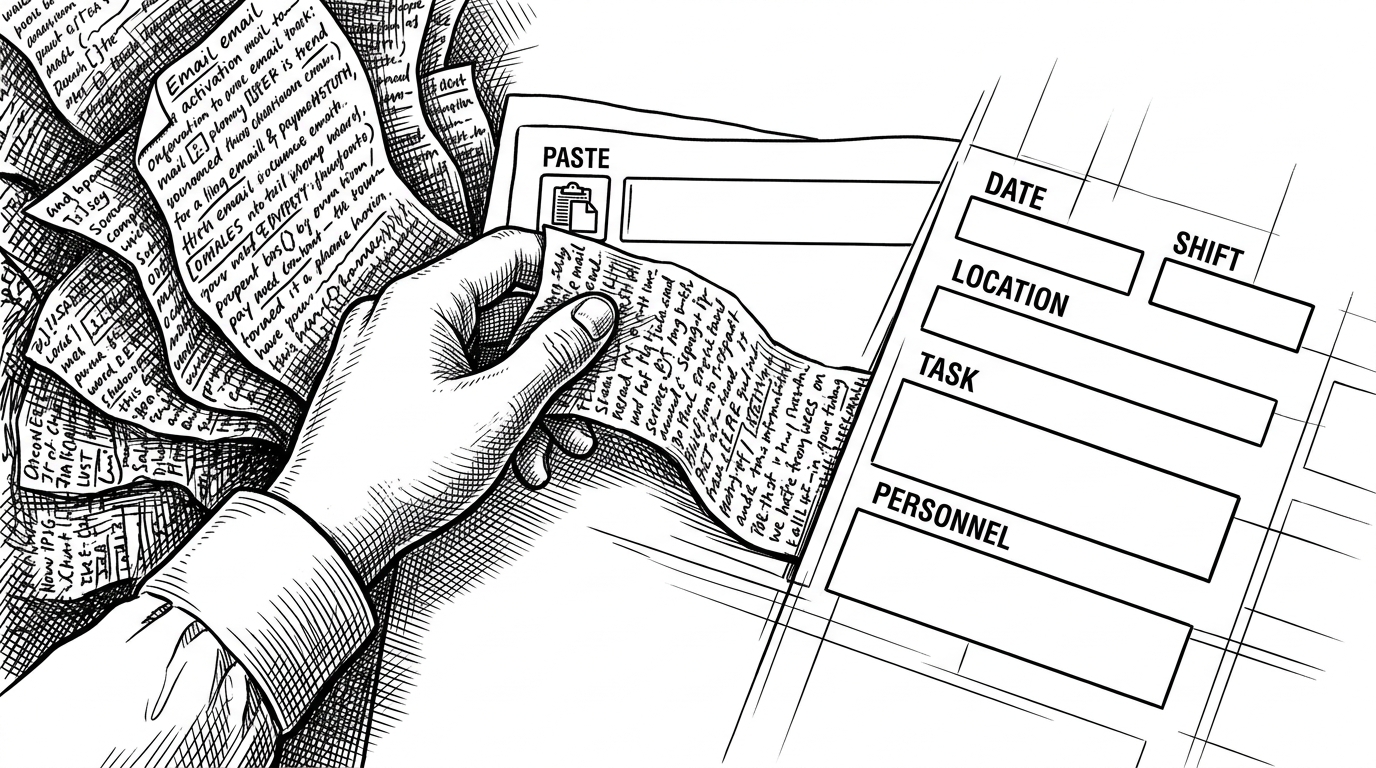
AI appears only where the paperwork hurts. Quick Create with AI turns a pasted email into activation fields. AI Summary turns open-ended responses into something an agency can skim.
That restraint is the point. The feature is not a gimmick layer. It is a translation layer for the two places humans waste the most time: setup and synthesis.
Mintlify gives a small team a large-company surface
The stack underneath is plain, and that is a compliment. docs.json holds the navigation, MDX carries the content, and the folder structure mirrors the app instead of fighting it.
The result is a documentation site with enough polish to feel product-grade, without needing a custom docs application. Mintlify gives a small team the surface area of a larger one.

docs.json
index.mdx
agencies/
  adding-to-roster.mdx
  create-activation.mdx
  tasks/
    create-task.mdx
    manage-results.mdx
ambassadors/
images/
That structure is the quiet advantage. The docs are not just written in MDX, they are organized like the product itself.
What Promo-docs does better than generic SaaS docs
Compared with generic SaaS docs, Promo-docs is optimized for adoption, not just explanation.
| Dimension | Generic SaaS docs | Promo-docs |
|---|---|---|
| Primary job | Explain features after launch | Reduce switching friction before launch |
| Audience model | One generic reader | Two distinct workflows, agencies and ambassadors |
| Import story | CSV upload buried in a guide | Roster migration treated as a core product path |
| AI role | Glossy feature mention | Practical parsing and summarization at the point of pain |
| Information design | Static article stack | Persona tabs and workflow-centered navigation |
| Business signal | Support content | Conversion infrastructure |
That is the real difference. Most docs answer questions. This repo tries to absorb uncertainty before it becomes a sales objection.