Beyond the Slide: How vibe-coding-jam-presentation Turns Code into Cinema
Moving past static decks to bespoke, zero-dependency web engines that treat the browser as a stage.
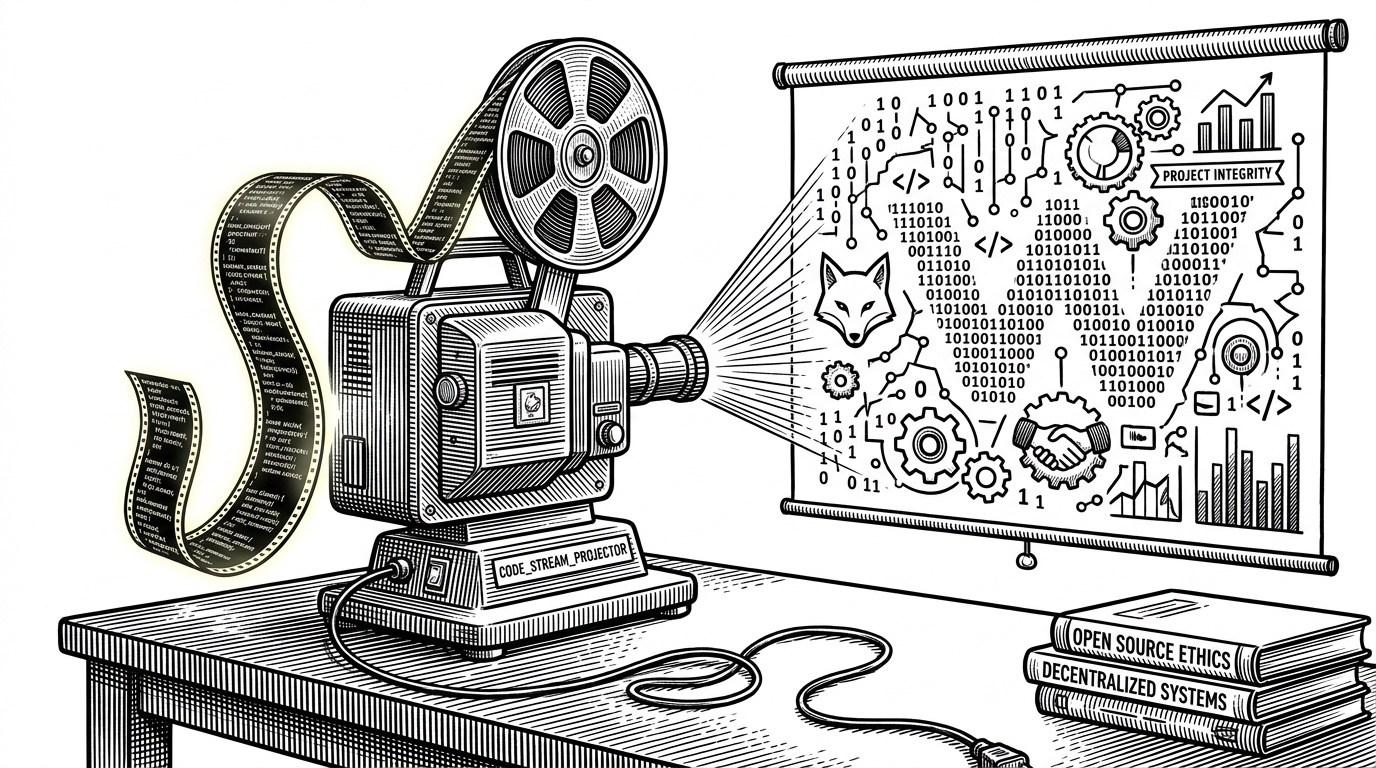
- A zero-dependency single HTML file replaces traditional presentation frameworks to ensure maximum portability.
- Isolated sandbox files allow for rapid aesthetic iteration of micro-interactions before they are integrated into the main engine.
- The engine uses native CSS state toggles and staggered animation delays to achieve a cinematic feel without complex JavaScript.
- Vibe coding prioritizes bespoke creative expression over the scalable production standards of traditional SaaS platforms.
The Single-File Manifesto
The story of this repository is not just about a presentation. It is about the death of the slide as a static container. Zara Zhang's repository reveals a shift where the code itself is the performance. By building a bespoke, zero-dependency engine for a single talk, she demonstrates that vibe coding is not just about generating UI. It is about using large language models to collapse the distance between a creative spark and a high-fidelity technical artifact.
The architecture avoids heavy frameworks like React or Reveal.js. Instead, it relies on a 200KB everything-in-one HTML file. This approach guarantees portability and enforces a strict no-build constraint. The presentation runs entirely in the browser, relying on native APIs and inline CSS to deliver a cinematic experience without the overhead of modern JavaScript bundlers.
The R&D Playgrounds
Before assembling the final deck, the author built isolated sandboxes. Files like color-playground.html and cursor-playground.html serve as micro-laboratories. This represents a decoupled design workflow. Rather than refreshing the main deck to see a change, these playgrounds provide an environment for rapid aesthetic iteration.
These files test various pointer styles and explore SVG path manipulation for organic imagery. By isolating the cursor logic and SVG animations, the developer optimizes performance without cluttering the main presentation logic. The vibe of a presentation often comes from these micro-interactions.
Orchestrating the Browser
The repository uses a bespoke DOM-based slide engine. It relies heavily on CSS for state-driven visibility. Both main versions of the presentation use an active class toggle to control slide transitions. The feel is handled via CSS keyframes rather than complex JavaScript logic.
.slide {
  opacity: 0;
  transform: translateY(20px);
  transition: opacity 0.6s var(--ease-out-expo), transform 0.6s var(--ease-out-expo);
}

.slide.active {
  opacity: 1;
  transform: translateY(0);
}

.slide.active .stagger-1 { transition-delay: 0.1s; }
.slide.active .stagger-2 { transition-delay: 0.2s; }
Using staggered animation delays and custom easing variables ensures the entrances feel snappy and professional. The backgrounds are not solid colors but atmospheres created via radial-gradient meshes and SVG noise textures. This turns the browser into a high-fidelity rendering target.
The Vibe vs. The Tool
This project sits at the intersection of creative expression and rapid engineering. While major platforms focus on production-ready SaaS apps, this repository fills a specific demonstrative niche. It is built for high-speed, high-creativity sessions where the goal is a proof-of-concept rather than a scalable product.
| Feature | Vibe Jam (Bespoke) | Platform (v0 / Bolt) |
|---|---|---|
| Architecture | Single-file HTML/CSS | React, Tailwind, Node.js |
| Dependency Model | Zero dependencies | NPM ecosystem, SaaS lock-in |
| Primary Goal | Bespoke aesthetic and narrative | Efficiency and production-readiness |
| Execution Environment | Any local browser | Sandboxed cloud containers |
The vibe-coding-jam-presentation emphasizes the narrative of the jam itself. It serves as a bridge between doing the coding and explaining the process, proving that sometimes the medium truly is the message.