0xor0ne/awesome-list: The Exploit Research Syllabus Hidden Inside an Awesome List
A year-by-year map of kernel hacks, memory corruption, and modern bypasses, curated for people who need to understand the technique, not just run the tool.
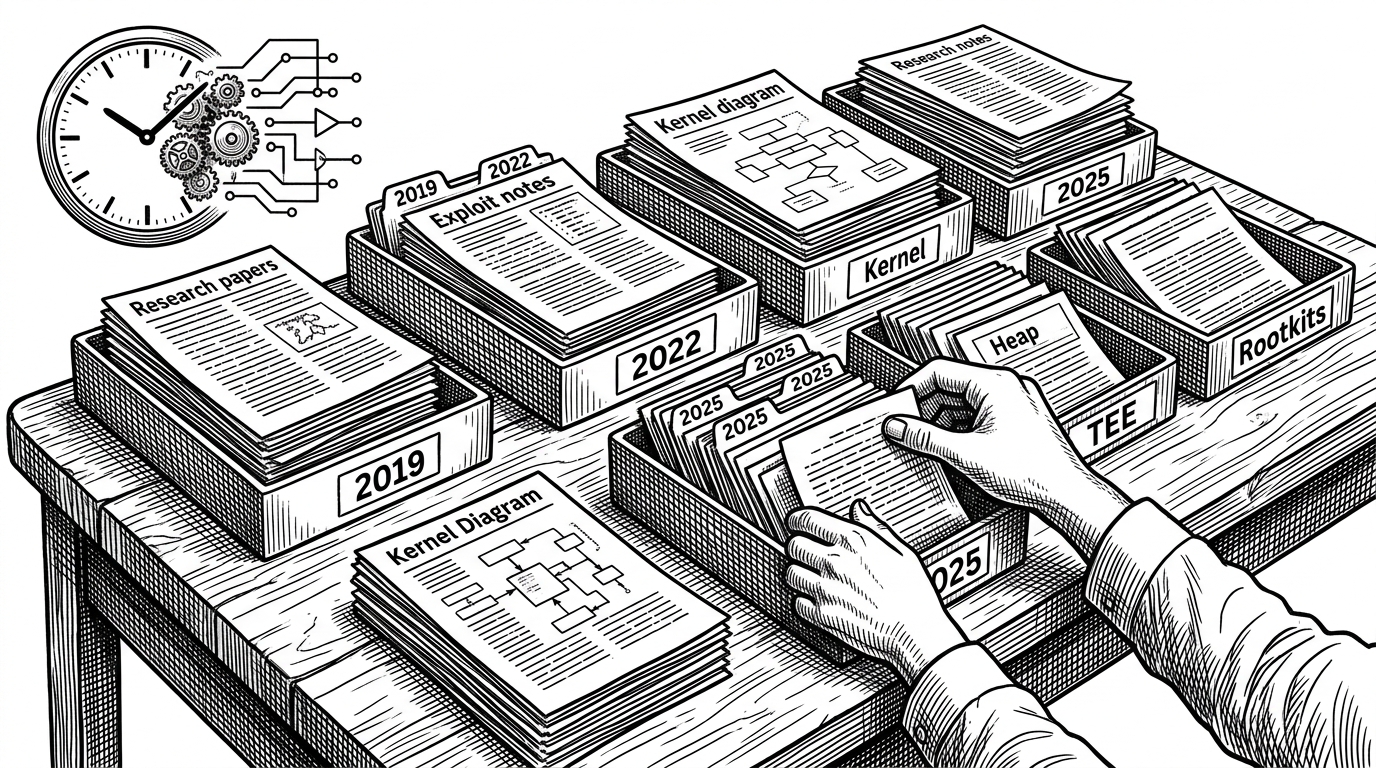
- This repository treats exploit research like a syllabus, not a shelf of links.
- Its year-based structure turns the security arms race into a readable timeline.
- The strongest signal is editorial judgment: papers and write-ups matter more than tools.
- A solo curator can create unusually coherent guidance when the filter stays opinionated and technical.
Why this list feels more like a syllabus than a list
Most awesome lists are useful because they are broad. This one is useful because it is narrow, opinionated, and organized around how advanced security actually gets learned. The maintainer is not collecting everything. They are collecting the material that teaches technique: exploit write-ups, research papers, and deep technical analysis.
My personal collection of awesome blog posts, write-ups, and papers focusing on cybersecurity.
That matters because the repo is aimed at people who already know the basics. It is built for researchers who want to understand memory corruption, kernel security, mitigation bypasses, and the craft of turning vulnerabilities into working exploits.
The year-by-year timeline is the real product
The root README does something smarter than a normal topic dump. It arranges the frontier by year, which makes the arms race legible. In security, freshness is not a cosmetic detail. A technique from one era can be obsolete by the next patch cycle.
| Standard security awesome list | 0xor0ne/awesome-list |
|---|---|
| Usually topic-first or tool-first. | Year-first, so the timeline of research stays visible. |
| Often broad and mixed for many skill levels. | Narrow and advanced, with a clear bias toward deep technical work. |
| Useful for discovery. | Useful for understanding how techniques evolve under pressure. |
| Can bury the newest material inside categories. | Makes recency easy to scan and compare. |
That structure also changes how you read it. Instead of asking, “What tool should I use?” you start asking, “What changed in the attack surface this year?” That is a better question for kernel exploitation, TEE research, and mitigation-aware memory corruption.
The three lanes of depth: kernel, exploitation, and adversary tradecraft
The topic files show the maintainer’s priorities. They are not a random assortment. They form a path from systems internals to exploit primitives to offensive practice.
| Topic file | What it signals | Why it matters |
|---|---|---|
| topics/linux_kernel.md | Kernel exploitation, fuzzing, rootkits, and eBPF stealth. | It tracks how Linux defense and offense keep reshaping each other. |
| topics/exploitation.md | Heap work, allocator-specific research, TEE, RTOS, and bypasses. | It shows interest in the hard part of exploitation: primitives, not slogans. |
| topics/red-team-adversary-emulation.md | Operational tradecraft and emulation frameworks. | It connects low-level research to adversary behavior and simulation. |
| topics/tools_and_repos.md | A separate index for software and utilities. | It keeps the main list focused on learning material instead of tool sprawl. |
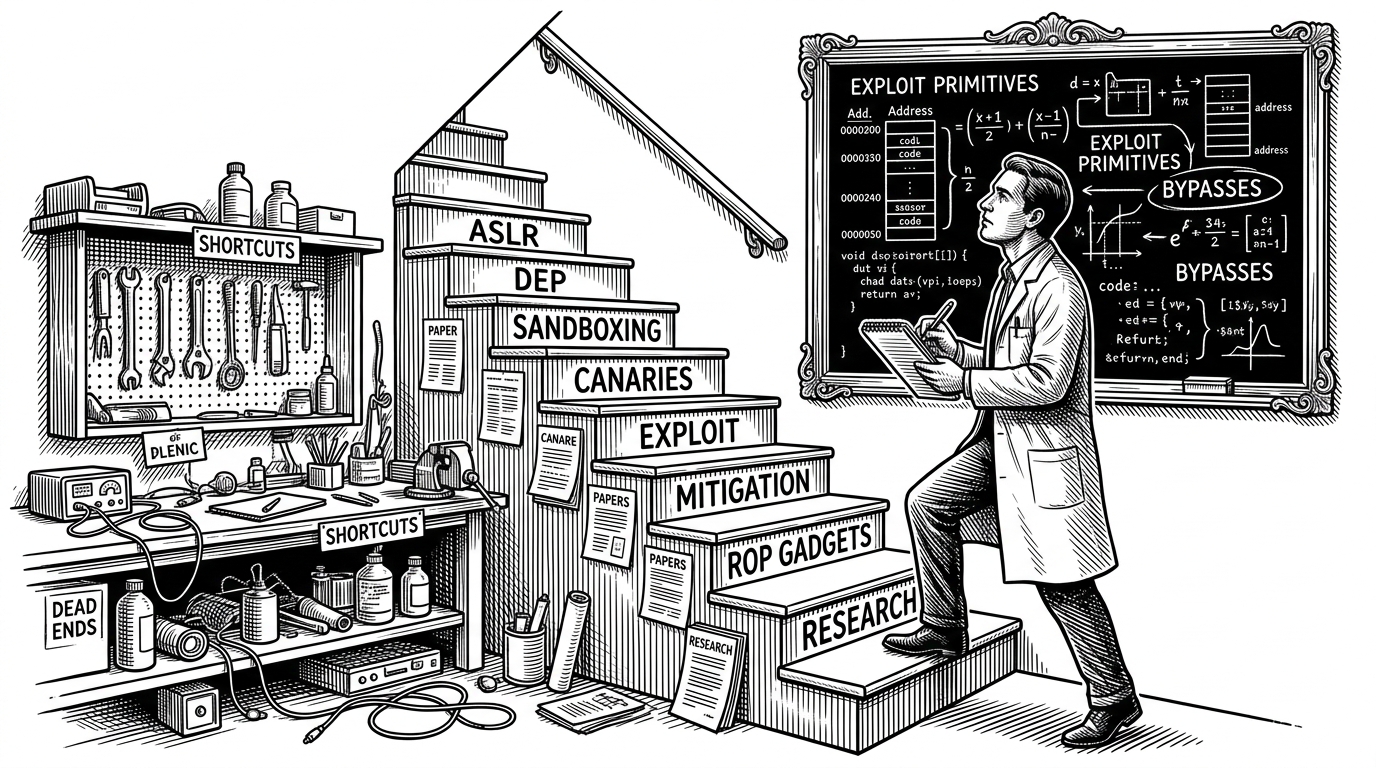
The strongest signal is the allocator-level detail. Scudo, jemalloc, glibc, heap houses, cross-cache attacks, and mitigation bypasses are not beginner keywords. They are the vocabulary of a repo designed to keep pace with modern exploit research, where the interesting part is often how one defense forces the next idea.
What the list says about modern offensive security
This repository is quietly making a larger argument. Modern offensive security is less about a single clever tool and more about reading the papers that explain why the tool worked, why it stopped working, and what replaced it.
That is why its coverage feels unusual. The inclusion of TEE and RTOS exploitation, plus modern Linux stealth topics like eBPF rootkits, suggests a curator watching the frontier, not the mainstream. This is the difference between a general reference shelf and a field guide for people who need to follow the pressure points.
Why a solo curator can outperform a crowd
The repository is highly centralized. That creates risk, but it also creates coherence. The same person is deciding what belongs, what is too shallow, and where the line is between useful and noisy.
| Solo curation | Crowd-sourced curation |
|---|---|
| One editorial voice keeps the bar consistent. | Many voices can widen coverage but blur standards. |
| A strong point of view is easy to feel. | Consensus can drift toward breadth over depth. |
| Bus factor is higher. | Redundancy and contributor diversity are higher. |
| The list can be intentionally opinionated. | The list may be more inclusive but less focused. |
That tradeoff is the point. A repository like this is not trying to become a wiki. It is trying to be a filter. In a field where the signal-to-noise ratio is brutal, a good filter is often more valuable than more links.
What to take away, even if you never bookmark it
The bigger lesson is editorial, not just technical. The best expert curators do three things well: they track the frontier, they privilege depth over volume, and they organize information the way practitioners actually learn. That is why this repo lands like a syllabus.
It is also a reminder that GitHub can host more than code. In the right hands, a repository becomes an instructional product, a thesis about a field, and a durable map through a fast-moving technical landscape.