ai-postex: Post-Exploitation That Reads for Meaning, Not Just Strings
A Cobalt Strike extension that runs compressed ML models on the target, turning file triage into native Windows inference instead of grep-based guesswork.

The goal is not to glorify evasion, but to develop practical intuition about classifier behavior so defenders and offensive security practitioners can better understand these systems and the attacks against these systems.
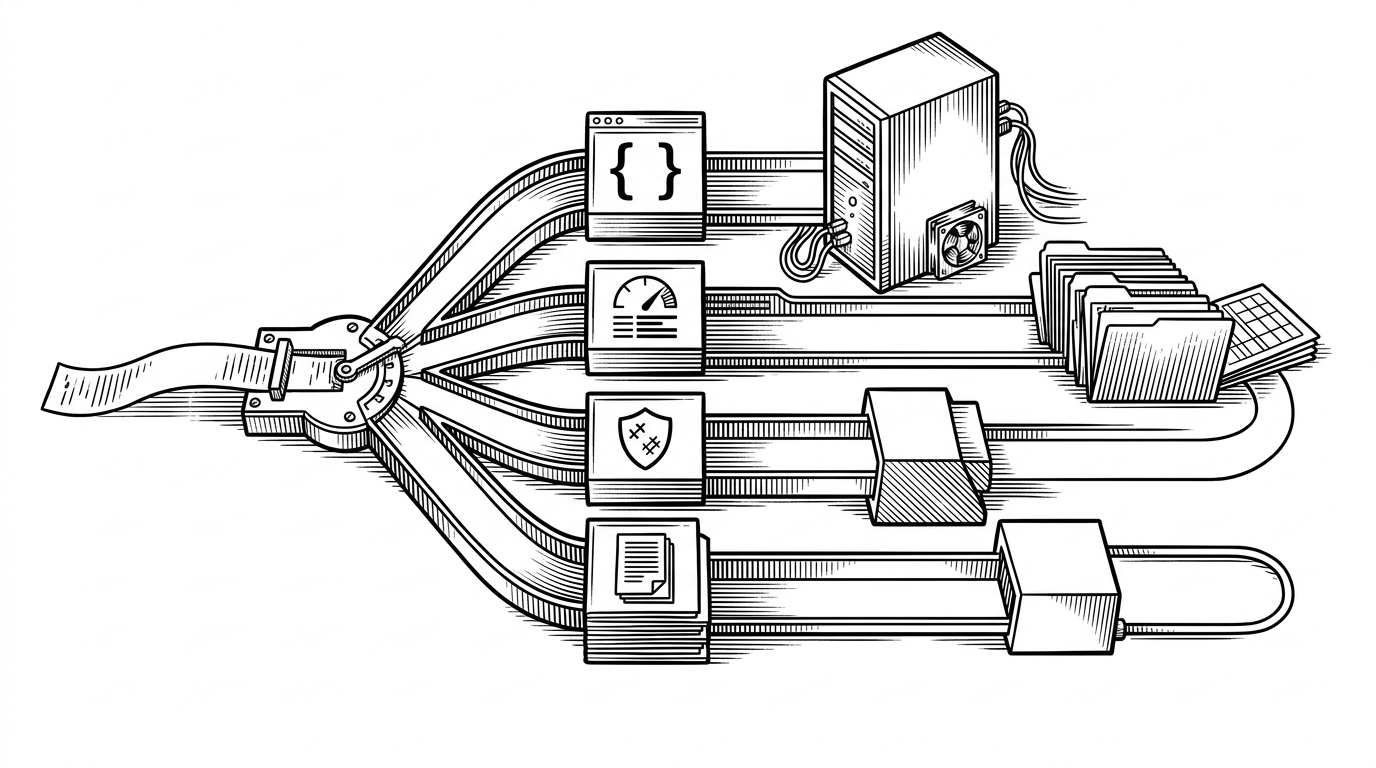
- ai-postex replaces keyword hunting with ranked relevance, so the operator can search for meaning instead of exact strings.
- The repo’s real trick is not the model itself but the delivery path that keeps inference native to Windows and off disk.
- The hybrid stack splits the work cleanly: C++ handles C2 plumbing, Rust handles extraction, and WinML handles inference on the target.
- This is a prototype of a broader offensive shift toward embedded, local, semantically aware tooling.
The End of Grep
`ai-postex` is interesting because it changes what search means during post-exploitation. The operator no longer has to know the exact keyword or filename pattern. They can ask for a credential hunt or a semantic match, and the target machine does the ranking locally.
That is the break. Traditional triage is a human with regex and patience. This repo turns the victim system into the inference engine, with the model and the parsing logic pushed down into the task itself.
Proof-of-concept implementation of AI-enabled postex DLLs
Why This Repo Exists
The public context around the repo matters. Steve S. has spent a lot of time thinking about machine learning evasion, and that research thread shows up here in a practical form: not a notebook, not a paper, but a deployable post-exploitation extension.
His own framing is blunt. In Evading the Machine, he says the goal is to develop practical intuition about classifier behavior so defenders and offensive security practitioners can better understand these systems and the attacks against them. `ai-postex` feels like that idea pushed into the field.
Two Ways to Hunt Data
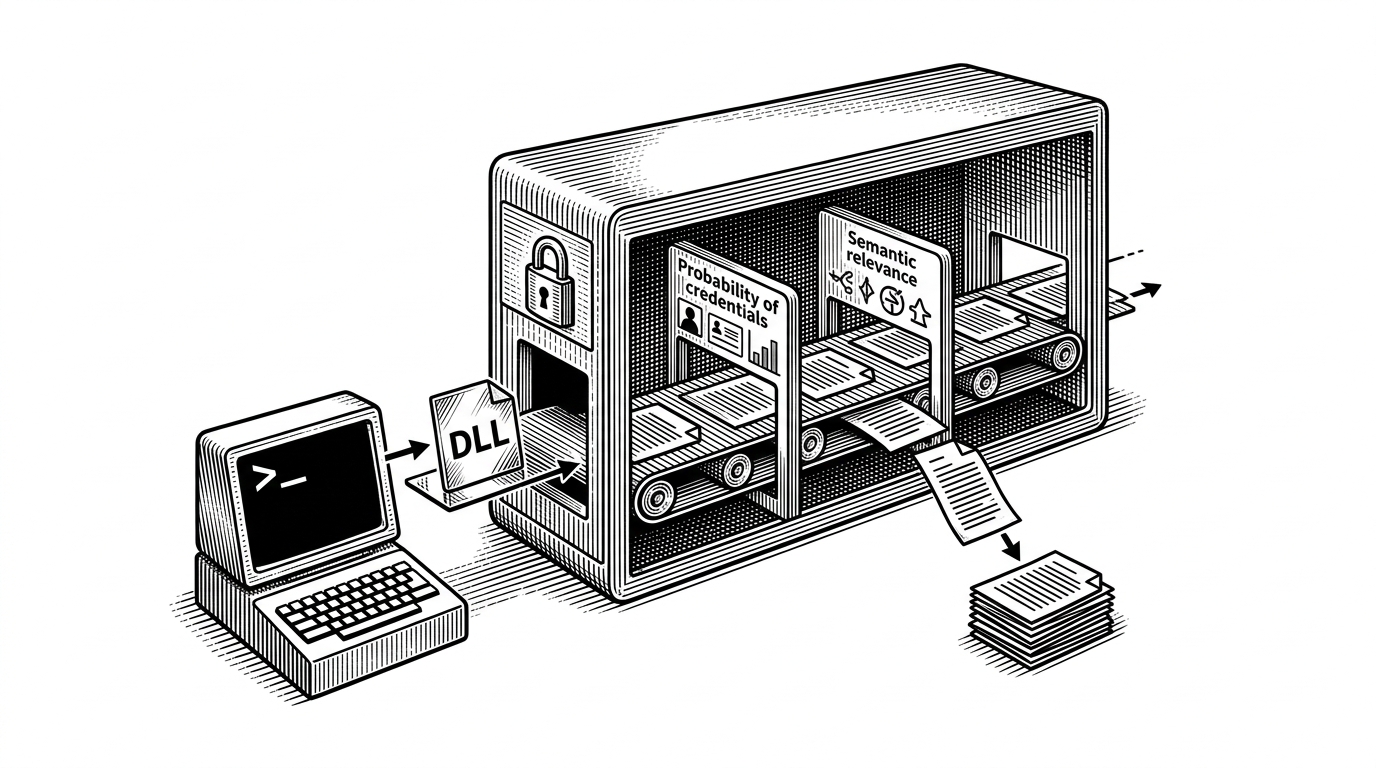
The repo ships two main modes. One hunts for credentials by scoring text for password-like structure. The other searches for documents by meaning, comparing file content against a reference string in vector space.
| Mode | What it looks for | Operator input | What comes back | Why it matters |
|---|---|---|---|---|
| Manual grep and regex | Literal strings and patterns | A keyword list or pattern | Matched lines | Fast, but brittle and syntax-bound |
| Standard C2 triage | Operator-guided search | Known terms and filenames | File hits | Useful, but still human-led |
| ai-postex | Credential likelihood and semantic relevance | A path, threshold, or reference string | Ranked results with scores | Lets the target rank value instead of just matching text |
How the Target-Side Pipeline Works
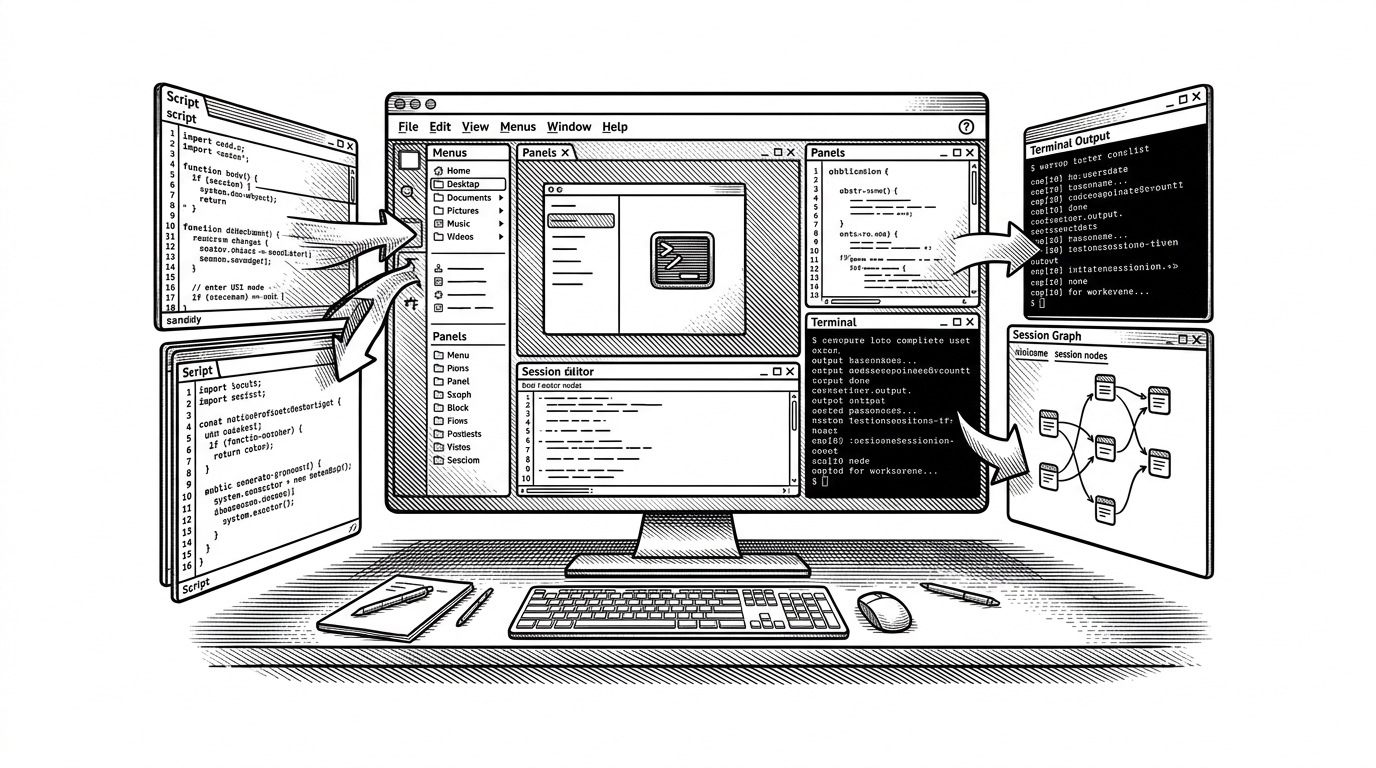
The delivery chain is the real story. An Aggressor Script alias hands work to a beacon task. The task launches a reflective DLL, which then loads a compressed model in memory, extracts text through Rust, and runs inference through WinML.
That means the model does not need to live as a loose file on disk. It can be packed into the payload, expanded in memory, and used without dragging in a Python runtime or a separate ML service.

The interactive diagram makes one more thing obvious. `credentialFinder` and `semanticSearch` are not cosmetic labels. They split the inference path into two different ways of asking the same machine to find value.
// Conceptual flow, simplified
beacon_execute_postex_job("credentialFinder", path, threshold);
beacon_execute_postex_job("semanticSearch", path, reference_string);

// On target
LoadModelFromMemory();
ExtractTextWithRust();
ScoreWithWinML();
The Architecture Is the Message
The language split is not decorative. C++ handles the Windows plumbing and reflective loading. Rust handles the messy document parsing. Python stays in the lab for training and export. WinML keeps the inference native to the platform that is already there.
That combination matters because post-exploitation tooling lives under a delivery constraint. Heavy dependencies are hard to move, obvious runtimes are noisy, and extra process hops create more surface area. This repo is built to keep the intelligence where the work happens.
| Layer | Role | Why it is used |
|---|---|---|
| C++ | Reflective DLL and Windows integration | Best fit for native C2 plumbing |
| Rust | Text extraction and parsing bridge | Safer handling for file formats and UTF-8 text |
| Python | Training and model export | Best fit for experimentation and offline work |
| WinML / DirectML | On-target inference | Lets the model run inside the Windows stack |
What It Means Compared With the Old Way
Compared with regex triage, `ai-postex` is not just faster. It is a different search model. The old way asks the operator to predict the right string first. This repo asks the machine to infer what looks valuable after the payload is already in place.
That is why the footprint choices matter. A standard C2 workflow can stop at operator-driven search. This one goes further and pushes the ranking logic onto the target, which is exactly what makes it interesting and operationally awkward at the same time.
| Approach | Strength | Weakness |
|---|---|---|
| Regex and grep | Simple and transparent | Misses context and variants |
| Standard post-ex tooling | Familiar and flexible | Still depends on human search strategy |
| ai-postex | Semantic ranking on target | Heavier payloads and more engineering effort |
The Bigger Bet
The strategic point is bigger than one repo. As Windows systems get better at running local models, offensive tooling can become more semantic, more embedded, and less dependent on outside services. That makes AI less of a wrapper around old workflows and more of a native part of them.
`ai-postex` is a prototype of that shift. It shows what happens when post-exploitation stops asking for a keyword and starts asking for relevance.