RoguePlanet: When Windows Defender Becomes the Exploit Path
A race-condition PoC turns a trusted security scan into `SYSTEM` access, and the weird part is how ordinary the trigger looks.

- RoguePlanet matters because it turns Windows Defender from a protection layer into the thing that grants privilege.
- The clever part is the delivery path, where a normal ISO mount creates the filesystem activity the race condition needs.
- The exploit story is about timing and trust, not just malformed input or a broken parser.
- Its fragility is the point, because modern security bugs often live in the narrow gap between check and use.
A security tool that becomes the attacker
Windows Defender is supposed to reduce risk. RoguePlanet flips that expectation by using a privileged Defender scan path as the route to `SYSTEM`. The machine is not just under attack. It is helping the attack move forward by doing ordinary defensive work.
RoguePlanet is a Proof of Concept (PoC) for a critical vulnerability in Windows Defender (MsMpEng.exe). This exploit demonstrates how the Antimalware Scan Service can be leveraged to achieve Local Privilege Escalation (LPE) or Remote Code Execution (RCE).
That is the sharpest part of the story. This is not an antivirus bypass, and it is not a clever payload hiding from detection. It is a security engine acting on user-controlled content with enough privilege to become the problem.
Why an ISO mount is the perfect trigger
The delivery mechanism is what makes RoguePlanet feel so unsettling. Mounting an ISO is a normal desktop action, not an exotic attacker primitive, yet it creates the filesystem churn and scan activity a race condition exploit wants.
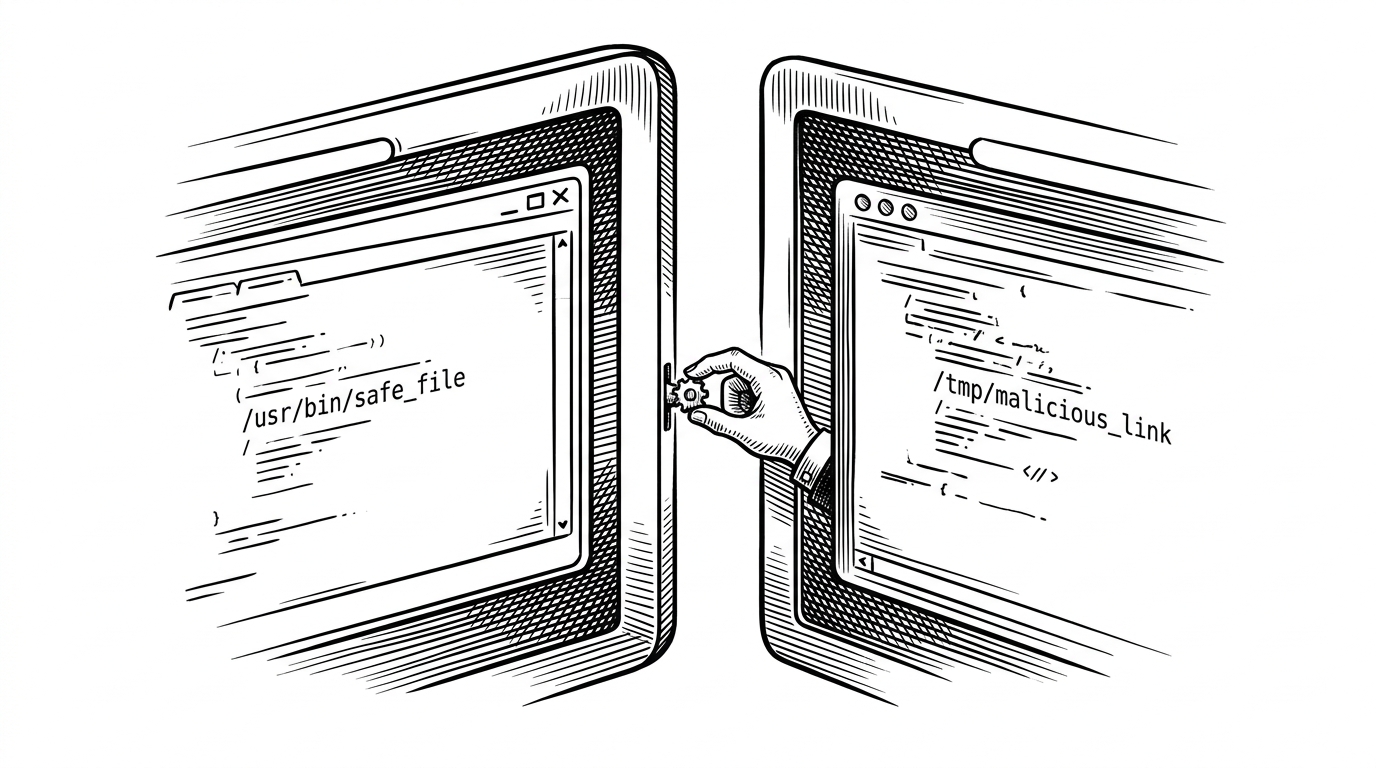
That matters because it removes the usual malware theater. No autorun trick. No weird social engineering. Just a feature people trust, feeding a security service that has to inspect what the user brought in.
How the race condition does the real damage
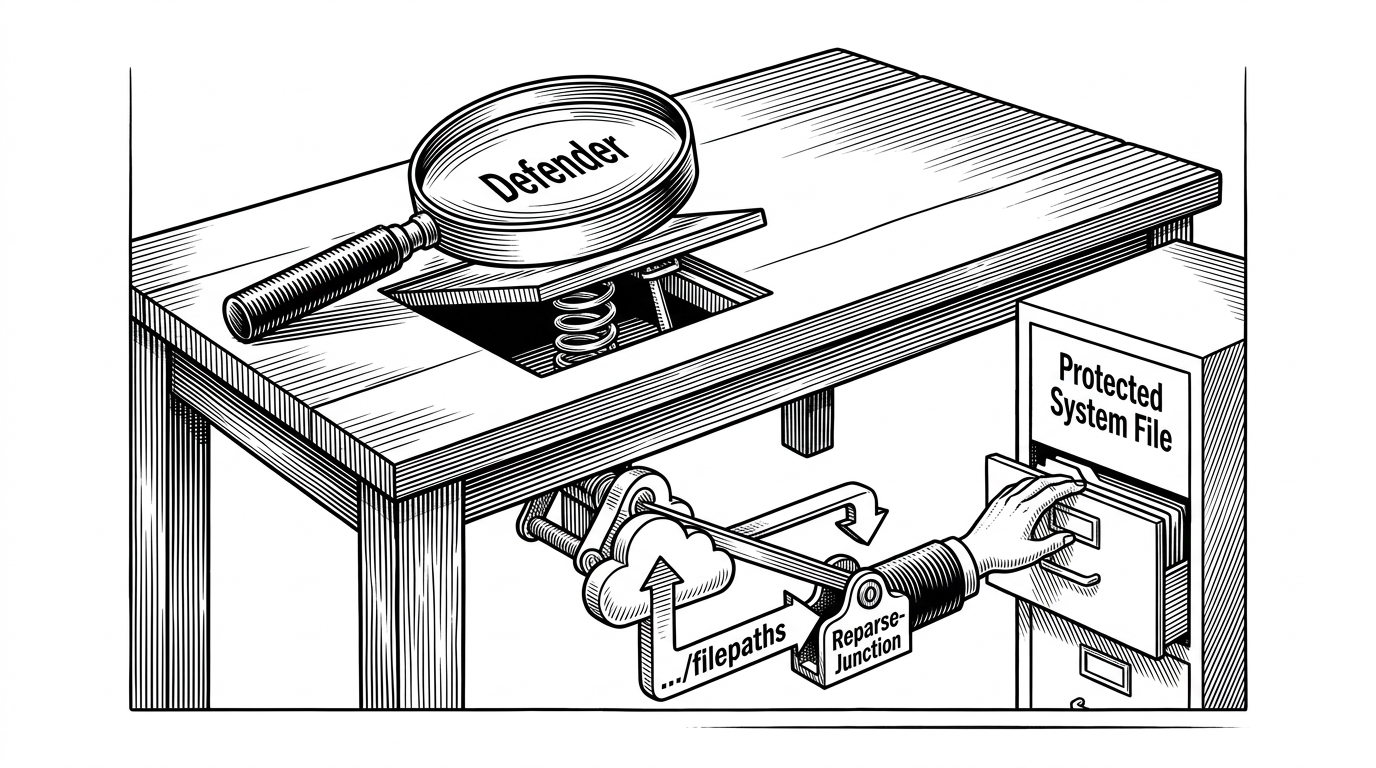
The exploit lives in a TOCTOU gap, a check-then-use problem. Defender inspects one version of the object, then acts on something else after the object changes in the tiny window between those steps. The whole point is to make the service commit to the wrong thing.
check(object)
use(object)

if object changes between those steps:
  privileged action lands on the wrong target
The timing is the story. If the race is lost, nothing dramatic happens. If it is won, a privileged security component can be nudged into doing work that belongs to a much less trusted context.
That is why the article should not read like a recipe. The interesting part is the mismatch between the simplicity of the trigger and the complexity of the consequence. The exploit is not magic. It is a narrow window that a privileged service has to pass through every time it scans.
Why this PoC feels fragile, and why that matters
Race-condition exploits are often unreliable by nature, and RoguePlanet is no exception. That fragility is not a footnote. It is evidence of how much exploitability depends on scheduler behavior, service timing, and implementation details that are hard to control from the outside.
| Dimension | RoguePlanet | What the fragility tells you |
|---|---|---|
| Trigger | Standard ISO mount | A normal feature can still produce attacker-useful timing |
| Mechanism | TOCTOU race in Defender flow | The bug sits between inspection and action |
| Reliability | Hit or miss | Privilege bugs can be real even when they are not perfectly stable |
| Outcome | `SYSTEM` access when the race lands | A narrow win can outweigh a noisy path |
In other words, unreliability does not make the issue less serious. It makes it more honest about how modern systems fail. The boundary between safe and unsafe is often a sliver of time, not a clean architectural line.
RoguePlanet versus the rest of AV research
RoguePlanet sits in a broader tradition of antivirus and EDR research, but it is not the same thing as generic AV evasion. Evasion tries to hide from detection. RoguePlanet tries to make the defense engine act on its behalf.
| Category | Goal | Mechanism | Privilege outcome | Why it matters |
|---|---|---|---|---|
| RoguePlanet | Exploit Defender | Race a privileged scan path | SYSTEM when the race lands | Shows the engine can become the entry point |
| Generic AV evasion | Avoid detection | Obfuscation, packing, living-off-the-land | Usually none directly | Focuses on payload visibility, not engine trust |
| Broader AV and EDR research | Find defects in security products | Parsing bugs, logic flaws, memory corruption | Often high, sometimes SYSTEM | Proves security tools are high-value targets |
| Project Zero style audits | Map vendor-wide weaknesses | Cross-product review and disclosure | Varies by bug | Reinforces that protection software deserves deep scrutiny |
The comparison that matters most is simple: this is an exploit of a trusted security engine, not a bypass of a detector. That places RoguePlanet in the same strategic class as a long history of research showing that the most privileged software on a system is often the most dangerous to leave unchallenged.
What the project says about Windows security design
RoguePlanet is a reminder that user convenience and hardening do not always line up. If a trusted service has to inspect user-controlled content at high privilege, the attack surface is already there. The architectural lesson is bigger than any one PoC: security software is part of the exposed system, not a layer floating above it.
That is why this project lands. It does not just show that Defender can be manipulated. It shows how easily a platform feature that feels harmless can become the first domino in a privileged failure chain.