The Switzerland of AI Coding: Unpacking aghub
How a Rust and Tauri desktop application uses simple Markdown files to break developer lock-in across 22 different AI assistants.
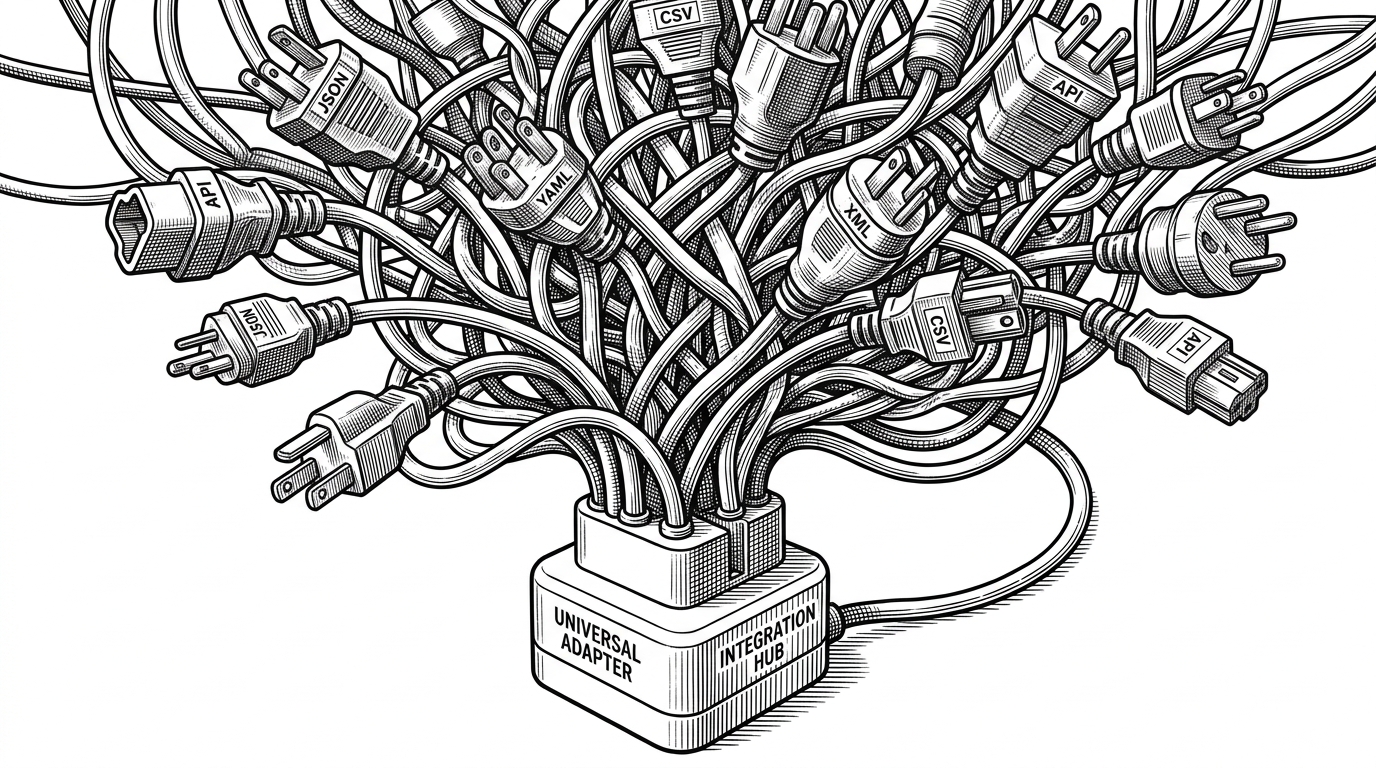
- aghub utilizes a Rust-based Adapter pattern to translate a single source of truth into 22 distinct AI agent configuration dialects.
- The platform standardizes agent capabilities using SKILL.md files, turning proprietary JSON schemas into version-controllable, human-readable text.
- By acting as a centralized control plane, aghub manages Model Context Protocol (MCP) servers like a universal device manager for AI tools.
The Configuration Chaos
Developers are drowning in a fragmented nightmare of configurations. As engineering teams switch between Cursor, Claude Code, and Windsurf, they find that every custom instruction and context rule must be rewritten. The ecosystem is scattered across obscure directories, trapping developer intent in proprietary silos.
Each tool has its own: Specific features and configuration items, Agent Skills directory structure, MCP server configuration method, Instructions file location and format
This is where aghub steps in. It acts as a neutral translation layer, breaking vendor lock-in and making custom agent skills truly portable across the entire AI landscape.
A Universal Translator Built in Rust
The core orchestration engine does not care if the target is Cursor or Windsurf. It uses a classic Adapter pattern implemented in Rust to abstract away the differences between AI tools. The AgentAdapter trait defines a common interface for loading and saving configurations, allowing the core logic to operate without knowing if the underlying file is a JSON or YAML document.
Markdown as Code: The SKILL.md Standard
The most surprising design choice in aghub is its rejection of complex JSON schemas. Instead of a proprietary binary format, aghub defines agent capabilities using SKILL.md files with YAML frontmatter. This low-tech solution to a high-tech problem means skills are human-readable, easily version-controlled via Git, and simple for the AI agents themselves to read and edit.
---
name: react-component-audit
description: Lints React components for accessibility and performance.
version: 1.0.0
---

# Instructions
1. Check all `<img>` tags for `alt` attributes.
2. Ensure no inline styles are used.
3. Verify that hooks are called at the top level.
Managing the New USB Ports of AI
The Model Context Protocol (MCP) has become the universal plug for AI tools, but managing these connections is chaotic. aghub defines a unified transport enum covering standard input/output, server-sent events, and streamable HTTP. It frames itself as the essential device manager for the AI era, allowing developers to plug external tools like Postgres or GitHub directly into any supported agent from a single interface.
| Feature | The Siloed Way | The aghub Way |
|---|---|---|
| Skill Definition | Duplicated per tool | Write once in SKILL.md |
| Config Location | Scattered across ~/.config | Centralized in aghub core |
| Format | Mixed JSON, TOML, and YAML | Unified UI and Markdown |
| MCP Management | Manual JSON editing per IDE | One-click universal deployment |