ArtTuneDB: The Windows Audio Stack That Treats Footsteps Like a Signal Problem
A guided installer, custom DSP scripts, and game-specific tuning files turn messy Windows audio into a tactical system for competitive play.
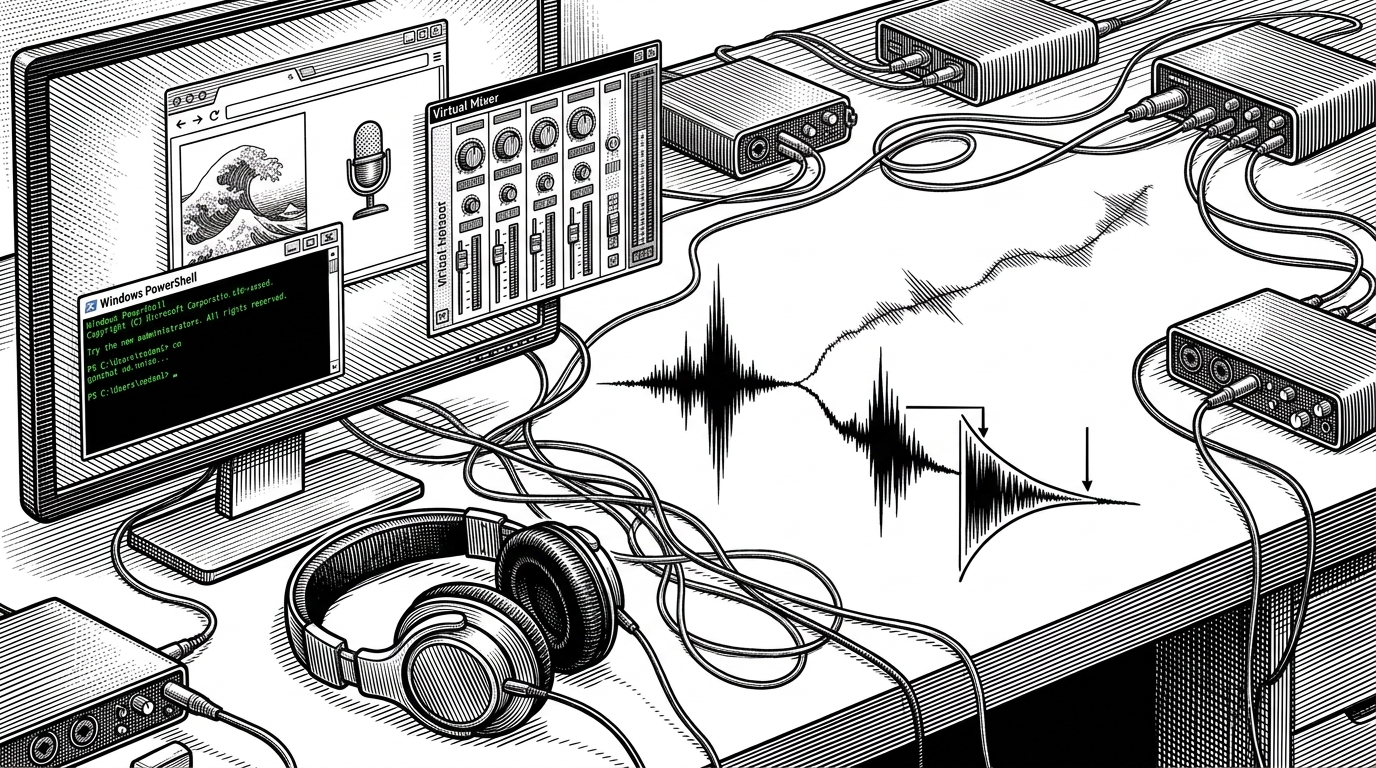

Equalizer APO, HeSuVi, and ReaPlugs configurations for game audio tuning. Includes EQ profiles, HRIR presets, and a guided PowerShell installer.
- ArtTuneDB turns competitive game audio into a software-defined pipeline, where routing, virtualization, and DSP matter as much as the headphones themselves.
- The repo is really three products in one: a PowerShell installer, a JSFX processing engine, and a versioned library of game-specific tuning files.
- Its most interesting trick is self-suppression, which ducks masking sounds so footsteps and other environmental cues stay legible under combat noise.
- The project sits between DIY audio tinkering and commercial one-click tools, and its value is that it packages studio-grade complexity for a niche that cares about every decibel.
Most gaming audio products promise immersion. ArtTuneDB promises leverage. It takes the messy Windows audio chain, then rearranges it so the sounds that matter in a fight survive the sounds that do not.
That sounds simple until you look at the stack. The repository combines installer automation, spatial processing, and versioned tuning profiles into one system. In other words, it is not a preset pack. It is a workflow for making audio decisions reproducible.
The easiest way to hear the game differently
ArtTuneDB is built around a blunt idea: if footsteps are hard to hear, change the chain, not just the EQ curve. The repo uses open-source audio tools to reshape output at multiple points, from endpoint routing to HRTF virtualization to transient control.
That matters because competitive audio is not just about volume. It is about separating useful cues from clutter, then keeping those cues stable when the match gets loud.
From presets to pipeline
The repository has a clean division of labor. The PowerShell layer handles installation and system wiring. The JSFX layer does the actual DSP work. The library layer stores game-specific audio states that can be dropped into the chain without rebuilding it from scratch.
powershell/
  Install-ArtTune.ps1
jsfx/
  atk_spatial_engine.jsfx
  atk_stereo_spatial_enhancer.jsfx
library/
  BO7/
    S3/
      BO7_S3_pre.txt
      ...
That structure is the first clue that this repo is solving for operational reality, not just audio theory. If the stack is hard to install, the best DSP in the world does not matter.
The installer is the product
`Install-ArtTune.ps1` is where the project becomes usable. It handles downloads with BITS, touches the registry, renames endpoints, and guides the user through different hardware paths, including Voicemeeter and approved-device setups.
That is not just convenience. It is product design in a hostile environment. Windows audio is powerful, but it is also brittle, and the installer exists to tame that brittleness without hiding the underlying chain entirely.
The real trick: self-suppression
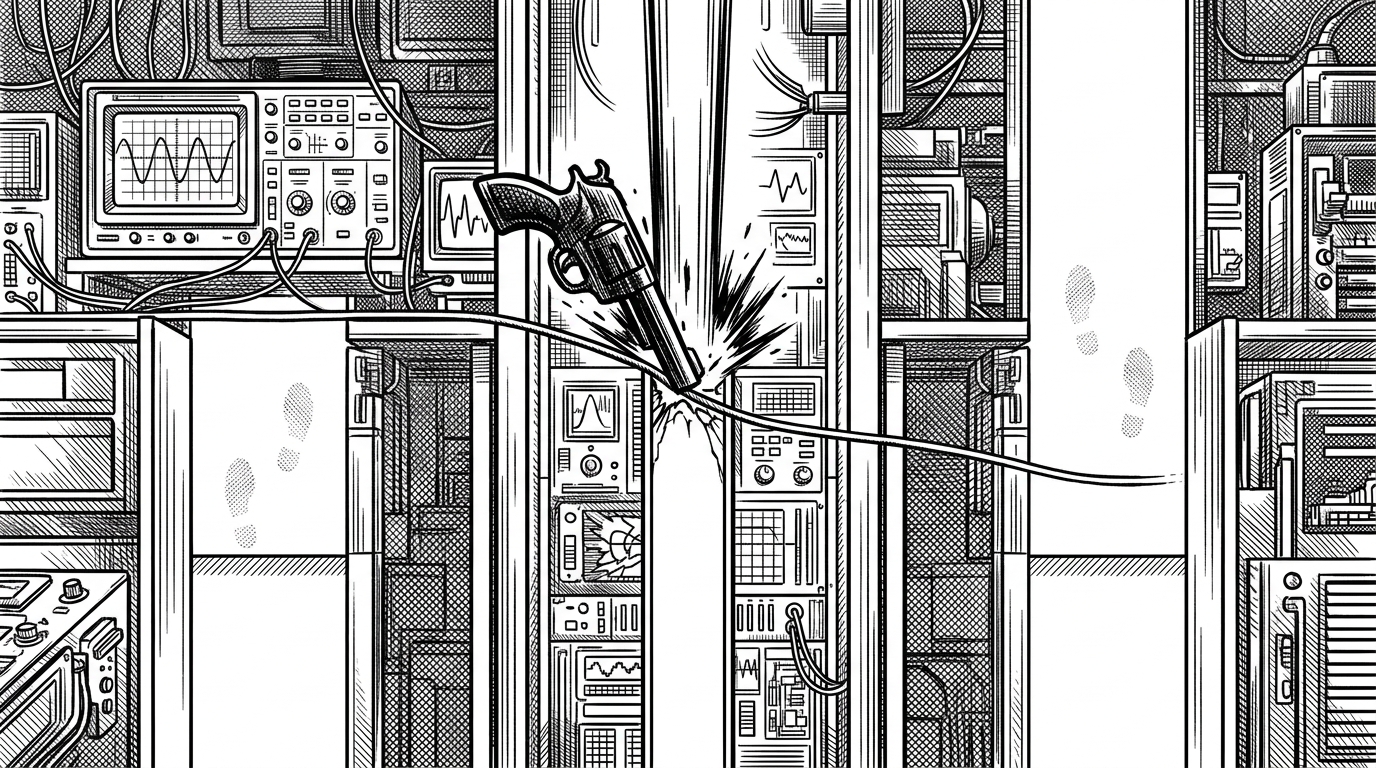
This is the part of ArtTuneDB that feels almost unfair. The spatial engine does not merely widen sound. It watches for center-heavy energy, then ducks the masking content so transient cues can survive the mix.
The result is practical, not mystical. Loud gunfire gets controlled. Faint movement gets room to appear. The player hears less of their own clutter and more of the opponent’s position.
Under the hood, that means multi-band processing, envelope detection, and center-channel suppression. The point is not to make everything louder. The point is to make the right sounds easier to parse in motion.
Why stereo widening is not enough
A wider soundstage can still be muddy if the low end stays centered and the phantom center collapses under pressure. ArtTuneDB’s stereo enhancer handles that by preserving directional accuracy while keeping bass anchored where it belongs.
That distinction matters. Many tools make audio feel bigger. Fewer tools make it read better.
A library of seasonal audio opinions
The library is where ArtTuneDB becomes distributable. Files under paths like `/library/BO7/S3/` package tuned states for specific games and seasons, so the setup can be updated without asking users to recreate every parameter by hand.
That versioning choice is revealing. Game audio shifts with patches and seasons, so the repo treats tuning as a living artifact, not a one-time calibration.
| Layer | What it stores | Why it matters |
|---|---|---|
| PowerShell installer | Setup flow, endpoints, device wiring | Makes the chain repeatable on Windows |
| JSFX DSP | Center suppression, transient control, band logic | Turns audio into a controllable signal problem |
| Library configs | Seasonal presets, serialized VST state, measurement data | Lets users deploy tuned profiles instead of rebuilding them |
Where this sits in the market
ArtTuneDB sits between convenience and control. Commercial spatial audio tools are easier to switch on, but they are broad by design. DIY Equalizer APO chains can be more flexible, but they demand patience, jargon, and a lot of trial and error.
| Option | Setup friction | Tuning depth | Game specificity | Best fit |
|---|---|---|---|---|
| ArtTuneDB | High upfront, guided | High | High | Competitive players who want a reproducible chain |
| Generic spatial audio | Low | Low to medium | Low | People who want quick virtual surround |
| Manual DIY chain | Very high | Very high | High | Power users who enjoy building from scratch |
| ARTTUNEKIT | Low | High | High | Users who want the same philosophy with more automation |
That is the real market position. ArtTuneDB is the open-source version of a sophisticated audio workflow. It asks for more setup than a consumer toggle, and it gives back more control than a generic preset can offer.
What ArtTuneDB says about Windows audio
The bigger lesson is not about game tuning alone. It is about how much orchestration Windows audio still requires when the goal is precision rather than default compatibility.
ArtTuneDB productizes invisible infrastructure for a niche that can hear the difference. That is why it matters: it shows that in some domains, the competitive edge is not a new device. It is a better signal chain.