animeTrackerList: The Text Files That Keep Anime Swarms Findable
A plain-text repository that behaves like infrastructure: it filters dead trackers, reshapes output for different clients, and quietly powers a niche BitTorrent ecosystem.
- animeTrackerList is a control plane for tracker delivery, not a static list of URLs.
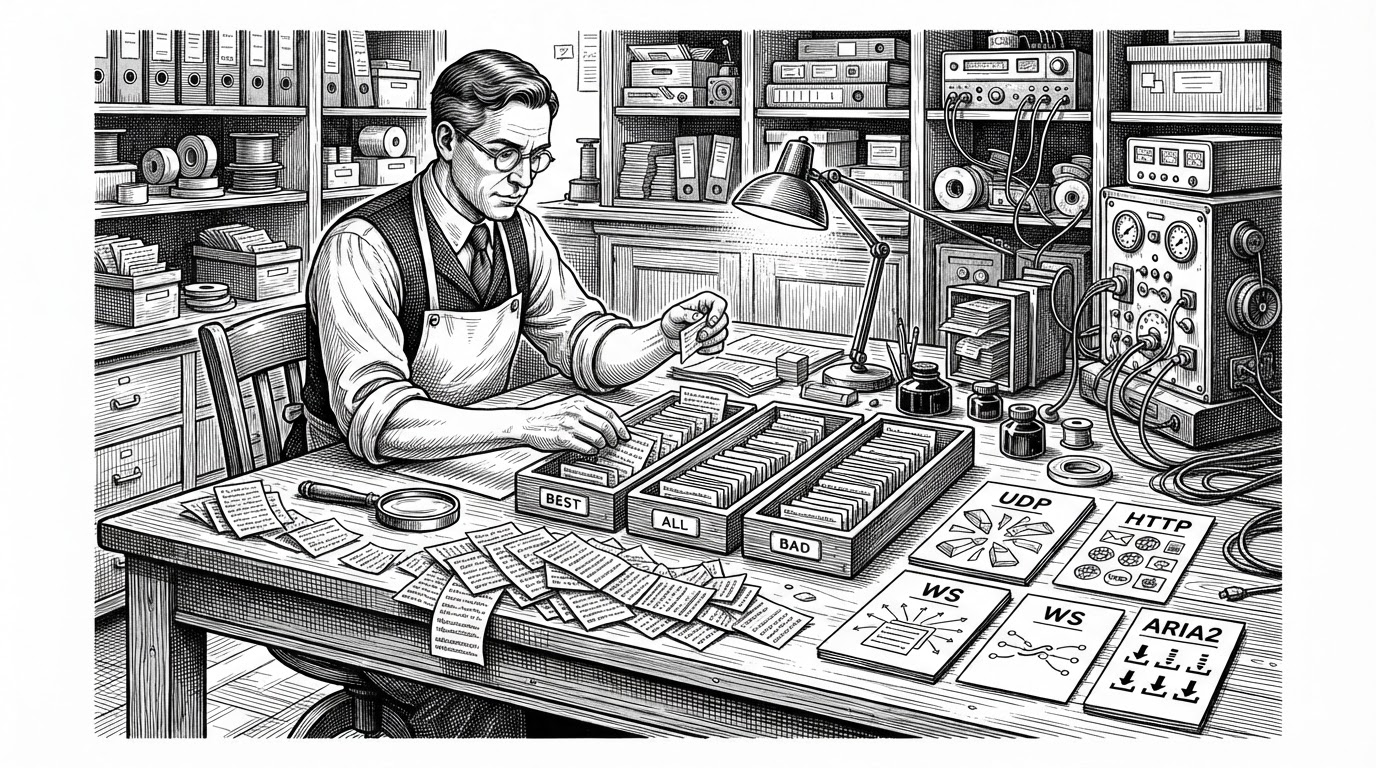
- Its real value comes from shaping the same tracker data into best, all, bad, and client-specific formats.
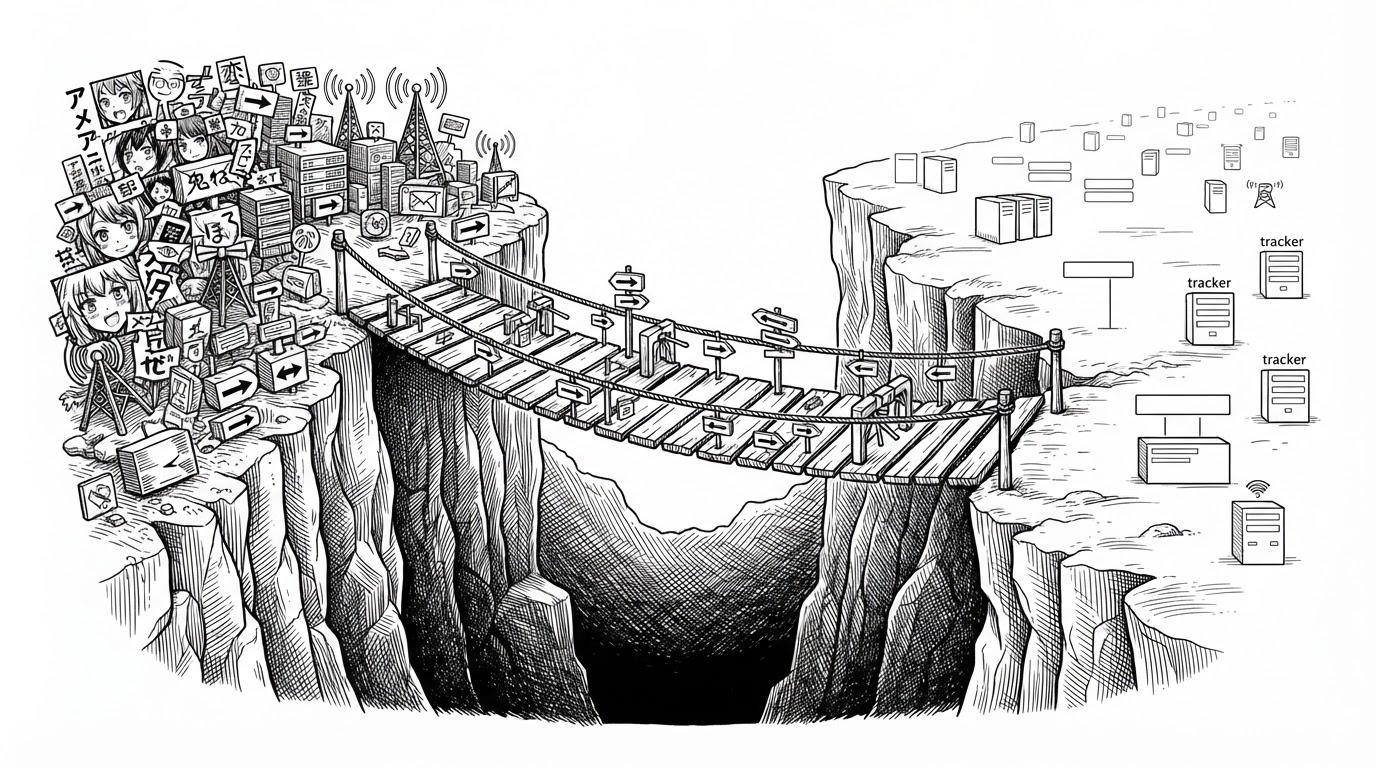
- The project is opinionated about ACG swarms and Chinese network conditions, which makes its curation useful in a narrower but real niche.
- Maintenance, not size, is the product.
This Is a Tracker List That Behaves Like Infrastructure
The first surprise is structural. animeTrackerList is a repository of plain text files that behaves like a small distribution system for BitTorrent tracker metadata. It does not just collect URLs. It classifies them, rejects broken ones, repackages them, and serves them in forms that different clients can consume with almost no manual cleanup.
动漫资源有效Tracker列表,动漫资源磁链死链解决和加速方案。 公共的(针对ACG资源)BitTorrent跟踪器的更新列表。 此项目,有别于以已存在的github项目:trackerslist,为天朝限定。
That README line says the quiet part out loud. The repo is built as an ACG-specific tracker service, with a China-aware bias baked into its curation. So the interesting question is not whether it stores trackers. It is how it turns a messy, unreliable public dataset into something closer to infrastructure.
One Source, Many Shapes
The architecture is a data pipeline hiding in file names. Raw lists become ranked lists, blacklists, and client-ready exports. The naming convention is the whole system: AT_* for core outputs, ATaria2_* for Aria2-friendly formatting, and quality or protocol suffixes that split the same underlying dataset into usable variants.
That is why the repo feels more like a control plane than a dump of links. The source material is one thing. The operational value comes from deciding which trackers are healthy, which are worth prioritizing, and which should be quarantined.
AT_best.txt
AT_all.txt
AT_bad.txt
AT_all_udp.txt
AT_all_http.txt
AT_all_https.txt
AT_all_ws.txt
ATaria2_all.txt
ATaria2_best.txt
Why ACG Changes the Problem
Generic tracker lists chase breadth. This repo chases usefulness inside a narrower universe: anime, comics, and games. That matters because tracker quality is not abstract. It depends on where the swarm lives, which sites seed the hashes, and how well trackers survive regional routing and filtering.
| Dimension | animeTrackerList | General tracker lists |
|---|---|---|
| Scope | ACG-focused | Broad and universal |
| Network bias | China-aware | Usually global |
| Output style | Client-specific exports | Mostly raw lists |
| Maintenance goal | Usable niche delivery | Maximum coverage |
| Value proposition | Fewer, better-fit trackers | More total trackers |
That niche focus explains the repo’s most practical move: it does not try to be everything for everyone. It tries to be the right tracker set for a specific content community and a specific network reality.
Best, All, and Bad Are Three Different Jobs
The quality tiers are not redundant. They are operationally distinct. best is the shortest path to performance. all is the coverage play. bad is the hygiene layer that keeps dead or malformed trackers from polluting the outputs.
| File family | Job | What it protects |
|---|---|---|
| AT_best | Curated high-availability trackers | Client performance |
| AT_all | Broad tracker coverage | Discovery and fallback |
| AT_bad | Known dead or malformed entries | List hygiene |
| ATaria2_* | Preformatted client exports | Manual conversion work |
That split matters because tracker lists fail in a very specific way. If you keep appending dead entries, clients waste time probing them, and the list becomes slower precisely when it was supposed to help. The blacklist is not an afterthought. It is the part that keeps the rest trustworthy.
Why Client-Specific Formatting Matters
The ATaria2_* files are a small but revealing DX choice. Aria2 expects trackers in a comma-separated form, so the repo publishes the format users need instead of forcing them to transform it themselves. That saves a step, but more importantly, it encodes intent: this project is built for actual download workflows, not for archival purity.
# aria2 configuration example
bt-tracker=https://tracker.example/announce,udp://tracker.example:6969/announce

# repo output already matches the comma-separated expectation
This is where a text repo starts to feel like product work. A format choice removes friction. A filename convention removes ambiguity. Together, they make the dataset easier to trust and faster to use.
由于对接口的请求数量超过了10W次/天。 所以,导致出现请求接口500错误的情况。 哭笑不得,感谢朋友们的热情和支持。
How This Compares to Generic Tracker Lists
Compared with projects like XIU2/TrackersListCollection and ngosang/trackerslist, animeTrackerList does not compete on universality. It competes on fit. The tradeoff is obvious: fewer use cases, but more intentional curation for the ones it targets.
| Project | Strength | Tradeoff |
|---|---|---|
| animeTrackerList | ACG-specific, China-aware, client-ready | Narrower scope |
| XIU2/TrackersListCollection | Broad and popular in Chinese communities | Less niche specialization |
| ngosang/trackerslist | Global reference list | Less tailored to regional or genre-specific needs |
That distinction is the point. Generic lists optimize for coverage. animeTrackerList optimizes for usefulness in a narrower ecosystem where tracker survival, regional accessibility, and client formatting all matter at once.
The Hidden Product: Maintenance
The repo’s most important work is invisible. It dedupes, ranks, rejects, and republishes. It has to, because a tracker list is only as good as its freshness and hygiene. The product is not the presence of many URLs. The product is the discipline that keeps those URLs worth trying.