Edge0: The MoE Engine That Hides SSD Latency in Plain Sight
A deep dive into the prerouter, streaming expert offload, and Recover-LoRA, the three ideas that let a 35B-class model behave like it belongs on a MacBook.
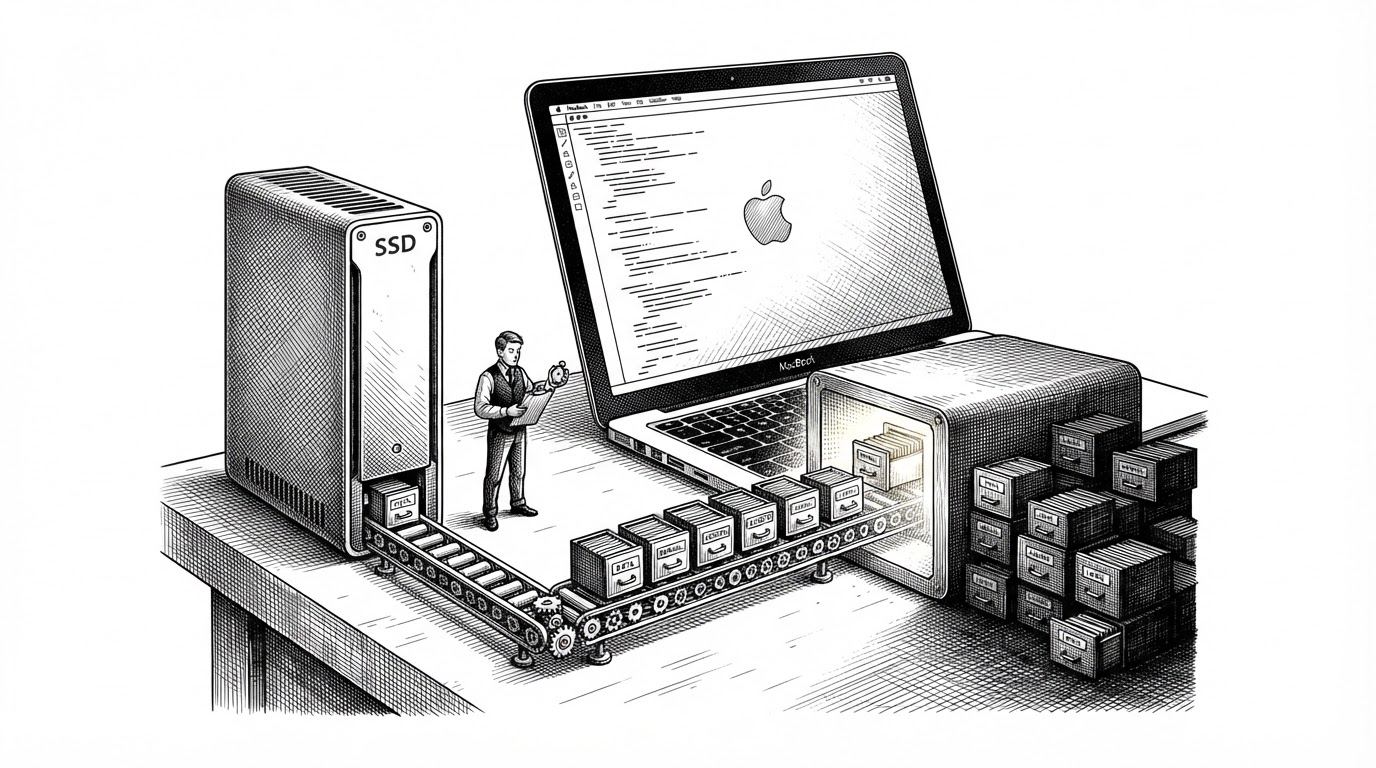
- Edge0’s real innovation is not compression, it is scheduling expert weights early enough to hide SSD latency.
- The prerouter turns routing into a look-ahead problem, which makes streaming MoE models practical on consumer hardware.
- Recover-LoRA matters because the project is only useful if small-memory deployment does not destroy output quality.
- The backend abstraction suggests a platform, not a one-off Apple Silicon demo.
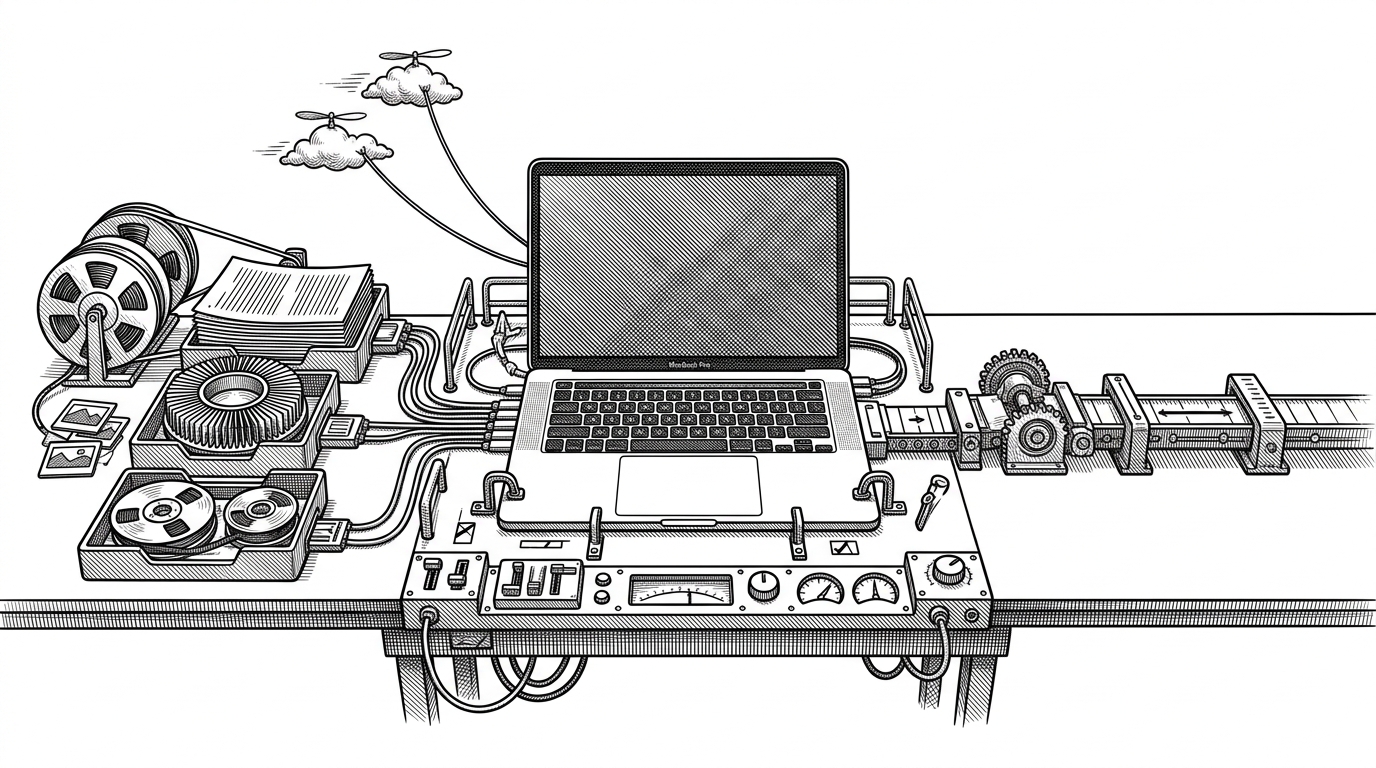
Edge0’s best trick is easy to miss because it looks like an inference engine. Under the hood, it behaves more like a storage scheduler for a sparse model: resident layers keep moving, expert weights arrive just in time, and a prerouter tries to keep the SSD one token ahead of the decoder. That shifts the question from “can this model fit?” to “can the next expert get here before the forward pass needs it?”
Why Edge0 Feels Like a Storage Engine, Not Just an Inference Library
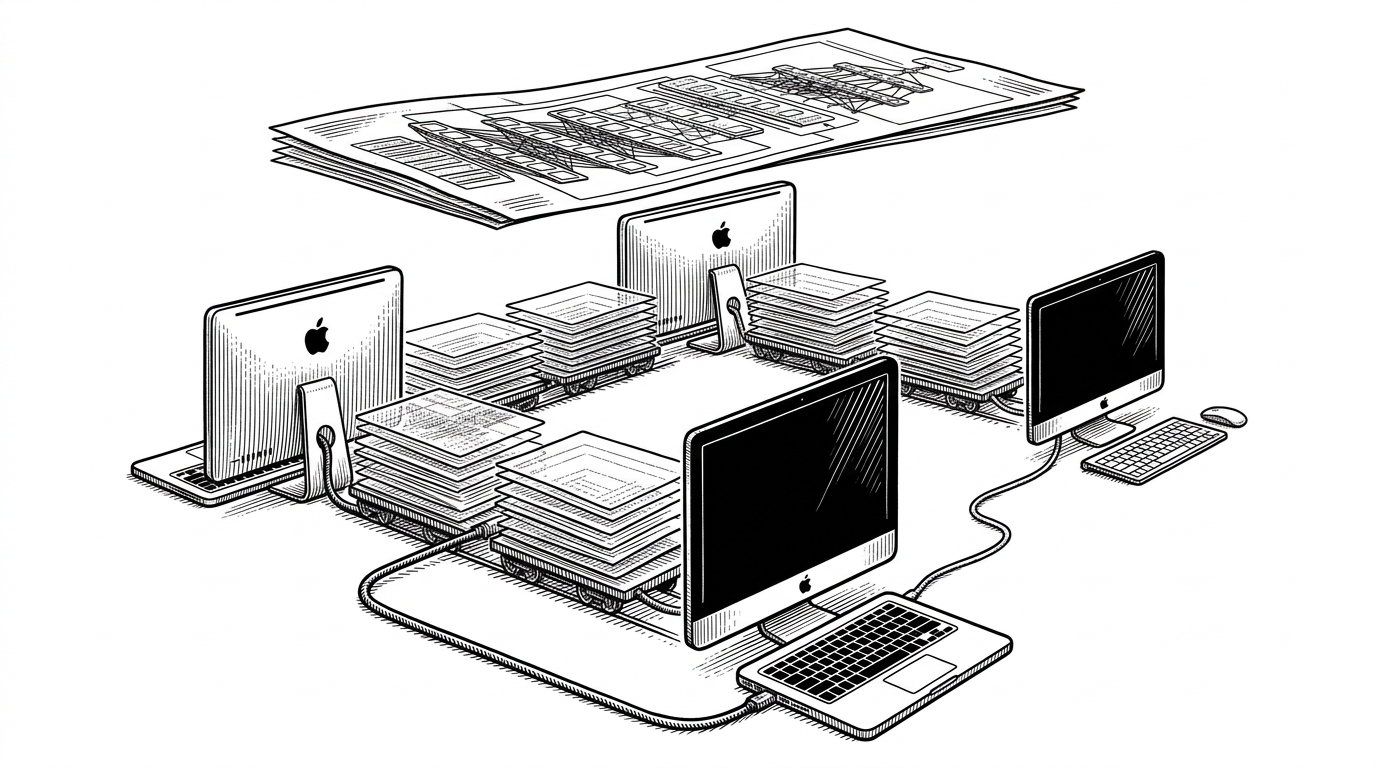
The project is built around a hard constraint: the whole model does not live in memory. Edge0 splits execution into resident and streaming paths, then overlaps the expensive part, loading expert weights, with useful work already happening on the current token. That is why the repo feels unusually disciplined. It is not trying to win by brute force. It is trying to make latency disappear.
The README puts the thesis plainly: “edge0 is an open-source streaming MoE inference framework. It generalizes the production-proven recipe — SSD expert offload + Recover-LoRA + prerouter routing prediction — into an extensible framework.” That combination is the point. Each piece solves a different failure mode of local inference.
The Prerouter Is the Trick
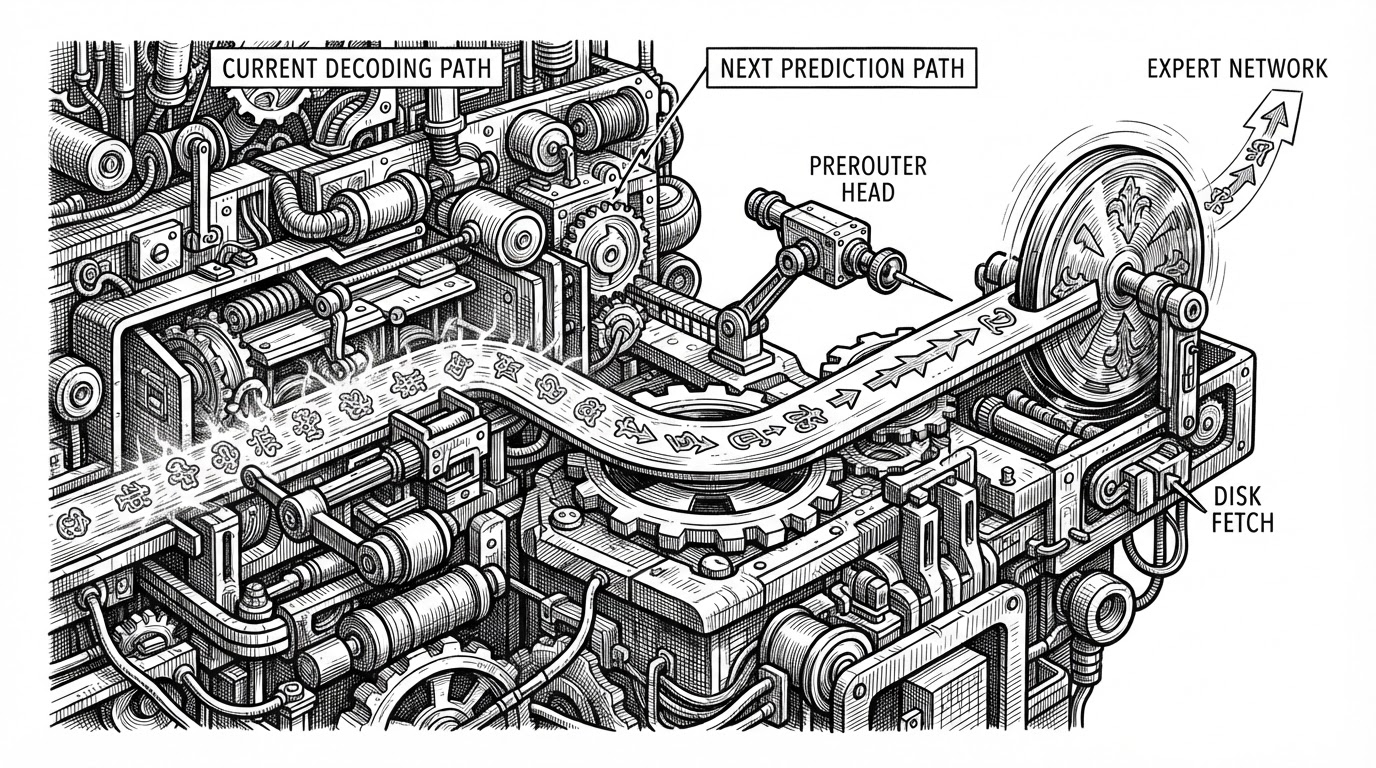
The key detail is that the prerouter is not a dumb cache miss predictor. It uses the current hidden state and expert history to guess the next routing decision, then starts the fetch early enough to cover most of the wait. If the guess is right, the decoder never sees the disk. If it misses, the system still falls back to the normal path. That is a practical trade-off, not a theoretical flex.
How the Engine Stages a Token
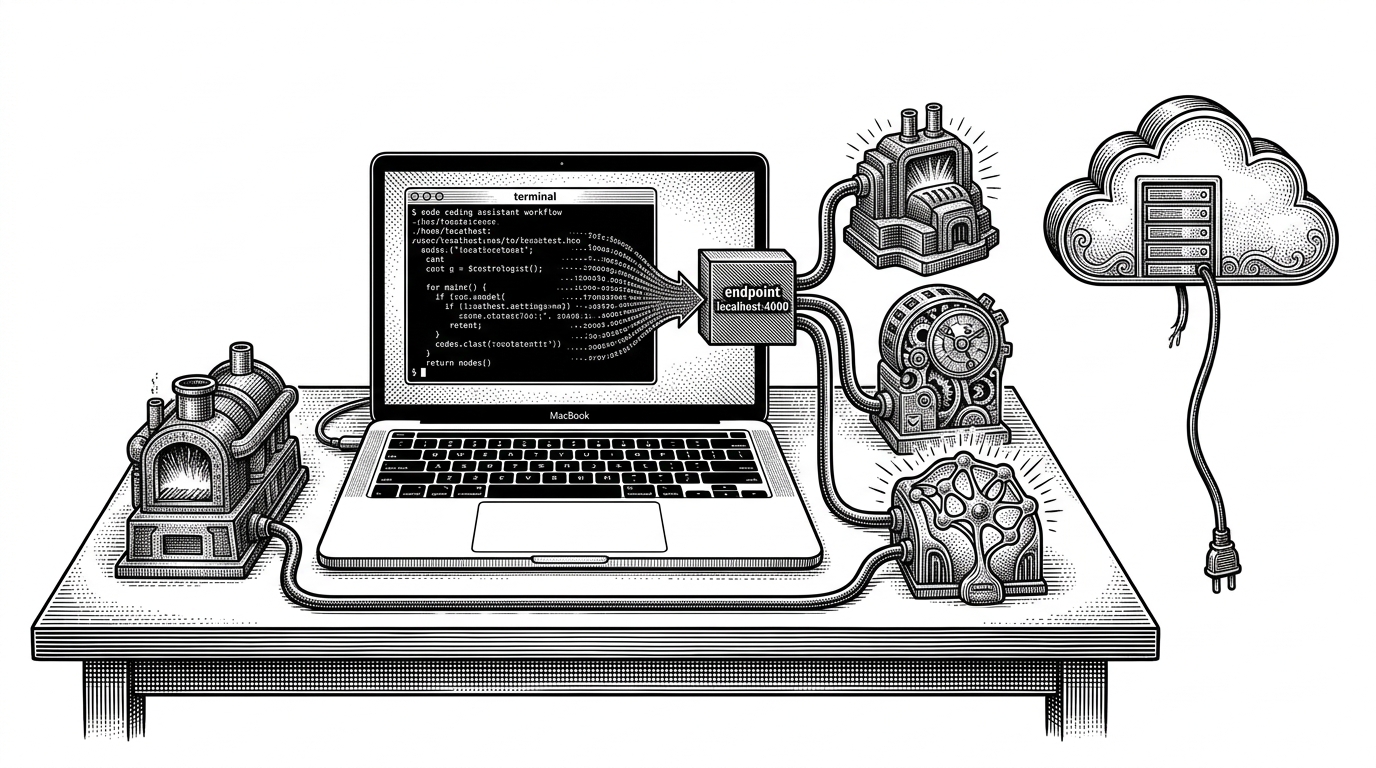
At the code level, Edge0Engine is the orchestrator. It handles prefill, then decode, and uses hooks like _step_pre and _step_post to trigger early-submit loads before the next token needs them. That is a small detail with big consequences. It means the engine is always preparing the next move while finishing the current one.
# Pseudocode for the staged token loop
for token in tokens:
    _step_pre(state)          # predict and stage next experts
    resident_forward(state)   # attention and already-loaded experts
    stream_in_experts(state)  # overlap SSD fetch with compute
    _step_post(state)         # commit routing, update history
The backend boundary matters just as much. The repo uses a TensorStore protocol so the engine does not care whether tensors come from MLX today or something else tomorrow. That is how a project starts on Apple Silicon without trapping itself there. The abstraction is the roadmap.
Recover-LoRA Changes the Quality Math
If streaming only made the model small, Edge0 would still be incomplete. Recover-LoRA is the other half of the story. It lets a frozen, read-only quantized base model regain quality through small distilled adapters, so the system can stay lightweight without throwing away too much capability.
| Approach | What it optimizes | Base model | Adapters | Why it matters |
|---|---|---|---|---|
| Standard quantization | Footprint | Usually merged | Merged or ignored | Smaller, but quality loss is accepted |
| Recover-LoRA | Quality recovery after quantization | Frozen, read-only | Small unmerged LoRA adapters | One base model can serve multiple specialized behaviors |
| Full fine-tune | Task fit | Modified in place | Not separate | High quality, but expensive to maintain and swap |
That operational advantage is easy to underestimate. One base model can support multiple personalities or deployment targets without rewriting the whole artifact. Swapping a tiny adapter is a much cleaner commercial story than shipping several large merged checkpoints. It is also easier to govern when the base stays immutable.
How Edge0 Differs From Nearby Projects
| Project | Primary optimization | Hardware focus | Expert prediction | Streaming offload | Adapter strategy | Main bottleneck addressed |
|---|---|---|---|---|---|---|
| Edge0 | MoE expert scheduling | Apple Silicon first | Yes | Yes | Recover-LoRA, unmerged | SSD latency during decode |
| llama.cpp | Broad local inference | CPU and many backends | No | Partial mmap support | Standard quantization and LoRA workflows | General memory and portability |
| MLX | Fast Apple Silicon tensor runtime | Apple Silicon | No | No | External to the runtime | Low-level tensor execution |
| PowerInfer | Predictor-style sparse loading | Consumer GPUs and local systems | Yes, but different target | Selective loading | Not centered on adapter recovery | Keeping sparse models efficient |
Edge0 is not trying to be the most general local inference stack. It is narrower and more opinionated. The novelty is the combination: MoE streaming, one-step-ahead prediction, and adapter recovery as a single pipeline. That is different from simply shrinking weights or relying on mmap alone.
A 35B language model running on an iPhone using only 1–2.5 GB of peak memory. No cloud. No remote server. No desktop GPU. Today, we're open-sourcing Edge0 — a framework for running large AI models fully on-device.
The Team, the Backend Roadmap, and the Discipline
The engineering discipline shows up in the boring details, which is usually where the real signal lives. The project pins MLX tightly, warns against incompatible versions, and keeps a placeholder for CUDA instead of pretending the future is already solved. That says the team understands how fragile backend assumptions can be when asynchronous loading is part of the design.
That is why Edge0 reads like a platform. It has a clear first backend, but it also has a clean seam where another backend can slot in later. If the abstraction holds, the idea scales beyond Apple Silicon. If it does not, the whole latency-hiding story collapses back into a demo.