mod-highlight: The One-File CMS That Points Cinderbox at a Featured Mod
A tiny JSON manifest turns GitHub into a curation layer, linking Cinderbox to Nexus Mods without hardcoding discovery into the app.
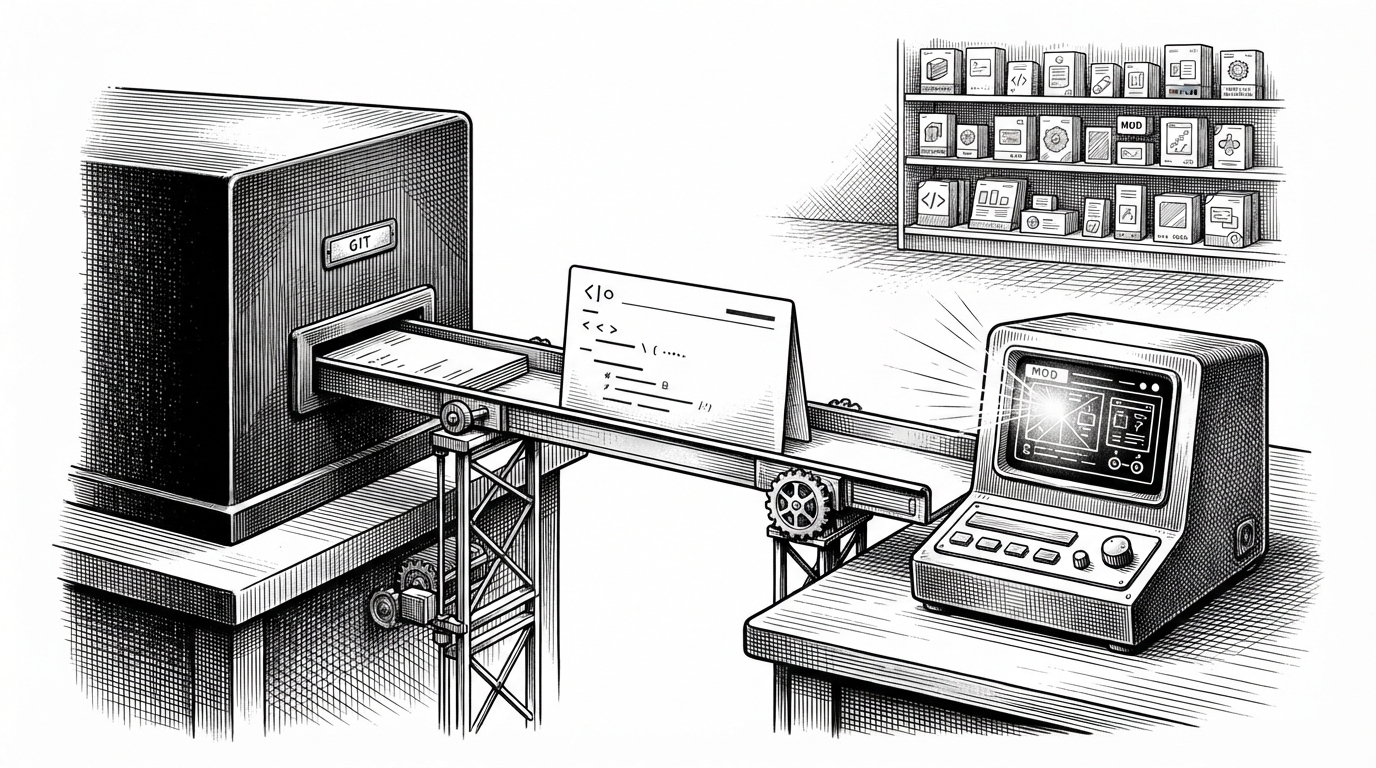
- mod-highlight turns GitHub into editorial infrastructure by storing one manifest instead of shipping discovery logic inside an app.
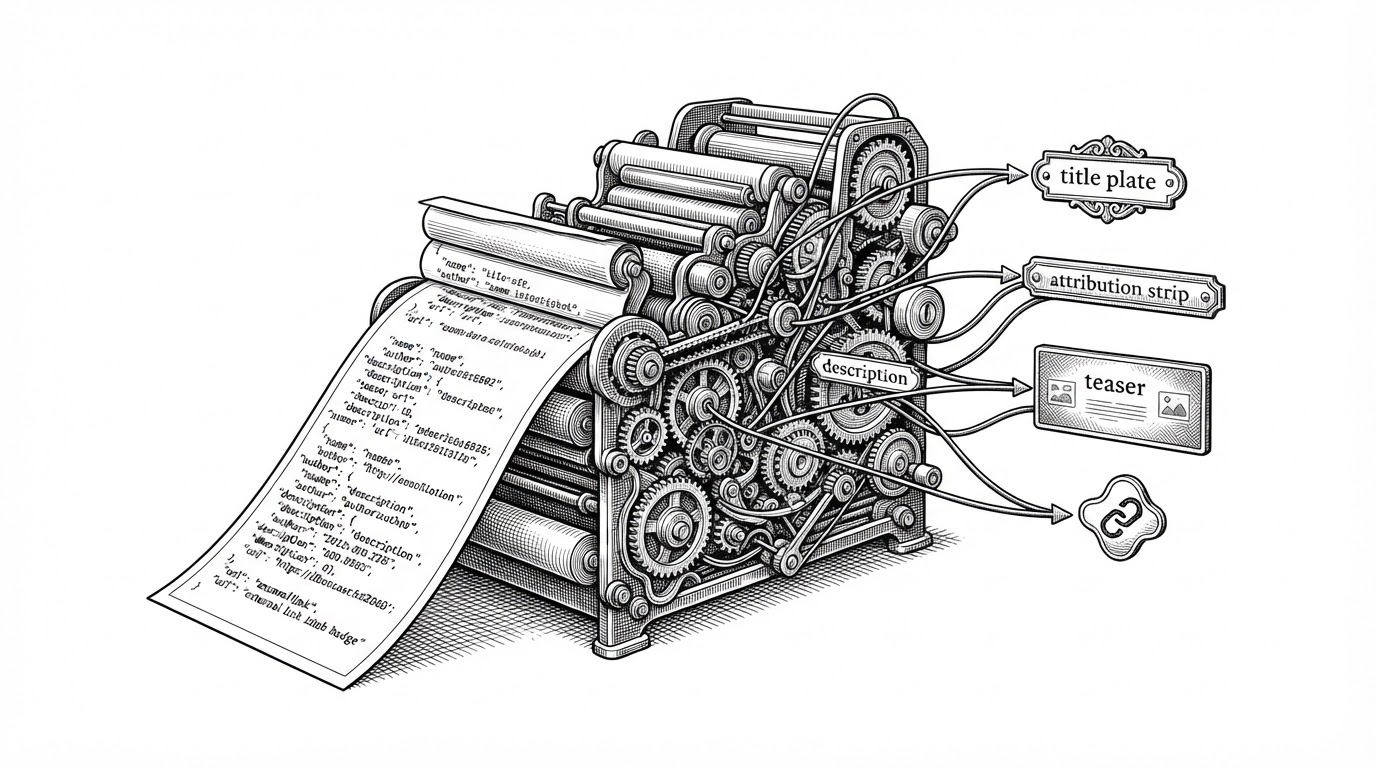
- The repo’s real job is translation, mapping a small set of metadata fields into a featured mod card elsewhere.
- This pattern keeps curation decoupled from product code, so a commit can change what users see without a rebuild.
- The broader lesson is that content pipelines can be as important as the software that renders them.
A repository that behaves like a CMS
mod-highlight is not really a codebase. It is a tiny content system disguised as a repository. The entire point is to tell another platform what to feature, who made it, and where the canonical mod lives.
That shift matters. Instead of baking featured content into application logic, the repo makes curation editable, reviewable, and portable. A commit becomes a publishing action.
Why mod discovery needs a layer like this
Mod ecosystems are fragmented. Discovery lives in app menus, admin tools, launcher settings, community posts, and external hubs. That makes featured content hard to move and even harder to update cleanly.
A manifest repo offers a lighter path. It separates the decision about what should be highlighted from the product code that shows the highlight.
| Traditional workflow | Manifest-driven workflow |
|---|---|
| Featured content hardcoded in the app | Featured content defined in a JSON file |
| UI updates require a release | UI updates can follow a commit |
| Content and rendering are tangled | Content and rendering are decoupled |
| Curation lives in product logic | Curation lives in a lightweight repo |
What the manifest actually does
The functional center of the repo is the JSON file. In the technical analysis, the key fields are simple: name, author, description, and url. That is enough to power a featured content card.
{
  "name": "Town Fields",
  "author": "Peekabo0",
  "description": "A rural, natural, and full of life mod for Stardew Valley.",
  "url": "https://www.nexusmods.com/stardewvalley/mods/49272"
}
There is no application shell here, no rendering layer, no business logic. The repo defines shape and intent. Another system does the rest.
The hidden architecture: GitHub as the editorial backend
This is the real trick. A commit updates the manifest. Cinderbox consumes the manifest. Users see a new featured mod card. That is a content pipeline, not a software feature.
GitHub becomes the backend because version control already solves the hard operational problems: history, review, rollback, and ownership. For a tiny highlight system, that is often better than building a CMS.
| Question | Answer in mod-highlight |
|---|---|
| Where is the content selected? | In the manifest |
| Where is it rendered? | In Cinderbox |
| Where is the source mod hosted? | On Nexus Mods |
| What changes when the highlight changes? | A commit, not an app release |
Why this matters more than it looks
The elegance here is operational, not flashy. Small repos like this let teams move curation into a familiar workflow instead of inventing a separate publishing system.
That is useful anywhere content is temporary, editorial, or community-driven. Featured items, rotating spotlights, launch banners, mod picks, partner links. The pattern scales because the artifact stays tiny.
It also keeps the product honest. Cinderbox does not pretend to own the mod. It points outward, credits the creator, and leaves the real content where it belongs.
The smallest possible bridge between two ecosystems
mod-highlight is a bridge, not a destination. On one side sits a platform that wants to feature something. On the other sits a mod ecosystem that already has the content, the author, and the distribution link.
The repo’s value is that it makes the bridge cheap to maintain. That is the real lesson of content-as-code: when the goal is curation, the best software may be the smallest possible file.