EveryInc/compound-engineering-plugin: Forcing AI Coding Agents to Remember
How an open-source framework replaces ad-hoc prompt engineering with a multi-agent, self-documenting software development lifecycle.


The key ratio: 80% planning and review, 20% execution. Most thinking happens before and after code gets written — the opposite of how most developers work.
- The plugin solves LLM amnesia by forcing agents to extract bugs into a machine-readable docs/solutions/ memory bank after every fix.
- Instead of a single code review prompt, it orchestrates a 14-persona adversarial pipeline to critique architecture and find failure points.
- A custom TypeScript compiler acts as a Rosetta Stone, translating Claude-native Markdown skills into formats compatible with Cursor, Copilot, and Windsurf.
- The framework enforces an 80/20 development philosophy, restricting AI execution until planning and review phases are explicitly approved.
The Institutional Memory Problem
Most developers use LLMs for one-off snippets. The model starts strong, loses context, and eventually breaks the build. The resulting "spaghetti AI" is a symptom of treating the agent like a junior script-kiddie with no long-term memory. The compound-engineering-plugin attacks this by introducing a command called /ce:compound.
When a bug is fixed, a "Solution Extractor" agent writes a machine-readable summary of the fix into a docs/solutions/ directory. Future planning agents read this directory before writing a single line of code. It effectively builds an institutional memory for the repository, ensuring the AI never makes the same mistake twice.
Spawning the Adversarial Red Team
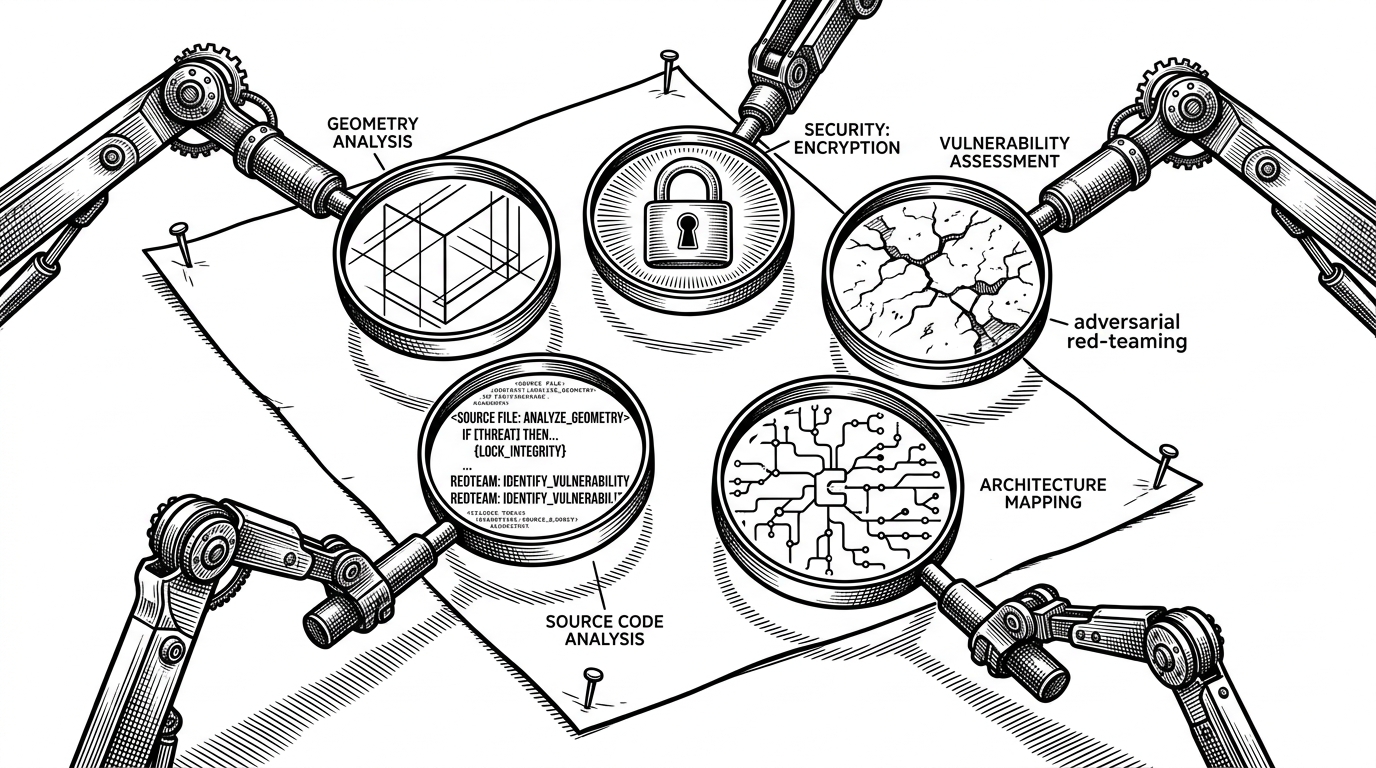
The code review process is the most technically complex part of the repository. Instead of a single chat completion, /ce:review operates as a multi-agent pipeline. It routes files to specialized "Tiered Personas."
A Ruby file goes to a simulated dhh-rails-reviewer, while critical logic is sent to an adversarial-reviewer prompted explicitly to find reasons the code will fail. This multi-lens scrutiny ensures that code is evaluated from multiple architectural and security perspectives simultaneously.
The Rosetta Stone of AI IDEs
The AI tooling landscape is fragmented across Claude Code, Cursor, Windsurf, and GitHub Copilot. The /src directory of this monorepo contains a custom TypeScript compiler that solves this fragmentation.
It takes a single Claude-native Markdown skill and cross-compiles it for over ten different AI environments, mapping proprietary tool names and environment variables automatically. This hidden superpower allows developers to author skills once and distribute them across any major AI IDE.
The 80/20 Inversion
At Every, developers manage five separate products with single-person engineering teams. Dan Shipper and Kieran Klaassen built this framework to enforce a specific operational philosophy. The AI is not trusted to write code until the /ce:plan step is explicitly approved.
The Agent Harness Wars
The concept of an "agent harness" is dividing the developer community. As teams move beyond simple chat interfaces, the need for structured orchestration becomes paramount. We can compare the Compound Engineering approach with other popular frameworks like Superpowers and Everything Claude Code (ECC).
| Framework | Core Philosophy | Architecture | Target Audience |
|---|---|---|---|
| EveryInc/compound-engineering-plugin | Institutional memory & 80/20 planning ratio | Markdown skills + cross-compiler | Small teams scaling multiple products |
| Superpowers (Groundy) | Strict TDD workflow | Composable markdown skills | Developers needing discipline |
| Everything Claude Code (ECC) | Performance optimization | JSON config + runtime hooks | Power users tweaking agents |