`undress-service`: The Repo That Looks Like a Wardrobe App and Behaves Like Two Projects
A self-hosted FastAPI fashion assistant, a local AI styling stack, and a completely separate downloader package living in the same tree.
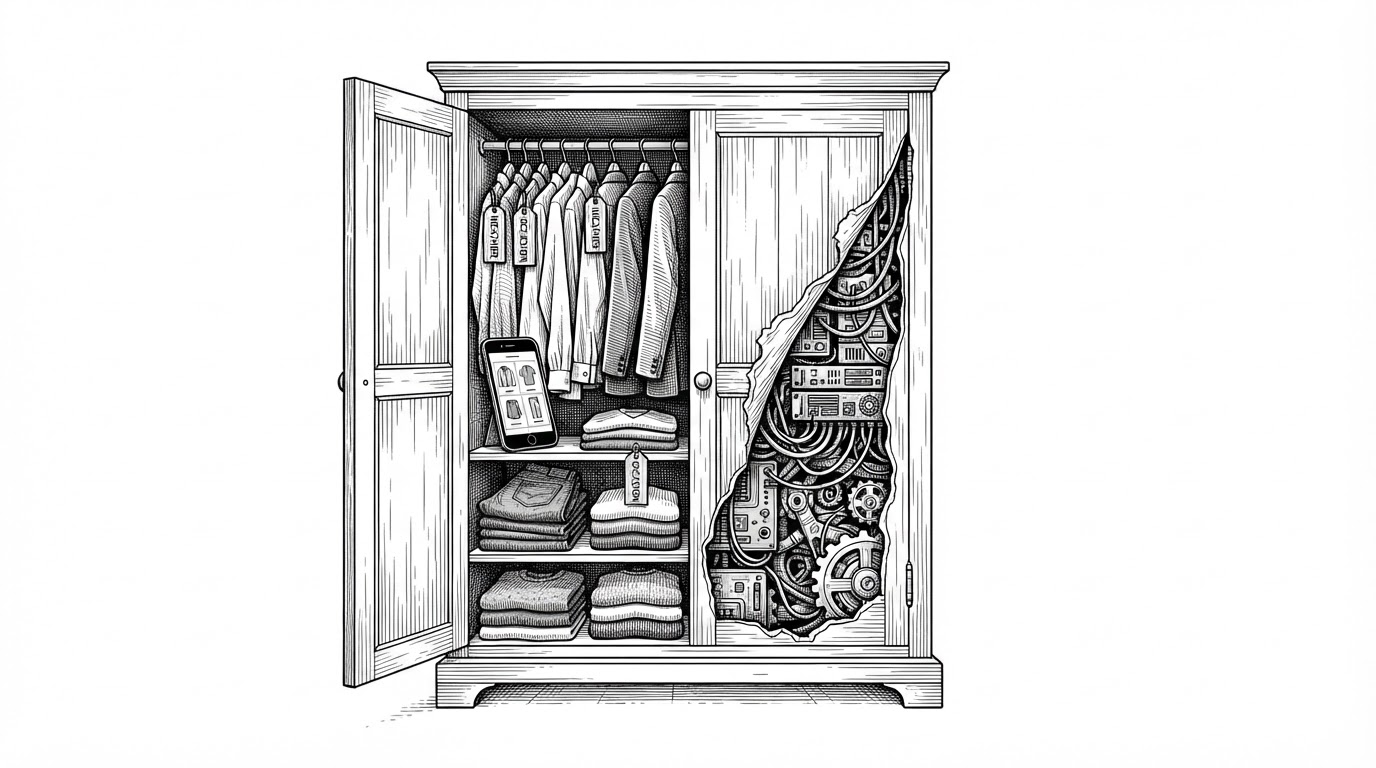
- The most revealing fact about `undress-service` is not its model stack, but its split identity as two unrelated projects sharing one repository.
- Its fashion assistant is a credible local-first system built around FastAPI, CLIP tagging, color clustering, and generative styling.
- The repo’s self-hosted posture makes privacy and control part of the product pitch, not just an infrastructure choice.
- The embedded downloader package turns a polished OSS service into an editorial case study about branding, bundling, and intent.
The Repo With Two Public Faces
At first glance, `undress-service` reads like a straightforward local AI wardrobe app. It promises a self-hosted way to catalog clothes, classify items, and generate outfit suggestions without sending everything to a third-party cloud. The surprise is that the repository also contains a separate package, `coomertool`, that points in a completely different direction.
Dress AI Sponsor.
That tension is the whole story. The clean, consumer-facing wardrobe assistant is technically interesting on its own, but the second package changes how you read the repo. It stops being just a product and starts looking like a bundle of adjacent ambitions, some polished and some deliberately off-brand.
The Clean System: A Local-First Fashion Assistant
The main application lives in `app/`, where FastAPI, SQLAlchemy, and Pydantic form a conventional service architecture. Wardrobe items become database records, outfits become relationships, and the UI layer is backed by a set of APIs for ingesting photos, generating metadata, and returning styled recommendations.
How the Wardrobe Brain Works
The ingestion path is pragmatic. An uploaded image is resized, dominant colors are clustered with K-Means, and CLIP does zero-shot classification against text prompts like a shirt, top, or jacket. The result is a structured wardrobe record with category, colors, season, and fabric attached to it.
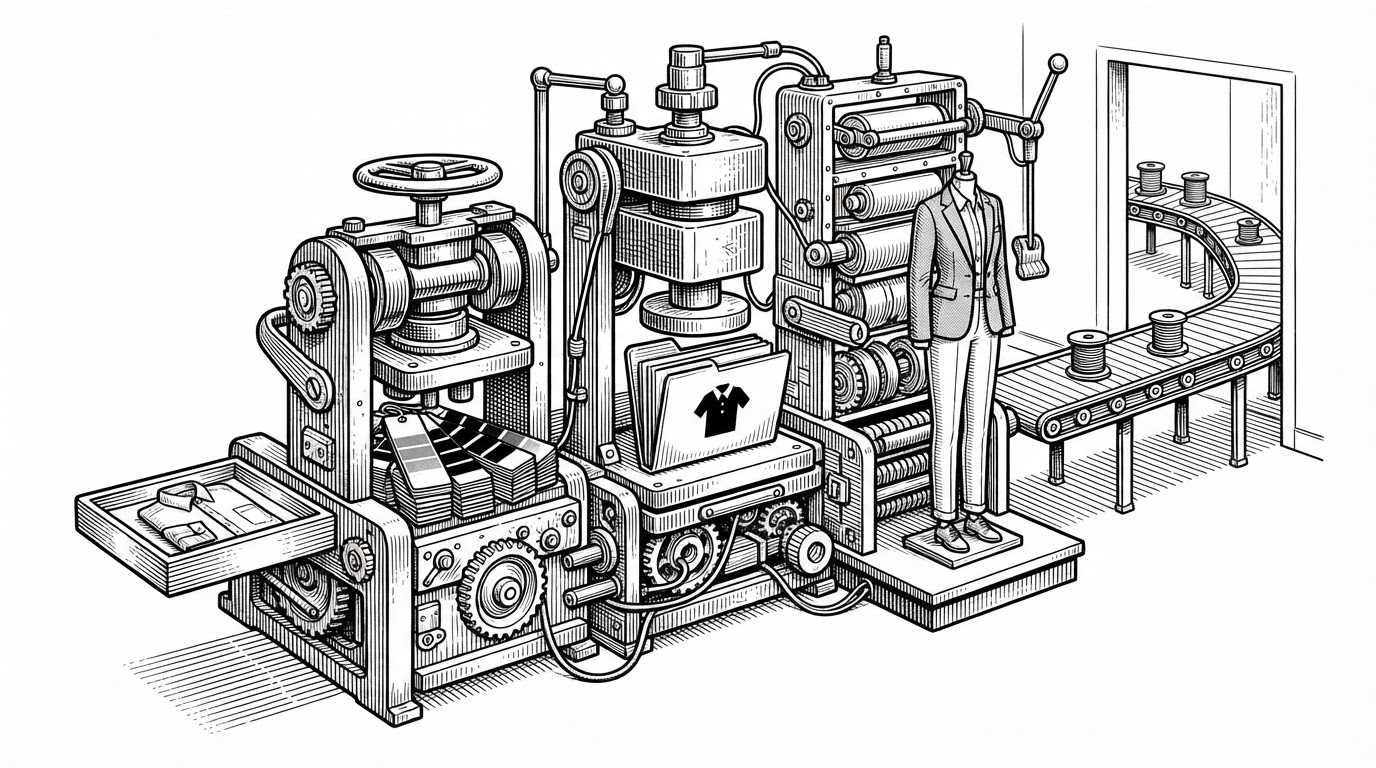
That pipeline matters because it avoids the usual fashion-app dependency chain. Instead of treating clothing analysis as a cloud service, the repo leans on local models and local storage. In this category, that is not just a deployment detail. It is part of the value proposition.
Why Local Models Matter Here
Self-hosting changes the economics and the trust model. Users do not have to upload private wardrobe photos to a vendor, and the maintainer does not have to pay per-request API costs for every classification or generated look. The tradeoff is maintenance, because local models raise the bar for setup and hardware.
| Approach | Data custody | Model hosting | Cost profile | UX polish | Maintainability | Editorial risk |
|---|---|---|---|---|---|---|
| Cloud fashion SaaS | Images leave the machine | Vendor-hosted | Recurring subscription | Usually polished | Low for the user | Low |
| Self-hosted wardrobe assistant | User-controlled | Local or optional local | Hardware and ops burden | Depends on the install | Higher for the user | Moderate |
| Single-purpose OSS repo | Usually user-controlled | Usually local | Minimal direct cost | Varies widely | Higher, but narrower | Lower |
| `undress-service` | User-controlled on the surface | Local-first stack | Local compute plus setup | Mixed, because it is two projects | Higher, because the repo is split | High, because branding and scope diverge |
The repo’s local posture also explains why the technical choices feel familiar to builders. CLIP gives broad zero-shot labeling without a custom dataset. K-Means gives a cheap, explainable way to extract color palettes. Generative models then turn that structured wardrobe state back into a visual preview.
The Shadow Package
Then there is `coomertool`. It is not a small helper module or a hidden utility. It is a separate scraper and downloader package sitting beside the fashion app, with its own code path and its own implied audience. That makes the repository harder to read and more interesting to analyze.
This is where the article stops being a simple architecture tour. The repo is technically competent, but its bundle of identities creates friction. One part says private wardrobe assistant. Another part says something else entirely. In open source, that kind of mismatch is rarely accidental enough to ignore.
What This Repo Says About Open Source Now
Bundled repos are common. Ambiguous branding is common too. What makes `undress-service` notable is that it turns those ordinary habits into a visible artifact. The codebase is not just a service. It is a record of how developers sometimes package adjacent tools, different users, and conflicting intentions under one roof.
Compared with polished cloud products, it is rougher and more revealing. Compared with clean single-purpose OSS projects, it is more confusing but also more honest about the messiness of real repo formation. That is why it deserves attention: not because the fashion assistant is novel, but because the repository tells on itself.