Multi-Document-RAG-Chatbot-System-: Multi-Document-RAG-Chatbot-System: The Small RAG App That Rebuilds Its Own Memory
A Streamlit, LangChain, FAISS, and Groq stack that turns a folder of PDFs into a queryable second brain, then exposes the source chunks so you can verify every answer.
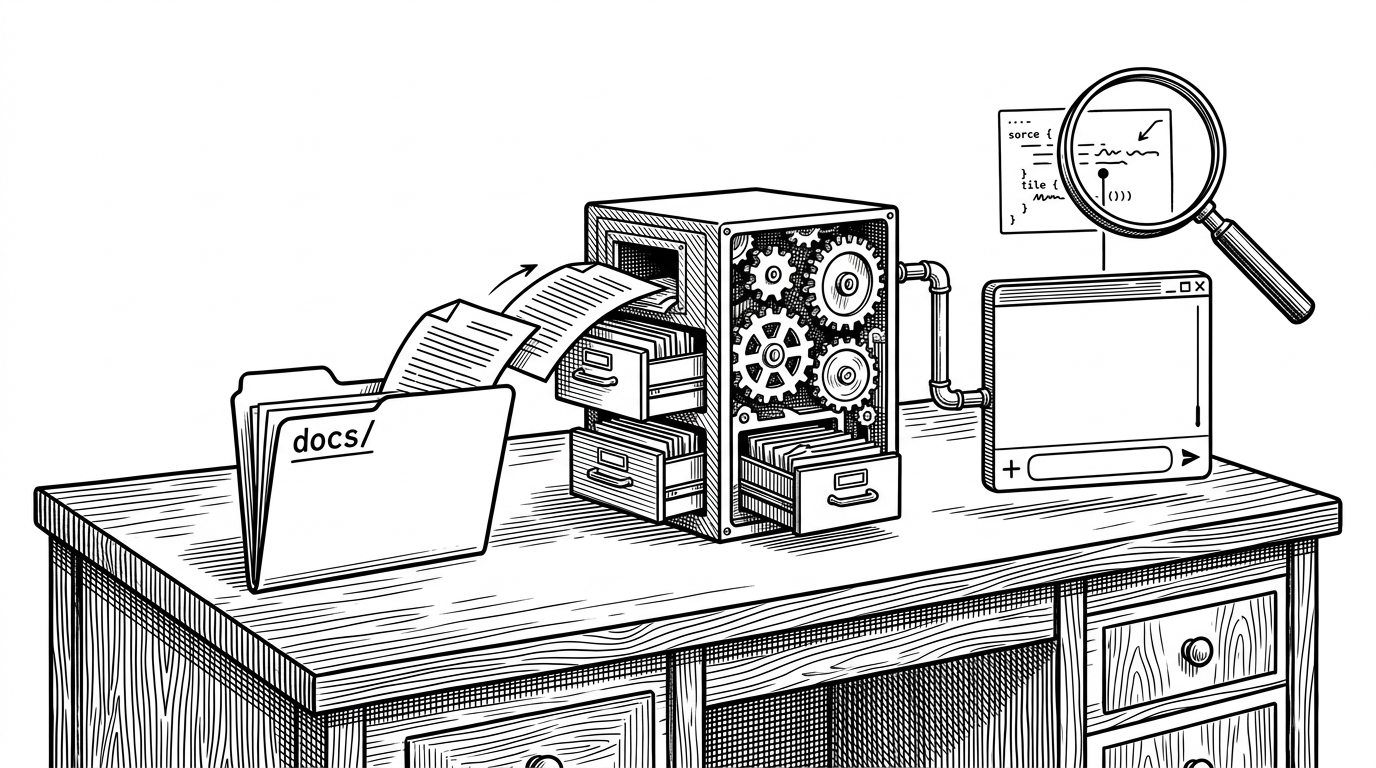
- This repo is most interesting as a trust machine, because it rebuilds its index from local PDFs and shows the source chunks behind each answer.
- Its hybrid split keeps embeddings local while sending reasoning to Groq, which makes the system feel lightweight without giving up model quality.
- The warm-up query is the smartest line in the project, because it checks retrieval and generation before a user ever asks a question.
- It reads less like a framework and more like a compact teaching artifact that makes the mechanics of multi-document RAG visible.
The part most RAG demos skip: proving the answer came from the right PDF
Most RAG demos stop at “ask a question, get an answer.” This repo does something more useful. It reloads the PDFs in docs/, refreshes the vector index, runs a startup query, and exposes the retrieved chunks so the answer can be checked against the original material.
This chatbot system allows users to interact with multiple documents simultaneously, leveraging Retrieval-Augmented Generation (RAG) to provide accurate and context-aware responses.
That makes the project feel less like a demo and more like a small trust layer. The user does not just get an answer. They get a path back to the source, which matters whenever a document system is being used for study notes, internal PDFs, or any other material where provenance is the whole point.
Why this stack is interesting: local embeddings, cloud reasoning
The architecture is a clean split. Embeddings stay local with sentence-transformers/all-MiniLM-L6-v2, while the question-answering model runs on Groq with llama-3.3-70b-versatile. That gives the repo a useful shape: cheap retrieval, stronger reasoning, and no need to host a giant model on the user’s machine.
That division also tells you what the repository is optimizing for. It is not chasing a fully local LLM stack. It is choosing the parts that benefit most from locality, then outsourcing the part where a large hosted model can add polish and fluency.
Inside app.py: one file that does ingestion, chunking, retrieval, and UI
The codebase is intentionally small. The main pipeline lives in app.py, which globs docs/*.pdf, parses each file with PyPDFLoader, injects source metadata, chunks text with RecursiveCharacterTextSplitter, and builds a FAISS index that gets saved locally.
That monolithic shape is not elegant in a framework sense, but it is excellent for learning. You can trace the path from PDF to chunk to embedding to retrieval without jumping across directories or abstractions. For a prototype, that is a feature.
for doc in loaded_docs:
    doc.metadata["source_file"] = pdf

text_splitter = RecursiveCharacterTextSplitter(
    chunk_size=1000,
    chunk_overlap=200
)
chunks = text_splitter.split_documents(loaded_docs)

vectorstore = FAISS.from_documents(chunks, embeddings)
vectorstore.save_local("vectorstore")

qa = RetrievalQA.from_chain_type(
    llm=llm,
    retriever=vectorstore.as_retriever(),
    return_source_documents=True,
)
The important part is not the syntax. It is the contract. Every chunk keeps a source reference, every answer can return source documents, and the saved index means the app can reload its memory instead of pretending the world starts fresh on every run.
The warm-up query is the weirdest and smartest line in the repo
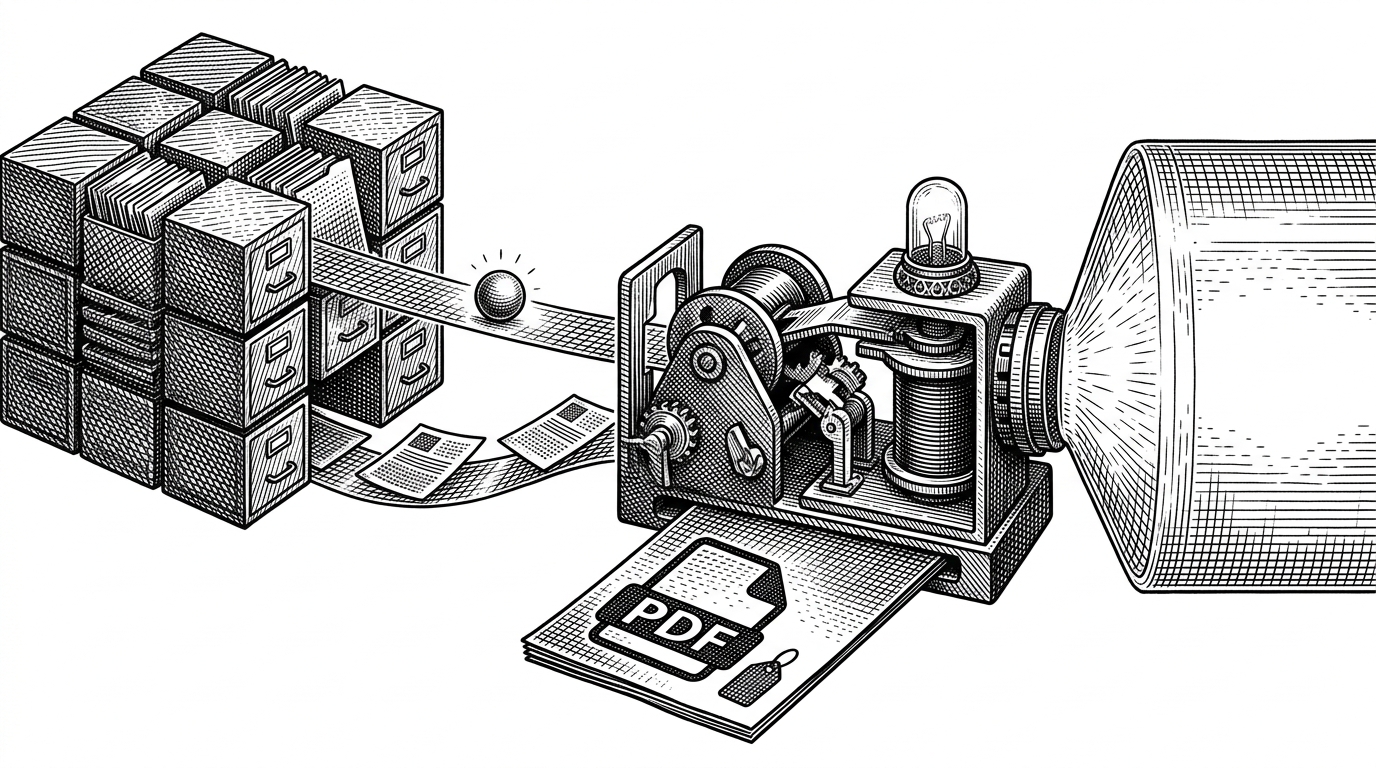
This is the repo’s most memorable move. On startup, it runs a similarity search and a QA call with a test prompt, which means the app checks the full retrieval path before it accepts a real question. That is a tiny but valuable operational pattern.
It changes the meaning of “works.” The system is not merely configured. It has already verified that the vector store is live, the model can answer, and the source path still resolves. In a small prototype, that is the closest thing to a heartbeat monitor.
What this repo is, and what it is not
| Dimension | This repo | LlamaIndex | LangChain |
|---|---|---|---|
| Primary role | A compact multi-document RAG template | A data framework focused on indexing and retrieval | A general orchestration toolkit for LLM apps |
| Scope | Single-purpose and easy to read | Broader retrieval and indexing features | Broadest surface area and integrations |
| UI | Streamlit app included | Usually paired with another UI layer | Usually paired with another UI layer |
| Best use | Learning the end-to-end shape of a RAG app | Building more advanced retrieval workflows | Composing chains, tools, and agents |
| Tradeoff | Clarity over breadth | Specialization over simplicity | Flexibility over minimalism |
This matters because the repository is honest about its size. There is no attempt to become a framework. There is no packaging polish, no grand abstraction layer, and no claim that it can outdo the bigger projects. Its value is that it shows the minimum viable shape of a working multi-document RAG app.
That also means the rough edges are informative. Debug prints, a lightweight file layout, and a local-first vector store are all signs of a learning artifact. In this case, the roughness is part of the lesson.
Compared with the bigger RAG stacks
Against LlamaIndex, LangChain, and Haystack, the repo is not trying to win on capability. It wins on compactness. You can see the full system in one sitting, which is exactly what makes it useful for people who want to understand how these pieces fit before they commit to a larger framework.
| Project | Strength | Weakness | Where this repo sits |
|---|---|---|---|
| Multi-Document-RAG-Chatbot-System | Easy to audit, easy to copy | Limited feature depth | A small, opinionated implementation |
| LlamaIndex | Strong retrieval and indexing primitives | More framework surface to learn | A better fit for advanced document workflows |
| LangChain | Huge ecosystem and orchestration power | Can feel broad before it feels focused | The repo already uses it as a building block |
| Haystack | End-to-end RAG and NLP workflow support | Heavier than a toy template | A stronger production-oriented option |
So the niche is clear. This repository is best understood as a readable blueprint, not a destination. If you want a production platform, the larger frameworks are the obvious next stop. If you want to understand the control flow, this is the quicker read.
The take-away: a second brain is only useful if it can show its receipts
The strongest lesson in this repo is not about embeddings or even about RAG. It is about visibility. The system rebuilds its memory from local PDFs, checks itself at startup, and returns the source chunk behind the answer. That combination turns a chatbot into something closer to an inspectable document system.
That is why the project works as an article subject. It makes the mechanics legible. The reader can trace the evidence, understand the tradeoff between local retrieval and cloud reasoning, and walk away with a concrete template for building a small but trustworthy knowledge base.