ResolveFlow-AI: The Helpdesk That Decides What Matters First
A Spring Boot and React complaint system that uses an LLM for triage, suggestions, and live escalation, then wraps it in JWT auth, rate limits, and real-time notifications.
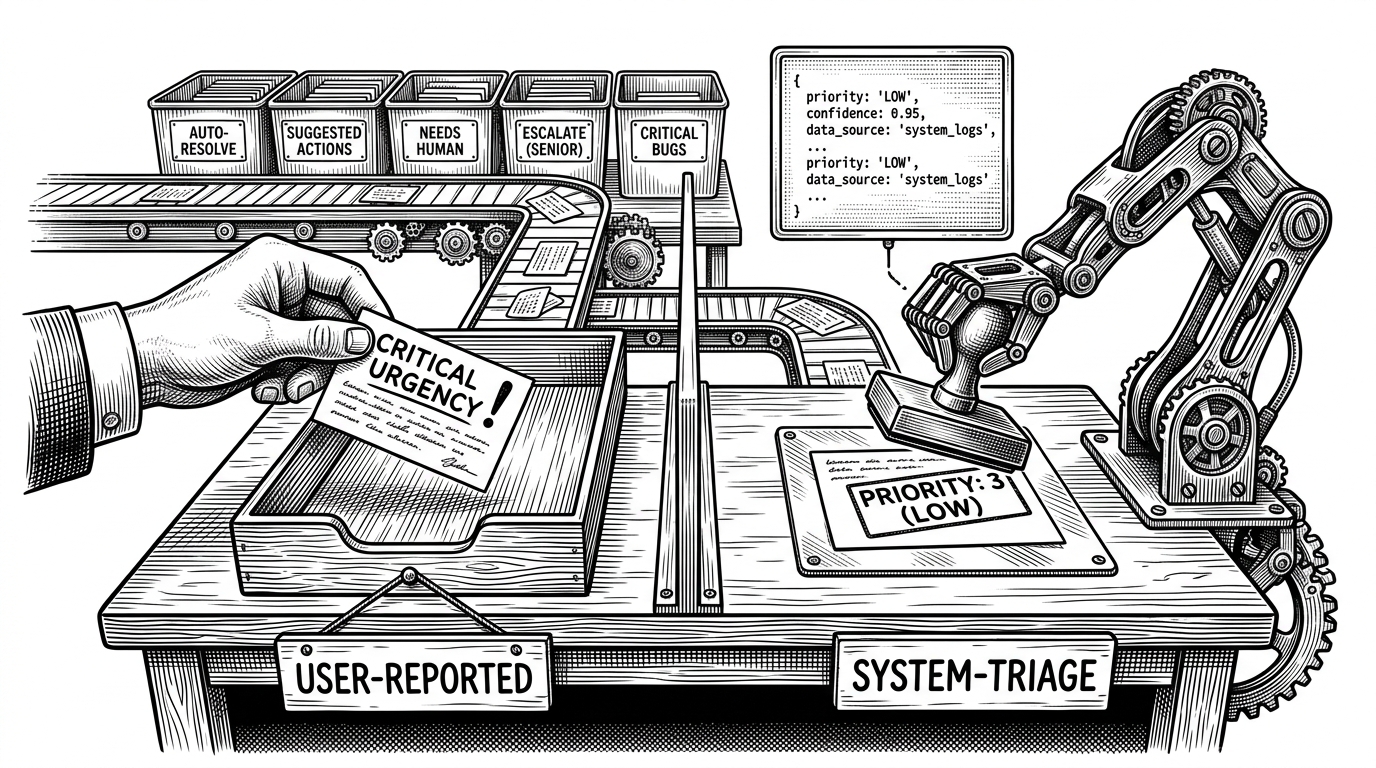
- ResolveFlow-AI is interesting because it lets the model influence triage, not just generate answers.
- The project treats AI as a constrained operator inside a production workflow, not as a chatbot bolted onto a form.
- Its strongest engineering idea is the fallback path: structured parsing, user priority fallback, rate limits, and caching keep the system usable and affordable.
- The repo’s real tension is governance, because handing priority decisions to software can reduce noise while also making policy invisible.
Most helpdesk apps are intake forms with notifications. ResolveFlow-AI is trying to be something sharper: a control system for turning messy complaints into machine-assisted triage. The difference shows up in one line of logic, where AI priority can override the user’s own self-assessment. That is not a cosmetic feature. It is a policy choice.
That choice changes the shape of the product. Instead of asking support staff to sift through a pile of equally urgent tickets, the system classifies, suggests next steps, and escalates only when it should. In other words, the repo is not selling chat. It is selling a more disciplined resolution loop.
The machine gets the first say
The most revealing part of ResolveFlow-AI is its attitude toward urgency. The backend prefers AI-derived priority when it exists, then falls back to the user’s own value when it does not. That is a strong signal that the app is trying to prevent the usual helpdesk failure mode, where everything is marked urgent and nothing is.
This is why the project feels different from a conventional support portal. The LLM is not there to sound helpful. It is there to shape workflow. It decides what should be routed, what should be suggested, and what should wait for human intervention.
Why complaints become faster when the system speaks first
The upside is practical. If a complaint can be categorized automatically, the support team does not have to burn time on rote intake. If the model can suggest troubleshooting steps immediately, low-complexity issues may resolve before they ever become tickets. That means fewer handoffs, less queue churn, and faster time to first useful response.
| Conventional helpdesk | ResolveFlow-AI | |
|---|---|---|
| User submits issue | User submits issue, then AI can reshape the ticket path | |
| Priority assignment | Priority is usually manual or user-declared | AI priority can override user urgency, with fallback logic |
| Troubleshooting response | Human agents respond after triage | The system can generate self-help suggestions immediately |
| Human intervention | Humans start early in the process | Humans enter after classification and escalation |
| Abuse protection | Often limited to basic auth and quotas | JWT, rate limiting, and caching protect the AI path |
| Real-time updates | Often polling or delayed status changes | WebSockets push updates live to the dashboard |
That comparison matters because it shows the repo’s real ambition. It is trying to reduce the amount of human labor required to get from complaint to action. The AI layer is not decorative. It is the first pass at operational judgment.
The triage brain
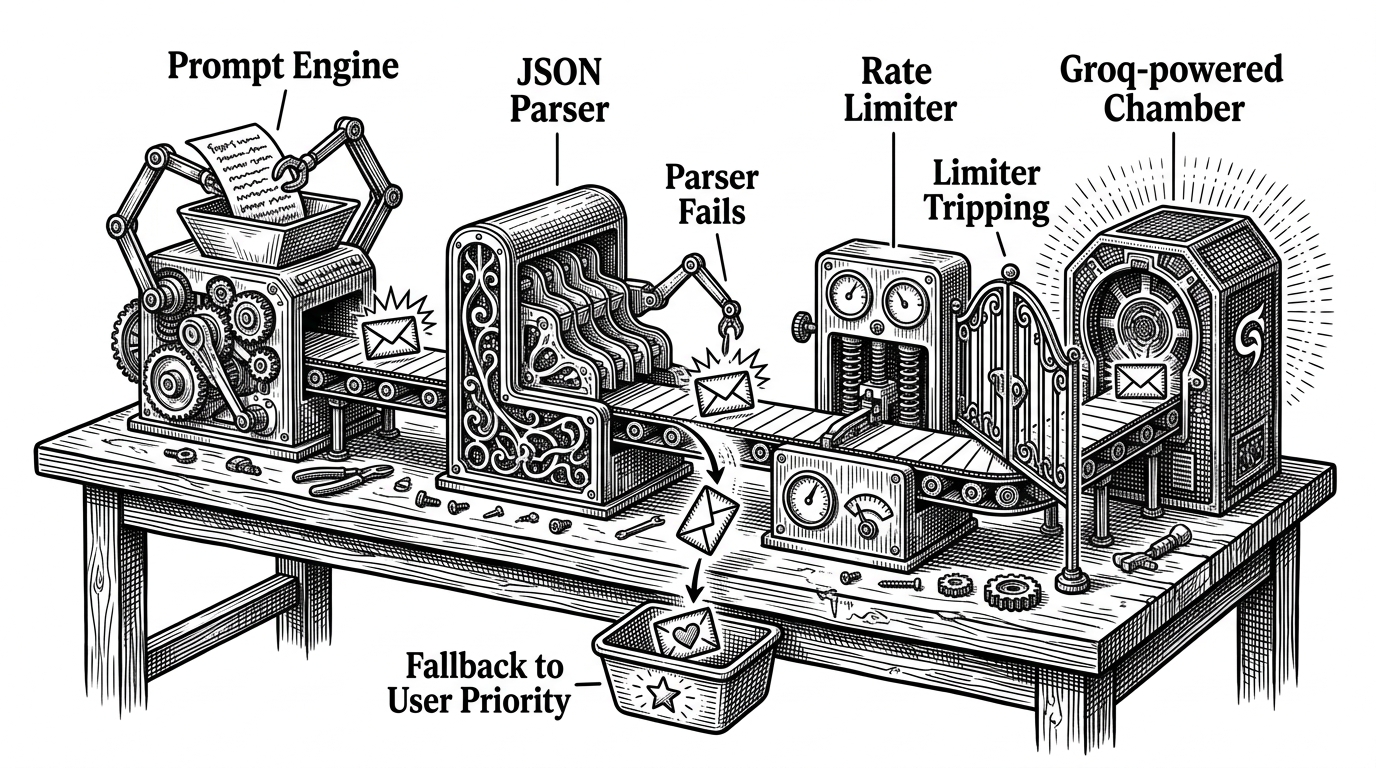
The architecture centers on AiService and AiController. The service sends a structured prompt to Groq, expects strict JSON back, and parses the response before the rest of the workflow continues. That pattern is important because it turns an LLM from a free-form writer into a constrained API participant.
String finalPriority = request.getAiPriority() != null && !request.getAiPriority().isBlank()
    ? request.getAiPriority()
    : request.getUserPriority();
That line does a lot of editorial work. It says the machine gets the first say, but not the last word if the machine is silent. The fallback is not just a defensive coding pattern. It is the compromise that makes AI triage deployable.
The broader pattern is "prompt engineering as a service." The backend sends a task-specific prompt, expects a constrained response, and then treats the output as data rather than prose. That keeps the LLM useful without letting it wander into the rest of the system.
A complaint is not just a complaint
The domain model is doing more than storing records. The Complaint entity holds the system’s memory: AI metadata, user input, technician assignment, category, and status history. That matters because resolution is never just a single state. It is a timeline.
| Field or relationship | Role in the workflow |
|---|---|
| Complaint.user | Identifies who raised the issue |
| Complaint.technician | Tracks who is handling it |
| Complaint.category | Places the issue into an operational bucket |
| Complaint.aiCategory | Stores the model’s classification |
| Complaint.priority | Represents the final urgency decision |
| Update history | Provides the audit trail for status changes |
This is what makes the repo feel closer to a workflow engine than a form app. The ticket is a living object. It accumulates decisions, not just text.
Real-time without polling
ResolveFlow-AI does not make the dashboard wait. When a complaint is created, the notification layer pushes updates through WebSockets, so the UI can react immediately. Email remains in the loop too, which gives the system both speed and permanence.
That split is smart. WebSockets make the app feel alive for operators. Email creates an asynchronous record for stakeholders who do not live inside the dashboard. The repo is using the right channel for each job.
Production guardrails around an expensive brain
This is where the project stops looking like a demo. JWT authentication keeps sessions stateless. Bucket4j and Caffeine limit abuse and protect expensive AI calls. File validation stops uploads from becoming a new attack surface. These are the sorts of choices that separate an interesting prototype from something a team could actually run.
| Guardrail | What it protects |
|---|---|
| JWT auth | Unauthorized access to complaint and admin flows |
| Rate limiting | AI API spend and request abuse |
| Caching | Repeated calls for identical or near-identical work |
| File validation | Attachment uploads and storage integrity |
| Strong DTO boundaries | Leaky coupling between API and persistence |
The most important point is not that the repo uses modern tools. It is that the tools are arranged around the cost of AI. The code assumes the model is valuable, fallible, and expensive. That is the right assumption.
What this stack says about modern Java apps
Spring Boot, React, MUI, MySQL, SockJS, STOMP, and Groq is a very contemporary stack, but not a trendy one. It blends old reliable enterprise patterns with AI-era behavior. The backend still speaks in services, repositories, and DTOs. The product behavior, however, is shaped by a model that classifies, suggests, and nudges routing decisions.
That mix is probably the project’s most realistic trait. It does not pretend that AI replaces workflow software. It folds AI into workflow software and then wraps it with the usual controls.
The trade-off hidden in plain sight
ResolveFlow-AI’s best idea is also its hardest one: letting AI decide priority can reduce noise, but it can also hide policy inside the model loop. If the system becomes good at correcting urgent-but-not-really-urgent tickets, it can also become harder to explain why a ticket was downgraded. That is not a bug. It is governance.
So the real question is not whether AI can triage complaints. It clearly can, at least enough to be useful. The question is who gets to define the fallback rules, audit the model’s influence, and decide when a machine should override the customer’s own sense of urgency.