BookNest Turns a Private Library Into a Live Shared Workspace
A Django and React app that treats books like physical assets, shelves like permissioned spaces, and sync like the default instead of the exception.
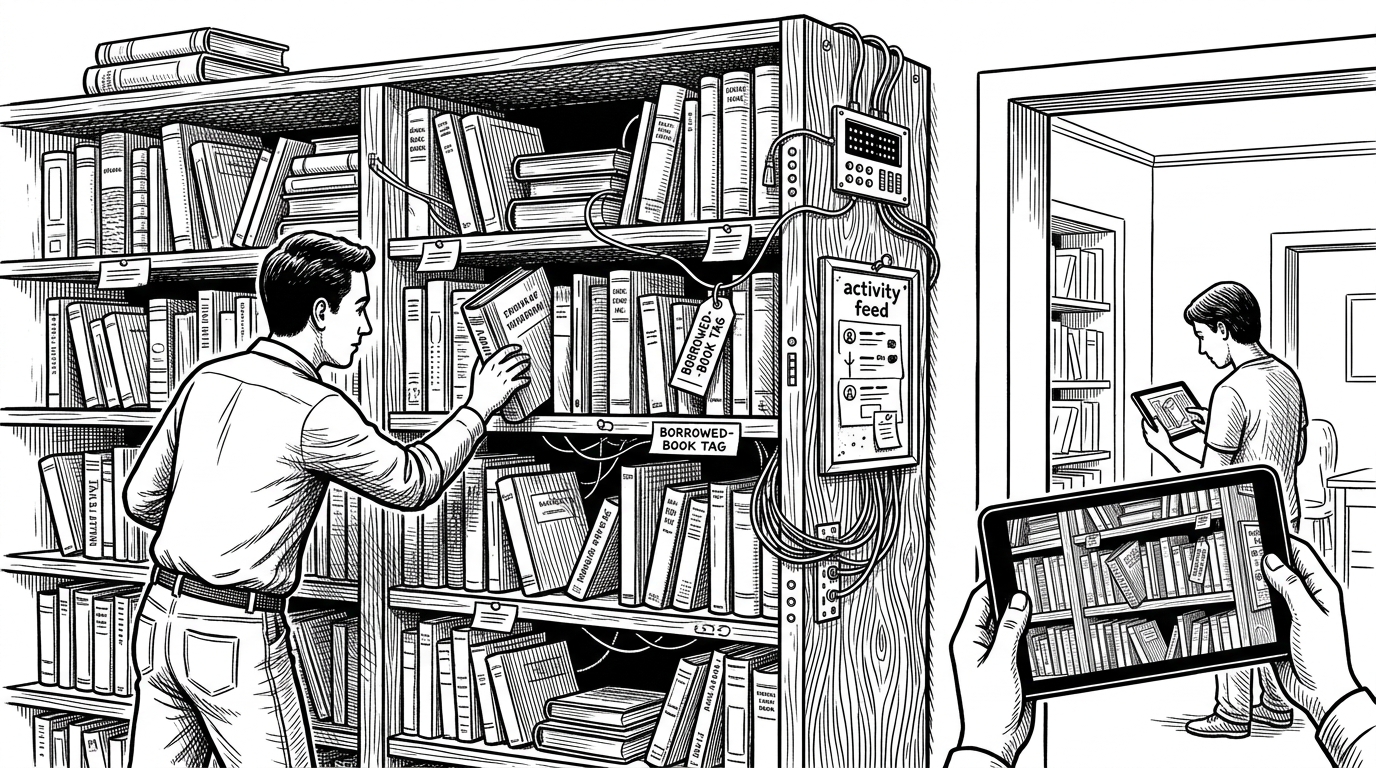
- BookNest’s real innovation is not book tracking, but coordinated ownership, access, and visibility around physical books in real time.
- Shared shelves and lending state are enforced as product logic, not as front-end decoration, which makes collaboration feel durable.
- Its real-time layer matters because it fan-outs REST changes to the right shelf groups instead of broadcasting generic updates to everyone.
- The stack is conventional, but the design choice is not: BookNest behaves more like collaboration software than a media catalog.
The library that updates while you are looking at it
Most library apps organize information. BookNest coordinates movement. A collaborator adds a title to a shared shelf, the owner sees it instantly, and a lent book changes state as a real-world object would, not as a checkbox in a form.
That is why the project feels different from a typical tracker. It treats a collection as a living workspace, where visibility, borrowing, and editing are all tied to who can touch which shelf.
The result is a product that behaves less like a personal archive and more like a lightweight operations layer for readers. The interface matters, but the deeper idea is the data model underneath it.
Books are treated as physical objects, not just records
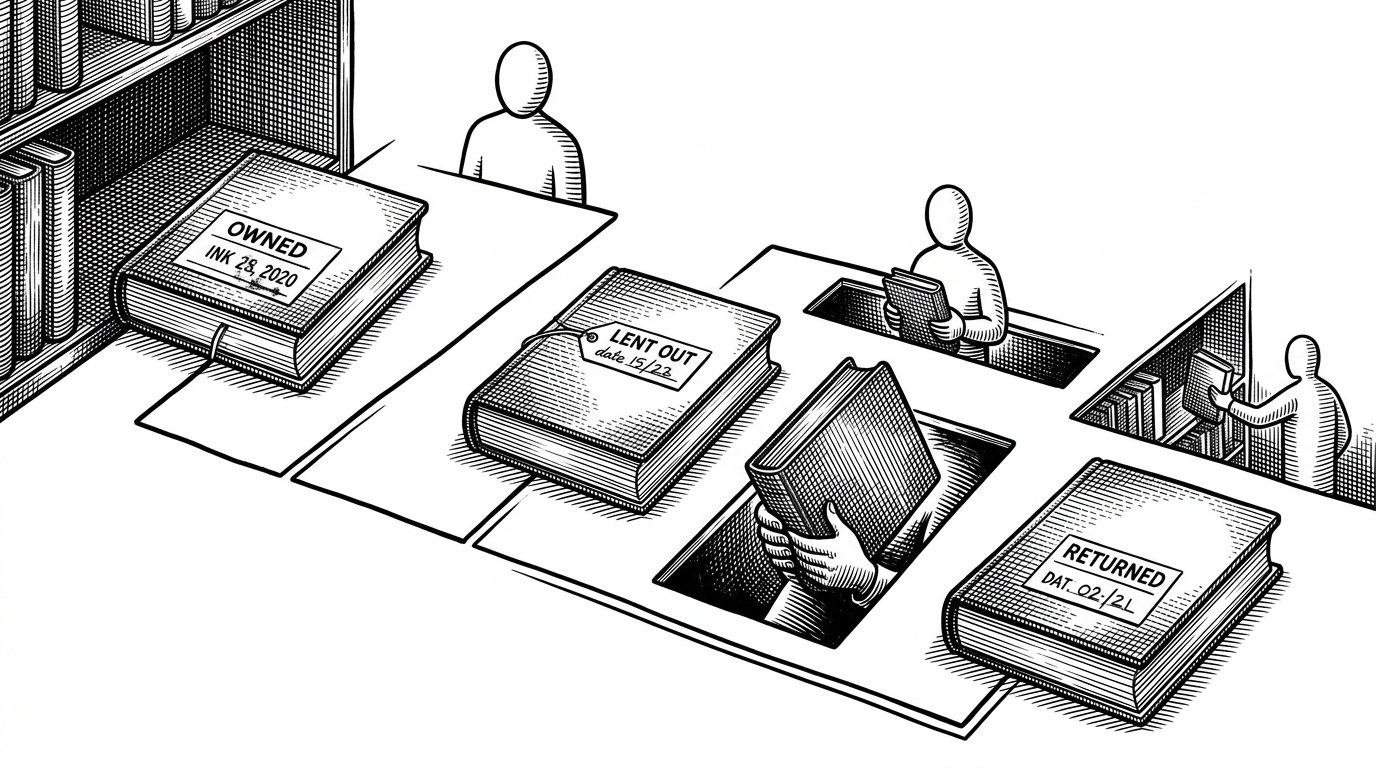
The core model is built around a simple but consequential distinction: ownership is not the same thing as possession. A book can still belong to your library even when `is_lent` is true and `lent_to` points at another user.
Shared shelves are permissioned spaces
BookNest does not treat collaboration as a UI state. It pushes it into the data layer with `Shelf` and `ShelfShare`, where roles like viewer and editor determine what a user can see, edit, and trigger.
| System | Primary use case | Physical lending | Collaborative shelves / RBAC | Real-time updates | Market position |
|---|---|---|---|---|---|
| BookNest | Collaborative personal library management | Yes | Yes | Yes | Shared workspace for books |
| Calibre-web | Browse a Calibre library | No | Limited | No | Web front-end for Calibre |
| Kavita | Comic, manga, and ebook server | No | Partial | Yes | Media server |
| Komga | Comic and manga server | No | Partial | Yes | Media server |
| Audiobookshelf | Audiobooks and podcasts | Limited | Partial | Yes | Audio-first server |
| BookStack | Documentation and knowledge base | No | Yes | No | Wiki-style content platform |
That distinction matters. If a user cannot edit a shelf, the backend should know it before the frontend hides a button. BookNest’s serializer logic and role checks make permission a property of the system, not a cosmetic choice.
How BookNest keeps everyone in sync
This is the technical centerpiece. REST handles the write, `_broadcast` turns that write into an event, and Django Channels fan it out to the relevant shelf groups instead of spamming every connected client.
The key move is scope. `JWTAuthMiddleware` authenticates the WebSocket handshake, then the consumer subscribes each user only to the shelves they own or share. Live updates stay targeted because the subscription list is built from the same permissions model that powers the app.
That is why a collaborator can add a book and the owner sees it instantly. The system is not polling for change. It is routing change to the exact people who need to know.
Silent refresh is doing more work than the UI shows
The frontend’s Axios interceptor makes the app feel calm. A request gets a bearer token automatically, a 401 triggers refresh, the new token is stored, and the original request is replayed without making the user think about session state.
api.interceptors.response.use(
  response => response,
  async error => {
    const originalRequest = error.config;

    if (error.response?.status === 401 && !originalRequest._retry) {
      originalRequest._retry = true;
      const refresh = localStorage.getItem('refreshToken');
      const res = await api.post('/api/auth/refresh/', { refresh });
      localStorage.setItem('accessToken', res.data.access);
      originalRequest.headers.Authorization = `Bearer ${res.data.access}`;
      return api(originalRequest);
    }

    return Promise.reject(error);
  }
);
This is not flashy, but it is product design. The fewer interruptions the user feels, the more natural the shared-library model becomes.
Why BookNest feels different from the usual library apps
BookNest sits in a different category from the better-known self-hosted book tools. It is not trying to be a media server, a docs wiki, or a Calibre front-end. It is trying to make book ownership collaborative.
| Project | Best known for | What it is not | Where BookNest differs |
|---|---|---|---|
| Calibre-web | A polished browser for Calibre libraries | A collaboration layer | BookNest adds lending and shared-shelf workflow |
| Kavita | Broad media library serving | A physical lending coordinator | BookNest centers real-world possession changes |
| Komga | Comic and manga collections | A permissioned reader workspace | BookNest is shelf-centric rather than format-centric |
| Audiobookshelf | Audio-first media playback | A book lending system | BookNest treats books as shared assets, not media files |
| BookStack | Creating documentation | A personal library manager | BookNest is about ownership and access, not authored pages |
That is the cleanest way to place it in the market. BookNest does not win by breadth. It wins by modeling a narrow problem correctly.
What this architecture says about the project’s priorities
The stack is conventional. Django, React, Channels, JWT, and Axios are all familiar tools. The judgment is in how they are combined: permissions are enforced at the data layer, real-time sync is scoped to relevant collaborators, and lending is treated as a state transition instead of a label.
That makes BookNest feel more complete than its feature list suggests. It is focused, but not simplistic. The project’s real ambition is to make a private collection behave like a shared system without losing clarity about who owns what and who can touch it.