The Dual-Protocol Bridge: Inside vercel-minimax-ai-provider
Why a rising LLM power chose to mimic two giants at once to win over the Vercel ecosystem.
- The provider implements a dual-protocol architecture that allows developers to toggle between OpenAI and Anthropic API formats for the same models.
- The repository utilizes a wrapper pattern that directly imports and reconfigures the official Anthropic SDK to minimize custom code maintenance.
- A specialized transformation layer manages reasoning blocks to prevent internal chain-of-thought tokens from breaking structured JSON parsers.
- Custom metadata extractors pull usage statistics from high-speed streams to maintain accurate metrics without impacting model latency.
The Provider with Two Brains
Most language model providers in the Vercel AI SDK ecosystem pick a lane. They either build a custom integration from scratch, or they implement a generic OpenAI-compatible endpoint to guarantee instant interoperability. The vercel-minimax-ai-provider repository takes a stranger, much smarter approach: it does both.
MiniMax, a prominent AI lab, exposes its models through two distinct API formats. One mimics OpenAI, ensuring broad compatibility with legacy systems. The other mimics Anthropic, which the provider explicitly notes offers better support for advanced features like complex tool calling and structured data extraction.
Rather than forcing developers to choose at the network level, this repository acts as a dual-protocol bridge. It exports two separate provider instances—minimax (which defaults to the Anthropic path) and minimaxOpenAI. This architectural choice reveals a deep understanding of how developers actually build agents: they want the ease of a standard interface, but they refuse to sacrifice the advanced capabilities of the underlying model.
The Art of the Wrapper
The elegance of this repository lies in what it chooses not to build. If you crack open src/minimax-anthropic-provider.ts, you won't find thousands of lines of custom request parsing and state management.
Instead, the code relies on a sophisticated wrapper pattern. It imports the internal AnthropicMessagesLanguageModel directly from the official @ai-sdk/anthropic package. The provider simply intercepts the configuration, swaps the base URL to point to MiniMax's servers, and injects the necessary x-api-key and version headers.
minimax-ai-provider is a community provider that use minimax-m2 to provide language model support for the AI SDK.
Dealing with the "Thinking" Problem
While the Anthropic path is an elegant delegation, the OpenAI implementation (src/minimax-openai-provider.ts) requires significantly more heavy lifting. This is because MiniMax's models—particularly the reasoning-heavy M2 series—generate outputs that standard OpenAI clients aren't equipped to handle.
The most complex logic in the repository deals with "thinking blocks." When a reasoning model processes a complex prompt, it often outputs its internal chain of thought before delivering the final answer. If these chaotic, unstructured thoughts are piped directly into a JSON parser expecting structured tool-call arguments, the application crashes.
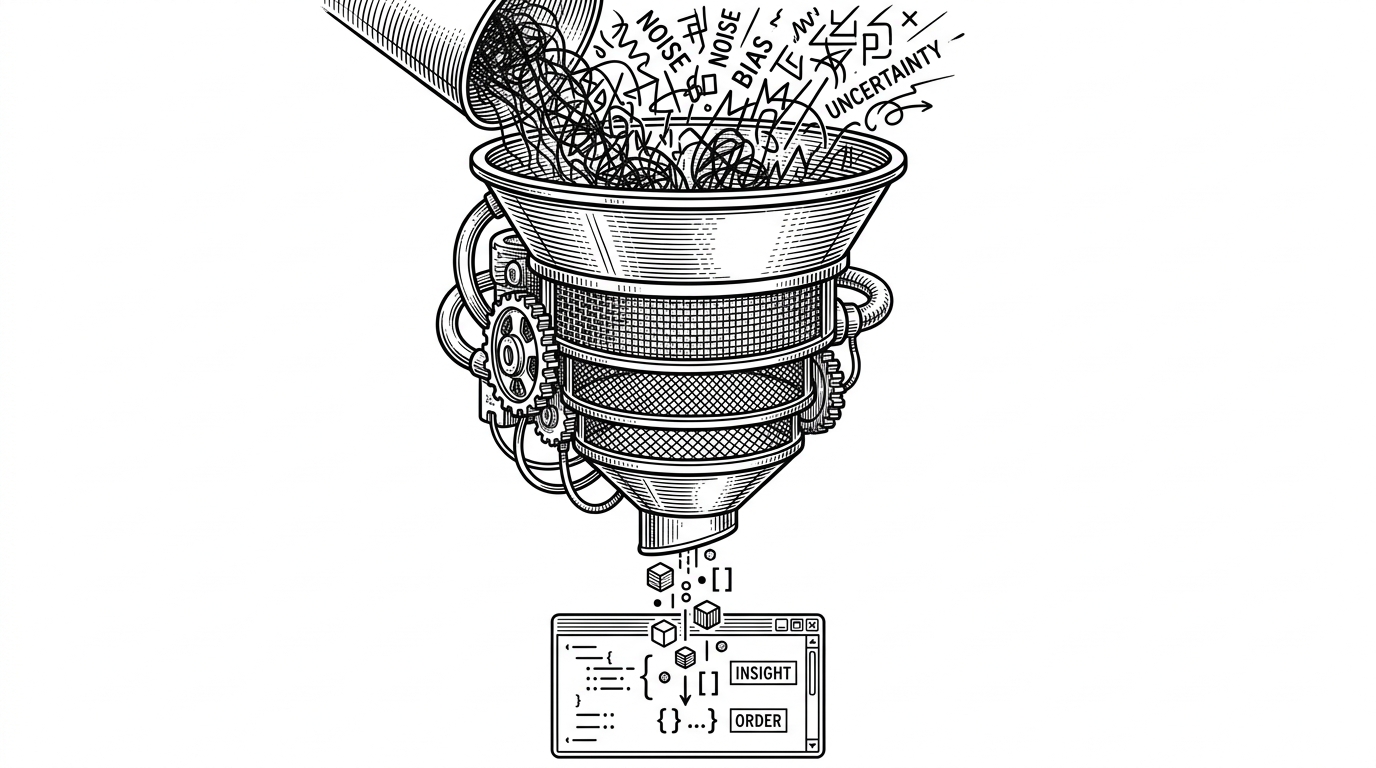
The transformation layer in convert-to-minimax-chat-messages.ts intercepts these responses. It explicitly manages the reasoning_split parameter, ensuring that the AI SDK can differentiate between the model's internal monologue and its final, actionable output. This is a critical feature for building reliable agents that rely on structured data.
// Inside minimax-openai-language-model.ts
const args = {
  model: this.modelId,
  messages: convertToMinimaxChatMessages(prompt),
  // MiniMax specific flag for reasoning models
  reasoning_split: this.modelId.includes('m2') ? true : undefined,
  stream: true,
};
Tuning for the Lightning Round
The architectural complexity is in service of speed. The provider is explicitly optimized for models like MiniMax-M2.1-lightning, which are designed for high-throughput, agentic workflows.
Focused on agentic use, Minimax M2 is very efficient to serve, with only 10B active parameters per forward pass.
To support this rapid generation without blocking the main thread, the repository includes a custom minimax-metadata-extractor.ts. This module is responsible for pulling usage statistics and token counts out of the high-speed stream as quickly as possible, ensuring that the Vercel AI SDK can report accurate metrics without slowing down the actual text generation.
Choosing Your Path
For developers entering the ecosystem, the existence of this provider simplifies a previously fragmented landscape. Instead of relying on community-maintained reverse proxies that scrape web interfaces, teams can use an officially supported bridge that guarantees type safety and edge compatibility.
| Feature | vercel-minimax-ai-provider | minimax-free-api (Reverse Proxy) | Generic OpenAI Wrapper |
|---|---|---|---|
| Protocol Support | Dual (Anthropic & OpenAI) | OpenAI Mimicry Only | OpenAI Only |
| Stability | Production-grade API | Fragile (Web Scraping) | Stable |
| Reasoning Support | Native (Handles thinking blocks) | Varies (Often breaks JSON) | Requires custom parsing |
| Edge Compatibility | Yes (Tested via Vitest Edge) | No | Usually |
The vercel-minimax-ai-provider is more than just a configuration file; it is a pragmatic solution to a complex integration problem. By choosing to mimic two giants simultaneously, it allows developers to harness the speed and reasoning capabilities of MiniMax models without abandoning the standardized workflows they already know.