Distracted-Driver: The Open-Source Safety System That Turns a Webcam Into an Alarm Stack
A ResNet50 classifier is only the beginning. This repo shows the messy, revealing last mile of driver monitoring: live video, label smoothing, audio warnings, email alerts, and location lookup.
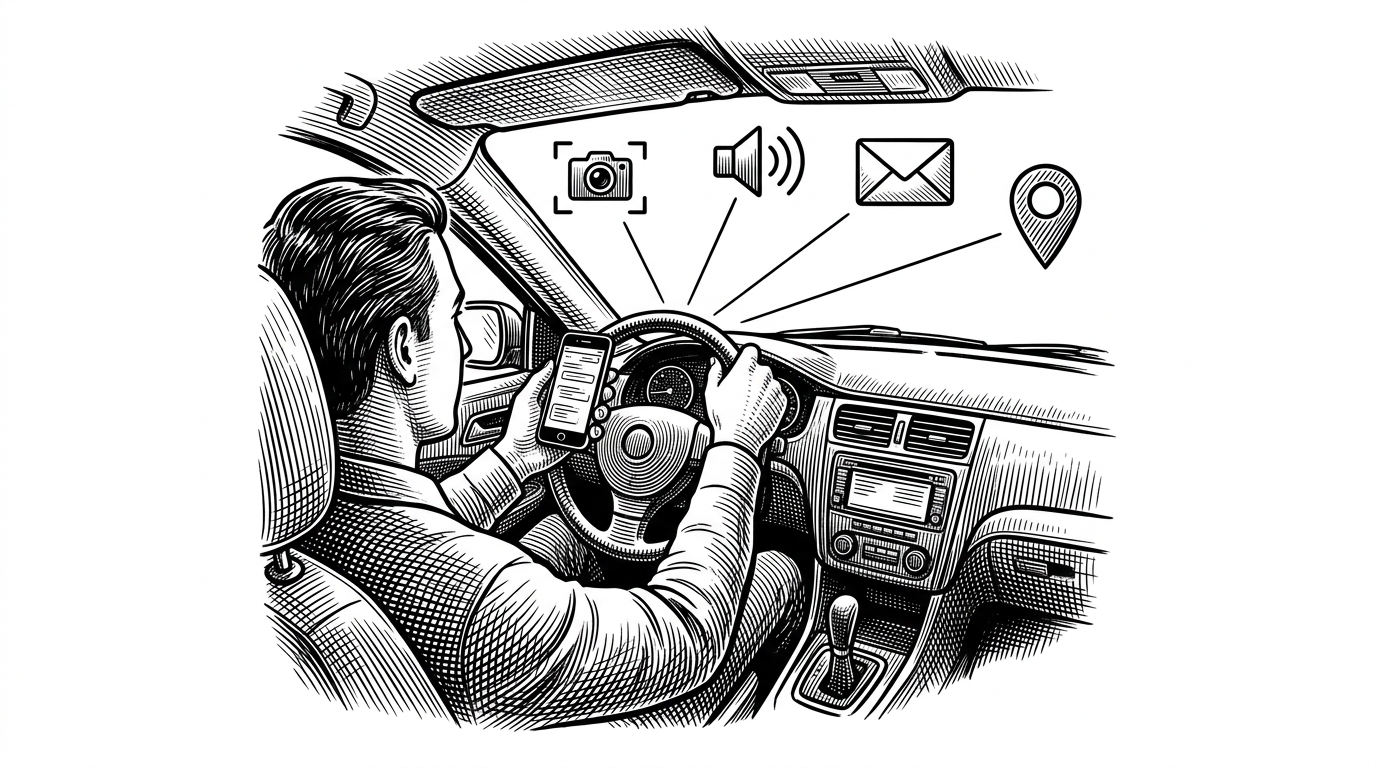
- Distracted-Driver matters because it turns a frame-level classifier into a multi-channel intervention system, which is the real last mile of AI safety.
- The repo’s most interesting choices are not in the model, but in the glue logic that debounces labels, triggers alarms, and attaches location reporting to an alert.
- Its rough edges, including class-count mismatch, image-size drift, and hardcoded credentials, read like prototype scars rather than accidental noise.
- This project sits between a Kaggle-style model demo and a production driver-monitoring product, which makes it a useful case study in how AI becomes operational.
Why this repo matters
Most distracted-driving repos stop when the model predicts a class. This one keeps going. It takes a distracted frame, stabilizes the label, and turns that signal into sound, text, email, and location reporting.
That changes the story. The repository is not really about computer vision accuracy. It is about what happens after the prediction, when a model has to become useful in a real-time safety loop.
From one prediction to five responses
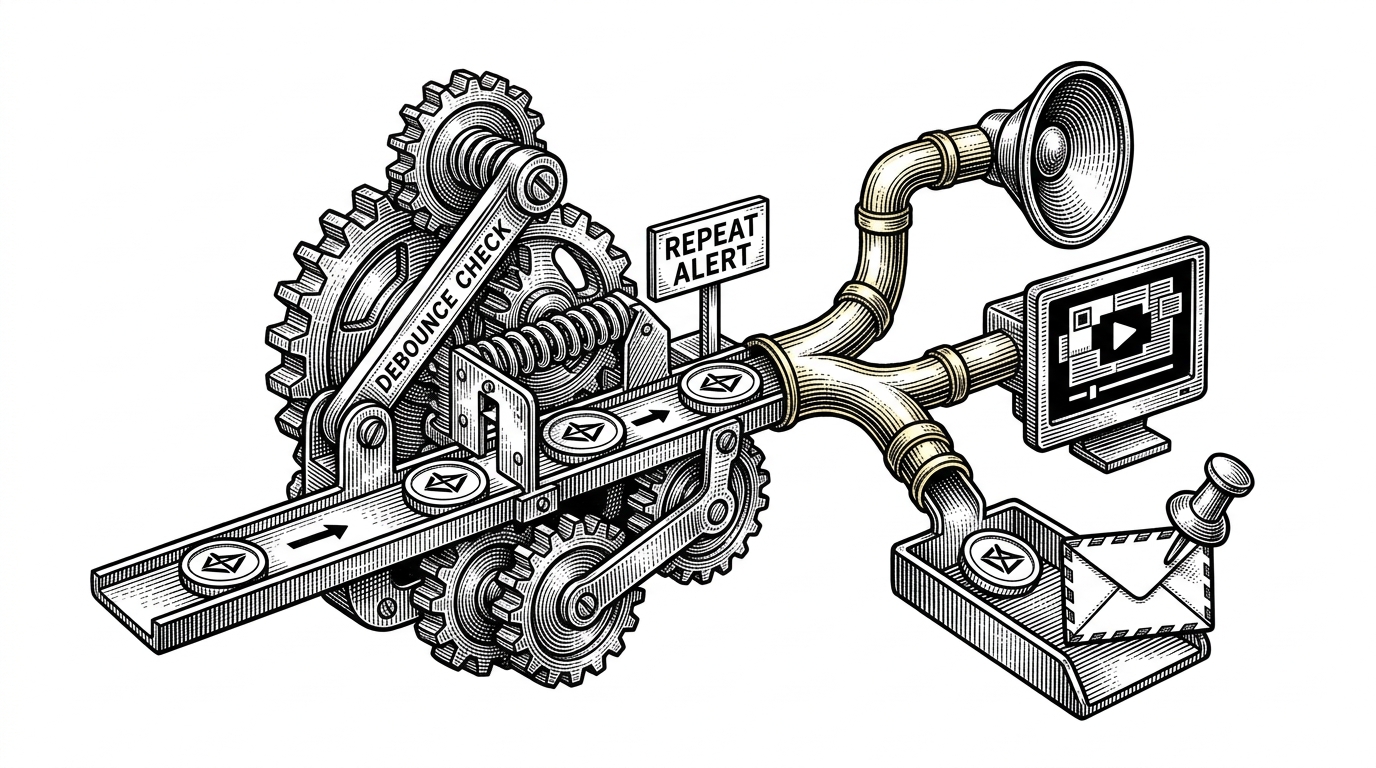
The pipeline is simple to describe and surprisingly revealing in practice. A camera feed becomes frames, frames go through ResNet50 inference, the predicted label gets mapped to a human-readable state, and a small gate checks whether the label is repeating before the alert stack fires.
That last hop matters. Once the label crosses the debounce gate, the system can speak to the driver, play an alarm, show the warning on screen, send an email, and attach a rough location. The model is the front door. The product logic is the house.
The model is conventional. The product logic is not
The training side is familiar transfer learning. `resnet_train.py` builds on ResNet50 with a small classification head, while `driver_prediction.py` wraps inference by loading the saved model and mapping class codes to readable labels.
model = ResNet50(weights='imagenet', include_top=False, input_shape=(224, 224, 3))
# ...
model.add(Flatten())
model.add(Dense(256, activation='relu'))
model.add(Dense(8, activation='softmax'))
The interesting part is the mismatch. The research notes show a training setup that expects 8 classes, while the broader project framing points to 10 distracted-driving categories. Inference also resizes to 128 by 128 in one place and 224 by 224 in another. Those are the kinds of seams you only see in a prototype that has moved faster than its own paperwork.
| Layer | What it does | What stands out |
|---|---|---|
| Training script | Fine-tunes ResNet50 for driver-state classification | Conventional transfer learning with a small dense head |
| Inference wrapper | Loads the model and maps outputs to labels | Bridges code and product, but shows size and class drift |
| Application loop | Turns predictions into alerts | This is where the repo becomes a safety system, not a demo |
How the real-time loop keeps alarms from thrashing
`predict_distracted.py` is the file that makes the project feel alive. It reads frames from a live camera feed, predicts the current label, compares it with `prevlabel`, and only escalates when the system sees a meaningful change.
if current_label != prevlabel:
    prevlabel = current_label
    if distracted:
        play_alarm()
        speak_warning()
        send_email()
        show_overlay()
That `prevlabel` check is small, but it is the difference between a prototype and a nuisance. It acts like a primitive debounce layer, keeping the alert stack from firing continuously when the frame-level model wobbles.
Why IP geolocation is the tell
`gpsloc.py` is one of the clearest signs that this project is trying to be useful without specialized hardware. Instead of a dedicated GPS module, it uses public IP lookup to estimate location. That makes the system easier to demo, but it also reveals the prototype’s boundaries.
| Option | Pros | Cons |
|---|---|---|
| IP geolocation | No extra hardware, easy to wire into a demo | Coarse and sometimes wrong |
| Dedicated GPS | Precise enough for incident reporting | Requires hardware and integration |
| No location | Simplest system | Less actionable when something goes wrong |
This is closer to a capstone than a product
The repository has the smell of an educational build that got pushed until it worked. Backup files are left in place, hardcoded alert credentials are visible in the code, and the dimension and class-count inconsistencies suggest the implementation evolved faster than the cleanup pass.
That is not a reason to dismiss it. It is the reason to read it closely. The repo shows what a real safety prototype looks like before polish, when the hard part is not model selection but making a prediction usable, tolerable, and operational.
Where it sits in the wider landscape
Compared with Kaggle-style distracted-driver notebooks, this project goes beyond accuracy and into action. Compared with commercial driver-monitoring systems, it is far less robust, but also far more legible. It sits in the gap between a tutorial and a deployable product.
| Project type | Strength | Limit |
|---|---|---|
| Kaggle classifier | Strong benchmarking culture | Usually ends at prediction |
| Commercial DMS | Hardware-backed reliability | Opaque and expensive |
| Distracted-Driver | Clear last-mile alert logic | Prototype-level rough edges |
What this project teaches
The lesson is bigger than distracted driving. AI projects become interesting when they have to do something after they know something. This repo is a compact example of that shift, from classification to intervention.
That is the real last mile of AI safety. Not a model in isolation. A system that notices, decides, and then acts.