The 97 KB Ocean: How Abyssal Garden Fits a Living Reef Into a Single HTML File
No images. No 3D models. No sound files. Just shaders, math, and WebGPU performing an entire underwater world from a file you can open offline.

- Abyssal Garden contains an entire explorable ocean in a single 97 KB HTML file, smaller than any screenshot of itself.
- The file stores rules, not assets: every kelp frond, caustic, bubble, and manta ray is computed live by WebGPU shaders.
- A committed prompt.txt bans Three.js and every texture file, and those two constraints are what forced the procedural approach.
- The file is tiny but the hardware pays the bill: WebGPU is required, and mobile touch support is still experimental.
A File Smaller Than a Photo of Itself
Download index.html and it weighs 97 kilobytes. Open it in Chrome or Edge and you are swimming. Kelp forests sway in the current and sparkle with tiny gold and green specks. Sunbeams fall through a rippling surface onto shimmering caustics on the sea floor. A wrecked wooden ship, a giant stone whale tail, rock arches, manta rays, schools of fish, rising bubbles, a purple grotto. It works offline. Nothing installs.
The file is smaller than a single screenshot of the world it contains. That is the whole paradox, and it is not a trick of compression. There are no images inside, no 3D models, no sound files. The screenshots you see of Abyssal Garden are, byte for byte, larger than Abyssal Garden.
The Two Rules That Made It Possible
Most web 3D projects lean on two escape hatches. A library like Three.js handles the math, the scene graph, and the camera. A folder of textures and models supplies the actual look of things. Abyssal Garden closes both.
The repository commits a prompt.txt that bans Three.js and every texture file. That is the origin story, told through an artifact rather than a biography. Remove the engine and you have to write the WebGPU pipeline by hand: buffers, bind groups, render passes, the whole stack. Remove the textures and nothing can be painted from a picture. Every surface has to be computed from a formula at the moment it is drawn.
Those two bans are not limitations. They are the creative engine. The constraint is what produced the thing.
Download the Score, Not the Song
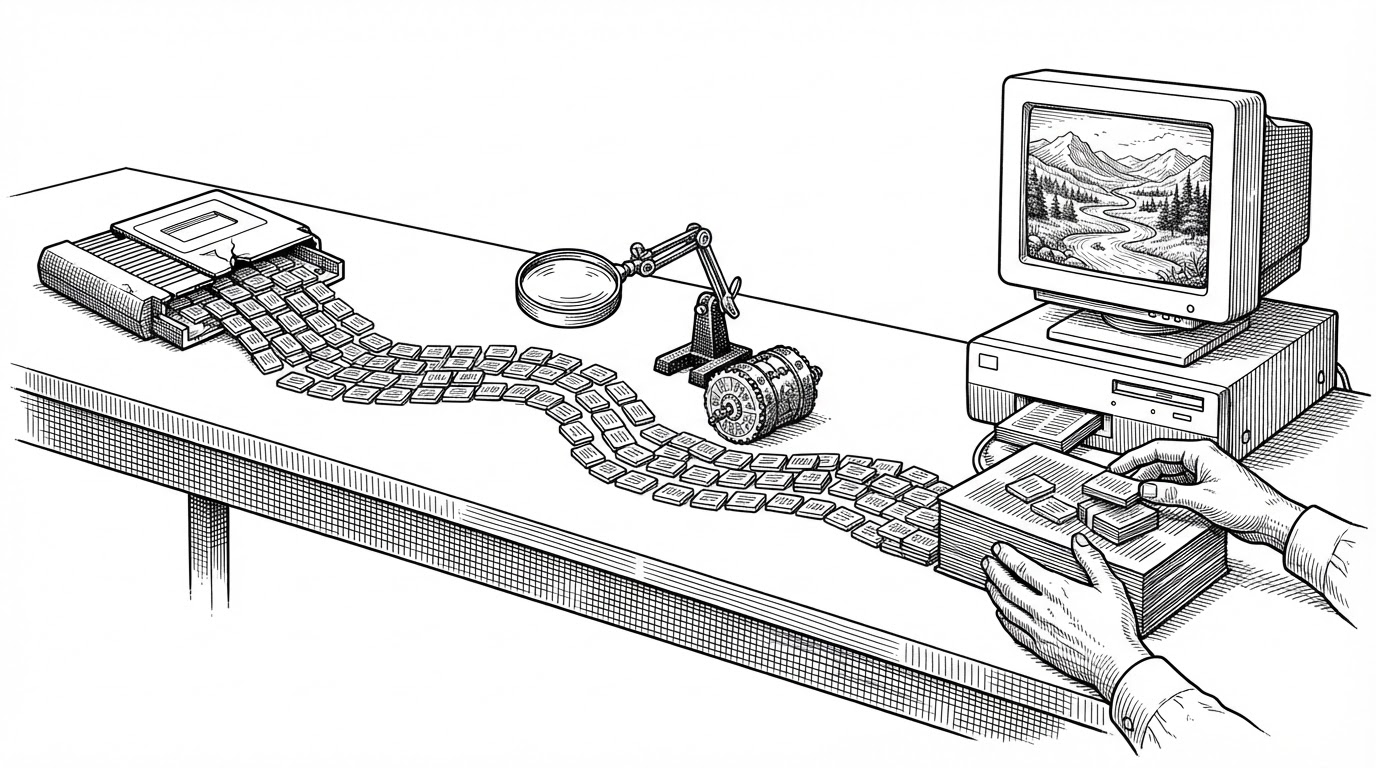
There is a cleaner way to hold this in your head. The file is not the ocean. It is the score. The browser and the GPU are the orchestra. You download the notation, not the performance, and every frame is played fresh.
A Chinese-language post on X landed on exactly this framing: the page works more like sheet music, where you download the rules and the browser and GPU perform them.
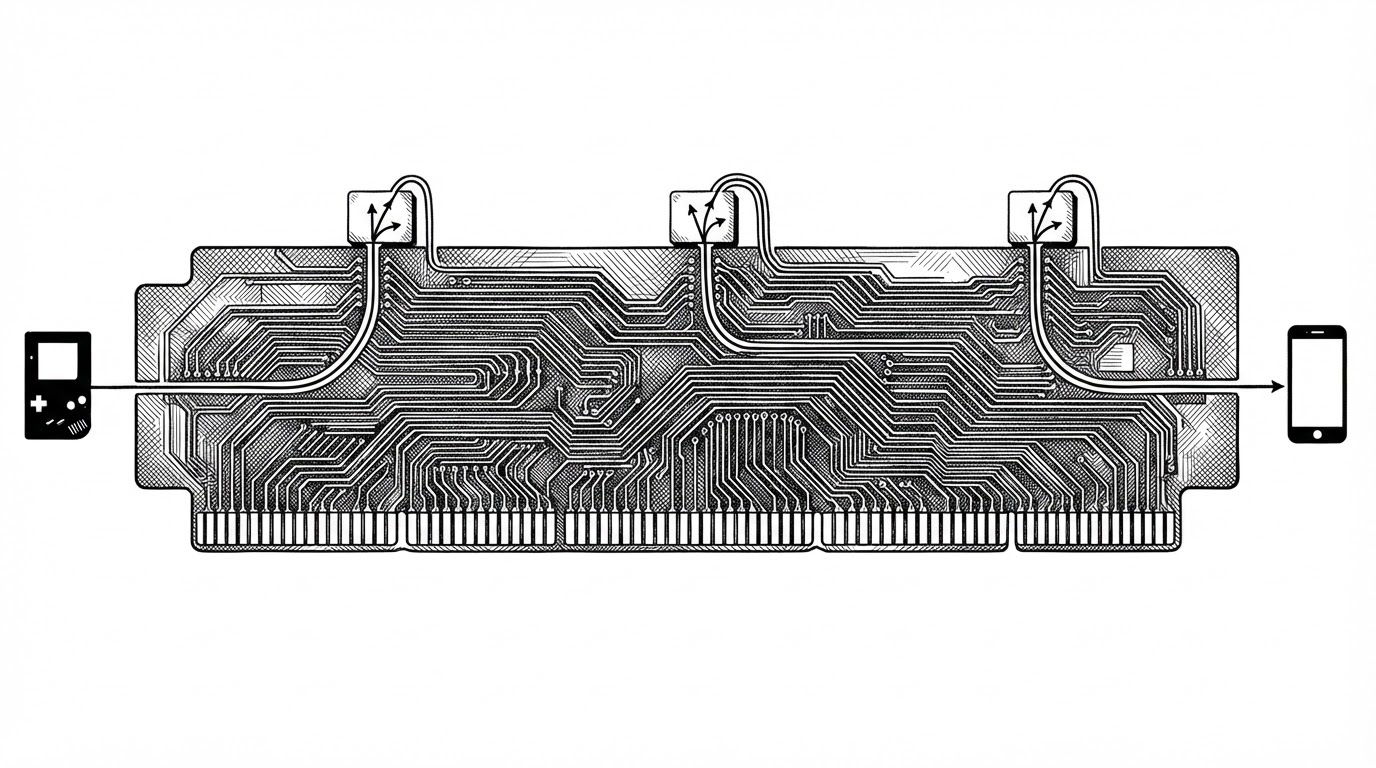
Nothing persists between frames except numbers. Position, time, a phase offset. From those, the shaders reconstruct the world sixty times a second or more. The question that makes the smallness believable is simple: how does one function become a whole forest?

What's Actually Running
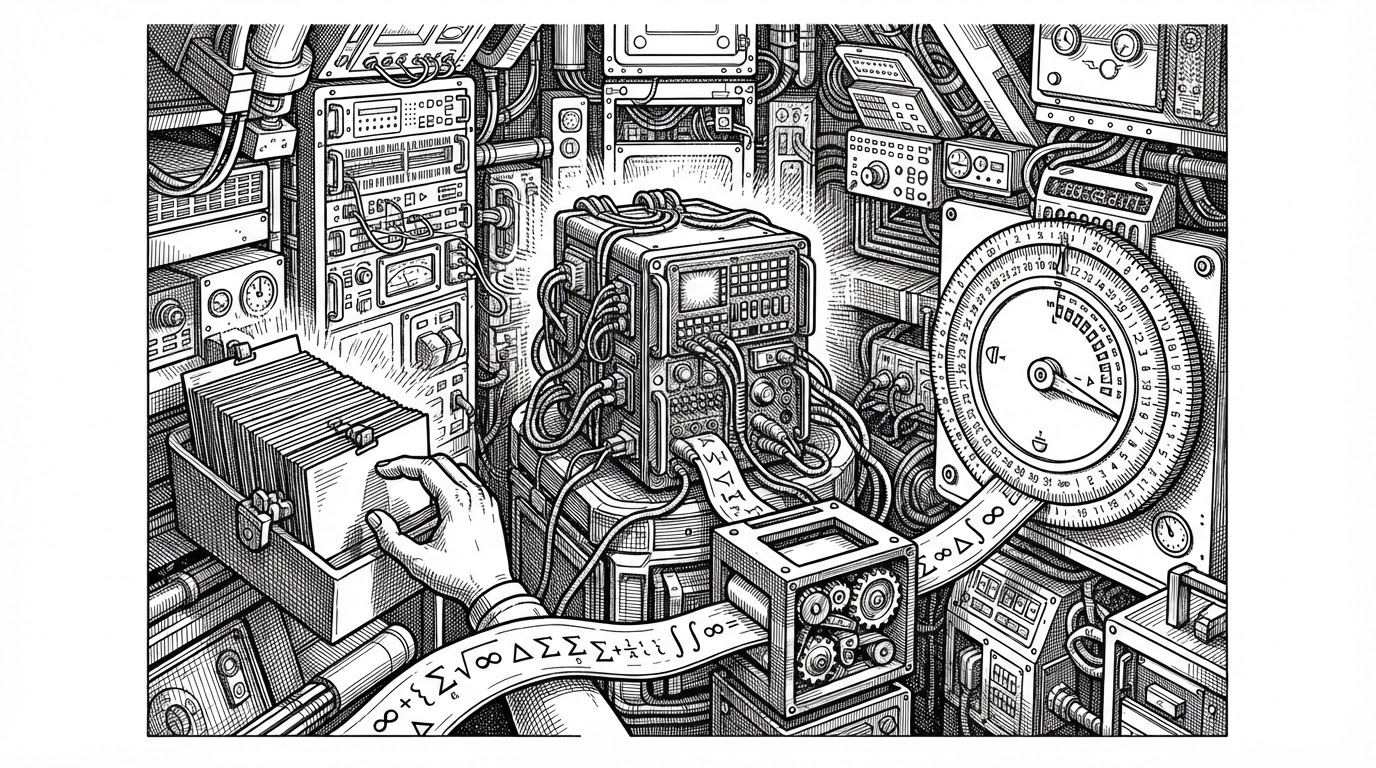
Here is the pipeline at the depth that matters. The CPU computes camera position and a handful of uniforms, then hands a small command buffer to WebGPU. A vertex pass bends each kelp blade by summing layered sine waves. A fragment pass computes water color from depth and the angle of the light. Caustics on the floor are an animated noise function, not a texture. Audio is synthesized with Web Audio API oscillators, so there are no sound files either.
// A simplified version of the sway math.
// One blade of kelp bends by summing layered sine waves,
// each with its own frequency and phase, scaled by height.
fn sway(time: f32, phase: f32, height: f32) -> vec2f {
  let a = sin(time * 1.7 + phase)         * 0.20;
  let b = sin(time * 3.1 + phase * 1.7)   * 0.08;
  let c = sin(time * 5.3 + phase * 0.6)   * 0.03;
  let bend = (a + b + c) * height;
  return vec2f(bend, height);
}
Performance is reported by the project, not independently benchmarked: roughly 180 fps at 2560x1440 on an RTX 5070 Ti, and about 20 fps at 670x372 on Low on a Samsung Galaxy A16. The build reduces resolution and draw distance automatically on slower hardware.
The Bill Comes Due
The file is tiny. The hardware is not. Abyssal Garden requires WebGPU, which today means a recent Chrome or Edge on desktop. If the browser lacks it, you get a message, not a fallback renderer. There is no graceful degradation to a slower path. You either have the orchestra or you do not.
- You gain: a whole world in one file, offline, with nothing to install and nothing to load.
- You give up: a WebGPU-capable browser and a reasonably modern GPU to perform it.
- Still in progress: mobile touch controls are described as experimental, and VR is proposed but not shipped.
An open pull request asks for WebXR support: stereoscopic rendering, headset orientation, and controller locomotion. It is on the table, not in the build. Secondary reporting suggests the author leaned on an AI coding assistant during development, but the repository itself does not foreground this, and the craft on display stands on its own.
Where It Sits in the Landscape
These are not competitors in the same category. Two are libraries, one is a gallery, and one is a finished piece of art. The table's job is to make that category difference legible in ten seconds.
| Project | What it is | How it differs from Abyssal Garden |
|---|---|---|
| Abyssal Garden | A finished, explorable procedural artwork in one file | The whole experience ships as a single HTML file with no engine and no assets |
| Three.js | General-purpose 3D library | A foundation you build on, with loaders and materials; Abyssal Garden renders directly to WebGPU |
| Babylon.js | Full web 3D engine with tooling | Higher-level engine and production pipeline; Abyssal Garden is a compact, self-contained implementation |
| Shadertoy | Community shader platform | A gallery of visual studies; Abyssal Garden is a navigable environment with sound and controls |
Go back to the score. What makes Abyssal Garden worth a download is not that it is small. It is that the smallness is honest. The file really does contain only rules, and the rules really do play the ocean. The constraint that looked like a budget cut is the reason the thing is beautiful.