OpenOrbis-PS4-Toolchain: OpenOrbis PS4 Toolchain: The Clean-Room SDK That Makes a PS4 Feel Like a Normal Compiler Target
A reverse-engineered toolchain, custom file formats, and LLVM-based plumbing let developers build native PS4 homebrew without Sony’s SDK.
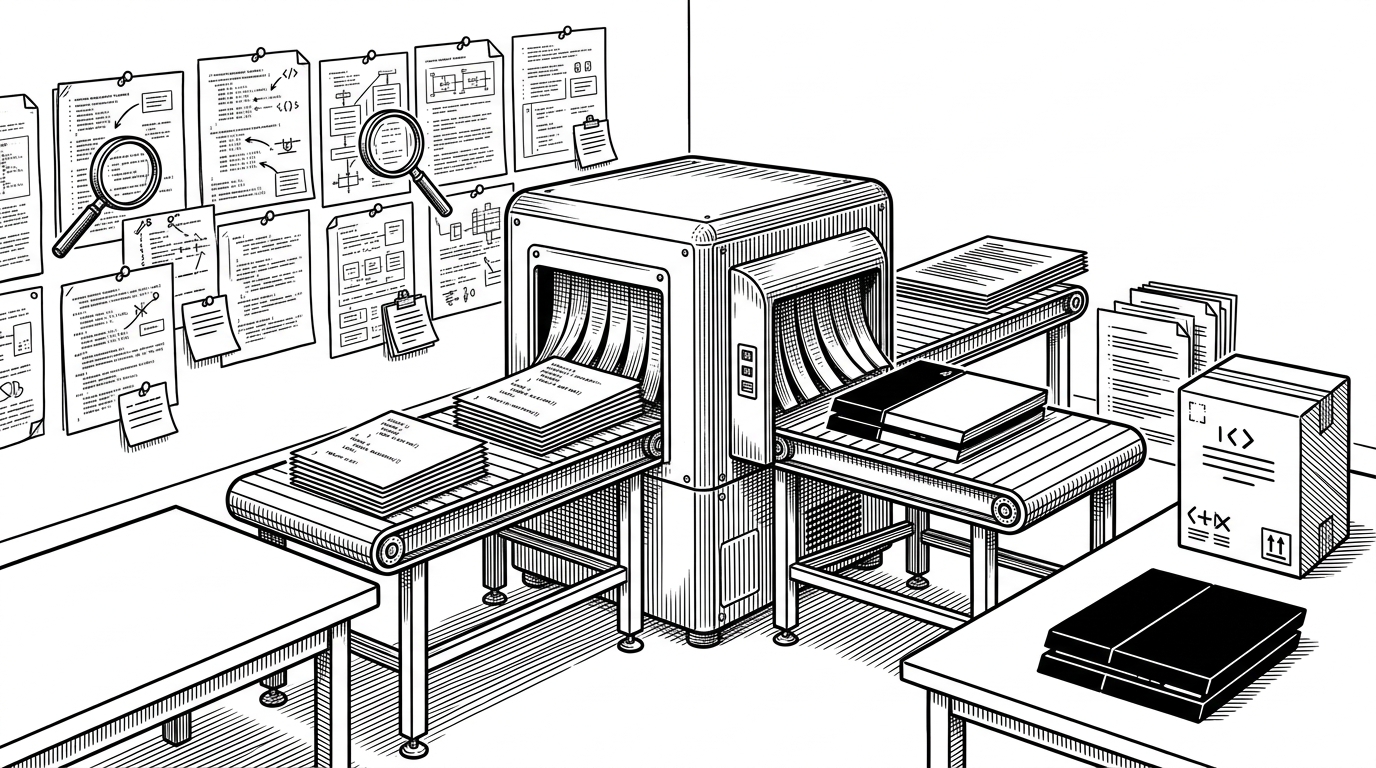
- OpenOrbis matters because it makes the PS4 behave like a normal compiler target without borrowing Sony’s proprietary SDK.
- The project’s real achievement is not the headers alone, but the pipeline that turns ordinary C and C++ into PS4-ready OELF, SELF, and PKG output.
- The repository works as both SDK and field report, because its headers document a platform that was only partially visible through reverse engineering.
- OpenOrbis fills the gap between official console development and legal homebrew by pairing LLVM with clean-room PS4-specific plumbing.
The oddity of OpenOrbis is not that a PS4 can be homebrewed. It is that the console can be approached like any other compiler target, with Clang, LLD, and a familiar C and C++ workflow, even though the platform itself never shipped an open SDK. That is the project’s real trick: it takes a locked appliance and makes it feel like a build system.
The PS4 You Can Compile For
OpenOrbis starts with a useful lie. The PS4 is not a normal target, because the real platform details are hidden behind Sony’s tooling and undocumented file formats. But from the developer’s chair, it gets close enough to one that the workflow feels familiar: write code, link it, package it, run it on hardware.
That familiar feeling is the point. OpenOrbis does not try to replace the PS4 with a generic Linux story. It builds a bridge to Orbis, the PS4’s FreeBSD-based world, using open compiler infrastructure and community reverse engineering.
What OpenOrbis Actually Ships
The repository is an SDK ecosystem, not a one-file trick. Its core directories map to a full development stack: include/orbis carries the PS4-facing headers, src holds runtime and module code, bin contains platform tools, docs records file formats and notes, and extra lowers the friction with templates and installers.
OpenOrbis/
  include/orbis/   PS4-specific headers and shell libraries
  src/             CRT, modules, bootstrap code
  bin/             Tooling for supported host platforms
  docs/            OELF notes, format docs, reverse-engineering records
  extra/           Templates, installers, integration helpers
That layout matters because it tells you what the project thinks is valuable. OpenOrbis is not just trying to compile code. It is trying to make PS4 development reproducible, documented, and portable across host machines.
The Real Magic Is the Build Pipeline
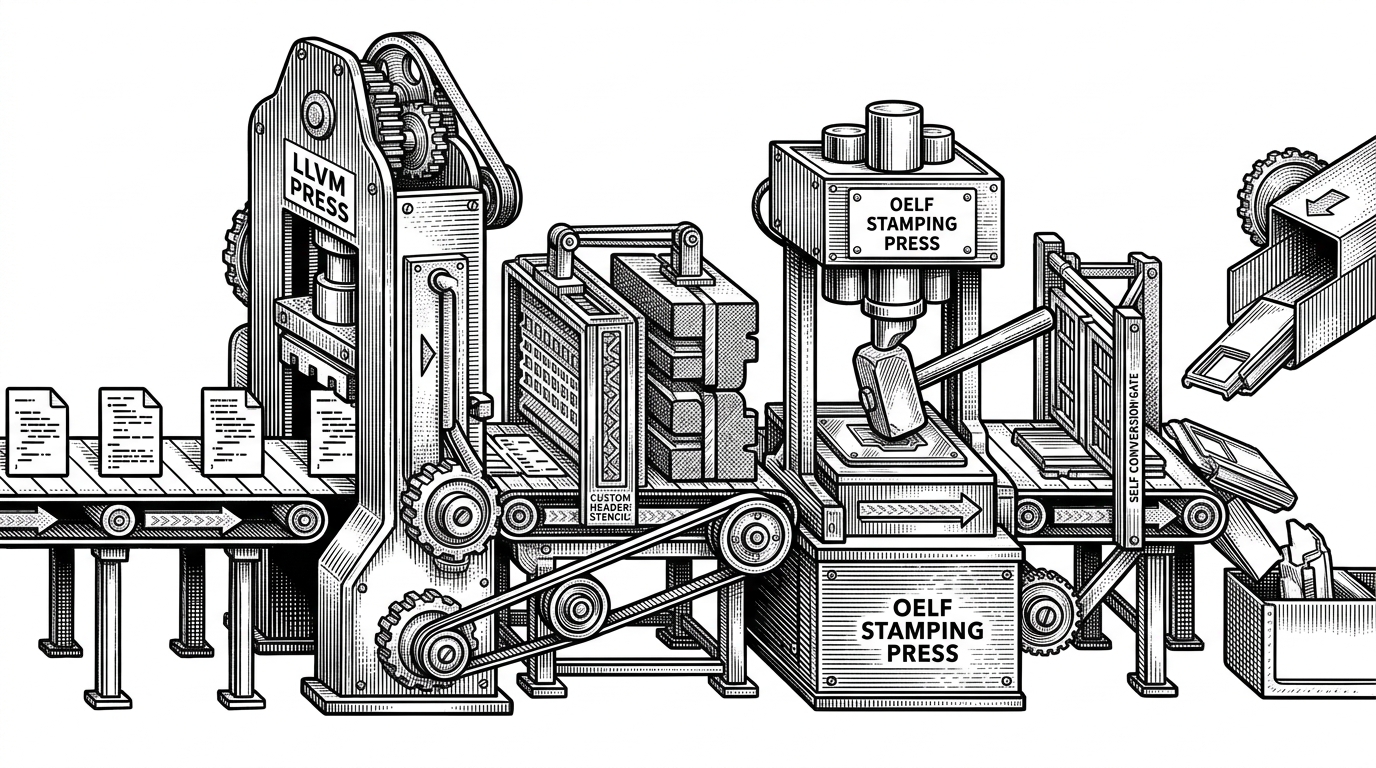
The pipeline is where the project becomes more than a set of headers. Clang and LLVM handle the front end, LLD does the linking, musl and libc++ provide the standard library side, and OpenOrbis-specific tools step in when the output has to match PS4 expectations rather than generic x86_64 conventions.
That sequence is the useful mental model. Source code does not simply become a binary. It passes through a chain of transformations that add PS4-specific metadata, shell library references, and package structures that the console can actually load.
| Layer | OpenOrbis PS4 Toolchain | Official Sony SDK |
|---|---|---|
| Access | Open-source and community available | Restricted and proprietary |
| Build front end | LLVM / Clang | Sony toolchain |
| Library model | Reverse-engineered headers and shell stubs | Official Sony libraries |
| Output | OELF, SELF, PKG | Sony-targeted signed formats |
| Audience | Homebrew developers and researchers | Licensed PlayStation developers |
| Documentation style | SDK plus reverse-engineering notes | Official vendor docs |
| Legal posture | Does not redistribute Sony implementations | Bundled with proprietary components |
The comparison is not just about convenience. It is about who gets to participate. Sony’s SDK defines the official lane, but OpenOrbis makes a legal, open lane for hobbyists, preservation-minded developers, and anyone who wants to study the platform without a license gate.
OELF Is the Project’s Secret Weapon
A standard x86_64 binary is not enough on a PS4. The console expects platform-specific metadata and relocation behavior, which is why OELF, or Orbis ELF, sits at the center of the project. This is the point where OpenOrbis stops being a generic cross-compiler and becomes a real platform SDK.
That difference is subtle but decisive. Anyone can point LLVM at a target triple. Far fewer projects can make the output look and behave like something Orbis actually wants to run.
because we want to be legally. safe we cannot redistribute. any Sony libraries with the tool chain. so these are actually shells. these libraries do not contain the actual implementation of the libraries.
That line explains the architecture in plain English. OpenOrbis has to know enough to link correctly, but not copy the proprietary implementations themselves. So the project leans on stubs, observed behavior, and file formats that carry the right shape.
A Header File Is Also a Field Report
Open the headers and you do not just see APIs. You see a research archive. Files like libkernel.h, Pad.h, VideoOut.h, GnmDriver.h, and Sysmodule.h are part interface, part notebook. They expose kernel calls, input APIs, display buffers, graphics commands, and module loading in a way that is useful precisely because the platform was undocumented.
That is why the repository reads differently from a normal SDK. A typical SDK hides uncertainty. OpenOrbis displays it. Some signatures are known, some behaviors are annotated as incomplete, and some files preserve the trail of reverse engineering as part of the value.
// Example of the style of the interface layer
int sceKernelAllocateDirectMemory(long long start, long long length, int alignment,
                                  int memoryType, int permissions, long long *physAddr);
int scePadSetLightBar(int handle, const OrbisPadLightBarParam *param);
int sceVideoOutSubmitFlip(int handle, int bufferIndex, unsigned int flipMode,
                          const void *flipArg);
The result is practical and archival at the same time. Developers get the API surface they need, while the repo quietly preserves the fact that much of that surface had to be inferred.
How It Compares
OpenOrbis sits in a narrow but important middle ground. It is not Sony’s official SDK, and it is not a dead-end exploit kit. It is closer to a clean-room equivalent of what PS3LIGHT offered on the PlayStation 3: a legal, open way to make software for a closed console.
| Project | Accessibility | Build output | Best for |
|---|---|---|---|
| OpenOrbis PS4 Toolchain | Open-source and community accessible | PS4-ready homebrew binaries and packages | Modern PS4 homebrew development |
| Sony official SDK | Licensed access only | Official retail-targeted builds | Commercial PlayStation studios |
| PS3LIGHT | Open homebrew SDK for PS3-era workflows | PS3 homebrew builds | Historical PS3 homebrew |
| LLVM and musl upstream | Broad open-source infrastructure | Generic toolchain components | Portable compiler and libc foundations |
That comparison shows why the project exists. It fills the gap between proprietary platform access and bare-metal experimentation, which is exactly where most serious hobbyist development lives.
we basically have to reverse these. so there's a lot of work into getting these prototypes. so if there's something here that you need or come across and you reverse it we'd. love it if you could add it to the tool chain
Why This Matters Beyond Homebrew
OpenOrbis is a preservation tool as much as a development tool. When a platform stops being the center of a vendor’s attention, the risk is not just that games age out. It is that the machine itself becomes harder to study, harder to extend, and harder to remember as a programmable system.
This repo pushes back on that loss. It keeps the PS4 legible to new developers, and it proves that open tooling can preserve access even when the official ecosystem is closed.