Mandy Runs GTA VI by Pretending to Be an Xbox
The fan project isn't recompiling the game. It's rebuilding the console's system software underneath it, one missing function at a time.
- Mandy does not translate the game's CPU code: the Xbox Series and a PC both speak x86-64, so what gets reimplemented is the console's Windows-like system software.
- A census subcommand ranks every imported function by how often the game actually calls it, turning a port into a prioritized list of missing functions rather than a spec to follow.
- Shader translation is the project's only true translation problem, converting RDNA2 binaries to SPIR-V or DXIL ahead of time into an on-disk cache.
- Two runtimes share one translator: a Rust D3D12 path that reaches the open world, and a C++ D3D12-to-Vulkan path that boots the story load but has not verified a world frame.
The Port That Isn't a Port
The README calls Mandy a static recompilation project. The code tells a narrower story. Static recompilation usually means lifting a program from one instruction set to another, or emitting C you can rebuild. That is not what happens here.
The Xbox Series X and a modern gaming PC share a CPU instruction set. Both are x86-64. The game's machine code, compiled by Rockstar for the console, runs on your Ryzen or Core chip without a single instruction being rewritten. There is no lifting, no translation layer, no emitted C. The bytes execute as they are.
So what does Mandy actually rebuild? The console's system software. The game imports hundreds of functions from Windows-like DLLs: D3D12 for graphics, kernel32 for files and threads, xaudio2 for sound. On an Xbox, those are Microsoft's. On your PC, Mandy supplies its own. The project's AGENTS.md describes runtime/ as "a PE loader that maps the game's executable and resolves its imports to shims." That is the shape of the work.
This puts Mandy next to Wine, not next to Dolphin. An emulator fakes a different processor. A compatibility layer reimplements the operating system a program expects. Mandy does the second thing, for a console that happens to share the PC's CPU.
This repository does not contain the game, keys or an executable, and it does not explain how to get them.
There is exactly one place where bits genuinely have to change before they can run: the GPU. The console's shaders are RDNA2 binaries, and a PC GPU wants SPIR-V or DXIL. That conversion is the project's only true translation problem, and it is where most of the difficulty lives.
How Do You Know What's Missing?
Every port like this faces the same question: what is left to build? The honest answer is a list, and Mandy generates it. The CLI ships a subcommand called census. It walks every PE image the game loads, aggregates the functions they import, and ranks them by how often the title actually calls each one. The output is a histogram of demand. The most used imports come first.
The census has a --strict flag, and it is the most important design decision in the tool. By default, a call the runtime does not implement can be forwarded to the host Windows API and counted as handled. Strict mode refuses that. It counts only what Mandy itself implements, and it prints the gap with --missing, most used first. The coverage number drops, and it becomes true.
# rank every imported function by how often the game calls it,
# counting only what the runtime actually implements
leonida census --strict --missing
This is reverse engineering driven by a usage histogram instead of a spec. Rather than reading documentation and guessing where to start, a contributor runs one command and gets a work queue sorted by impact. The default run policy follows the same logic: unknown calls pass through to the host where possible, and missing ones trap, so gaps stay visible while progress continues.
The Shader Problem
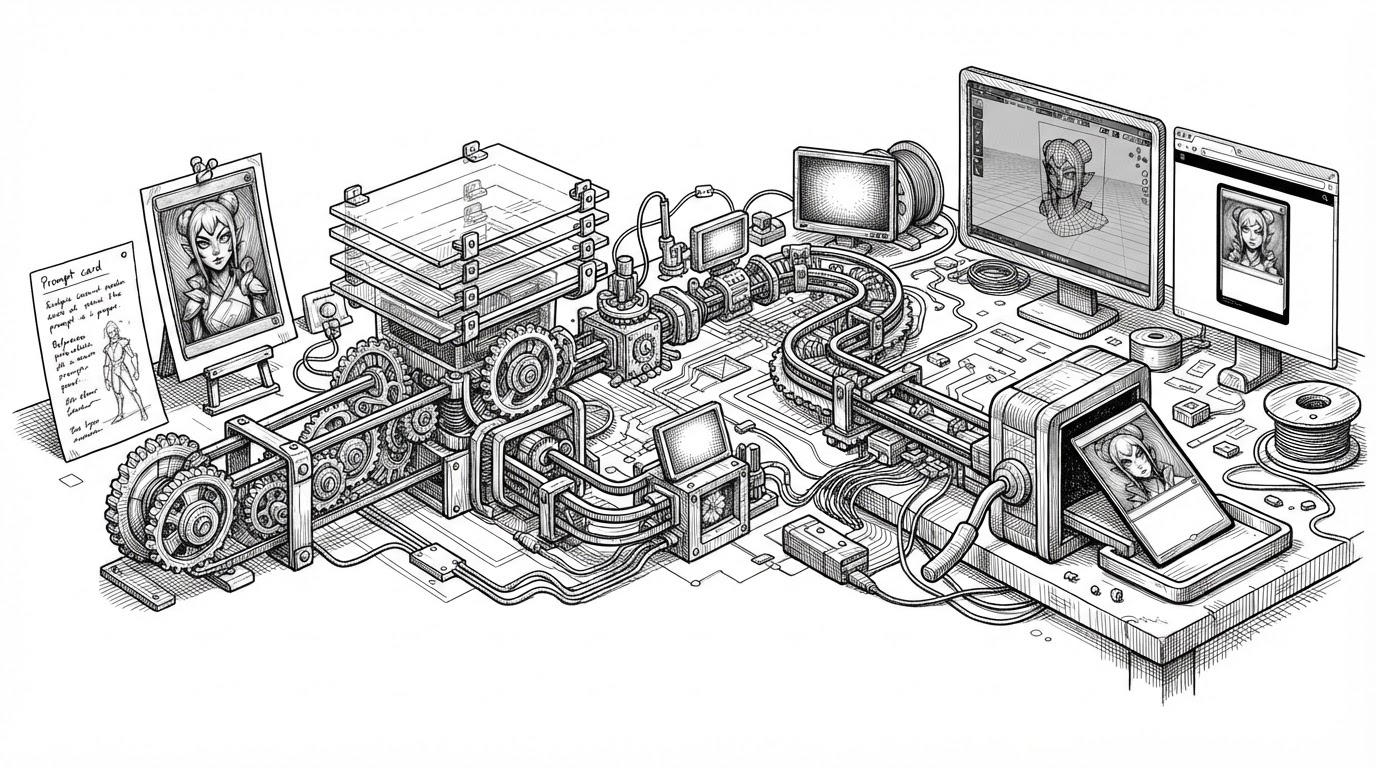
The console's GPU programs are precompiled RDNA2 binaries. Nothing on a PC can execute them directly. Mandy translates them, and it does so ahead of time. The shaders subcommand walks every shader, converts it, and writes the result into an on-disk cache with --jobs for parallelism. A run never pays the cost twice.

Two destinations, one translator. The Vulkan path emits SPIR-V. The D3D12 path emits DXIL, and can validate its output against Microsoft's dxil.dll validator. The first full translation takes minutes; after that the cache carries it. The translator has its own regression suite, built from hand-written .asm fixtures in tests/semantic/, so a change that breaks an instruction shows up as a failing test rather than a black frame.
Two Ways to Draw a Frame
There are two runtimes in the tree, and they are an engineering bet, not a fallback. runtime/ is C++ and CMake, and it builds an executable called gta6rt. It takes the game's D3D12 calls and translates them to Vulkan, and its shaders to SPIR-V. The idea is portability: Vulkan runs on Windows and, through Proton, on Linux.
d3d12/ is a Rust workspace, and it builds leonida.exe. It calls native D3D12 directly and emits DXIL. There is no translation layer for the graphics API, only the shader conversion.
| Runtime | Language | Graphics path | Shader target | Reported status |
|---|---|---|---|---|
| runtime/ (gta6rt) | C++ / CMake | D3D12 calls translated to Vulkan | SPIR-V | Boots through the story load; no verified world frame |
| d3d12/ (leonida.exe) | Rust | Native D3D12 host calls | DXIL | Reaches the open world; reported playable at a save point |
The status of the two paths diverges sharply. The D3D12 runtime reaches the open world and is reported playable, with controls, audio, HUD, map, and pause menu. The Vulkan path boots through the story load but has not yet verified a first world frame. Both share the same shader translator, so progress on one feeds the other.
A Project That Came Back
Mandy continues Leonida. The original project set out to run the Xbox Series build of GTA VI on Windows, and it drew a DMCA takedown from Take-Two. The Verge reported that the company's enforcement team targeted the main repository and more than 2,900 forks.
Take-Two is trying to slow this progress, and its IP enforcement team targeted the main GitHub repository for Leonida and more than 2,900 forks of it, claiming that it “infringes upon Take-Two’s copyrighted works and facilitates copyright infringement of Rockstar Games title, Grand Theft Auto VI.”
The continuation kept the commit history and the contributors. NotRexed, the original author, returned to the work.
Hey everyone, I have been doing a lot of work behind the scenes. After Leonida got shut down some friends continued it and I am joining them to continue Leonida, now called Project Mandy. I will be posting more updates on it soon.
Mandy's stated rules are explicit. The repository ships no game, no keys, no executable. The user supplies their own copy, and generated shaders, extracted assets, and saves stay on their own machine. Those are the project's claims about its own conduct, not a legal ruling.
- Leonida: the original GTA VI PC effort, credited to NotRexed and contributors.
- Take-Two DMCA: the main repository and over 2,900 forks targeted.
- Continuation: friends keep the work alive under the name Mandy.
- Return: NotRexed rejoins to continue the project.
Where It Fits
Mandy is one of several projects chasing the same target, and they are not interchangeable. The closest in scope is VIctory, which is also GTA VI specific but follows a separate implementation line. XCL aims wider, at Xbox Series titles in general, the way Wine aims at Windows programs in general.
| Project | Scope | Approach | Reported status |
|---|---|---|---|
| Mandy | GTA VI specific | Reimplements console system software; two runtimes | D3D12 runtime reaches the open world; Vulkan path boots the story load |
| Leonida | GTA VI specific | The predecessor effort | Removed after the DMCA takedown |
| VIctory | GTA VI specific | Separate runtime line | Menus around 30 fps; world drawn around 1 fps |
| XCL | General Xbox Series | Wine-like compatibility layer | Multiple retail titles playable or working |
| victory-fork | GTA VI specific | Community fork of VIctory | Open world around 17 fps on one GPU |
Those frame rates are not a clean ranking. They come from different hardware, different codebases, and different stages of development, and the fork's numbers follow a change of base rather than a straight progression. Read them as signs of life, not as a scoreboard.
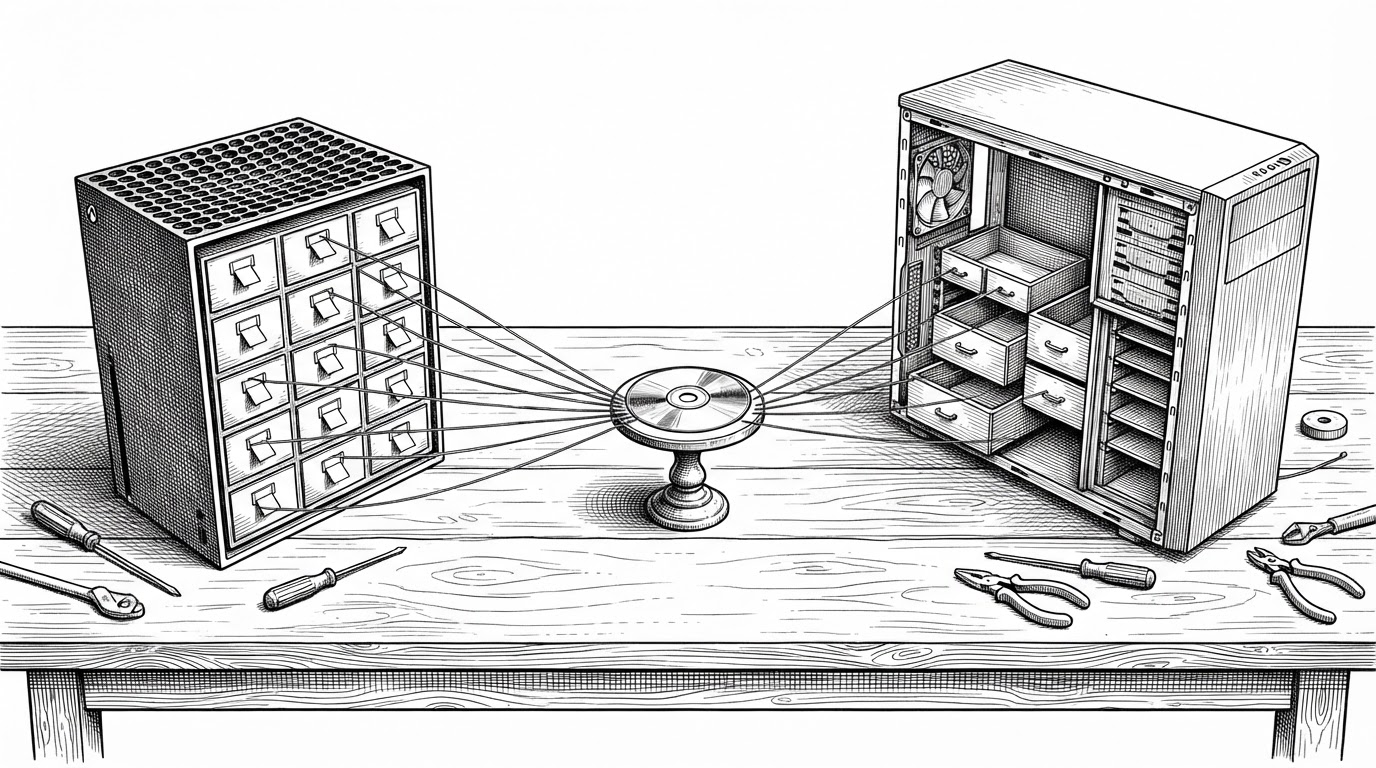
What makes Mandy worth a look is not the frame count. It is the method. A port that knows exactly which functions the game calls, ranked by how often it calls them, and a translator that turns console shaders into PC shaders once and caches the result, is a project that has stopped guessing. The game disc sits on the pedestal, untouched, while the drawers around it get filled in.