Isaac-GR00T: NVIDIA Isaac GR00T N1.7: The Robot Brain That Treats Bodies Like Plug-Ins
How NVIDIA’s open humanoid stack uses relative actions, embodiment mapping, and human video to turn motion into a shared language across very different machines.
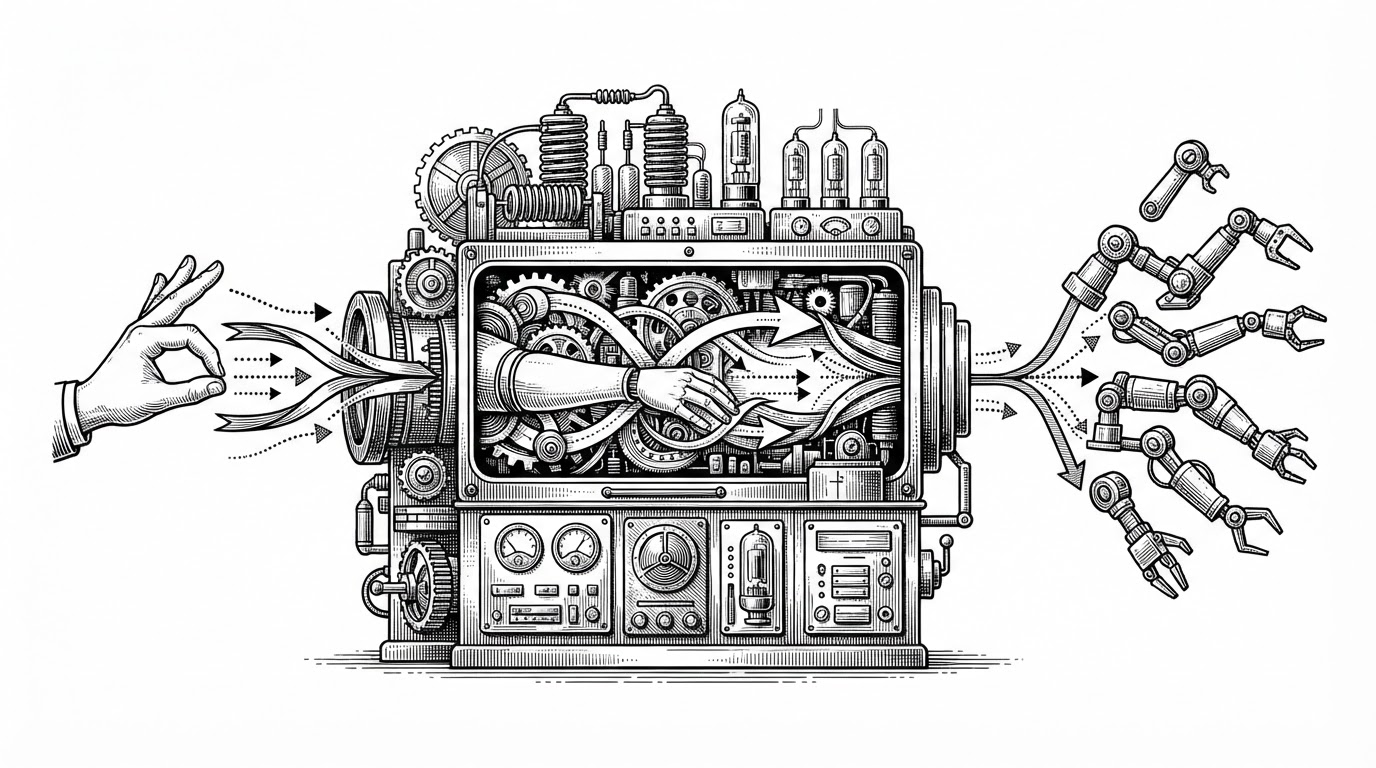
- GR00T N1.7 is trying to make motion portable across bodies, not merely improve humanoid control.
- Relative actions are the technical trick that lets human video and robot teleop share one training space.
- The config layer is the real abstraction, because it translates one policy into robot-specific joints, grippers, and navigation commands.
- NVIDIA is positioning GR00T as a horizontal platform for embodied AI, not just another demo robot stack.
The best way to read NVIDIA/Isaac-GR00T is not as a single model repo. It is a system for translating motion across bodies. That sounds abstract until you notice what the code keeps repeating: the policy stays shared, while embodiment-specific configs decide what that policy means on a given machine.
A Brain for Bodies
Most robotics stacks begin with hardware and then build upward. GR00T starts with the opposite assumption: intent can be learned once, then remapped. That makes the repo feel less like a robot controller and more like a compiler for physical forms.
That is the real novelty. A human hand, a small arm on a workbench, and a humanoid torso are not treated as separate worlds. They are treated as different targets for the same motion grammar.
Building foundation models for general humanoid robots is one of the most exciting problems to solve in AI today.
Why Relative Actions Matter
The surprising move in GR00T N1.7 is that human video is not treated as a separate island of data. It becomes another embodiment. That works because the action space is relative. The model learns deltas, not absolute coordinates.
| System | What it learns | Action space | Why it transfers |
|---|---|---|---|
| Human video in GR00T | Manipulation intent | Relative deltas | A hand moving toward a cup and a robot wrist moving toward a cup can share the same geometry of intent. |
| Absolute-coordinate control | Pose targets | Fixed positions | It is precise, but it breaks when the body, frame, or joint limits change. |
| Teleop-only robot data | Robot-specific habits | Hardware-tied commands | It works well on one platform, but generalization is expensive. |
| GR00T N1.7 | Shared motion semantics | Mixed relative and absolute outputs | It can reuse one policy across different embodiments by changing the mapping layer. |
The important detail is not just that relative actions are easier to transfer. It is that they make the same training story work for teleoperation, human video, and robot execution. Once motion is represented as change rather than destination, the boundary between demonstration and deployment gets a lot thinner.
The Config Layer Is the Real Product
The repo’s deepest idea lives in the configuration layer. Files like embodiment_configs.py describe which joints belong to which modality, whether an action should be interpreted as relative or absolute, and how the same policy output should be remapped for a specific body.
# Conceptual shape of the embodiment layer
MODALITY_CONFIGS = {
    "unitree_g1": {
        "left_arm": "RELATIVE",
        "right_arm": "RELATIVE",
        "waist": "RELATIVE",
        "gripper": "ABSOLUTE",
        "base": "ABSOLUTE",
    },
    "so100": {
        "arm": "RELATIVE",
        "gripper": "ABSOLUTE",
    },
}

# The policy stays shared.
# The config decides how the same action becomes a robot command.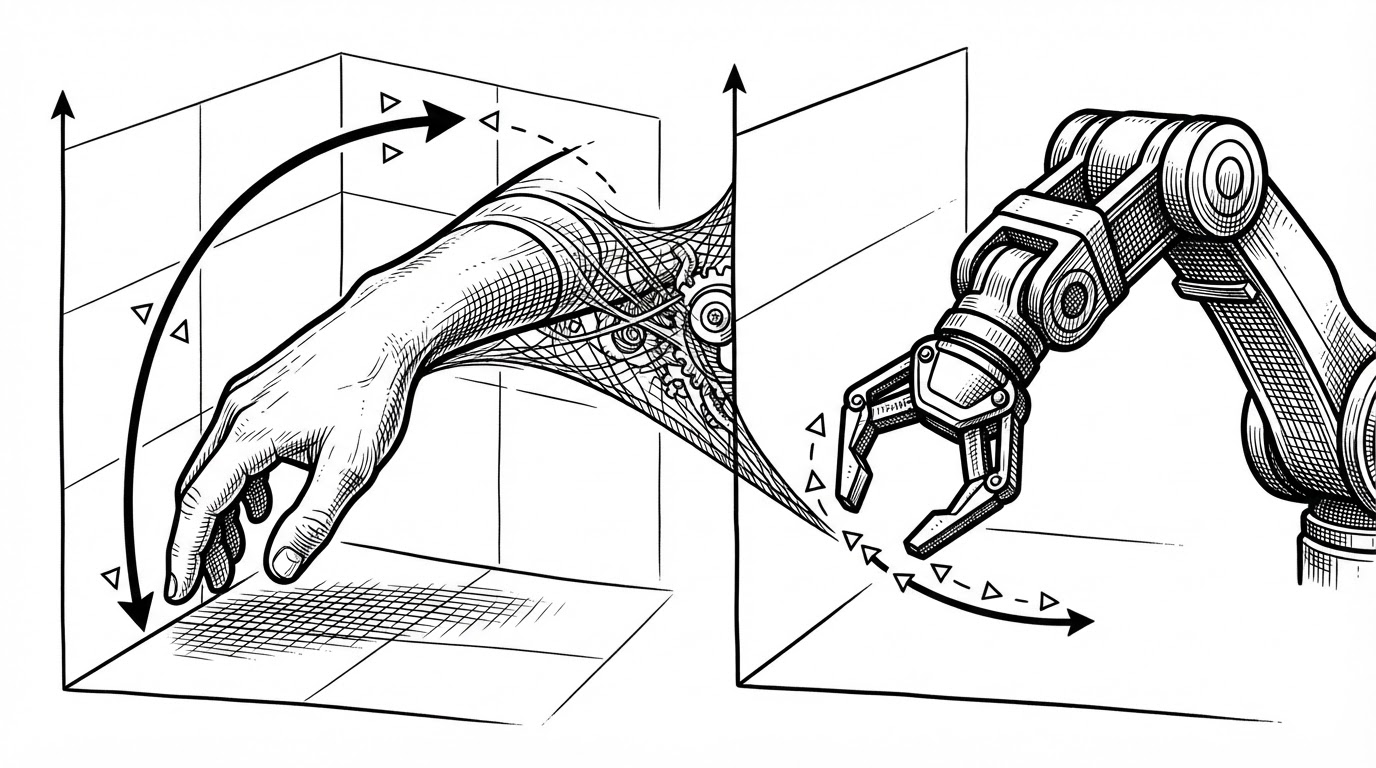
That is why the repo feels hardware-agnostic without becoming vague. The model does not pretend every robot is identical. It just pushes embodiment differences into a layer that is explicit, inspectable, and swappable.
How GR00T Turns One Policy Into Many Robots
GR00T’s action space is broad enough to mix joint groups, grippers, waist control, and base commands. That matters because humanoid work is rarely one skill at a time. Reaching, turning, grasping, and navigating often belong in the same control loop.
| Capability | Traditional stack | GR00T approach |
|---|---|---|
| Arms | Separate control policy per arm | One policy can emit relative arm deltas for multiple embodiments |
| Grippers | Often bolted on as a special case | Grippers are a first-class output type |
| Waist and torso | Usually excluded or handled elsewhere | Included in the same action grammar |
| Base motion | Split into another planner | Can coexist with manipulation commands |
| Deployment | Model tied closely to one robot | Embodiment configs remap the same policy to new hardware |
This is a whole-body control story disguised as a VLA repo. The model is not just deciding what to pick up. It is deciding how an entire body should coordinate around that pick-up.
The DROID Bridge From Server to Metal
The execution path is split on purpose. Heavy inference can live on a server, while the robot client stays lightweight. That makes the stack easier to deploy in the real world, where the robot should not have to carry every ounce of compute onboard.
def compute_eef_9d(position, rotation_matrix):
    # Conceptual view of the DROID bridge
    xyz = position
    rot6d = rotation_matrix_to_rot6d(rotation_matrix)
    return concatenate([xyz, rot6d])

# A correction matrix aligns the robot frame with the model's training distribution.
# The output then becomes robot-specific actuator commands.
That final mile matters more than it looks. A policy is only useful if the world it trained on and the world it runs in are close enough. GR00T’s answer is to make that gap explicit and then correct for it.
Why This Stack Is Different From Other Humanoid Plays
The comparison is not about who wins. It is about what layer each company is trying to own. GR00T is trying to be the abstraction layer under many robots, while some competitors are building vertically integrated products around a single hardware story.
| Project | Embodiment strategy | Training data mix | Action representation | Open vs proprietary | Deployment model | Best at solving |
|---|---|---|---|---|---|---|
| GR00T N1.7 | Cross-embodiment platform | Human video, real teleop, synthetic data | Relative plus embodiment-mapped outputs | Open source core under Apache 2.0 | Model plus config layer for many bodies | Reusable motion semantics across robots |
| Figure | Vertically integrated stack | Proprietary robot data | End-to-end internal policy | Mostly proprietary | Tightly coupled hardware and software | Commercial deployment on its own platform |
| Tesla Optimus | Hardware-centric fleet approach | Real-world fleet data and in-house capture | Internal control pipeline | Proprietary | Tied to Tesla’s own robot program | Scaling from real robot experience |
| RT-2 / Gemini Robotics | Language-to-action precedent | Web-scale and robot grounding data | VLA style grounding | Mostly proprietary research output | Model-led research stack | Showing language can map into action |
| LeRobot | Open training infrastructure | Community datasets and tooling | Framework, not one fixed policy | Open source | Dataset and training layer | Standardizing robot learning workflows |
GR00T’s strategic bet is different from a demo robot race. It wants to become the standard way motion gets represented, remapped, and deployed across bodies. If that works, NVIDIA does not just sell chips for robotics. It sells the stack that makes robot bodies interoperable.
What NVIDIA Is Actually Building
The repo suggests a broader ambition than a single foundation model. It connects simulation, data pipelines, embodiment configs, fine-tuning, and real hardware deployment into one architecture. That is a platform move, not just a model release.
If NVIDIA succeeds, GR00T becomes the default middle layer between robot hardware and robot intelligence. That is the part of the stack with the most leverage. It decides how quickly new bodies can join the ecosystem, and how much of the robot world can speak the same control language.