stockhub: EquiNex: The MERN Stock App That Tries to Be a Trading Desk, a Chat Room, and a Data Proxy
Inside a backend that blends sessions, JWTs, Socket.io signaling, and API aggregation into one collaborative finance stack.
- EquiNex’s core idea is coordinated trading, not just portfolio tracking.
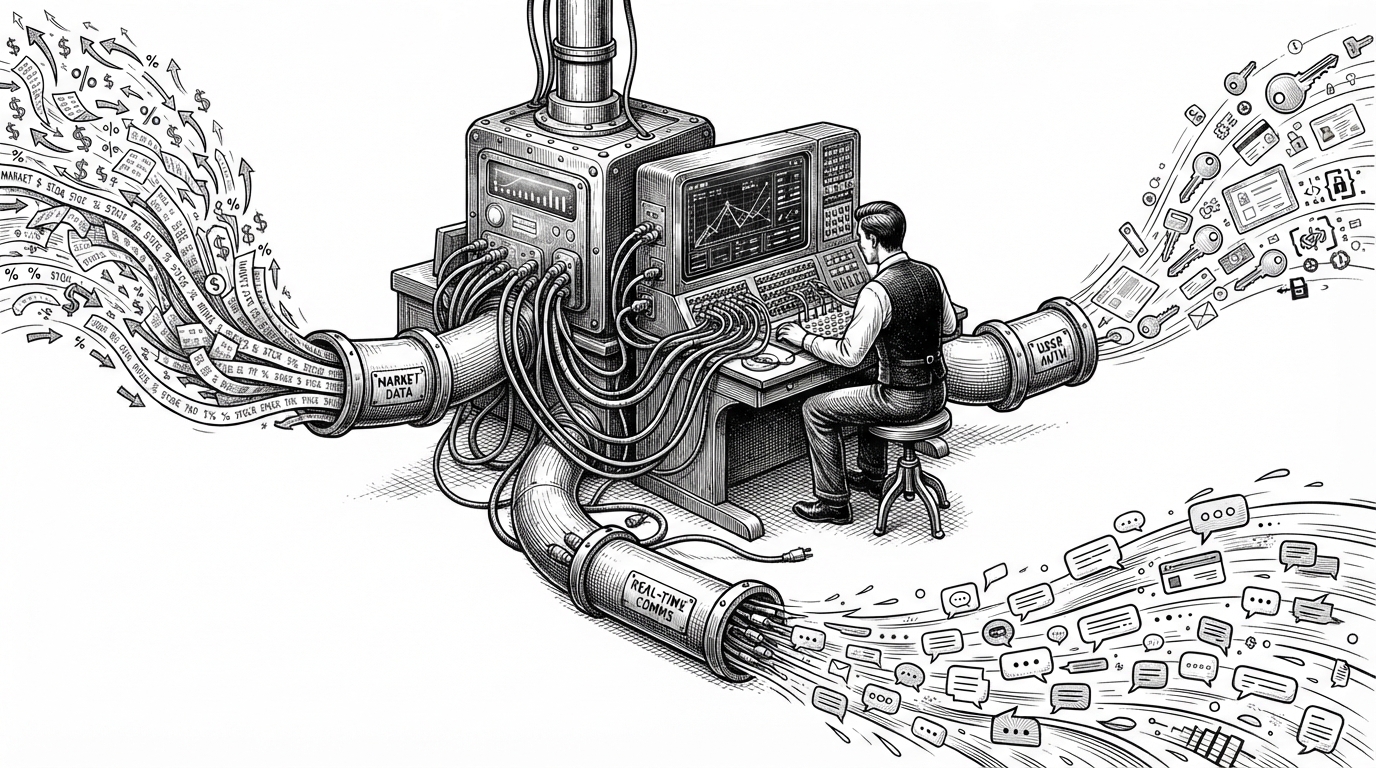
- The backend combines auth, market data proxying, and realtime sockets into one control plane.
- Socket.io is doing coordination work that looks close to WebRTC signaling, not simple chat.
- The project’s promise is strong, but its security and repo hygiene still look like a prototype.
A Stock App Built Like a Coordination Layer
EquiNex looks like a stock app on the surface, but that is not the interesting part. The real product idea is closer to a shared workspace for people who trade together. The backend is built to handle identity, market data, and live interaction in one place, which makes the whole system feel less like a dashboard and more like a coordination service.
What the Backend Is Actually Doing
The server is doing three jobs at once. First, it handles identity with sessions, Passport, and JWTs. Second, it acts as a market data mediator, pulling from outside APIs and shaping the payload before the frontend ever sees it. Third, it keeps live sockets moving, which is where the collaboration story starts to matter.
That combination is the tell. A plain stock app usually stops at holdings and quotes. EquiNex is trying to be the layer in the middle, the place where external data, user state, and shared interaction are stitched together into one experience.
The Hybrid Auth Stack Is the Tell
The auth stack mixes Passport local auth, sessions, JWTs, and connect-mongo. That is not elegant, but it is revealing. The code looks like it is straddling two modes at once: a conventional logged-in web app and a more decoupled client that wants token-based access.
In other words, the stack is a product clue. It suggests the app is being shaped for both browser workflows and a looser API-driven frontend, even if the implementation still carries some early-stage seams.
Socket.io Is Doing More Than Chat
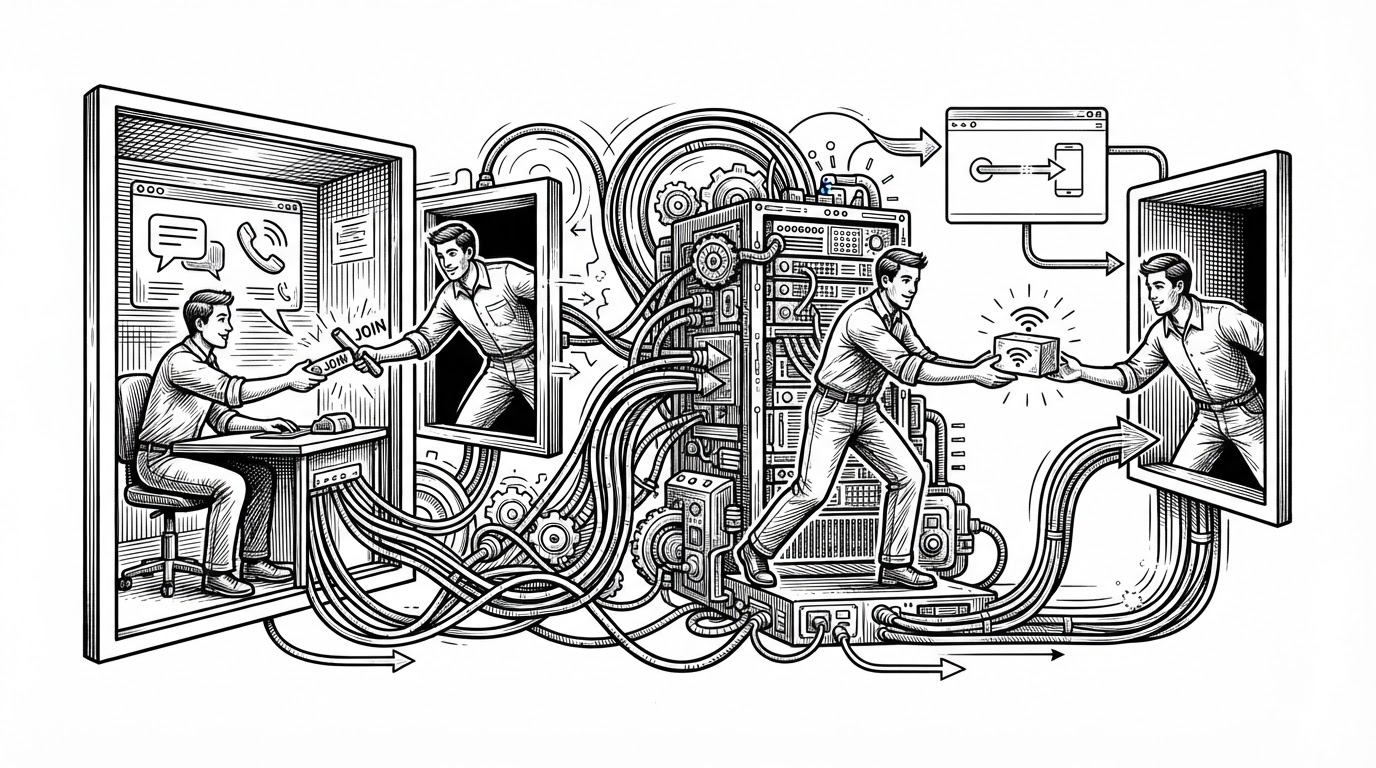
The socket layer is the most interesting part of the repo. Events like join-call, signal, chat-message, and disconnect point to a live coordination pattern, not just a realtime ticker. The presence of signaling logic especially suggests the backend is ready for WebRTC-style interactions, even if the product is still early.
socket.on("signal", (toId, message) => {
  io.to(toId).emit("signal", socket.id, message);
});
The Data Model Mirrors the Product Promise
The model layer is modular in a way that matches the product pitch. Holdings, Orders, and Positions separate the trading domain. Posts and Users handle the social layer. That split matters because it lets the frontend ask for portfolio state and community content without forcing everything through one oversized schema.
That modularity is what keeps the whole thing from collapsing into one generic monolith. It is still a student-style codebase, but the domain boundaries are sensible.
The Security and Maturity Story
This is where the rough edges are impossible to ignore. The repository includes node_modules, and the research notes point to an exposed .env. There are also duplicated server entry points, which usually means the project evolved by accretion rather than by a clean architecture pass.
Those are not small details. They tell you this is a working prototype or student build, not a hardened fintech product. The concept is stronger than the repo hygiene.
| Product shape | What it does well | What it leaves out |
|---|---|---|
| Plain stock tracker | Shows prices, holdings, and basic portfolio state | No live collaboration and little social context |
| Standard community app | Handles posts, chat, and user interaction | No financial workflow or market mediation |
| EquiNex | Combines trading data, login state, and realtime coordination | Still carries prototype-era security and maintenance trade-offs |
The comparison makes the project’s identity clearer. EquiNex is not trying to out-feature a broker or out-chat a community platform. It is trying to occupy the overlap between the two.
Why EquiNex Feels Different From a Plain MERN Clone
Most MERN demos are dashboards with CRUD attached. EquiNex has a more ambitious center of gravity. Its backend is acting like broker, messenger, and meeting room at the same time, and that makes the project feel like a prototype for social trading infrastructure rather than a routine portfolio app.
That ambition is the whole story. The codebase still needs cleanup, but the product instinct is real: trading becomes more useful when the coordination layer is built into the app itself.