quick-ai: Quick AI: How One Small SaaS Turns Clerk, Neon, Gemini, and Cloudinary Into a Multi-Tool AI Factory
A look at the repo’s most interesting trick, the OpenAI-to-Gemini bridge, and how its middleware, billing gates, and tool pages fit together into a lean freemium machine.
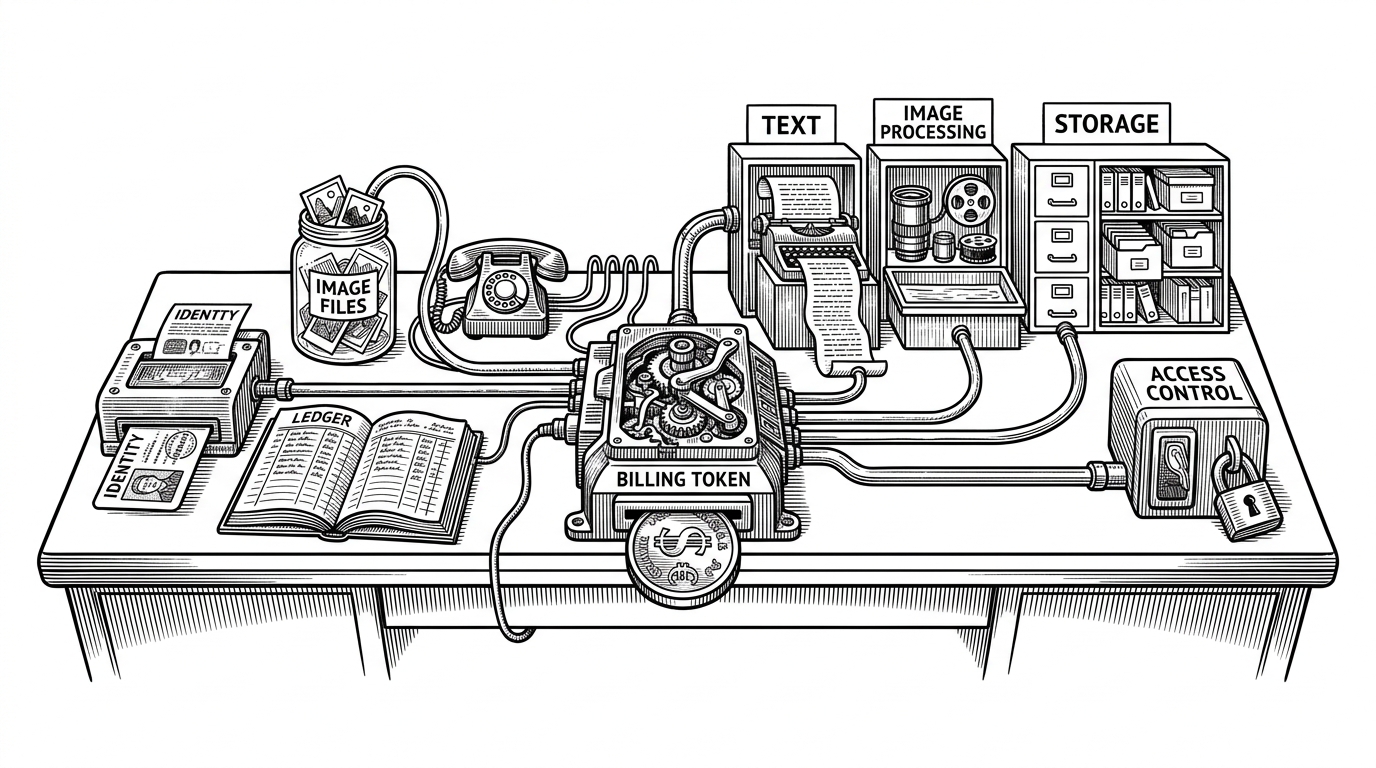
- Quick AI is interesting because it shows how one developer can assemble a believable AI SaaS from modern defaults without inventing a new platform layer.
- The repo’s sharpest move is an OpenAI-style client configured to speak to Gemini, which keeps the code familiar while preserving vendor flexibility.
- Freemium access is enforced in middleware and metadata, so billing is part of the request path rather than a cosmetic UI check.
- The project’s real product is a reusable request pipeline that can power six tools without changing the underlying shape of the app.
The smartest line in the repo
The best clue in Shivalearner/quick-ai is not the UI. It is the decision to use the OpenAI SDK as a wrapper around Gemini. That one choice tells you the repo is built for developer comfort first, model loyalty second.
That matters because most small AI SaaS projects die on integration friction. This one lowers the cost of moving between providers. The code keeps the mental model familiar, then swaps the endpoint underneath.
A SaaS shell built for many AI tools
The repo’s shape is straightforward. React handles the client, Express handles the control plane, and the server is split into routes, controllers, middleware, and config. That is not novel, but it is the point. The architecture is small enough to understand in one sitting and modular enough to add another tool without redesigning the house.
The client also follows the same logic. A shared dashboard shell wraps the tools, while pages such as article generation, image generation, background removal, object removal, and resume review slot into the same layout. The product feels broader than the codebase because the scaffolding is reusable.
Freemium is not a feature here. It is middleware.
The most product-minded part of the repo is not the AI call. It is the gate in front of it. Clerk holds user identity and plan metadata, and the Express middleware turns that into a server-side decision about whether the request should proceed.
| Classic custom stack | Quick AI’s approach | Typical single-purpose tool |
|---|---|---|
| Build auth, billing, storage, and model wiring yourself. | Use Clerk, Neon, Cloudinary, and Gemini through a thin server layer. | Ship one feature with minimal shared infrastructure. |
| More control, more code, more maintenance. | Fast composition, low ceremony, vendor dependence. | Simple UX, limited reuse, narrow ceiling. |
| Harder to launch, harder to iterate. | Easier to extend into a multi-tool SaaS. | Easier to demo, harder to become a platform. |
That changes the economics of the app. Free users can be capped by usage counts. Premium users can be let through without a separate code path in every tool. The billing logic lives where it belongs, near the request.
const AI = new OpenAI({
  apiKey: process.env.GEMINI_API_KEY,
  baseURL: "https://generativelanguage.googleapis.com/v1beta/openai/",
});

export const checkUser = async (req, res, next) => {
  // Clerk metadata and usage checks happen before the tool runs.
  // Free users are bounded here, not in the UI.
};
Six tools, one pattern
The tool list matters less than the pattern behind it. Each feature follows the same loop: accept input, route it through a controller, call a model or service, log the result, and render a response. That is why the app can feel like a product suite instead of a bundle of pages.
| Tool | Input | Processing | Output |
|---|---|---|---|
| Write article | Prompt | Gemini text generation | Rendered article draft |
| Blog title generator | Topic or prompt | Gemini text generation | Title list |
| Image generation | Prompt | Model call plus storage | Hosted image |
| Background removal | Image upload | Clipdrop processing | Processed asset |
| Object removal | Image upload | Clipdrop processing | Edited image |
| Resume review | PDF upload | Parse, analyze, format | Markdown feedback |
The shared loop is what makes the project extensible. A new tool does not need a new business model. It needs a new controller, a new page, and the same policy layer in front of it.
The resume reviewer is the cleanest end-to-end example
Resume review shows the whole stack working without much ceremony. A file comes in. The server parses the PDF. The model produces structured feedback. The client renders it cleanly with markdown support. Each step is understandable on its own, which makes the whole pipeline easier to trust.
That is useful because trust is the real product requirement in small AI tools. The user does not need a grand model story. They need a pipeline that is predictable, logged, and easy to inspect.
What this repo is really competing with
This is not competing with Hugging Face or PyTorch Lightning. It is competing with the stack decisions a solo builder makes when they want to launch fast. Do they build auth, billing, storage, and model wiring from scratch, or do they compose a serviceable SaaS from defaults?
| Decision | Build it yourself | Use Quick AI’s pattern |
|---|---|---|
| Auth and plans | Custom user tables and subscription logic | Clerk metadata and middleware checks |
| Storage | Custom object store wiring | Cloudinary for images, Neon for records |
| Model access | Direct provider integrations | OpenAI-style SDK pointing to Gemini |
| Product shape | One-off feature app | Shared dashboard with multiple tools |
The trade-off is clear. This approach is fast, modular, and friendly to iteration. It also increases vendor coupling and operational surface area. When your SaaS depends on several external systems, reliability becomes a composition problem.
What’s fragile, what’s promising
The promise is obvious: one developer can ship a credible multi-tool AI product without building an entire platform from scratch. The fragility is just as obvious: the app leans on third-party services for identity, billing, inference, image ops, and storage. That is a lot of moving parts for a small team.
Still, the repo is a good blueprint. It shows how to build around a repeatable request pipeline, keep the UI shared, and isolate the risky pieces behind middleware and service adapters. That is a practical pattern, not a research breakthrough. For a solo SaaS builder, that is enough.