The Paranoid Laboratory: Inside turboquant-t4-colab-lab
How a defensive, self-verifying notebook squeezes 128k context windows out of aging free-tier GPUs and survives the chaos of bleeding-edge LLM forks.

- The repository treats a Jupyter notebook as a paranoid unit test, compiling its own binaries and grepping the output to survive fast-moving upstream fork changes.
- TurboQuant achieves a massive 5x memory reduction by compressing all tokens via vector quantization, standing in stark contrast to methods that drop tokens entirely.
- Jupytext integration allows the project to maintain its complex logic as version-controlled Markdown, solving the notorious notebook binary blob problem.
- By strictly targeting the 16GB NVIDIA Tesla T4, the lab proves that 128k context windows are viable on aging, budget-friendly enterprise hardware.
Squeezing a Ship into a Bottle
The physics of local AI are brutal. A 128k context window on a standard 7B model requires a massive amount of VRAM just to store the Key-Value (KV) cache. If you try to run this on an older NVIDIA Tesla T4 with its modest 16GB of memory, you will immediately hit an Out Of Memory error. The math simply does not work.
This is the exact problem turboquant-t4-colab-lab sets out to solve. It serves as a highly specialized testing ground for TurboQuant, a breakthrough compression technique. But what makes this repository fascinating is not just the 5x compression it tests. It is the extreme paranoia with which it runs those tests.
The Architecture of Paranoia
In the chaotic world of LLM forks, features constantly break or change names. This lab refuses to trust its environment. It utilizes a guarded execution pattern that treats a Jupyter notebook not as a scratchpad, but as a rigid, self-verifying unit test for bleeding-edge inference.
The notebook begins by strictly pinning the hardware. It uses torch.cuda.get_device_capability(0) to ensure the GPU is exactly compute capability 7.5. If Colab assigns a different GPU, the notebook halts. It then compiles the llama.cpp fork from source using specific CMake flags. Finally, it uses Python's subprocess to run the compiled binary's help menu and greps the output for the turbo3 flag. If the flag is missing, the experiment aborts before wasting time loading a massive model.
Vector Quantization vs. Token Pruning
The reason for this elaborate setup is to test TurboQuant's specific approach to context management. Traditional methods often rely on dropping tokens entirely to save space. TurboQuant takes a different route, utilizing random rotations and vector quantization to shrink the memory footprint of every single token without discarding them.
| Paradigm | Mechanism | Fidelity & Recall |
|---|---|---|
| Baseline (FP16/FP8) | Stores raw tensors in high precision | Perfect recall, massive memory usage |
| Token Pruning (ZipVL) | Discards less important tokens | Lossy recall, excellent speed |
| Vector Quantization (TurboQuant) | Compresses all tokens into dense vectors | Near-perfect recall, requires custom kernels |
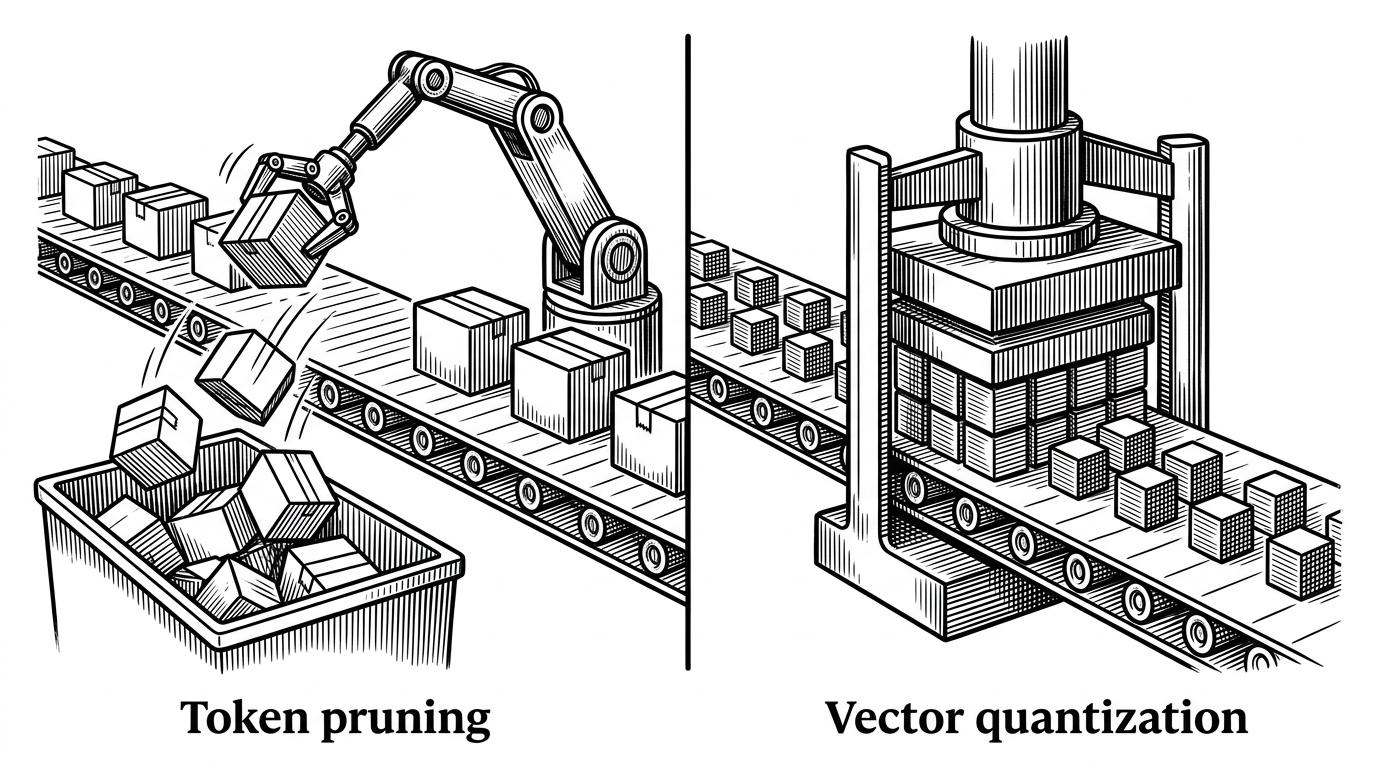
This compression requires highly optimized Triton kernels to function efficiently. The resulting performance gains are significant, particularly when scaling to multiple models across different environments.
The fused kernel reads compressed blocks directly from vLLM’s page table, decompresses in on-chip SRAM, and computes attention — all in one pass. Memory traffic dropped from 1,160 to 136 bytes per token. That 8.5x reduction means the fused path is faster, not just more memory-efficient.
The Markdown Source of Truth
Jupyter notebooks are notoriously difficult to version control because they are essentially massive JSON blobs. This repository completely bypasses that problem by utilizing Jupytext and the uv package manager.
[project]
name = "turboquant-t4-colab-lab"
version = "0.1.0"
requires-python = ">=3.10"

[tool.uv]
dev-dependencies = [
    "jupytext>=1.15.0",
]
By declaring Jupytext as a core development dependency, the author ensures that the notebook is maintained as a clean, diff-friendly Markdown file. The actual .ipynb file is merely an artifact generated for Colab execution. This approach treats the notebook as standard code, making it readable and maintainable.
Escaping the Memory Crisis
The industry is currently facing a memory crisis. High DRAM prices and a focus on enterprise AI data centers have left consumer hardware struggling to keep up with model sizes. Projects like this Colab lab are critical for democratizing access to large-context models.
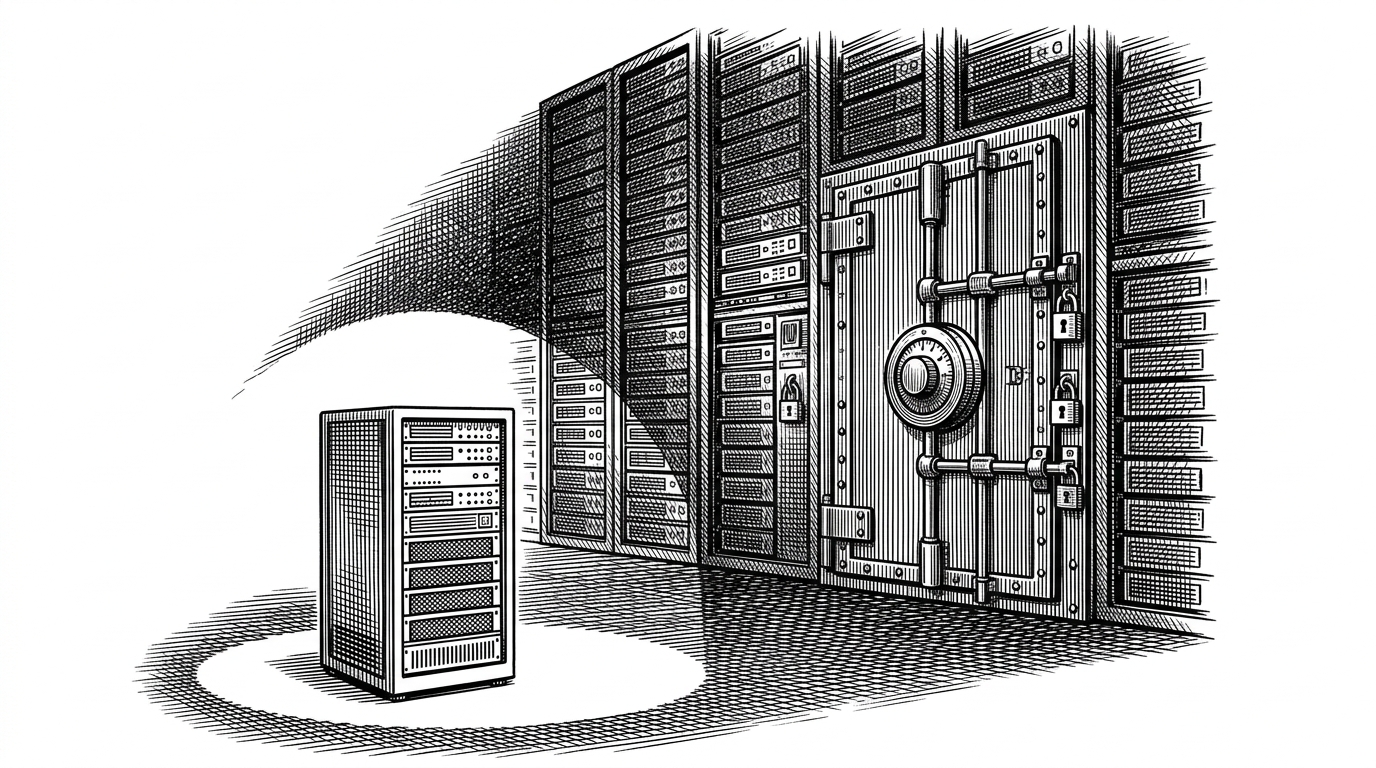
By proving that a 128k context window can be squeezed into a 16GB Tesla T4, the repository shows a path forward. It demonstrates that with enough paranoia, rigorous testing, and clever math, aging hardware can still run at the bleeding edge.